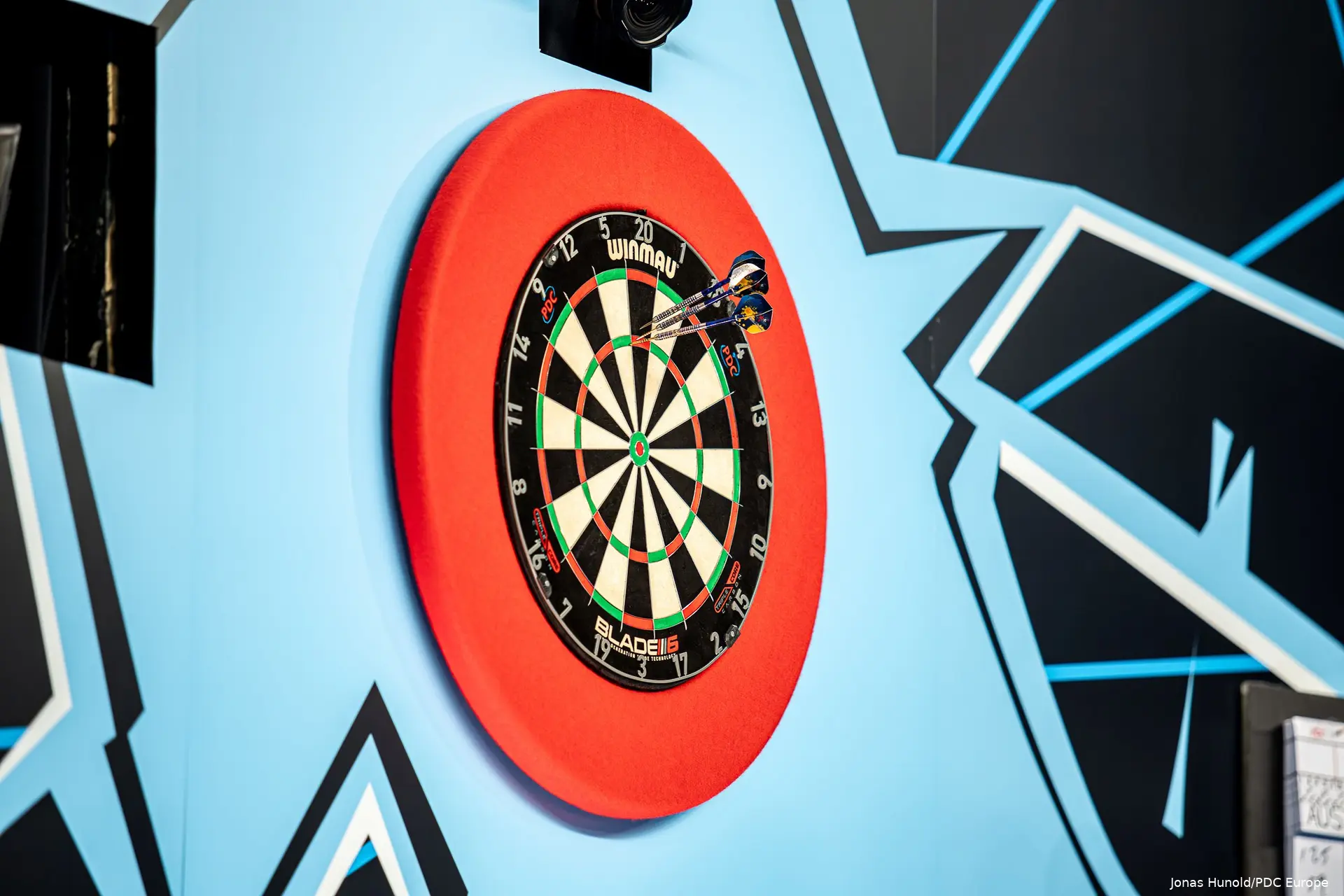
On a Sunday afternoon in 1987, two strangers stood at a dartboard in a television studio and decided whether to keep what they had won or risk it all on six darts. Millions of people watched them think it over. The programme was Bullseye, and this was its closing round.
ADVERTISEMENT
Bullseye ran on ITV, Britain's commercial television network, from September 1981 to July 1995. Jim Bowen, a club comedian from Lancashire, presented all fourteen years of it. Three pairs of contestants threw darts and answered questions for cash and prizes, and at its height the programme drew audiences of up to 20 million.
Open the game shows tab in an online casino now and the setup will look oddly familiar: a live presenter, a bright studio, a large wheel, a countdown before each round. The category has spread across the whole market since 2017, turning up in the lobbies of platforms that ask for a large deposit before you can start and of budget-friendly deposit casino sites alike, which makes the resemblance to Sunday afternoon television worth explaining rather than dismissing.
What Bullseye Was, and Why Britain Watched It
Andrew Wood created and owned the format, arriving at it after studying what gave game shows broad appeal. ATV made the first series in 1981; Central took over in 1982 and produced the programme until 1995.
Each edition brought on three pairs of contestants, each made up of an amateur darts player and a quizzer. Bowen introduced them with a line that stuck: over there, the people that throw, and over there, the people that know. Tony Green, a professional darts referee and commentator, joined in 1982 to keep score and later became a presence on screen, calling out results in a voice regular viewers could imitate.
Darts drove everything. The value of a question, the prizes a couple collected and the result of the final gamble all depended on where an arrow landed, so a weak thrower could cost a strong quizzer the entire show. By the end of the original run the programme was receiving around 12,000 applications a year, and the waiting list for audience tickets stretched to five years.
How the Game Worked, Board by Board
ADVERTISEMENT
Three boards did the work, and each behaved differently.
- Bully's Category Board. Ten sectors, each holding a subject. The money rose the closer a dart landed to the centre, from £30 at the rim to £200 for the bullseye, and a correct answer added more.
- Pounds for Points. Three darts each at an ordinary matchplay board. The highest scorer won their partner a question worth £1 per point.
- The charity interval. A professional threw nine darts, with £1 donated per point, doubled to £2 per point if the total passed 300. Eric Bristow, John Lowe, Bob Anderson and Mike Gregory all took a turn.
The couple with the most money then moved on to the part everyone remembers.
Bully's Prize Board
The producers had this board made for the programme alone. Eight narrow red sectors alternated with eight wide black ones, with a bullseye at the centre. Each red sector carried a number from one to eight and a corresponding prize, while the bullseye held a larger item called Bully's Special Prize.
ADVERTISEMENT
The pair threw nine darts between them, the first and last three by the darts player and the middle three by the partner, keeping every prize whose sector they hit. Black sectors gave nothing, and a second hit on the same red sector cancelled that prize, which produced Bowen's best-known line about keeping out of the black and in the red.
The Star Prize Gamble
Bowen read out what the couple had won and asked whether they wanted to risk it. The Star Prize stayed behind a panel, and nobody in the studio, contestants included, knew what sat there. Speedboats, cars, caravans and holidays all turned up over the years.
Saying yes meant six darts, three each, with the non-darts player throwing first, and a target of 101 or more. From the eleventh series the couple's cash went on the line as well, and Bowen warned that failure left them with nothing but their bus fare home. Either way, the crew wheeled the Star Prize out at the end and showed them what they had missed.
The Ideas the Format Rested On
ADVERTISEMENT
Set aside the jumpers and the mascot, and five design choices remain:
- A live host who sets the pace, explains events and reacts on the viewer's behalf.
- A physical randomiser in shot, so the audience follows the result with their own eyes.
- Rules short enough to explain in ten seconds.
- A choice between something certain and something better.
- A reveal of whatever the contestants failed to win.
None of this asked the viewer to know anything about darts, which was the point. Wood built a programme a family could join halfway through without anyone having to ask what was going on.
What a Casino Game Show Is
Live casino means a real studio, a presenter on camera and a video stream, with players betting from home while the round plays out in front of a camera. Two terms recur: a multiplier increases a payout by a stated amount, and a bonus round is a separate mini-game triggered by the main one.
ADVERTISEMENT
Evolution opened the category in 2017 with Dream Catcher, a vertically mounted wheel of 54 segments, built to order, marked with the numbers 1, 2, 5, 10, 20 and 40 plus two multiplier segments. Todd Haushalter, the studio's chief product officer, said at the launch that the aim was to reach slot and bingo players who never went near a table game.
Three titles show where the idea went next:
- Crazy Time, from July 2020, keeps the same wheel and adds four bonus rounds: a coin toss performed by a machine, a shooting gallery holding 108 concealed multipliers, a physical pachinko wall with 16 channels, and a virtual wheel.
- Monopoly Live has a presenter spinning a wheel while an animated Mr Monopoly walks a three-dimensional board collecting multipliers.
- Sweet Bonanza CandyLand, from Pragmatic Play, runs from a sweet-themed studio in Bucharest built for that single game.
All of it streams around the clock.
The Same Ideas, Forty Years On
Line the two up and the resemblance is close. Both put a host in charge of the pace, both keep the randomiser in shot, and both keep the rules short, for the reason Haushalter gave: the audience the industry wanted had no wish to learn anything first. The choice survives as well, compressed into a betting window of roughly fifteen seconds, and the near miss stays on screen rather than hidden, because every player watches the segment they did not back.
The link runs deeper than style. Television formats now pass to gambling companies by contract. Evolution built Deal or No Deal Live with Endemol Shine. Playtech runs Family Feud from a glass-walled studio on a Las Vegas casino floor under licence from Fremantle, and the same agreement covers Family Fortunes, the British version that began on ITV on 6 January 1980. ATV made that programme too, twenty months before it made Bullseye.
ADVERTISEMENT
Bully Is Back on ITV
Bullseye returned as an ITV Christmas special on 22 December 2024, with Freddie Flintoff presenting and Richard Ashdown keeping score. A full series followed from November 2025, bringing professionals including the world champion Luke Littler to the oche. ITV commissioned a second run of eight episodes in June 2026, and filming began this autumn.
The programme has come back to a country where its central idea is available every hour of the day, from a studio somewhere in Europe, on a phone. What the original had that the newer version of the format does not is a limit. It finished after thirty minutes, the prizes stood in the room, and everyone watching could see exactly what was at stake.

Samuel GillChief Content Officer
Samuel Gill is the Chief Content Officer (CCO) of DartsNews.com, a role he has held since 2020. He is responsible for editorial governance across the platform, including setting content standards, overseeing accuracy and consistency, and guiding long-term editorial strategy across professional darts coverage. Since joining, he has contributed more than 10,000 articles and editorial pieces, playing a central role in the development and daily operation of the site.
Based in Leicester, Samuel has extensive experience in darts media and has been closely involved in coverage of the professional darts circuit for several years. Within the UK darts community, he is a recognised figure known for his consistent editorial output and ongoing reporting on major tournaments and developments across the PDC calendar.
In his current role, Samuel works closely with editors and writers to ensure content meets clear journalistic standards, with a focus on source verification, editorial consistency, and timely updates when new, confirmed information becomes available.
claps 0visitors 0
Just in


Popular news

Latest comments
- In the absence of a report regarding the death of Stefan Lord, I'll assist. An excellent player in the late 70s and early 80s, he actually won the now defunct 3rd place match at two World Championships and a couple of the News of the World Championships. A fabulous player and easily the best Swedish player ever. Rest peacefully Stefan.richieburnettrocks16-10-2026
- Joking aside, it is the second most watched sport on sky (more than golf, F1 etc) behind football only, and in participation is second to only football and swimming. It doesn't get the attention or sponsorship of "bigger" sports because it's not as sexy, but it's right up there.BandB13-10-2026
- i love darts but you can't seriously believe it's the second most popular sport in the uk. even top five is pushing it. it may be the fastest growing, though.colt13-10-2026
- I'm a big Clayton fan, but he's got this completely wrong. Qualification criteria exists for a reason - so just as failing to make the top 32/64 for the Euro championships/PT Finals means you miss out, so does not lifting a title for this one.26sForFun12-10-2026
- The players who deliberately slow the game down are usually boring and win very little in the way of silverware. Horrible to watch.MrYnyslas197112-10-2026
- [“The Gentle” then used a sweeping and questionable phrase...] You anglocucks are hilariously finished in every sense of the word.Critical99911-10-2026
- I love Jonny but I disagree. The Grand Slam was always supposed to be "champion of champions" type competition. If the top 16 are guaranteed participation in everything there will be so much less jeopardy involved in qualifying and each major tournament will lose its unique flavour which the PDC has worked hard trying to develop. I enjoy following the qualification races towards the end of the year, and while consistency should have its rewards, the truth is Jonny hasn't reached a major final all year or won a single event on the Pro Tour. Being consistent is one thing, but that alone should have consequences as the sport's elite should not be prepared to accept consistently strong performances, their foremost motivation should be to win and this should be what separates them from the rest, not the consistency of their performances. Jonny is expecting that losing should be enough; it shouldn't be, at least not as far as the Grand Slam is concerned.Deduce635811-10-2026
- Well being honest,it doesn't matter what level you play at, there's always someone who slows it down to suit themselves,and extra swig of water, replacing flights, asking the ref what the score is. It happens wherever. I'm not saying it's professional,but I'm sure we've all seen it beforerick6711-10-2026
- Agree completely. Not sure how a ranking event can have a criteria not based on rankings. And he right on popularity. In the UK second only to football.BandB11-10-2026
- Doesn't matter who's in it,it's boringrick6710-10-2026
Loading