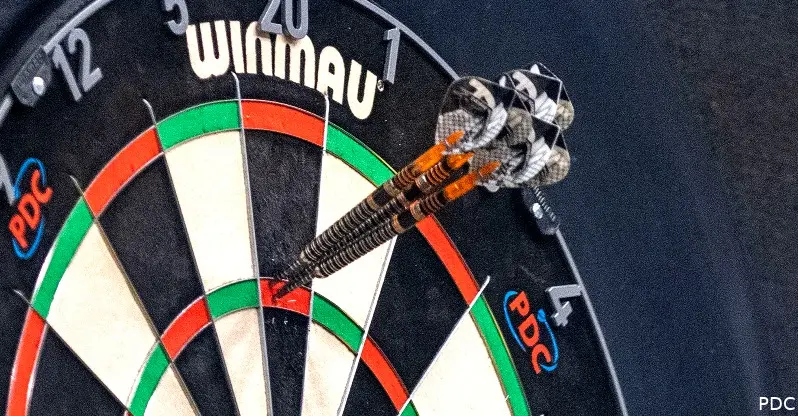
Darts have always had a place in
British life. For decades, it filled corners of pubs, working men’s clubs, and
community halls. Players gathered after work, chalked scores by hand and built
rivalries that lasted years. Those small weekly matches quietly laid the
foundation for something much bigger.
ADVERTISEMENT
Over time, the sport tightened its
structure, sharpened its standards and found a wider audience. What once felt
local gradually became national. Packed arenas and televised finals now sit
alongside the same pub leagues that started it all. That steady progression
explains how darts earned its status without losing its roots.
From Local Leagues to Organised Competition
Strong local leagues gave darts its
backbone. Regular fixtures meant players improved through repetition. Familiar
opponents pushed standards higher. Results mattered because league tables
reflected consistent effort, not occasional brilliance.
Clubs that want thriving competitions
should focus on reliability above all else. Matches need fixed dates. Rules
must stay consistent. Disputes should be handled quickly and fairly. When
players trust the structure, they stay involved.
Laying Down Clear Standards
County associations helped connect
scattered leagues into something more unified. Standard board height and
throwing distance removed confusion. Shared rules allowed players to travel
between venues without adjusting their game.
That attention to detail still
matters. Written regulations prevent disagreements. Updated standings keep
motivation high. Cup competitions add excitement beyond league play.
ADVERTISEMENT
Simple improvements often make a real
difference. Better lighting sharpens focus. Secure board fittings avoid
arguments over bounce-outs. Transparent organisation builds respect. Darts grew
because thousands of volunteers treated local matches seriously.
The Television Boom That Changed Everything
Exposure on television changed public
perception. Audiences who had never stepped into a league night suddenly saw
dramatic finishes and distinctive personalities. The sport felt accessible.
Viewers recognised players and followed their progress.
The PDC World Championship regularly
attracts millions of viewers in the UK. The 2023 final peaked at over three million on Sky Sports.
Figures like that show sustained interest rather than a short spike.
Organisers learned quickly that
presentation shapes experience. Clear stage layouts, strong lighting and
structured walk-ons give events polish. A well-run session keeps viewers
engaged from first throw to final double.
ADVERTISEMENT
Personality, Pace and Presentation
Players became recognisable characters
rather than anonymous competitors. Interviews added context. Rivalries gained
attention. Crowds played their part, bringing energy without overshadowing the
action.
Local organisers can borrow from that
formula. Streaming finals online widens access. Sharing highlights across
social platforms draws younger viewers. Even small tweaks to staging can make a
club final feel significant.
Television did not change the
fundamentals of darts. It simply amplified what was already there.
Professional Darts and the Modern Tour Structure
ADVERTISEMENT
The formation of the Professional
Darts Corporation during the 1990s reshaped elite competition. A clear ranking
system replaced uncertainty. Prize funds increased steadily. Players could now
build full-time careers with defined progression.
That structure raised expectations.
Training routines became more disciplined. Practice sessions focused on
consistency under pressure. Travel schedules demanded physical and mental
resilience.
Interest in darts betting expanded
alongside major televised events. Supporters follow match markets and
tournaments during competitions such as the World Championship and Premier
League. Many check odds and fixtures through the darts betting page at BetGoodwin while keeping
up with live coverage and player statistics.
What Professional Standards Require
Elite performance demands routine.
Players repeat scoring drills for hours. Checkout practice becomes second
nature. Mental focus often separates narrow wins from early exits.
ADVERTISEMENT
Clubs hoping to develop stronger
competitors should encourage regular match exposure. Open qualifiers provide
honest feedback. Facing higher-ranked opponents reveals weaknesses quickly.
Knowledge of format also matters.
Early rounds tend to move quickly. Later stages test stamina across longer
matches. Following those patterns helps supporters understand performance
swings throughout tournaments.
Major Events That Capture National Attention
Large tournaments anchor darts firmly
within British sport. Each winter, Alexandra Palace hosts the PDC World Championship.
Attendance frequently exceeds 90,000 across the event. Evening sessions blend
intense competition with lively crowd participation.
That success rests on careful
organisation. Ticket tiers make sessions accessible. Security remains firm
without feeling restrictive. Sponsors gain visibility without distracting from
the match itself.
ADVERTISEMENT
The Premier League Effect
Premier League Darts travels weekly
across major UK cities during spring. A consistent format keeps interest steady
over several months. Supporters know what to expect each week, yet individual
matches still produce drama.
Host venues often experience increased
hospitality demand on event nights. Cities benefit from the travelling format.
Rotating locations also brings elite darts closer to regional fans who may not
attend London-based events.
Spectators improve their experience
with simple preparation. Early ticket booking secures better seating, and
checking session times avoids unnecessary stress on the night.
Darts as a Fixture in British Sporting Culture
ADVERTISEMENT
Darts now holds a stable place within
the national sporting calendar. Media outlets cover major tournaments
consistently. Player interviews appear beyond specialist platforms.
Financial growth reflects that
popularity. The PDC World Championship winner currently receives £500,000.
Such prize funds highlight how far the professional game has progressed.
Yet local leagues still run weekly.
County competitions continue to attract dedicated players. That balance between
elite performance and community participation sustains the sport’s identity.
Get Closer to the Action
Darts continues to expand because
people stay involved at every level. Some compete each week in local leagues.
Others travel across the country for major events. Many follow rankings and
fixtures throughout the season.
ADVERTISEMENT
Improvement comes through steady
practice and meaningful match experience. Spectators gain more enjoyment when
they understand tournament formats and track player form carefully.
Support local clubs, watch live
coverage, and stay informed through trusted sources. British darts grew through
commitment and shared enthusiasm, and continued involvement will ensure it
keeps progressing while holding onto the foundations that made it strong.

Samuel GillChief Content Officer
Samuel Gill is the Chief Content Officer (CCO) of DartsNews.com, a role he has held since 2020. He is responsible for editorial governance across the platform, including setting content standards, overseeing accuracy and consistency, and guiding long-term editorial strategy across professional darts coverage. Since joining, he has contributed more than 10,000 articles and editorial pieces, playing a central role in the development and daily operation of the site.
Based in Leicester, Samuel has extensive experience in darts media and has been closely involved in coverage of the professional darts circuit for several years. Within the UK darts community, he is a recognised figure known for his consistent editorial output and ongoing reporting on major tournaments and developments across the PDC calendar.
In his current role, Samuel works closely with editors and writers to ensure content meets clear journalistic standards, with a focus on source verification, editorial consistency, and timely updates when new, confirmed information becomes available.
claps 0visitors 0
Just in

Popular news
Latest comments
- Assuming you qualify as one of the "muppets" in question. Classist too. And since you're so clearly interested in academia, look up "linguistic descriptivism" while you're at it. Oh, and better stay away from the working class sport of darts and maybe offer your insightful analysis to, let's say, croquet instead?Deduce635806-10-2026
- The consequences of being uneducated and grammatically challenged. "To all THOSE muppets not THEM " Everytime I see Arsepinall, I have an image of him wearing a cap, standing behind the counter of a fast food establishment.richieburnettrocks05-10-2026
- I don't understand Littler's reason for playing this tournament.rick6705-10-2026
- James Wade has become James Wide. He has piled on the tonnage considerably, he barely fits in his shirt.richieburnettrocks03-10-2026
- Littler will play whatever tournaments he decides. But does every headline have to start with him? Bristow bought Taylor through,and he followed that with Lewis. I can't see littler doing the same. Let him choose,and lose,he's getting good at that lately!rick6702-10-2026
- I believe he has it in him to qualify for the Worlds as he consistently wins matches, even if it is only one or two at a time, although his recent PC quarter-final run was somewhat encouraging in that regard. I think there is a lot of pressure for him to retire, people in the media accusing him of tarnishing his legacy. I think that is a ridiculous line of thinking. How ungrateful it is to attach terms and conditions to the amazing moments he has provided us over the course of his career. What position are we in to dictate to him how he should manage his career when it is he who achieved those successes in the first place? What's more, this is his life and the passion that sustains it, it is not for us to decide when his career is over when it is he who must bear the genuine ramifications of that decision. Since I'm sure money is not a concern, the only question on which the decision should rest is whether he truly continues to enjoy competing. He has retired once before, but the desire to compete is what brought him back. We see a lot of negative body language and he does genuinely look miserable when he is not playing well, but only he will know when he wakes up the next day whether he wants to go and do it all over again. If he wants to compete, he should, it's as simple as that, this is a decision that should not involve anyone else but him and his family. He should not retire to indulge the whims of the media or the public. What satisfaction would he receive by being forced into retirement? What closure would it bring to such a brilliant career? When Phil Taylor decided to retire, his decision was final and resolute. I believe RvB needs to get to this point himself, no matter how many 70 averages it might take. We see the likes of John Part continue to compete on a regular basis well past his prime, I say more power to him, and who knows, further glory could be around the corner, it's darts after all, you just never know. Sometimes I worry that RvB is acutely aware of the clamour for him to retire and that this pressure may even have an impact on his performances as he begins to question whether there is even a place for him in darts anymore, further compounding his poor form and creating a vicious loop. Perhaps to take his future into his own hands would provide him with a levity and freedom that would lend itself to better performances, not to mention an improved wellbeing. In any case, it is under these conditions that one can clear-headedly and definitively settle an issue so profound as retirement, not when you feel you're being rushed out the door. If his performances can no longer sustain his presence on the tour, so be it; as it stands his card seems safe for this year but is in serious jeopardy next year. He could always allow himself to drop off the tour naturally rather than forfeiting his place in the top 64, this could provide a sense of finality while offering a route back through Q-School if he so desired; after all, he's done it before. In conclusion, I just hope that RvB can play - or not play - for his own sake, rather than anyone else's, so that when the time comes he can be in no doubt as to his decision, leaving no lingering questions, so that he can reflect with no regret or uncertainty on the marvelous career he has had.Deduce635826-09-2026
- Luke Littler has been good for the sport of darts, no question. But he is not above it. For his sake and ours, he needs to be put in his place sometimes, rather than having his every whim catered to. That is not how you build a good person nor a good sporting organisation, and it's beginning to have consequences.Deduce635826-09-2026
- Extremely disappointing decision. It used to be that, along with major events and Euro Tours, the Players Championship series constituted one of three standards against which successful darts players could be measured, one of three challenges every successful darts player should be expected to master to consider themself among the elite. Now they are dead weight in the darting calendar, and player turnout and the standard of competitiveness will reflect that. The truth is that Luke Littler and other big names would rather play lucrative exhibitions than put in the hard graft that being a successful dart player requires. It undermines the authority of the PDC and the game in general. So what do they do about it? Give them exactly what they want. Of course, why wouldn't they? They are their star attractions. It is ironic that an organisation formed in protest by the sport's elite should be undermined and disrespected by their contemporary equivalents, but the PDC had a chance to stand up to them with a firm message: play 2 events all year and expect the final to be played without you. Instead, they caved in. These events will be hardly worth playing anymore and this decision may have grave consequences for the future of floor events at the elite level. Some may say the calendar is overstuffed, yet these elite players have more than enough time to play plenty of exhibitions. The Premier League in particular is gruelling, but busy players are not expected to play every event, they are expected to manage their playing schedule carefully in order to apportion their time and energy appropriately. Clayton and Humphries, for instance, both sit in the top 20 of the Players Championship and European orders of merit, in addition to competing in the Premier League; they have proven it is absolutely possible and this change is an insult to their efforts in effectively managing their calendars. I think we are seeing players who simply think they are too good for Pro Tour events, arrogance which should be punished rather than rewarded as we are seeing here. Furthermore, why should success in Euro Tours qualify you for the Players Championship Final? The PDC are blurring the lines between those three disciplines of darting excellence, and in so doing destabilising the very foundations upon which the organisation and its success is built. Some may say I'm overreacting, but this, in addition to the PDC's subservience and snivelling obsequiousness toward their biggest assets, makes me fear for the future of professional darts.Deduce635826-09-2026
- I guess this will mean the top players will turn up even less? Taken all the excitement of qualifying away I think. Wish they made it top 32 to qualify and the finals to last all week.Baphomet26-09-2026
- Great article - but not written by this site. It's taken wholesale from last Sunday's Observer with this interview published online on Saturday.Scoobedybop22-09-2026
Loading