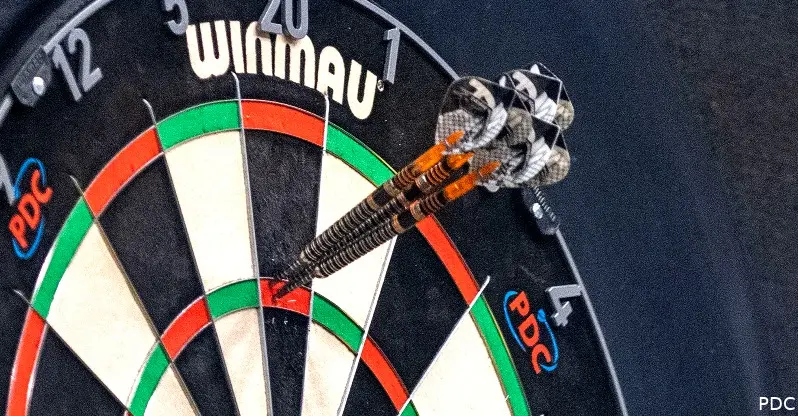
When a sixteen-year-old walked onto
the Alexandra Palace stage in December 2023 and reeled off 180 after 180, he
didn't just announce himself as the next face of darts. He quietly blew up a
betting market that had operated on the same assumptions for nearly two
decades.
ADVERTISEMENT
Darts trading desks used to be
predictable. Van Gerwen was the short price. Price, Wright, and Cross carried
the secondary lines. A cluster of seasoned pros filled the outright books, and
prop markets moved in tight, data-driven bands because the player pool rarely
surprised anyone. Then Littler happened and the models haven't fully
recovered since.
The pre-Littler equilibrium
To understand what changed, you have
to appreciate how stable darts betting had become. Oddsmakers had years of
televised PDC data on every top-thirty player: their averages against
left-handers, their checkout percentages from 81 and below, their away-from-Ally-Pally
form. Markets priced accordingly, and the edges available to sharp bettors were
narrow.
World Championship outright pricing
was a good example. Van Gerwen would typically open between 2/1 and 3/1, with a
small handful of challengers clustered in the 10/1 to 20/1 range and almost
everyone else drifting into long-shot territory. The shape of the market told
you who the sport thought could actually win, and it was rarely wrong.
Then a teenager who'd barely played a
senior TV event reached the final as a 66/1 outsider, and every model built on
"experience matters" looked suddenly fragile.
What the Littler effect actually changed
The obvious shift is at the top of the
market. Littler now opens as favourite or joint-favourite for nearly every
major he enters, and the sport has a genuine two-horse race at the top for the
first time in years. But the interesting changes are further down the card.
ADVERTISEMENT
Volatility in outright markets has
widened. Bookmakers now price young, relatively
untested players more generously on the way up, because the Littler precedent
proved that a prodigy can skip the usual three-to-five-year development arc.
Names like Gian van Veen, Beau Greaves, and the next wave of Development Tour
graduates get pulled into shorter prices faster than they would have pre-2024.
Prop and special markets have
exploded. Most nights of PDC action at online betting
sites like BOYLE Sports now feature the kinds of player-specific props — 180
counts, highest checkout, tournament average over/unders — that used to be
reserved for World Championship weekend. Littler's consistency at generating
180s (and the viewing numbers that come with him) made darts a commercially
attractive sport to build deeper markets around.
In-play liquidity has roughly
doubled in the top markets. Industry chatter
suggests darts in-play turnover during major Littler matches now rivals
mid-tier tennis ATP events. That has downstream consequences — tighter margins,
faster price movement, and more sophisticated traders watching the sport.
The stats that actually matter now
If you're reading player form with
betting in mind, the Littler era has shifted which metrics move the needle. A
few worth watching:
ADVERTISEMENT
First-nine average against
top-sixteen opposition. Littler's ceiling in
opening legs is what separates him from the field, and the stat has become a
better predictor of match outcomes than overall tournament average. Players who
can hit 105+ first-nine consistently against elite fields now get rewarded in
pricing.
Checkout percentage under 40. The modern top-tier player wins matches by finishing, not by
scoring. Doubles from 40 and below have become more predictive than the more
commonly cited overall checkout rate, which can be flattered by easy
single-dart finishes.
Floor-to-TV differential. Some players — Humphries being the obvious example, scale up their
averages on television. Others go the opposite way. Pre-Littler, the
conventional wisdom was that floor players always struggled under lights, but
the last eighteen months have produced enough counterexamples to force a
rethink. Look at recent TV debuts rather than assuming a career pattern will
hold.
The new hierarchy and where value still lives
Van Gerwen's prime-years dominance is
gone. Humphries is the world number one but rarely a short-price favourite.
Littler is the headline act but draws such heavy money that his outright prices
are often shorter than the underlying probabilities justify — particularly in
majors where the format upsets oxygen.
ADVERTISEMENT
That dynamic is where informed bettors
find edges. When Littler opens at 3/1 for a major and the field is deep, the
mathematics rarely support a price that short for any single player over a
two-week tournament. The public pays for the name; the book balances its
liability by slightly overpricing the second and third tier, which is where
value reliably sits.
Players worth tracking in that tier
right now include Gerwyn Price, who has rediscovered his floor form through
the European Tour, and Martin Schindler, whose tournament-by-tournament
improvement has started to register in outright pricing. Chris Dobey and Ryan
Searle remain the kind of streaky pros who can win a major from a 40/1 opening
price if the draw opens up — the sort of profile that used to define value
picks before Littler compressed the top of the market.
What this means for how you watch
The Littler effect isn't purely about
one player. It's accelerated a broader shift in darts: younger fields, deeper
analytics, more volatile markets, and a sport that has genuinely global
commercial weight for the first time. A teenager hitting 180s at Ally Pally was
the catalyst, but the infrastructure around the sport — broadcast, data,
betting — has scaled with him.
For fans, the practical consequence is
that darts is a more interesting sport to watch with skin in the game than it
was three years ago. The markets are deeper, the storylines run further down
the rankings, and the next Littler — whoever that turns out to be — will be
discovered in public, priced in real time, and absorbed into the form book
before we've had time to argue about whether they belong there.
ADVERTISEMENT
Van Gerwen used to joke that darts was
"boring because I keep winning." The sport can't say that anymore.
Neither can anyone try to price it.

Samuel GillChief Content Officer
Samuel Gill is the Chief Content Officer (CCO) of DartsNews.com, a role he has held since 2020. He is responsible for editorial governance across the platform, including setting content standards, overseeing accuracy and consistency, and guiding long-term editorial strategy across professional darts coverage. Since joining, he has contributed more than 10,000 articles and editorial pieces, playing a central role in the development and daily operation of the site.
Based in Leicester, Samuel has extensive experience in darts media and has been closely involved in coverage of the professional darts circuit for several years. Within the UK darts community, he is a recognised figure known for his consistent editorial output and ongoing reporting on major tournaments and developments across the PDC calendar.
In his current role, Samuel works closely with editors and writers to ensure content meets clear journalistic standards, with a focus on source verification, editorial consistency, and timely updates when new, confirmed information becomes available.
claps 0visitors 0
Just in


Popular news
Latest comments
- I agree,I can't believe the lack of coverage of this sad loss. Always enjoyed watching him,but I guess now it's all about littler,well it seems that way. Darts has sadly lost a good manrick6717-10-2026
- In the absence of a report regarding the death of Stefan Lord, I'll assist. An excellent player in the late 70s and early 80s, he actually won the now defunct 3rd place match at two World Championships and a couple of the News of the World Championships. A fabulous player and easily the best Swedish player ever. Rest peacefully Stefan.richieburnettrocks16-10-2026
- Joking aside, it is the second most watched sport on sky (more than golf, F1 etc) behind football only, and in participation is second to only football and swimming. It doesn't get the attention or sponsorship of "bigger" sports because it's not as sexy, but it's right up there.BandB13-10-2026
- i love darts but you can't seriously believe it's the second most popular sport in the uk. even top five is pushing it. it may be the fastest growing, though.colt13-10-2026
- I'm a big Clayton fan, but he's got this completely wrong. Qualification criteria exists for a reason - so just as failing to make the top 32/64 for the Euro championships/PT Finals means you miss out, so does not lifting a title for this one.26sForFun12-10-2026
- The players who deliberately slow the game down are usually boring and win very little in the way of silverware. Horrible to watch.MrYnyslas197112-10-2026
- [“The Gentle” then used a sweeping and questionable phrase...] You anglocucks are hilariously finished in every sense of the word.Critical99911-10-2026
- I love Jonny but I disagree. The Grand Slam was always supposed to be "champion of champions" type competition. If the top 16 are guaranteed participation in everything there will be so much less jeopardy involved in qualifying and each major tournament will lose its unique flavour which the PDC has worked hard trying to develop. I enjoy following the qualification races towards the end of the year, and while consistency should have its rewards, the truth is Jonny hasn't reached a major final all year or won a single event on the Pro Tour. Being consistent is one thing, but that alone should have consequences as the sport's elite should not be prepared to accept consistently strong performances, their foremost motivation should be to win and this should be what separates them from the rest, not the consistency of their performances. Jonny is expecting that losing should be enough; it shouldn't be, at least not as far as the Grand Slam is concerned.Deduce635811-10-2026
- Well being honest,it doesn't matter what level you play at, there's always someone who slows it down to suit themselves,and extra swig of water, replacing flights, asking the ref what the score is. It happens wherever. I'm not saying it's professional,but I'm sure we've all seen it beforerick6711-10-2026
- Agree completely. Not sure how a ranking event can have a criteria not based on rankings. And he right on popularity. In the UK second only to football.BandB11-10-2026
Loading