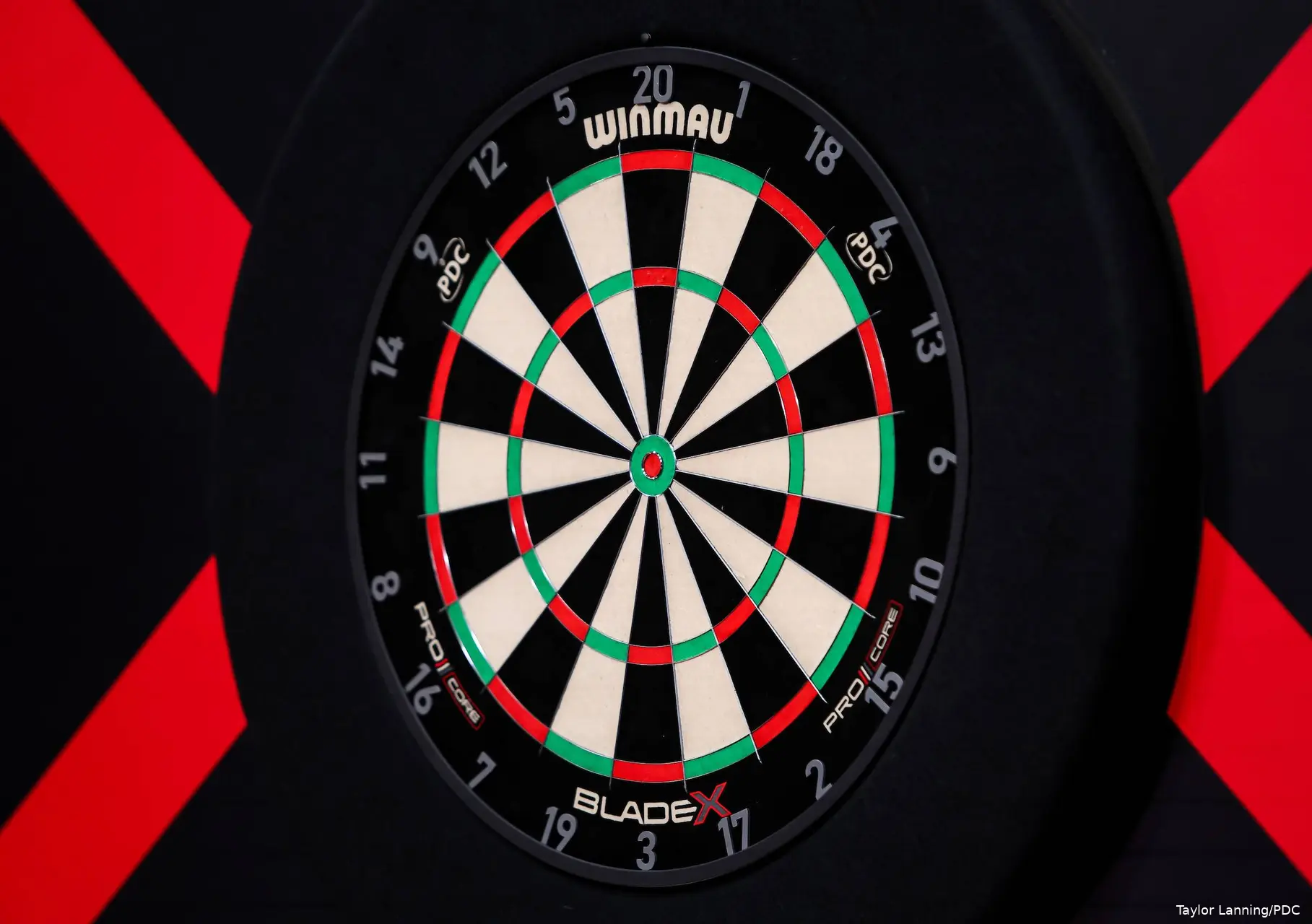
Walk into any
darts arena this month and the branding tells you something about the sport’s
economics before a single dart is thrown. The World Cup of Darts is under way
in Frankfurt this week, forty nations chasing one team trophy, and the
competition carries the name of BetVictor, a gambling company. That is not a
quirk of this year’s event. Betting brands have underwritten professional darts
for the best part of two decades, and the relationship runs deeper than a logo
on the stage.
ADVERTISEMENT
A bookmaker’s name above the world’s darts teams
BetVictor has
held the title-sponsor rights to the World Cup of Darts for several years, one
of a string of betting firms that have bankrolled the PDC’s rise from club
nights to sold-out arenas. When the deal was first announced, PDC chairman
Barry Hearn called it “fantastic” for the event, and the language said a lot:
this is a sport that has long treated gambling money as its natural fuel. This
year’s edition carries a £500,000 prize fund, with the winning team sharing
£100,000, and the sport’s only major team competition pulls players from every
corner of the darting world.
That funding
model shapes what you see on screen. Sponsor names are stitched into the
tournaments themselves, the boards behind the players, and the markets
scrolling across the broadcast. Ireland is among the nations lining up in the
2026 field and schedule, and like every other team they will throw under a
banner paid for by the betting industry.
One brand, a sportsbook and a casino
Most casual
viewers see a betting firm and stop there. A name like BetVictor is more than a
bookmaker. The same brand runs a sportsbook and an online casino side by side,
with slots, roulette and live dealer tables sitting a tab away from the darts
markets. The name above the oche belongs to a casino business as much as a
betting one, and that crossover is true of most of the operators whose logos
have shaped modern darts.
For Irish fans
whose curiosity drifts from the tungsten to the casino side of these brands,
the ground is shifting quickly. The casino arms of betting firms now sit close
to the centre of how the sport pays its bills, and Ireland’s rules on that side
of the business are changing faster than they have in a generation. That makes
the wider Irish casino landscape worth a closer look.
What Ireland’s new gambling rules mean for fans
ADVERTISEMENT
Behind the
branding, Ireland has rewritten its gambling laws for the first time in nearly
a century. The
Gambling Regulation Act 2024, signed in October 2024, created the country’s
first dedicated regulator, the Gambling Regulatory Authority of Ireland, which
was formally established in March 2025. It began accepting licence applications
in February 2026, and every online operator serving Irish players is expected
to hold a licence by July 2026.
The changes
are not cosmetic. Credit card deposits are banned, with only debit cards and
e-wallets allowed. Stake limits of €10 apply to certain games. Gambling adverts
on television and radio are restricted to between 9pm and 5:30am, and a
National Gambling Exclusion Register lets a player shut themselves out of every
licensed site at once. The regulator can levy fines of up to €20 million or 10%
of turnover, whichever is larger, so the rules carry real weight rather than
reading as guidance. Even so, not all online casino sites have applied for a
licence, and some have withdrawn from the Irish market entirely, so before
registering anywhere it is worth taking a moment to verify that a casino
holds a valid GRAI licence.
On the oche,
Ireland arrive with something to prove. Ireland’s
revamped pairing sees Mickey Mansell line up for the Republic alongside
William O’Connor, a switch that stirred a wider nationality debate before a
dart was thrown. Whatever your view on the eligibility question, the duo give
Irish supporters a genuine reason to follow this year’s draw closely.
Eyes on the oche
For Irish
supporters, the next few days are about the darts first, and the branding is
just the backdrop. It is worth remembering that gambling, in any form, is
entertainment rather than a way to make money, and the smart approach is to
enjoy the spectacle and treat any flutter as the cost of the fun. Anyone
choosing to play should be 18 or over and lean on the deposit limits and
self-exclusion tools the new rules now require.
ADVERTISEMENT
It adds up to
a quiet shift. Betting firms built the stage, the casinos sit inside those same
companies, and Ireland’s regulator is now holding that side of the sport to
local rules. Mansell and O’Connor will hope to make their noise on the oche
this week rather than in the small print, and Irish fans at least have a
clearer market to read once the final dart lands.

Samuel GillChief Content Officer
Samuel Gill is the Chief Content Officer (CCO) of DartsNews.com, a role he has held since 2020. He is responsible for editorial governance across the platform, including setting content standards, overseeing accuracy and consistency, and guiding long-term editorial strategy across professional darts coverage. Since joining, he has contributed more than 10,000 articles and editorial pieces, playing a central role in the development and daily operation of the site.
Based in Leicester, Samuel has extensive experience in darts media and has been closely involved in coverage of the professional darts circuit for several years. Within the UK darts community, he is a recognised figure known for his consistent editorial output and ongoing reporting on major tournaments and developments across the PDC calendar.
In his current role, Samuel works closely with editors and writers to ensure content meets clear journalistic standards, with a focus on source verification, editorial consistency, and timely updates when new, confirmed information becomes available.
claps 0visitors 0
Just in

Popular news

Latest comments
- I agree,I can't believe the lack of coverage of this sad loss. Always enjoyed watching him,but I guess now it's all about littler,well it seems that way. Darts has sadly lost a good manrick6717-10-2026
- In the absence of a report regarding the death of Stefan Lord, I'll assist. An excellent player in the late 70s and early 80s, he actually won the now defunct 3rd place match at two World Championships and a couple of the News of the World Championships. A fabulous player and easily the best Swedish player ever. Rest peacefully Stefan.richieburnettrocks16-10-2026
- Joking aside, it is the second most watched sport on sky (more than golf, F1 etc) behind football only, and in participation is second to only football and swimming. It doesn't get the attention or sponsorship of "bigger" sports because it's not as sexy, but it's right up there.BandB13-10-2026
- i love darts but you can't seriously believe it's the second most popular sport in the uk. even top five is pushing it. it may be the fastest growing, though.colt13-10-2026
- I'm a big Clayton fan, but he's got this completely wrong. Qualification criteria exists for a reason - so just as failing to make the top 32/64 for the Euro championships/PT Finals means you miss out, so does not lifting a title for this one.26sForFun12-10-2026
- The players who deliberately slow the game down are usually boring and win very little in the way of silverware. Horrible to watch.MrYnyslas197112-10-2026
- [“The Gentle” then used a sweeping and questionable phrase...] You anglocucks are hilariously finished in every sense of the word.Critical99911-10-2026
- I love Jonny but I disagree. The Grand Slam was always supposed to be "champion of champions" type competition. If the top 16 are guaranteed participation in everything there will be so much less jeopardy involved in qualifying and each major tournament will lose its unique flavour which the PDC has worked hard trying to develop. I enjoy following the qualification races towards the end of the year, and while consistency should have its rewards, the truth is Jonny hasn't reached a major final all year or won a single event on the Pro Tour. Being consistent is one thing, but that alone should have consequences as the sport's elite should not be prepared to accept consistently strong performances, their foremost motivation should be to win and this should be what separates them from the rest, not the consistency of their performances. Jonny is expecting that losing should be enough; it shouldn't be, at least not as far as the Grand Slam is concerned.Deduce635811-10-2026
- Well being honest,it doesn't matter what level you play at, there's always someone who slows it down to suit themselves,and extra swig of water, replacing flights, asking the ref what the score is. It happens wherever. I'm not saying it's professional,but I'm sure we've all seen it beforerick6711-10-2026
- Agree completely. Not sure how a ranking event can have a criteria not based on rankings. And he right on popularity. In the UK second only to football.BandB11-10-2026
Loading