
Darts always knew the importance of theatre. Walk-on music and full arenas, combined with strong personalities, have helped to make a simple pub game into a big televised sport. That next step in that evolution could be even more entertainment-driven - and the top-tier competition is increasingly being wrapped up in celebrity-driven, participatory entertainment fit for streaming.
ADVERTISEMENT
The £501,000 challenge - the central theme of which is Luke Littler - reflects that transition. The formula is something viewers of betting-led entertainment, like that of an nz online casino will know well: establish a simple headline prize, add a familiar star at the heart of the game, and give a common person a reason to dream of being at the game.
Luke Littler Is Now Bigger Than the Tournament Format
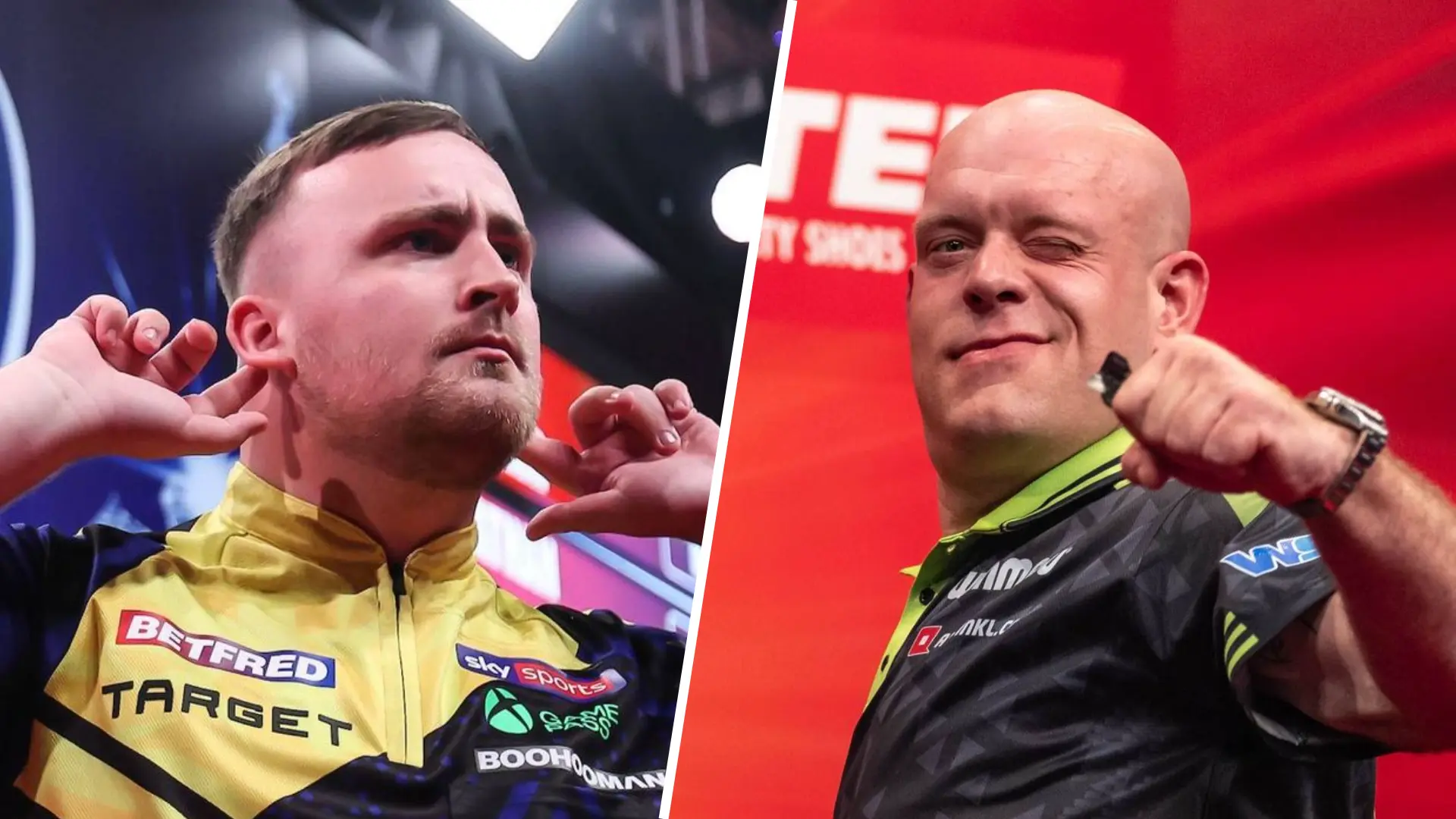
Luke Littler is now more than just the top player of his generation. He's now a media product himself.
This has brought him younger viewers, greater mainstream media attention and provided a face for broadcasters to sell beyond the classic tournament setting. That's why the challenge format and the emphasis on defeating him is good business. There is no need for viewers to know the ranking points or qualifying structures or long format match play. It offers them an offer they cannot refuse: Who can beat the best?
That simplicity is a virtue in the contemporary sports media. A traditional darts tournament can take several days and viewers have to watch a big dart field. A celebrity-led challenge can establish a narrative within minutes.
The £501,000 prize provides the program with a ready-made hook too. The number not only fits in well with the sport's traditional 501 starting score, but is large enough to draw national attention.
Entertainment Formats Can Reach New Audiences
ADVERTISEMENT
The fundamental rules of darts are easily understood, making it very suitable for crossover television. A missed double, a pressure of one last dart, or a triple 20 is understood by the viewer without specialist knowledge.
A challenge show is a good way to showcase the sport to those who may not be following the World Championship or Premier League. It can also inspire those who aren't professional to view the elite players as attainable, not far off.
It doesn't necessarily indicate that the contestants are going to be able to compete with Littler on a serious level. The fun lies in the fact that, though unlikely, one regular player may have one moment that is extraordinary.
That sort of tension is what streaming services appreciate. Short challenges and dramatic reactions and recognizable prizes can also be easily cut for social media, thus extending the program beyond its original broadcast.
Competition Risks Becoming Secondary
ADVERTISEMENT
It is not a question of whether entertainment is bad for darts per se. The sport has always been reliant on atmosphere & personality. The danger is that the star vehicle is more prominent than the professional infrastructure behind it.
Elite darts is a result of many years of practice, qualifying and ranking competition. When the sport is presented primarily in a one-off challenge format, it can make the sport seem easier than it actually is.
It can also focus too heavily on an individual player. Littler is a huge asset at the moment, but a sport that relies heavily on one name can be at risk of the form dropping, injury or audience boredom.
There is a need for other players to develop their identity. Rivalries, depth and uncertainty are important factors to consider in sustaining the longterm health of darts, not just about who can beat the most popular player.
Betting and Broadcast Narratives Are Merging
ADVERTISEMENT
The form additionally shows a more considerable crossing over of the culture of sport, amusement and wagering.
When the prize is big, there is a clear question of probability. They start to think right away about whether the challenge is feasible, who has a hope of making it and what kind of performance is needed. That automatically leads to betting-type discussion even if the program isn't a regular tournament.
Probability graphics, live statistics and performance markets have become staples in modern sports broadcasts, helping to keep the viewers entertained. Darts is especially good for this since each throw will give you measurable data.
A challenge show can create suspense regarding checkout percentages, scoring averages and missed opportunities. The distinction between sports commentary and entertainment becomes more and more blurred.
Darts Must Keep the Competitive Core Visible
ADVERTISEMENT
The £501,000 challenge is testament to the commercial strength of darts. A sport that used to be more of a pub sport and specialist TV event can now be used to create streaming events around individual stars and life-changing prize money.
A good thing that expansion is, as long as it's not used to replace the competitive game but to lead people back to it.
The best form of modern darts is a combination of both sides. Attracts with personality and spectacle; provides reason to care about rankings, championships and the broader professional tour.
While entertainment can be the key, competition needs to add meaning to the sport.

Samuel GillChief Content Officer
Samuel Gill is the Chief Content Officer (CCO) of DartsNews.com, a role he has held since 2020. He is responsible for editorial governance across the platform, including setting content standards, overseeing accuracy and consistency, and guiding long-term editorial strategy across professional darts coverage. Since joining, he has contributed more than 10,000 articles and editorial pieces, playing a central role in the development and daily operation of the site.
Based in Leicester, Samuel has extensive experience in darts media and has been closely involved in coverage of the professional darts circuit for several years. Within the UK darts community, he is a recognised figure known for his consistent editorial output and ongoing reporting on major tournaments and developments across the PDC calendar.
In his current role, Samuel works closely with editors and writers to ensure content meets clear journalistic standards, with a focus on source verification, editorial consistency, and timely updates when new, confirmed information becomes available.
claps 0visitors 0
Just in

Popular news
Latest comments
- I agree,I can't believe the lack of coverage of this sad loss. Always enjoyed watching him,but I guess now it's all about littler,well it seems that way. Darts has sadly lost a good manrick6717-10-2026
- In the absence of a report regarding the death of Stefan Lord, I'll assist. An excellent player in the late 70s and early 80s, he actually won the now defunct 3rd place match at two World Championships and a couple of the News of the World Championships. A fabulous player and easily the best Swedish player ever. Rest peacefully Stefan.richieburnettrocks16-10-2026
- Joking aside, it is the second most watched sport on sky (more than golf, F1 etc) behind football only, and in participation is second to only football and swimming. It doesn't get the attention or sponsorship of "bigger" sports because it's not as sexy, but it's right up there.BandB13-10-2026
- i love darts but you can't seriously believe it's the second most popular sport in the uk. even top five is pushing it. it may be the fastest growing, though.colt13-10-2026
- I'm a big Clayton fan, but he's got this completely wrong. Qualification criteria exists for a reason - so just as failing to make the top 32/64 for the Euro championships/PT Finals means you miss out, so does not lifting a title for this one.26sForFun12-10-2026
- The players who deliberately slow the game down are usually boring and win very little in the way of silverware. Horrible to watch.MrYnyslas197112-10-2026
- [“The Gentle” then used a sweeping and questionable phrase...] You anglocucks are hilariously finished in every sense of the word.Critical99911-10-2026
- I love Jonny but I disagree. The Grand Slam was always supposed to be "champion of champions" type competition. If the top 16 are guaranteed participation in everything there will be so much less jeopardy involved in qualifying and each major tournament will lose its unique flavour which the PDC has worked hard trying to develop. I enjoy following the qualification races towards the end of the year, and while consistency should have its rewards, the truth is Jonny hasn't reached a major final all year or won a single event on the Pro Tour. Being consistent is one thing, but that alone should have consequences as the sport's elite should not be prepared to accept consistently strong performances, their foremost motivation should be to win and this should be what separates them from the rest, not the consistency of their performances. Jonny is expecting that losing should be enough; it shouldn't be, at least not as far as the Grand Slam is concerned.Deduce635811-10-2026
- Well being honest,it doesn't matter what level you play at, there's always someone who slows it down to suit themselves,and extra swig of water, replacing flights, asking the ref what the score is. It happens wherever. I'm not saying it's professional,but I'm sure we've all seen it beforerick6711-10-2026
- Agree completely. Not sure how a ranking event can have a criteria not based on rankings. And he right on popularity. In the UK second only to football.BandB11-10-2026
Loading