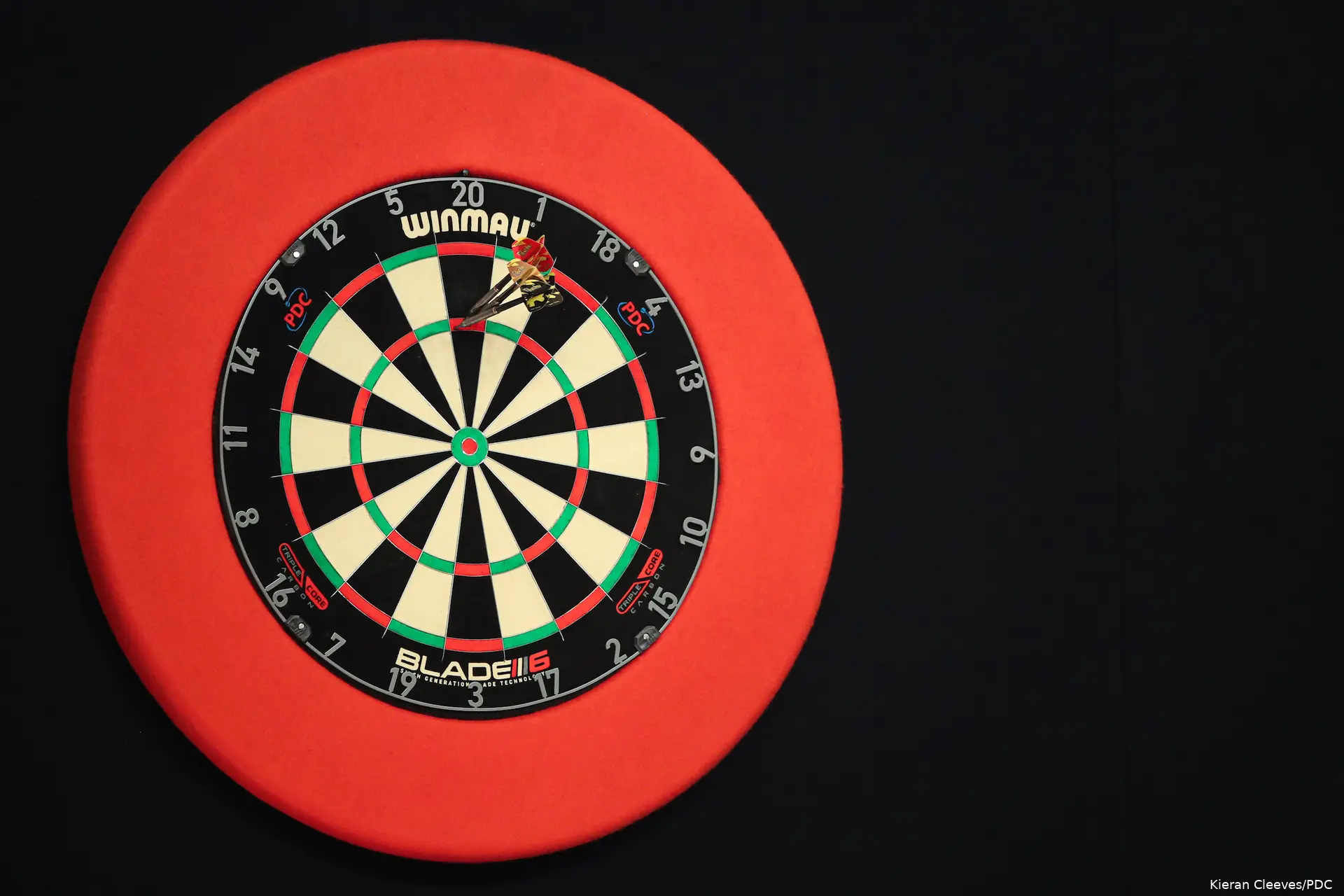
From the outside, darts looks like one of the calmer sports on television. It does not require sprinting, contact with other players or opponents, or split-second physical reactions from the participants. A player steps to the oche, raises an arm, and throws. This seeming stillness hides one of the most psychologically harsh and punishing skills in professional sport. It’s the ability to release a small metal dart on command, cleanly, in front of thousands of people and a judging television audience. The title, the paycheck, and often both are at stake.
ADVERTISEMENT
Sometimes this ability fails due to something that players and commentators call “dartitis”, a freeze in the throwing motion that makes it hard to let go of the dart. It is the darts world’s version of the yips, the same phenomenon that often kicks off track professional golfers and cricketers, but much more visible. Players cannot hide a broken release from the crowd, the camera, or the opponent.
Why the Nervous System Turns on Itself
The clinical picture of dartitis comprises psychological and neurological features. It does not require any physical injury to show up. No torn muscle, no nerve damage – and yet, the arm simply won’t do what the player wants it to. Researchers who actively study this condition tend to describe it as anxiety hijacking motor patterns that used to run on autopilot.
This is where fans and spectators researching the topic often find a strange mix of content. Anyone exploring how players manage intense psychological pressure and high-stakes stress often discovers that this same appetite for tension drives the broader digital entertainment space. Platforms like https://automatenspielex.com/en highlight how the thrill of high-stakes moments extends into the online casino industry, where players seek out quick-burst games and sports-themed slots to experience a similar rush of adrenaline and instant anticipation. This shows that the psychological intensity of professional darts is part of a much larger culture built around high-stakes excitement.
The Physical Symptoms Players Describe
Dartitis usually presents with a combination of symptoms. According to players, it tends to progress through several recognisable stages. These include:
- Micro-hesitation. This is a barely noticeable pause at the top of the throw. That’s often the very first sign that something is off.
- Grip locking. The player’s fingers won’t release the dart at the intended moment. This forces out an awkward, delayed follow-through.
- Visible trembling. An evident shake in the hand or forearm that cannot be hidden from either the crowd or the cameras.
- Full release failure. A numbing inability to let go of the dart at all, often for several seconds, in front of a silent, carefully watching arena.
ADVERTISEMENT
Not every player progresses through all four stages. Some recover after the earlier signs with the right intervention. Others, such as, famously, five-time world champion Eric Bristow, never fully regained their pre-dartitis form.
What High Stakes Actually Do to the Brain
Sports psychologists distinguish between pressure that sharpens focus and pressure that overloads it. In darts, the tipping point arrives after specific triggers. Several distinct situations recur in player interviews and case studies:
- Championship deciders, where a single missed double can end a tournament run instantly for the player.
- Televised debut matches, where the presence of an unfamiliar camera increases the self-consciousness of a normally relaxed and laid-back player.
- Public losing streaks, where each missed shot adds to the player’s fear of the next one – especially in front of a crowd that distinctly remembers the last miss.
- Rivalry matches, where crowd noise and heckling are an external and often unpredictable variable to what might initially seem like a controlled routine.
The technical breakdown usually happens when the player shifts from playing the board to playing the moment. When a player throws at the scoreboard instead of the target, the throw tends to fail.
ADVERTISEMENT
An Expert’s Take on Breaking the Cycle
Dartitis isn’t a confidence problem in the way people usually measure it and talk about it. Instead, it is a state-driven response. The nervous system is trying to protect the player from a perceived threat, which is often public failure. It does so by interrupting the exact motor sequence that could otherwise cause the failure. The tragic irony of this all is that the interruption is exactly what causes the failure.
Luckily, you can counter dartitis by getting the thinking part of the brain out of the way of the throwing part. It is all about rebuilding trust in automatic movement, which includes pre-throw routines, breathing patterns, and lowering the stakes on purpose before gradually adding pressure anew.
Why the Modern Game Makes This Harder
The sphere of professional darts has changed and modernised itself over the past two decades. To players' dismay, most of these changes increase the psychological load instead of reducing it. Prize money has grown substantially, TV channels and websites broadcast tournaments to larger global audiences than ever, and even the calendar itself has become more congested. Now, professional players have even less recovery time between high-pressure events.
ADVERTISEMENT
Things like walk-on entrances, pyrotechnics, and noisy arena crowds have turned darts into a spectacle. This is great for the sport commercially, but it adds a layer of performance pressure on players that did not exist when people played darts in smaller, quieter clubs.
This does not mean that darts, as a sport, has become mentally harder than it used to be. Still, the margin for a bad night has shrunk, and the audience watching that bad night has grown. Players who are managing dartitis face a real challenge of the contemporary game: performing an intensely fine motor skill while being watched by an entire arena, well aware of everyone’s expectations.

Samuel GillChief Content Officer
Samuel Gill is the Chief Content Officer (CCO) of DartsNews.com, a role he has held since 2020. He is responsible for editorial governance across the platform, including setting content standards, overseeing accuracy and consistency, and guiding long-term editorial strategy across professional darts coverage. Since joining, he has contributed more than 10,000 articles and editorial pieces, playing a central role in the development and daily operation of the site.
Based in Leicester, Samuel has extensive experience in darts media and has been closely involved in coverage of the professional darts circuit for several years. Within the UK darts community, he is a recognised figure known for his consistent editorial output and ongoing reporting on major tournaments and developments across the PDC calendar.
In his current role, Samuel works closely with editors and writers to ensure content meets clear journalistic standards, with a focus on source verification, editorial consistency, and timely updates when new, confirmed information becomes available.
claps 0visitors 0
Just in


Popular news

Latest comments
- I agree,I can't believe the lack of coverage of this sad loss. Always enjoyed watching him,but I guess now it's all about littler,well it seems that way. Darts has sadly lost a good manrick6717-10-2026
- In the absence of a report regarding the death of Stefan Lord, I'll assist. An excellent player in the late 70s and early 80s, he actually won the now defunct 3rd place match at two World Championships and a couple of the News of the World Championships. A fabulous player and easily the best Swedish player ever. Rest peacefully Stefan.richieburnettrocks16-10-2026
- Joking aside, it is the second most watched sport on sky (more than golf, F1 etc) behind football only, and in participation is second to only football and swimming. It doesn't get the attention or sponsorship of "bigger" sports because it's not as sexy, but it's right up there.BandB13-10-2026
- i love darts but you can't seriously believe it's the second most popular sport in the uk. even top five is pushing it. it may be the fastest growing, though.colt13-10-2026
- I'm a big Clayton fan, but he's got this completely wrong. Qualification criteria exists for a reason - so just as failing to make the top 32/64 for the Euro championships/PT Finals means you miss out, so does not lifting a title for this one.26sForFun12-10-2026
- The players who deliberately slow the game down are usually boring and win very little in the way of silverware. Horrible to watch.MrYnyslas197112-10-2026
- [“The Gentle” then used a sweeping and questionable phrase...] You anglocucks are hilariously finished in every sense of the word.Critical99911-10-2026
- I love Jonny but I disagree. The Grand Slam was always supposed to be "champion of champions" type competition. If the top 16 are guaranteed participation in everything there will be so much less jeopardy involved in qualifying and each major tournament will lose its unique flavour which the PDC has worked hard trying to develop. I enjoy following the qualification races towards the end of the year, and while consistency should have its rewards, the truth is Jonny hasn't reached a major final all year or won a single event on the Pro Tour. Being consistent is one thing, but that alone should have consequences as the sport's elite should not be prepared to accept consistently strong performances, their foremost motivation should be to win and this should be what separates them from the rest, not the consistency of their performances. Jonny is expecting that losing should be enough; it shouldn't be, at least not as far as the Grand Slam is concerned.Deduce635811-10-2026
- Well being honest,it doesn't matter what level you play at, there's always someone who slows it down to suit themselves,and extra swig of water, replacing flights, asking the ref what the score is. It happens wherever. I'm not saying it's professional,but I'm sure we've all seen it beforerick6711-10-2026
- Agree completely. Not sure how a ranking event can have a criteria not based on rankings. And he right on popularity. In the UK second only to football.BandB11-10-2026
Loading