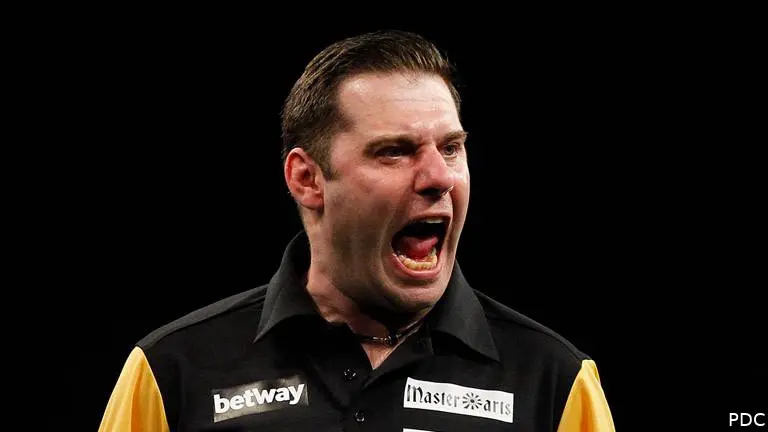
In this feature, we regularly travel back in the day with a particular darts player. Today, we do so with German player Jyhan Artut. For many years, he was one of the best-known German darts players on the international stage. Around 2010, Artut established himself as a regular on the major PDC tournaments and managed to qualify for the World Darts Championship several times. Although he never developed into an absolute world-class player, Artut enjoyed a number of memorable moments during his career. His name will be most strongly associated with his sensational performance against Gary Anderson at the 2012 World Darts Championship.
ADVERTISEMENT
Jyhan Artut was born on October 9, 1976, in Holzminden. He made his breakthrough in his home country. In 2009 and 2010, he became German champion, quickly putting himself firmly on the map. His second German title also earned him a place at the World Darts Championship for the second consecutive year.
At the 2010 World Championship, Artut immediately caused a major upset. In the first round, he faced experienced Englishman Wayne Mardle, who at the time was one of the sport's most recognizable figures. Artut was not intimidated and secured a convincing 3-0 victory. This sent him through to the second round, where Robert Thornton was his opponent. Artut eventually lost 4-1 to the Scot.
A year later, Artut returned to Alexandra Palace. At the 2011 World Championship, he first had to come through the preliminary round. There, he defeated Hong Kong's Scott MacKenzie 4-3. In the first round, he then faced Denis Ovens. The German was unable to repeat his earlier upset against Mardle and lost 3-1.
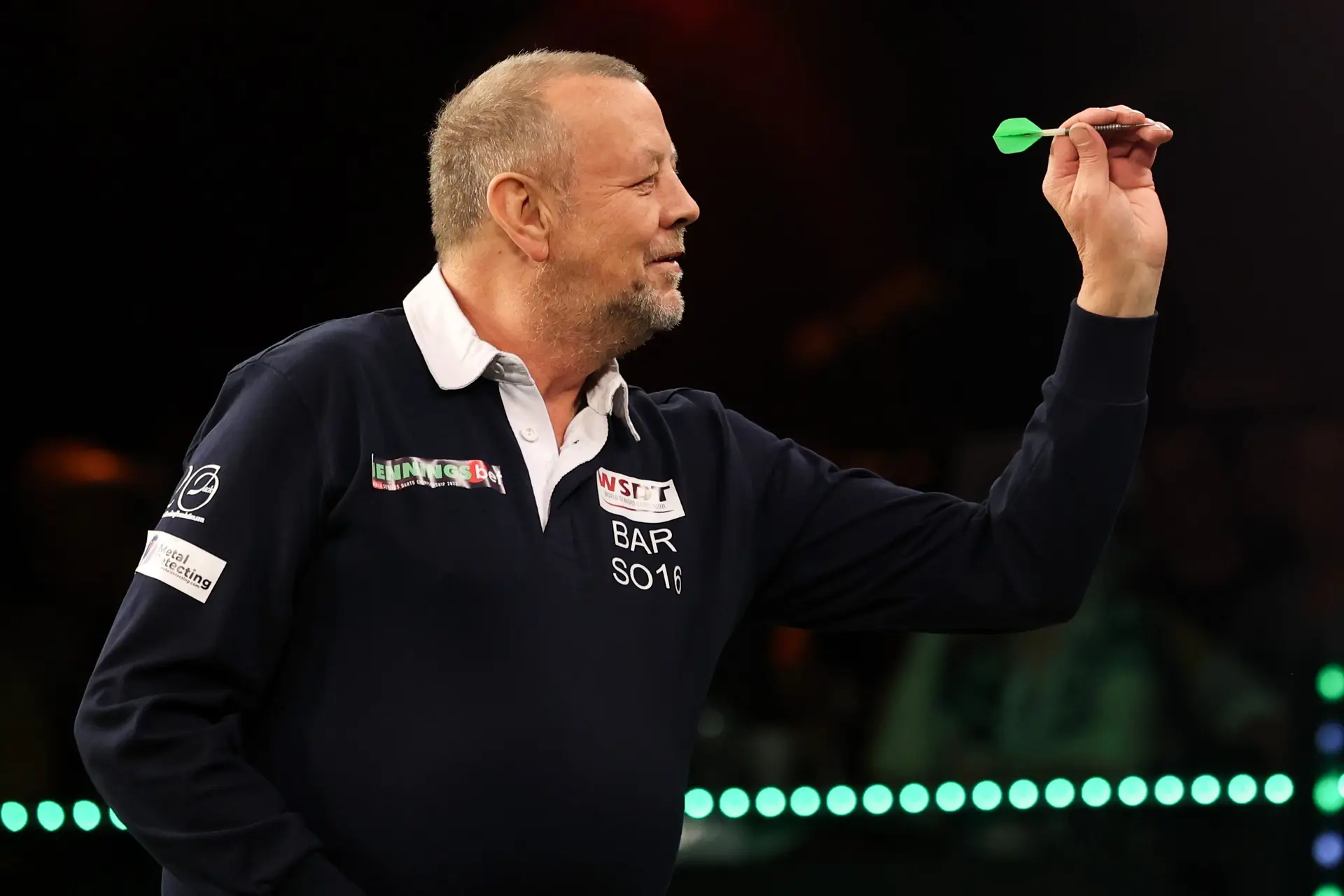
Artut continued to develop and once again qualified for the 2012 World Championship. This time, he qualified through the European Order of Merit. His draw was particularly difficult, as the German was paired with Gary Anderson.
What happened next became one of the most memorable first-round matches in World Championship history. Artut came flying out of the blocks and won the first two sets. Anderson, who was renowned for his scoring power and rapid playing style, suddenly found himself in serious trouble.
ADVERTISEMENT
However, the Scot fought his way back into the match. Anderson won the third and fourth sets, bringing the score level at 2-2. Everything had to be decided in a fifth and final set.
Both players had chances in that set. Artut continued to fight and appeared to be on course for a huge upset. In the tenth leg, he even had four darts to win the match outright. He failed to convert any of them. Anderson escaped and the match eventually had to be decided in a sudden-death leg.
Anderson prevailed in that leg. The defeat was particularly painful for Artut, but at the same time, he had firmly established his name among the international darts audience. The German had shown that he could compete with one of the best players in the world.
Outside the World Championship, Artut also remained active on the international circuit. In 2012, he represented Germany alongside Bernd Roith at the World Cup of Darts. The German duo were eliminated 3-1 by the United States in the second round.
ADVERTISEMENT
Later that year, Artut qualified for a European Tour event through a qualifying tournament. He defeated Jann Hoffmann and was then given the opportunity to take on Wes Newton. The Englishman, who was ranked fifth in the world at the time, won 6-4.
A year later, Artut faced another major challenge. He began 2013 ranked 71st in the world, putting him outside the top 64 who automatically retained their PDC Tour Cards. Artut therefore had to go to Q School to secure his place on the professional circuit. He did so convincingly. On the first day, he had already secured his Tour Card by defeating Vernon Sheppard 6-3.
Quarter-final at the World Cup of Darts
That gave his career another boost. Artut subsequently represented Germany at the World Cup of Darts, this time alongside Andree Welge. The duo enjoyed a strong group stage, recording victories over Finland and the United States. Poland were then defeated 5-2, sending Germany through to the quarter-finals.
There, Finland awaited once again. Artut won his singles match 4-1 against Jani Haavisto, but Welge lost to Jarkko Komula. This meant a deciding doubles match would determine the outcome. Germany fought back from 1-3 down to level at 3-3, but ultimately lost the deciding leg.
Individually, Artut recorded his best result of 2013 at the sixth UK Open Qualifier. He reached the quarter-finals, where John Bowles proved too strong, winning 6-1. At the UK Open itself, Artut reached the third round, where he lost 9-5 to Kim Huybrechts.
The German also regularly appeared on the European Tour. He qualified for five of the eight events and recorded a victory over David Pallett at the German Darts Championship. Andy Hamilton then ended his run in the second round.
Artut narrowly missed out on another World Championship appearance in 2013. He was 13th on the European Order of Merit but fell just £500 short of qualifying for the 2014 World Championship. It was a painfully small margin for a player who had already appeared on the biggest stage several times.
The 2014 season subsequently brought both disappointments and an important highlight. Artut was eliminated by Alan Derrett in the first round of the UK Open. Germany, with Artut and Welge, also failed to make much progress at the World Cup of Darts, losing 5-3 to South Africa.
ADVERTISEMENT
Jyhan Artut was a German mainstay.
Stopped by Van Gerwen at Players Championship
In October, however, one of the best individual performances of Artut's career followed. At the 18th Players Championship event of 2014, the German stormed into the semi-finals. Along the way, he defeated Steve Grubb, Ron Meulenkamp, Chris Aubrey, Steve Beaton and Ian White.
Artut was finally stopped by Michael van Gerwen in the semi-finals. The then world number one won 6-4. Nevertheless, Artut had once again demonstrated that, on his day, he was capable of defeating world-class players.
He also qualified for the European Darts Championship, but lost 6-4 to Dave Chisnall in the first round.
ADVERTISEMENT
The 2015 World Championship brought another notable draw. Artut qualified for the tournament through the Pro Tour Order of Merit and was drawn against Phil Taylor. Against the greatest player in the history of the sport, Artut endured a difficult start, losing the first two sets without winning a single leg.
However, he refused to give up. In the third set, he forced Taylor into a deciding leg. The Englishman ultimately won that set as well, eliminating Artut 3-0. Despite the defeat, his World Championship appearance saw him reach a new career-high ranking of 48th in the world.
Another World Cup of Darts quarter-final, this time with Max Hopp
Artut also performed well at the 2015 World Cup of Darts. Together with young Max Hopp, he represented Germany. The duo defeated India and Austria to reach the quarter-finals. England awaited them there. Both Artut and Hopp lost their singles matches, resulting in Germany's elimination.
At the 2015 European Darts Open, Artut recorded an impressive victory over Stephen Bunting. He defeated the Englishman 6-3 and then showed against Kim Huybrechts that he still possessed a very high level of performance. Artut posted an impressive average of 104.14 in that second-round match, but nevertheless lost 6-4.
ADVERTISEMENT
Through his consistent appearances on the European Tour, Artut once again qualified for the World Championship. At the 2016 World Championship, he faced Bunting. The German lost 3-0 and had chances to extend the match in the final set, but missed two match darts.
Things then became quieter around Artut on the international stage. In 2016, he still qualified for three European Tour events, but was eliminated in the first round on each occasion. At Players Championship level, however, he did reach the last 16. There, he defeated Dave Chisnall before Joe Cullen eliminated him 6-4.
Artut also teamed up with Max Hopp at the 2016 World Cup of Darts. Australia proved too strong in the opening round, winning 5-3.
Jyhan Artut's World Championship results
Year
Round
Opponent
Result
2010
Second round
Robert Thornton
1-4
2011
First round
Denis Ovens
1-3
2012
First round
Gary Anderson
2-3
2015
First round
Phil Taylor
0-3
2016
First round
Stephen Bunting
0-3
ADVERTISEMENT
Return to the European Tour after years away
After a period away from the spotlight, Artut returned to the European Tour in 2019. At the European Darts Open in Leverkusen, he lost 6-4 to Wesley Plaisier in the first round. He also qualified for the next two European Tour events. In Hildesheim, however, he suffered a heavy 6-0 defeat to Boris Koltsov, while Josh Payne proved too strong in Munich, winning 6-2.
Those three matches were also indicative of the end of his international career. Artut recorded averages of just 81, 75 and 82 points per three darts.
Jyhan Artut regularly competed on the Euro Tour in the past.
Not a major champion, but he helped pave the way for the current generation of German players
That does not take anything away from the remarkable career Artut enjoyed. He was a two-time German champion, played at multiple World Championships, held a PDC Tour Card for many years and represented Germany several times at the World Cup of Darts. He also defeated Wayne Mardle at the World Championship, reached a Players Championship semi-final and achieved a career-high ranking of 48th in the world.
But above all, Jyhan Artut will be remembered by many darts fans for that one spectacular night at Alexandra Palace. Against Gary Anderson in 2012, he looked on course for a sensational victory for a long time. Four missed match darts and a sudden-death leg ultimately stood between the German and one of the biggest World Championship upsets ever.
Artut did not win the match, but his performance made it clear that, on his best days, he was capable of achieving great things. His name therefore belongs to a generation of German darts players who helped pave the way for Germany's later rise on the international darts scene.
In his reporting, Kieran places strong emphasis on careful sourcing, editorial accuracy, and updating articles when new, verified information becomes available.