Gerwyn Price senses his chance at the European Championship: impressive numbers fuel hopes of a long-awaited title, but can he overcome his Littler trauma?
PDC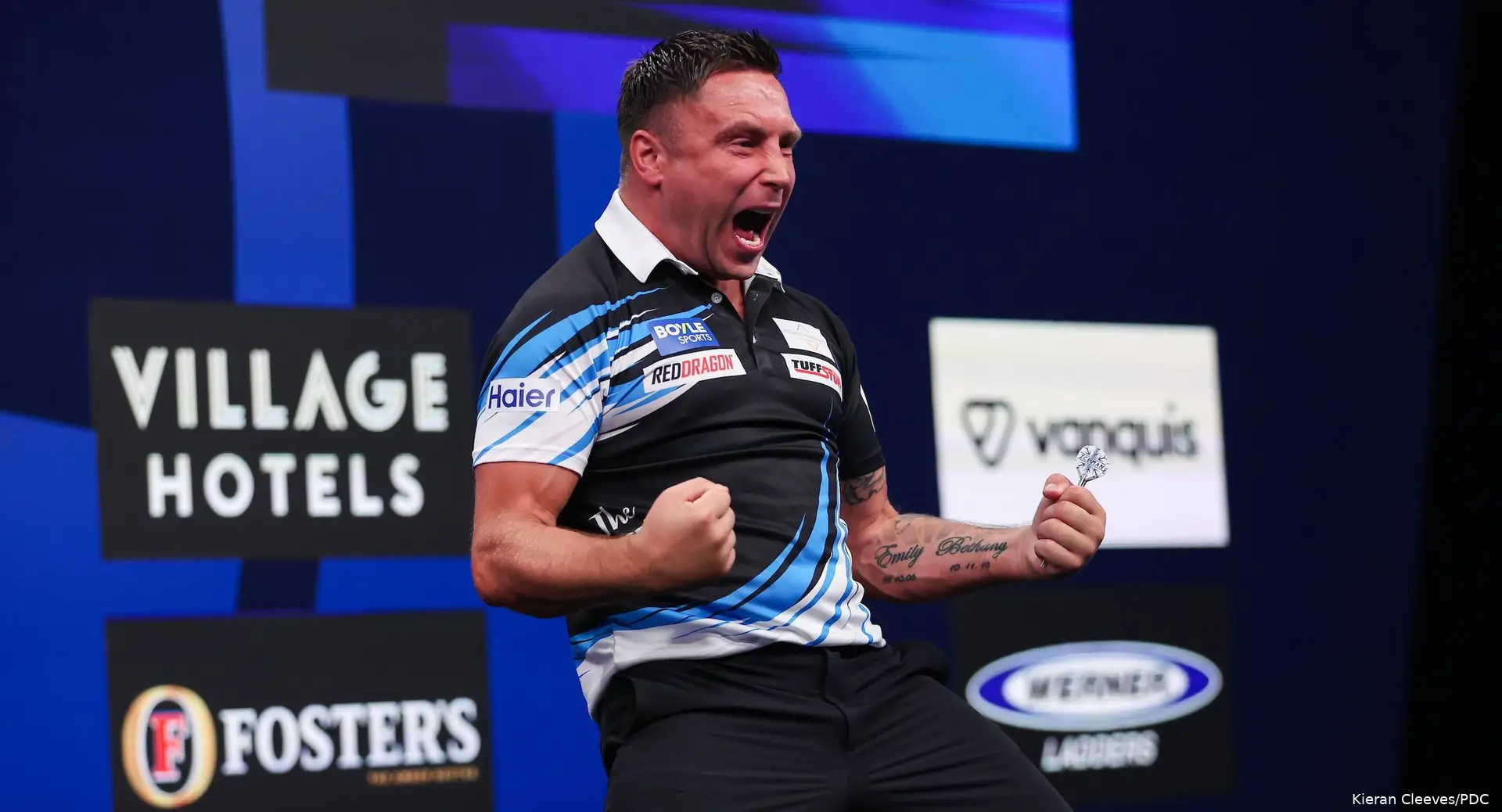
Gerwyn Price begins the European Championship on Thursday with a clear objective: to win another major individual title at last. The Welshman has returned to the world’s elite on the strength of his recent performances, but has now gone almost four years without a major title. Three consecutive defeats in major finals have only sharpened ‘The Iceman’s’ hunger.
ADVERTISEMENT
In Dortmund, he gets another chance to end that long drought. With impressive finishing statistics, excellent form and a notably improved relationship with the crowd, Price has plenty in his favour. Yet a major challenge also lies ahead: can he finally get the better of Luke Littler, the player who has repeatedly blocked his path to a major title in recent months?
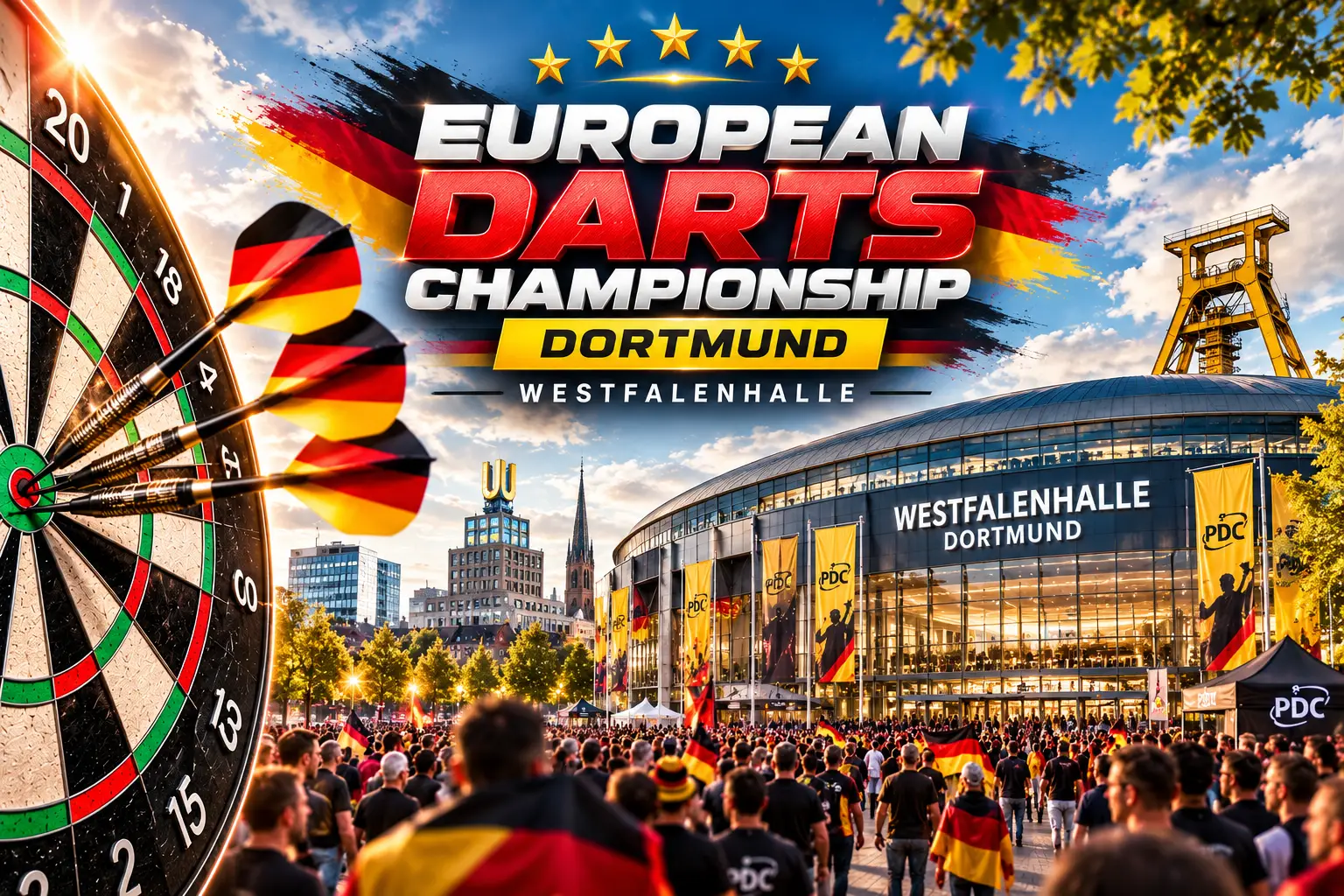
At the Westfalenhallen in Dortmund, the 32 best players based on the 2026 European Tour results will come together to compete for the European title. As usual, Luke Littler and Luke Humphries are among the leading favourites. Littler has emerged as one of the PDC’s dominant forces in recent seasons, while Humphries is also exceptionally difficult to beat thanks to his consistent performances and experience on the biggest stages.
But behind that English duo are several players capable of beating anyone on their day. Price is undoubtedly one of them. The former world champion has shown repeatedly in recent months that he still has what it takes to win major tournaments. His three consecutive defeats in major finals make his story all the more compelling. Is the Welshman a player who just falls short at the decisive moment, or is it only a matter of time before he lifts another major trophy?
The statistics offer plenty of reason to believe the latter. Price is playing superbly, ranks among the circuit’s best finishers and has already shown in 2026 that he can get results against almost any opponent. His relationship with darts fans also seems to have entered a new phase. The player who faced years of boos and hostile reactions is increasingly receiving support from the stands.
If those factors come together in Dortmund, the European Championship could be the tournament where ‘The Iceman’ finally ends his long wait.
Three final defeats, but Price is back among the world’s elite
Price’s recent results speak for themselves. He reached the final of the World Matchplay, the World Series of Darts Finals and the World Grand Prix. Three prestigious tournaments, three appearances in the final and not a single title. For a player with Price’s ambitions and ability, that is a particularly painful run.
ADVERTISEMENT
At the World Matchplay, Price had to settle for second best against Littler. The young Englishman proved too strong in the final, preventing the Welshman from adding one of the PDC calendar’s biggest titles to his record. Price then had another excellent opportunity at the World Series of Darts Finals. This time, Ross Smith stood in his way. The Englishman came out on top, handing Price another disappointment.
The Welshman also failed to take the final step at the World Grand Prix. Humphries, another opponent of the highest calibre, awaited him in the final. Price could not cap a strong tournament with the title and had to settle for second place for the third time in a row.
That is a run that can weigh heavily on a player’s confidence, especially when opportunities keep coming but the reward never follows. Losing a final is disappointing in itself, but missing out on a major title three times in a row can easily create the feeling that something is lacking at the most important moments.

Gerwyn Price has reached three major finals this year
There is, however, another way to view that run. Price has reached three major finals in recent months. That means he has repeatedly fought his way through a strong field and beaten opponents who were also chasing silverware. He has the form to go deep and the mental resilience to put himself in contention for a major title again and again.
ADVERTISEMENT
The Welshman also does not need to look back to a distant past to remember what it feels like to win a major. His most recent major individual title came at the 2022 World Series of Darts Finals, but his earlier successes show that he knows how to perform on the biggest stages. Price became world champion in 2021 and has won several major PDC tournaments during his career.
Gerwyn Price’s major titles
| Year | Major tournament | Opponent in the final | Result |
| 2018 | Grand Slam of Darts | Gary Anderson | 16-13 |
| 2019 | Grand Slam of Darts | Peter Wright | 16-6 |
| 2020 | World Grand Prix | Dirk van Duijvenbode | 5-2 (sets) |
| 2020 | World Series of Darts Finals | Rob Cross | 11-9 |
| 2021 | World Darts Championship | Gary Anderson | 7-3 (sets) |
| 2021 | Grand Slam of Darts | Peter Wright | 16-8 |
| 2022 | World Series of Darts Finals | Dirk van Duijvenbode | 11-10 |
Almost four years have now passed since his last major title. For a player who spent years competing for the biggest prizes, that is a long time. Yet his recent finals show that another title is far from out of reach. On the contrary, Price seems closer to another triumph than his long drought might suggest.
The European Championship comes at an intriguing moment, then. Price arrives in Dortmund knowing he can reach finals again, but also aware that he has not yet taken the final step. The question is not whether he is good enough to win a major tournament. It is whether he can maintain his current level throughout the European Championship and make the right decisions at the decisive moments.
ADVERTISEMENT
PDC Form Guide puts Price top: only Humphries can match his average
Anyone questioning Price’s current form need only look at the statistics. The latest PDC Form Guide, compiled by PDC statistician Christopher Kempf, underlines just how well the Welshman is playing. In the rankings, published last week, ‘The Iceman’ sits at the top with an average of 100.32 across his last 200 legs.
The Form Guide offers an interesting measure of players’ current form. Rather than looking only at tournament wins or the world rankings, it assesses performances across a run of recent legs. This gives a picture of how players are performing at the board right now.
With an average of 100.32, Price belongs to a particularly select group. He is one of only two players in the statistics to average more than 100 points per three darts. Humphries is next with an average of 100.12, making him the only other player in the same bracket.
The gap between the two players is tiny. Price currently leads Humphries by just 0.20 points, showing how closely matched the pair are. It also makes clear that Price should not be judged solely on his results in finals. His scoring power and efficiency remain at an exceptionally high level.
ADVERTISEMENT
An average above 100 is, of course, no guarantee of tournament wins. Darts is a sport in which the timing of a good visit can matter just as much as overall performance. A player can score superbly throughout a match and still lose if their opponent hits the doubles at crucial moments.
That is exactly why Price’s numbers are so interesting. His strong average is backed up by excellent finishing. That makes him dangerous against any opponent, particularly if he can maintain his level over several matches.
For the European Championship, that is an important point. A player who performs well both in scoring and on the finishing doubles does not have to rely on one specific part of their game. If the scoring slows, strong finishing can keep them in the match. And when they put their opponent under pressure with big scores, they can turn that pressure into legs won.
Price’s position at the top of the PDC Form Guide does not mean he is certain to win the European title. It does show, however, that he starts the tournament from an excellent position. Anyone hoping to beat him in Dortmund will likely have to produce a high level themselves.
ADVERTISEMENT
Excellent on the doubles: Price has no reason to doubt his finishing
When assessing Price, people have recently pointed to his three defeats in major finals. This can create the impression that the Welshman no longer shows the same composure at the biggest moments as he did in his best years. But the numbers from his recent performances tell a different story, at least in part.
Across his last 200 legs in the latest PDC Form Guide, Price hit 42.25 per cent of his doubles. That is an outstanding figure, bettered by only two players: James Wade and Ross Smith.
Wade hit 44.88 per cent in the same statistics, while Smith recorded a double percentage of 44.73. Price is therefore close behind two players renowned for their efficient finishing.
The gap to his rivals is not large enough to suggest that the Welshman should worry about his own finishing. A 42.25 per cent success rate means that he converted a large share of his double attempts in this sample. In a sport where missing a few doubles can be the difference between winning and losing, that is a valuable weapon.
ADVERTISEMENT
The figures are all the more relevant because Price has repeatedly gone deep in major tournaments in recent months. His three consecutive major finals show that he creates enough chances to take matches away from the world’s best. The statistics also suggest that his finishing is not the weakness some have made it out to be.
Of course, a double percentage does not tell the whole story. Not all attempts at a double are equal. A player aiming at a comfortable double with a healthy lead is in a different situation from someone trying to finish a match under intense pressure. The number of chances a player gets also matters when interpreting the figures.
Even so, Price’s percentage is a clear sign that his finishing is currently one of his strengths. He does not necessarily need a major technical overhaul to win another major. The key is more likely to be using his existing qualities at the right moments.
Price also has a clear preference. When the situation allows, he prefers double 20. That is a familiar target for many top players, but it is a key part of the Welshman’s finishing. On his best days, he seems to need little thought when given the chance to end a leg on double 20.
That confidence can make a major difference in a big tournament. A player who approaches their preferred double with conviction has less reason to hesitate when the stakes are high. Particularly in close matches, where neither player gives much away, hitting a double can completely shift the momentum.
ADVERTISEMENT
The three final defeats should not be taken as proof that Price can no longer deliver at decisive moments. He lost to Littler, Smith and Humphries, all opponents capable of performing at the highest level. Losing to them does not automatically mean his finishing is falling short.
Price’s main challenge is to turn his strong individual statistics into another title. He must not only play well, but also take control of matches at the right moments. His double percentage shows that he has an important weapon to do just that.
Room for improvement in scoring
Although Price currently tops the PDC Form Guide, that does not mean there is no room to improve his game. A closer look at the statistics shows that the Welshman is not top of every category.
Among the Form Guide’s top ten players, for example, Price ranks only seventh for scores of 171 to 180. That is notable because such big scores can put opponents under pressure and create opportunities to win legs.
The figures show that his excellent average of 100.32 is not solely the result of overwhelming scoring power. His strong finishing also plays a major part. Price converts his chances efficiently, making up for the fact that several rivals produce more big scores.

Gerwyn Price is currently ranked fourth in the world
That is not a problem in itself. There is no set formula for winning a match. Some players build their success mainly on high scoring, while others excel at finishing. The best players combine both, but even at the top of the game, there are clear differences in playing style.
Improving his scoring could, however, be Price’s next step. If he produces more scores of 171 and 180, he can put his opponents under pressure even faster. That could give him more chances to take legs early and leave him less reliant on his finishing to recover from a deficit.
That is particularly important against players such as Littler and Humphries. Both Englishmen score heavily and can build a big lead in a short time. If Price wants to beat them, he must stop them from having too much room to play their own game.
More maximums could help. They force an opponent to match the pace and increase the chance that a match will be decided by a few exceptional visits. Price has the quality to reach that level, but his current statistics show that he does not yet rank as highly in this area as he does on the doubles.
The good news for the Welshman is that he does not need to develop an entirely new game. His average is already among the very best, and his finishing is excellent. If he can sharpen his scoring a little further, he could become even harder to beat.
It should be noted, however, that statistics covering 200 legs are still only a snapshot. They offer a useful picture of recent performances, but they do not tell us everything about what will happen in a single tournament. A player might start superbly in Dortmund and then have an off match, while a rival with less impressive figures beforehand could peak at just the right moment.
Even so, Price’s figures are encouraging. He does not begin the European Championship as a player desperately searching for his best form, but as a darts player who has been producing strong performances for months. The main question is whether he can maintain that form as the pressure builds in Dortmund.
Littler is his chief tormentor: seven defeats in their head-to-head
Anyone assessing Price’s chances at the European Championship cannot ignore one name: Luke Littler. The young Englishman has quickly become a particularly difficult opponent for the Welshman. While Price regularly gets the better of most top players, Littler has proved a cut above him so far.
That was clear this year in the Premier League Darts. Price played 29 matches and won 15. Most notably, he beat every participant in the prestigious competition at least once. His results show that he can win matches even in a field full of top players.
There was, however, one player he could not beat: Littler. The pair met four times in the Premier League’s regular season, and the Englishman won all four matches. The young world-class player was not merely a difficult opponent for Price, but a recurring problem.
And when the stakes were highest, nothing changed. The pair met again in the play-off semi-finals. Price came close to victory but ultimately lost 10-9. The narrowest of margins ended his hopes of winning the Premier League.
It was a particularly painful defeat for the Welshman. He had battled his way to the semi-finals and had a chance to reach the final, but Littler stood in his way once again. The fact that the match was decided in the final leg made the loss all the harder to take.
Littler continued to be a stumbling block outside the Premier League, too. He knocked Price out in the semi-finals of the World Masters, then got the better of him again at the World Matchplay. In the final of that tournament, the Welshman had to watch as his opponent claimed the title.
The head-to-head record in the matches listed in the source text, including the Premier League, is telling. Price lost all seven recorded meetings with Littler in this comparison. His results against the other leading names are considerably better.
Gerwyn Price’s major matches against Premier League players in 2026
| Opponent | Head-to-head record |
| Luke Littler | 0-7 |
| Luke Humphries | 2-3 |
| Gian van Veen | 5-2 |
| Michael van Gerwen | 3-0 |
| Josh Rock | 1-1 |
| Stephen Bunting | 2-2 |
| Jonny Clayton | 5-2 |
From opponent to fan favourite? ‘The Iceman’s’ remarkable evolution
Price’s sporting form is not the only factor that could shape his chances at the European Championship. His relationship with the crowd has also changed significantly in recent years. For a long time, the Welshman was one of the most heavily booed players on the circuit. In recent months, however, he seems to have received more support from spectators.
That is striking, given the distinctive reputation Price has built in the darts world. Since joining the PDC in 2014, he has stood out for his energetic behaviour on stage. The Welshman was never afraid to celebrate loudly, show his emotions and react exuberantly towards opponents after hitting an important score or big finish.
For Price, that was part of how he experienced darts. He was a player who threw himself into the moment and made little effort to hide his enthusiasm. When he won an important leg, he wanted the whole arena to know about it.
Not everyone appreciated that attitude. Several opponents were irritated by his celebrations and felt that he sometimes crossed the line. His on-stage emotions led to repeated incidents and made Price increasingly unpopular with some fans.
The best-known example came in the 2018 Grand Slam of Darts final, when Price faced Gary Anderson. The Scot was hugely popular with darts fans and found the Welshman’s behaviour difficult to accept. The tension between the pair was clear throughout the match.
Price ultimately won the final and claimed the title, but his sporting triumph came with a downside. Images of the confrontation lingered and helped fuel the negative image that some fans held of the Welshman in the years that followed.
He was then regularly booed at various tournaments. The noise could become so loud that it formed a major part of his matches. Instead of being judged solely on his performances, Price often had to contend with a hostile atmosphere in the arena.
That also affected his behaviour on stage. At one point, he even wore headphones in an attempt to block out the boos and focus more closely on his own game.
He also tried to rein in his emotions. The exuberant celebrations that had drawn attention early in his career became less pronounced. Price seemed to be looking for a way to limit the negative attention while maintaining his level.
Yet that more restrained approach was not necessarily the answer. The Welshman went through a spell in which his performances were less convincing and said some time ago that he wanted to bring more expression back into his game. He no longer wanted to worry constantly about how others interpreted his behaviour. Instead, he wanted to be the player who dared to show his emotions again.
That did not mean he intended to provoke more conflict. He mainly wanted to feel freer on stage and stop suppressing his natural game. For a player who has always regarded his energy as an important part of his identity, it can be difficult to feel constantly on guard.
In recent months, that decision seems to have paid off more and more. Price is making his presence felt on stage again and showing his emotions when the moment calls for it. At the same time, the crowd’s reaction seems to have softened. Where he once often faced boos, he is now receiving loud applause and encouragement on several occasions.
That does not mean his reputation has changed completely. Price remains a forceful personality, and not every darts fan will appreciate his behaviour. But his relationship with the crowd seems less uniformly negative than it was a few years ago.
That shift could be a significant advantage at the European Championship. Dortmund is a venue where the atmosphere can add extra intensity to a match. When a player feels supported by the crowd, it can help them approach the board with greater confidence and energy.
The most important thing for Price is to remain himself. His distinctive way of playing and celebrating has always set him apart from other players. If he can channel that energy positively again, crowd support need not be a sideshow; it could give him an extra lift.
Gerwyn Price’s European Championship record
| Year | Result | Lost to | Score |
| 2015 | Last 32 | Michael Smith | 4-6 |
| 2016 | Last 16 | Michael van Gerwen | 2-10 |
| 2017 | Last 16 | Mensur Suljović | 4-10 |
| 2018 | Quarter-finals | James Wade | 9-10 |
| 2019 | Final | Rob Cross | 6-11 |
| 2020 | Last 16 | Peter Wright | 6-10 |
| 2021 | Quarter-finals | Michael van Gerwen | 8-10 |
| 2022 | Last 32 | Rowby-John Rodriguez | 4-6 |
| 2023 | Quarter-finals | Danny Noppert | 8-10 |
| 2024 | Last 32 | Daryl Gurney | 3-6 |
| 2025 | First round | Daryl Gurney | 3-6 |
Conclusion: could Dortmund be the setting for another triumph?
The European Championship comes at a particularly intriguing time for Price. The Welshman has shown in recent months that he still has the ability to win the biggest tournaments. His three consecutive major finals are the clearest evidence, while the latest PDC Form Guide figures confirm that he is in excellent form.
With an average of 100.32 across his last 200 legs and a double percentage of 42.25, ‘The Iceman’ has little reason to doubt his ability. He is among the circuit’s best players and can compete with anyone on his day. The fact that he has not won an individual major title since 2022 does nothing to change that.
Price will nevertheless have to prove in Dortmund that he can turn his strong form into a tournament victory. In recent months, he has fallen just short each time. He had a chance to win a major in three different finals against Littler, Smith and Humphries, but his opponent came out on top every time.
The European Championship gives him another chance to close that chapter. He will need to focus not only on his own performance, but also on the competition. Littler and Humphries remain the leading favourites, while several other top players are also capable of challenging for the European title.

Samuel GillChief Content Officer
Samuel Gill is the Chief Content Officer (CCO) of DartsNews.com, a role he has held since 2020. He is responsible for editorial governance across the platform, including setting content standards, overseeing accuracy and consistency, and guiding long-term editorial strategy across professional darts coverage. Since joining, he has contributed more than 10,000 articles and editorial pieces, playing a central role in the development and daily operation of the site.
Based in Leicester, Samuel has extensive experience in darts media and has been closely involved in coverage of the professional darts circuit for several years. Within the UK darts community, he is a recognised figure known for his consistent editorial output and ongoing reporting on major tournaments and developments across the PDC calendar.
In his current role, Samuel works closely with editors and writers to ensure content meets clear journalistic standards, with a focus on source verification, editorial consistency, and timely updates when new, confirmed information becomes available.
claps 0visitors 0
Just in
Popular news
Latest comments
- I agree,I can't believe the lack of coverage of this sad loss. Always enjoyed watching him,but I guess now it's all about littler,well it seems that way. Darts has sadly lost a good manrick6717-10-2026
- In the absence of a report regarding the death of Stefan Lord, I'll assist. An excellent player in the late 70s and early 80s, he actually won the now defunct 3rd place match at two World Championships and a couple of the News of the World Championships. A fabulous player and easily the best Swedish player ever. Rest peacefully Stefan.richieburnettrocks16-10-2026
- Joking aside, it is the second most watched sport on sky (more than golf, F1 etc) behind football only, and in participation is second to only football and swimming. It doesn't get the attention or sponsorship of "bigger" sports because it's not as sexy, but it's right up there.BandB13-10-2026
- i love darts but you can't seriously believe it's the second most popular sport in the uk. even top five is pushing it. it may be the fastest growing, though.colt13-10-2026
- I'm a big Clayton fan, but he's got this completely wrong. Qualification criteria exists for a reason - so just as failing to make the top 32/64 for the Euro championships/PT Finals means you miss out, so does not lifting a title for this one.26sForFun12-10-2026
- The players who deliberately slow the game down are usually boring and win very little in the way of silverware. Horrible to watch.MrYnyslas197112-10-2026
- [“The Gentle” then used a sweeping and questionable phrase...] You anglocucks are hilariously finished in every sense of the word.Critical99911-10-2026
- I love Jonny but I disagree. The Grand Slam was always supposed to be "champion of champions" type competition. If the top 16 are guaranteed participation in everything there will be so much less jeopardy involved in qualifying and each major tournament will lose its unique flavour which the PDC has worked hard trying to develop. I enjoy following the qualification races towards the end of the year, and while consistency should have its rewards, the truth is Jonny hasn't reached a major final all year or won a single event on the Pro Tour. Being consistent is one thing, but that alone should have consequences as the sport's elite should not be prepared to accept consistently strong performances, their foremost motivation should be to win and this should be what separates them from the rest, not the consistency of their performances. Jonny is expecting that losing should be enough; it shouldn't be, at least not as far as the Grand Slam is concerned.Deduce635811-10-2026
- Well being honest,it doesn't matter what level you play at, there's always someone who slows it down to suit themselves,and extra swig of water, replacing flights, asking the ref what the score is. It happens wherever. I'm not saying it's professional,but I'm sure we've all seen it beforerick6711-10-2026
- Agree completely. Not sure how a ranking event can have a criteria not based on rankings. And he right on popularity. In the UK second only to football.BandB11-10-2026
Loading