"I felt like I shouldn't be here" - Dimitri Van den Bergh's World Championship conqueror opens up on PDC Tour imposter syndrome
PDC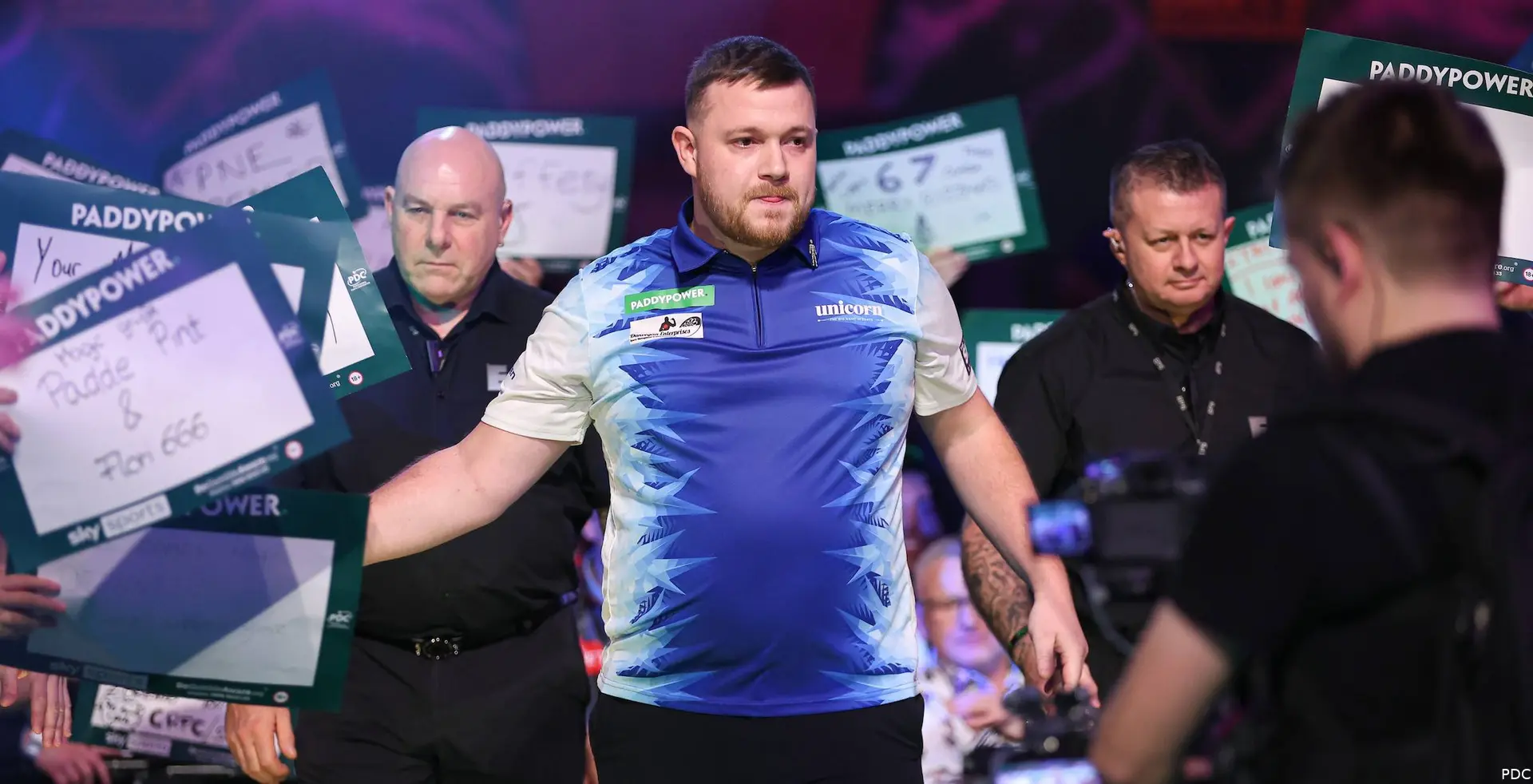
After two seasons as a Tour Card holder, Darren Beveridge was forced to say goodbye to the professional PDC circuit at the end of 2025. The Scot did not immediately throw everything into trying to return, however. Following his appearance at the World Championship, Beveridge deliberately stepped away from the game and chose to spend more time with his family.
ADVERTISEMENT
Now the desire is beginning to return and one goal sits above everything else: getting back onto the ProTour through Q-School in 2027. Beveridge recently made his debut in the current MODUS Super Series, although it was far from his first experience of the concept. He previously featured regularly in Southampton's Online Darts Live League, the predecessor to the Super Series in its current form.
The difference between the two environments is considerable, Beveridge admitted. "Well, it's a lot different to what the Live League used to be. It was just like a little room in an office, but we've got a nice big stage here now, so it's a lot better than it used to be."
Beveridge had already sought advice from players with previous MODUS Super Series experience before arriving, including fellow Scot Scott Campbell. Even so, seeing the venue properly for the first time still made an impression.
"No, I wouldn't say as expected," he said. "I still wasn't sure what to expect when I walked in. I didn't know how big the stage was, obviously just watching it on TV and stuff. But yeah, it's really nice, I must admit."

Stepping away after losing his Tour Card
His Super Series appearance forms part of Beveridge's preparations for another attempt to reach the PDC ProTour. After losing his Tour Card at the end of last year, he initially chose to make darts less of a priority.
ADVERTISEMENT
"Just after the Worlds, I sort of took a wee break from it," Beveridge explained. "I started spending a wee bit more time with my family, just enjoying staying in the same place for a while."
The relentless travelling that came with two seasons on tour had taken its toll. It was not playing darts itself that Beveridge found particularly draining, but everything required around it.
"It can be. It's the travelling that's the worst," he said. "Once you're at the venue and you're playing, that's just normal. The darts part is fine. It's sitting in airports, waiting for trains, getting taxis back and forward, spending hours on end on your own. An airport can be very, very boring and draining. So staying in my own house, having my own TV and seeing my family for a while was good."
Beveridge has since started playing more seriously again, using ADC events to rebuild his competitive rhythm ahead of Q-School.
"I'm now in the run-up to going back to Q-School, so I've started playing some ADCs, getting my arm moving again," he continued. "My form seems to be coming back quick enough, so this is just a run-up to Q-School again."
ADVERTISEMENT

Beveridge beat Dimitri Van den Bergh 3-0 in sets on his Worlds debut.
"Darts is for old men"
That Beveridge would eventually become a professional darts player was far from obvious when he first encountered the sport. In fact, he initially had very little interest in it.
"It started by accident, honestly, Dan," Beveridge recalled. "I used to go out playing football. I wasn't very good at that either, but it was raining one day, so my friend Mark said, 'Do you want to come back to my house and play darts?' I was like, 'No, darts is for old men. It's not for me.' He said, 'Just try it.' So I was like, 'Okay.' I went back to his room, had a few games of darts and I've never put them down since."
He was around 13 or 14 at the time and almost immediately wanted a board of his own. Beveridge's father already played in local leagues and was happy to encourage his son's new interest.
ADVERTISEMENT
"So I went back home and asked my dad for a dartboard," Beveridge said. "He used to play in local leagues and stuff, so he was like, 'Yeah, I'll get you a dartboard.' I went to school, came back and he had it all set up for me. We went to the dart shop, got me a set of darts and that's where the success story really started."
By the age of 16, Beveridge began to realise he might have more than simply a recreational interest in the sport. After qualifying for the Winmau Masters under-18s event, his composure in particular caught his father's attention.
"My dad said my composure and stuff when I was playing was a lot more advanced for my age than other kids he'd seen," Beveridge explained. "He said, 'You should keep practising, give it a go. You could start winning some titles locally.'"
That development was temporarily halted when Beveridge took a job which required him to work weekends. His competitive darts ambitions were effectively put on hold until his mid-20s, when a change of job finally gave him weekends free again.
Read also

ADVERTISEMENT
First taste of Q-School
Local competitions and qualifiers eventually led Beveridge to Q-School for the first time. It immediately exposed the gulf between succeeding locally and being ready to compete for a place on the PDC circuit.
"We went to that and, playing in Q-School, there was just a massive gulf in the standard," Beveridge recalled. "I realised that I wasn't quite good enough yet. So it was back to the drawing board, keep practising and try to come back in a few years."
Rather than discouraging him, the experience showed Beveridge exactly how far his game still needed to develop.
"I know Q-School is one of the hardest competitions in the world, and when I went there and saw a lot of the players competing to try and get their card, I was sort of like a fish out of water," he admitted. "I realised I definitely wasn't good enough to get a card at that time. Because it was free entry, I was like, 'Well, go and give it a go and see what the experience is like.' It just let me know where I needed to get my game to in the future before I could start competing to try and get on the tour."
ADVERTISEMENT
Despite several disappointments over the years, Q-School itself became an event Beveridge enjoyed.
"It's tough," he said. "I do love Q-School, the competing, the hunger and everything. Everybody's desperate to get a Tour Card. But the atmosphere in the room is great. I do enjoy going to it. I don't enjoy the results I've had, but I still enjoy competing at it."
His spells in the old Live League also helped bring him closer to the required level. Beveridge believes the quiet playing environment, cameras and sheer volume of competitive matches provided useful preparation for the conditions found on the PDC floor.
"Yeah, I think it did, especially having the cameras and stuff there as well," he said. "It's very similar to a streaming board on the ProTour. It definitely helped with the fact that it was very quiet, the cameras were there and everything was getting filmed. It was very, very similar to ProTours. I would say it helped people progress. If you look at the people who have actually got Tour Cards after playing in the Live League or MODUS Super Series, there are a lot of people who have played there and gone on to the ProTour. So it definitely helps."
Finally securing the coveted Tour Card
ADVERTISEMENT
After repeated attempts, Beveridge eventually earned his Tour Card. More than anything, the overriding emotion was relief.
"It was a massive, massive relief," he said. "The 'what ifs' were sort of gone because I knew I was good enough to get one. I'd been close numerous times before. Just seeing my name go into that sort of dark green, knowing I was safe at the end of the day, was just a sheer relief."
Once among the world's 128 Tour Card holders, however, Beveridge initially struggled to feel as though he truly belonged.
"I felt like I had imposter syndrome for the first two months," Beveridge admitted. "I felt like I shouldn't be here. I'm just a normal guy from Midlothian in Scotland. I don't know why I'm standing here with the best 128 players in the world."
That feeling did not last indefinitely. Once the competitive reality of tour life took over, the names around him began to matter considerably less.
ADVERTISEMENT
"But that soon disappeared when you realise the boys are still trying to take money out of your pocket and you're trying to win money, so you just need to get your head down and get on with it," he continued.
The adjustment, Beveridge explained, ultimately came down to recognising that everybody had the same opportunity once they stepped to the board. "I'm there to do the same as them. I'm given the same chances," he said. "We're using the same boards. You've got the three darts in your hand. Just go and try to win as many games as you can."
His first season proved difficult. Beveridge picked up wins at Players Championship events but failed to qualify for a European Tour event, the World Championship or the Players Championship Finals. That left him needing a considerably stronger second year if he was to retain his card.
For players in that situation, Beveridge believes European Tour qualifiers can be particularly important.
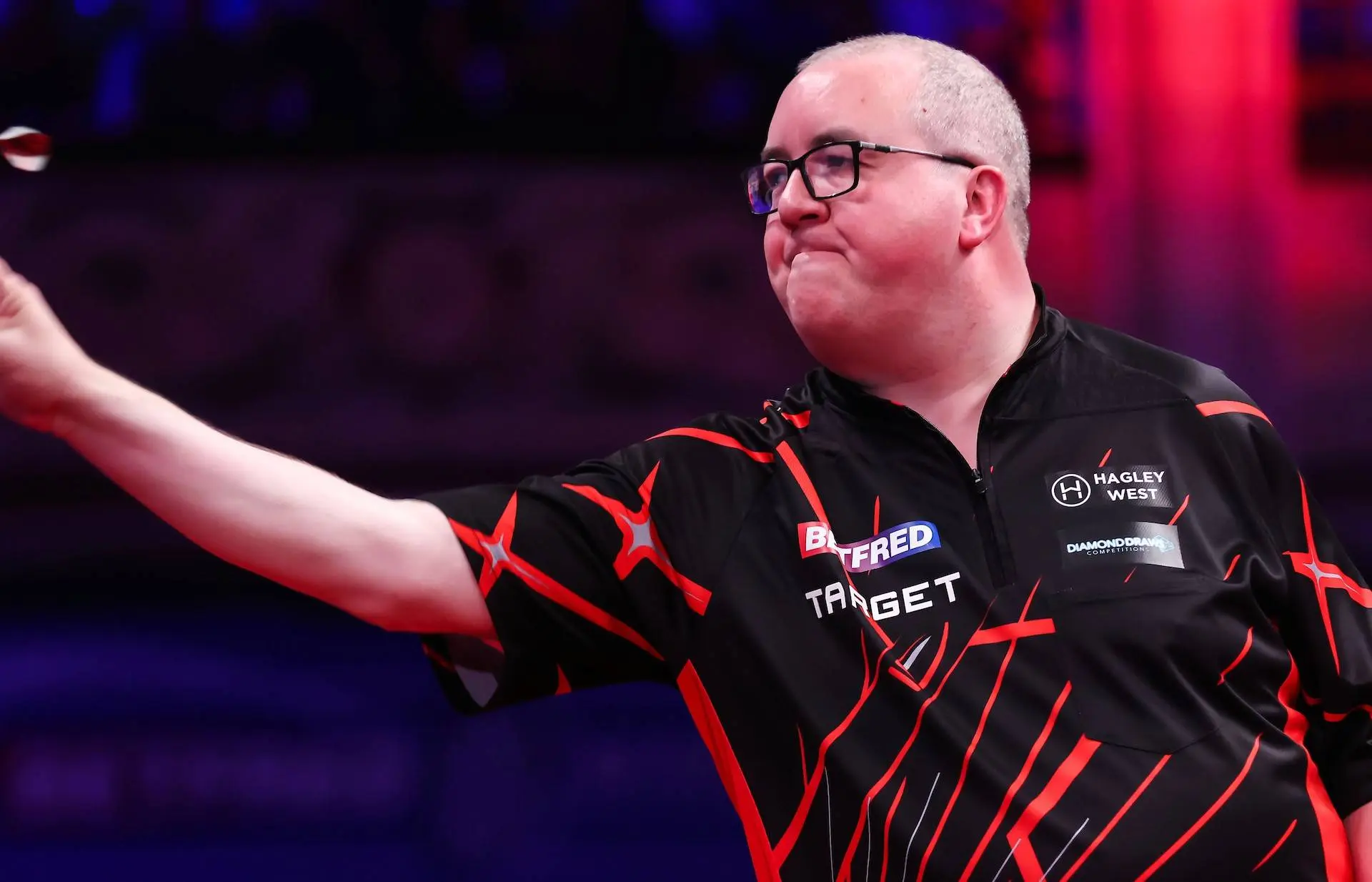
"Yeah, the Euro Tour qualifiers, I think, are massive for trying to keep your Tour Card," he explained. "Like I say, there's only so much you can do on the ProTour. There are only so many games you've got. So getting that extra money in those extra events definitely helps. Getting good runs at the UK Open, getting to European Tour events, trying to squeeze into the Players Championship Finals if you've done well enough, all that extra onto your rankings is massive."
Form arrived too late
Beveridge's performances began to improve markedly during the second half of his second season. He reached a ProTour quarter-final, qualified for the Players Championship Finals and returned to the European Tour.
"Yeah. I felt like the last six months of my second year, I belonged on the ProTour," Beveridge said. "I was playing well. I was getting a lot of decent wins. As I said, I qualified for the Players Championship Finals. I'd got another Euro Tour event and I won my game on that. So I felt like I was coming into my stride a little bit, but I think I still did it a little bit too late."
One of the standout moments of that European Tour campaign came in Hungary, where Beveridge defeated Wessel Nijman.
"Like I say, on the floor Wessel was one of the best players in the world," he said of the Dutchman. "He's so good on the ProTour, so good on the floor. I knew when I saw the draw that this was going to be a tough game, but for some reason he just didn't really turn up in his full form that day. So I was quite happy to take advantage of it."
Childhood dream realised at Alexandra Palace
The biggest moment of Beveridge's career followed at Alexandra Palace. Having qualified for his first World Championship, the Scot was preparing to make the famous walk onto the Ally Pally stage having never even previously attended the tournament as a spectator.
"I'd never even been to watch the World Championship before," Beveridge revealed. "It was like my childhood dream. Me and my friend used to talk about it when we were younger and say, 'How good would it be to be up there playing in front of that crowd?' So just getting that opportunity to go and do it was really surreal. I got to the hotel thinking, 'Tomorrow I'm going to Alexandra Palace. This is nuts.' Then jumping in the taxi, going up that hill and seeing it all lit up in green with Paddy Power and stuff, it was unbelievable. It had been my childhood dream since I first picked up a dart, so the fact that it was coming to fruition was just amazing."
The enormity of the occasion properly struck Beveridge shortly before he walked onto the stage.
"Yeah. It was as they took me away from the practice room to go down and get ready to go on the stage," he recalled. "You're standing at the back of the curtain and you can see all the crowd, and it just sort of hit me: 'This is the World Championship. This is a big deal.'"
Beveridge then made his debut even more memorable by defeating Dimitri Van den Bergh. His partner and friends were all there to witness the biggest win of his career.
"It was unbelievable," Beveridge said. "I'm not going to say the game was easy. It was still difficult. You've still got the crowd making noise and stuff, but it's hard to put into words. It was my first time. My partner was watching. All my friends were there. It was just amazing getting that first win on the stage, living my childhood dream and seeing everybody ecstatic. It was once in a lifetime."
Madars Razma awaited in the next round. Beveridge felt considerably more comfortable with his surroundings by then, but found himself chasing the game after a rapid start from the Latvian.
"Yeah. The second game I was really comfortable," he explained. "I knew what to expect and what the stage was like. I knew how to get back and forward to the venue and stuff. I knew Razma didn't play the greatest in his first game, but I know he's far better than that. So I knew if I could just stick in there, I had a good chance. The first couple of sets, he just steamrolled me. He came out of the blocks a lot quicker than I did. I gave myself a lot of work to do. The crowd were giving me a bit of stick as well. I wasn't their favourite person on the stage, but it was good. It was still good."
Everything geared towards Q-School
After losing his Tour Card and taking his subsequent break, Beveridge has now mapped out his route through the remainder of 2026.
ADC events remain part of the plan, including opportunities to qualify for another appearance at the MODUS Super Series. A return to the Challenge Tour, however, is not currently on his agenda.
"I'm not going to bother with the rest of the Challenge Tours," Beveridge confirmed. "I didn't do them at the start of the year. I just took a break, so I don't think there's any point in wasting my time with them just now."
Beveridge also intends to enter November's World Championship qualifier in an attempt to earn another trip to Alexandra Palace. Beyond that, his focus is firmly fixed on Q-School.
"I'll try and go to the World Championship qualifier in November to try and get back there," he said. "So that's my aim. Up until January, I've not looked past Q-School yet. That's my run-up to that."
Kieran WoodDarts Journalist
Kieran Wood is a sports journalist based in Wales and has been active in journalism since 2022. He contributes to DartsNews.com, where he covers professional darts through news, match reports, analysis, and live coverage across the PDC calendar and major tournaments.
A key part of his work is on-site reporting from leading events. Kieran has covered the PDC World Darts Championship in person, reporting daily from the venue and providing first-hand insight from the tournament. During his coverage, he has conducted interviews with leading players including Luke Littler, Luke Humphries, and Gerwyn Price.
He is also one of the leading voices of the English-language Dartsnews Podcast, contributing regular analysis and discussion on developments across the professional darts circuit.
In his reporting, Kieran places strong emphasis on careful sourcing, editorial accuracy, and updating articles when new, verified information becomes available.
claps 0visitors 0
Just in

Popular news



Latest comments
- I'm a big Clayton fan, but he's got this completely wrong. Qualification criteria exists for a reason - so just as failing to make the top 32/64 for the Euro championships/PT Finals means you miss out, so does not lifting a title for this one.26sForFun12-10-2026
- The players who deliberately slow the game down are usually boring and win very little in the way of silverware. Horrible to watch.MrYnyslas197112-10-2026
- [“The Gentle” then used a sweeping and questionable phrase...] You anglocucks are hilariously finished in every sense of the word.Critical99911-10-2026
- I love Jonny but I disagree. The Grand Slam was always supposed to be "champion of champions" type competition. If the top 16 are guaranteed participation in everything there will be so much less jeopardy involved in qualifying and each major tournament will lose its unique flavour which the PDC has worked hard trying to develop. I enjoy following the qualification races towards the end of the year, and while consistency should have its rewards, the truth is Jonny hasn't reached a major final all year or won a single event on the Pro Tour. Being consistent is one thing, but that alone should have consequences as the sport's elite should not be prepared to accept consistently strong performances, their foremost motivation should be to win and this should be what separates them from the rest, not the consistency of their performances. Jonny is expecting that losing should be enough; it shouldn't be, at least not as far as the Grand Slam is concerned.Deduce635811-10-2026
- Well being honest,it doesn't matter what level you play at, there's always someone who slows it down to suit themselves,and extra swig of water, replacing flights, asking the ref what the score is. It happens wherever. I'm not saying it's professional,but I'm sure we've all seen it beforerick6711-10-2026
- Agree completely. Not sure how a ranking event can have a criteria not based on rankings. And he right on popularity. In the UK second only to football.BandB11-10-2026
- Doesn't matter who's in it,it's boringrick6710-10-2026
- Assuming you qualify as one of the "muppets" in question. Classist too. And since you're so clearly interested in academia, look up "linguistic descriptivism" while you're at it. Oh, and better stay away from the working class sport of darts and maybe offer your insightful analysis to, let's say, croquet instead?Deduce635806-10-2026
- The consequences of being uneducated and grammatically challenged. "To all THOSE muppets not THEM " Everytime I see Arsepinall, I have an image of him wearing a cap, standing behind the counter of a fast food establishment.richieburnettrocks05-10-2026
- I don't understand Littler's reason for playing this tournament.rick6705-10-2026
Loading