"I'm not confident he'll ever return to the tour" - Dimitri Van den Bergh faces potential end to PDC career at just 32
PDC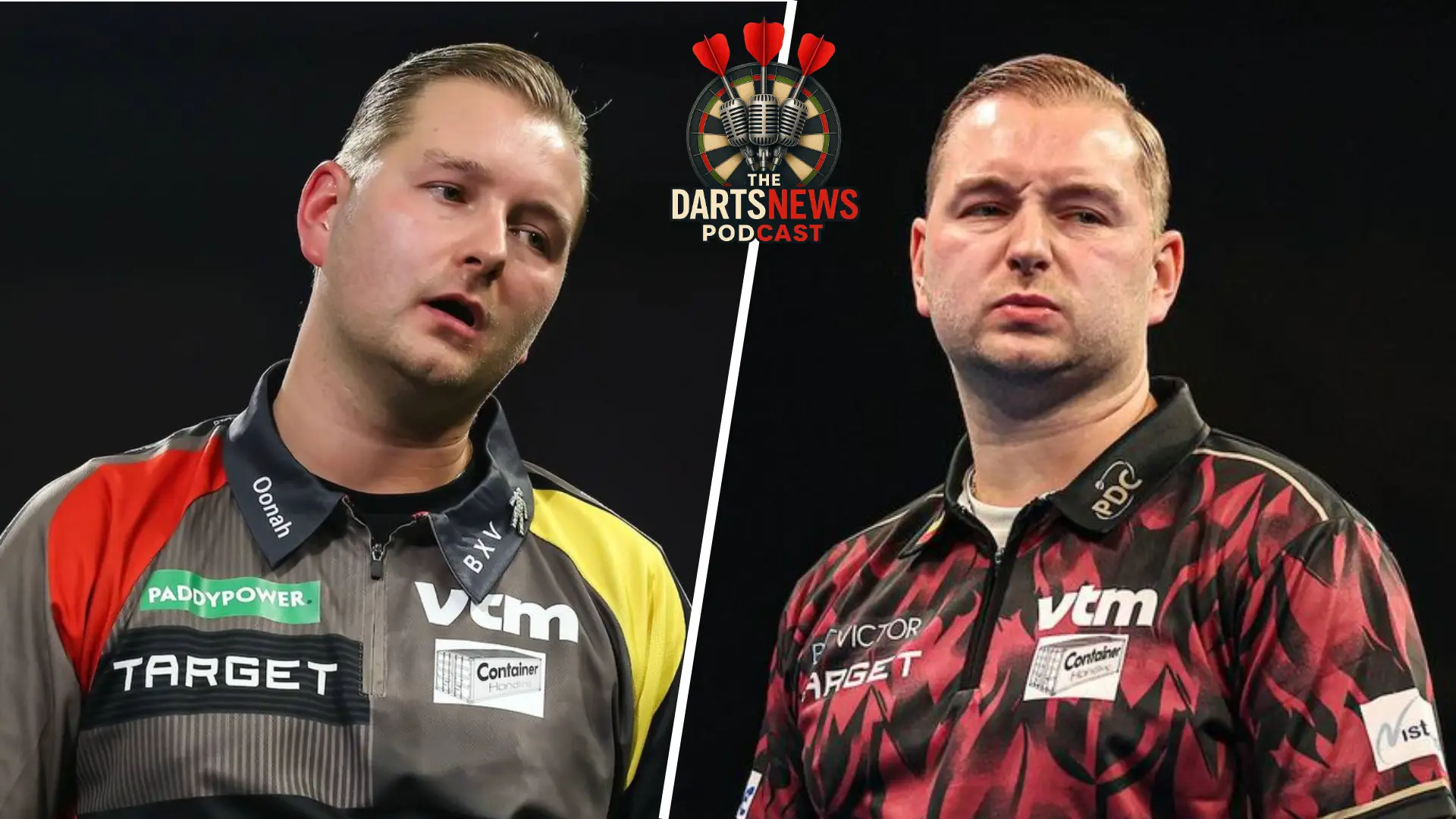
Less than three years after defeating Luke Humphries to win the UK Open, Dimitri Van den Bergh is approaching what could be the final PDC ranking event of his career. The two-time major champion, still only 32, faces the near-certain loss of his Tour Card unless he can qualify for the PDC World Darts Championship on 30 November and then produce an extraordinary run at Alexandra Palace.
ADVERTISEMENT
The Belgian's collapse has prompted serious doubts about whether he will ever reclaim his place on the professional circuit. On the latest DartsNews Podcast, Nicolas Gayer admitted he has little confidence in a comeback, while Samuel Gill questioned whether Van den Bergh would even attempt Q-School in January.
From two-time major champion to the brink of losing his Tour Card
Van den Bergh's rise through the PDC ranks began with consecutive World Youth Championship titles in 2017 and 2018. His breakthrough on the senior circuit came at the 2020 World Matchplay, where he defeated Gary Anderson 18-10 in the final to claim his first major.
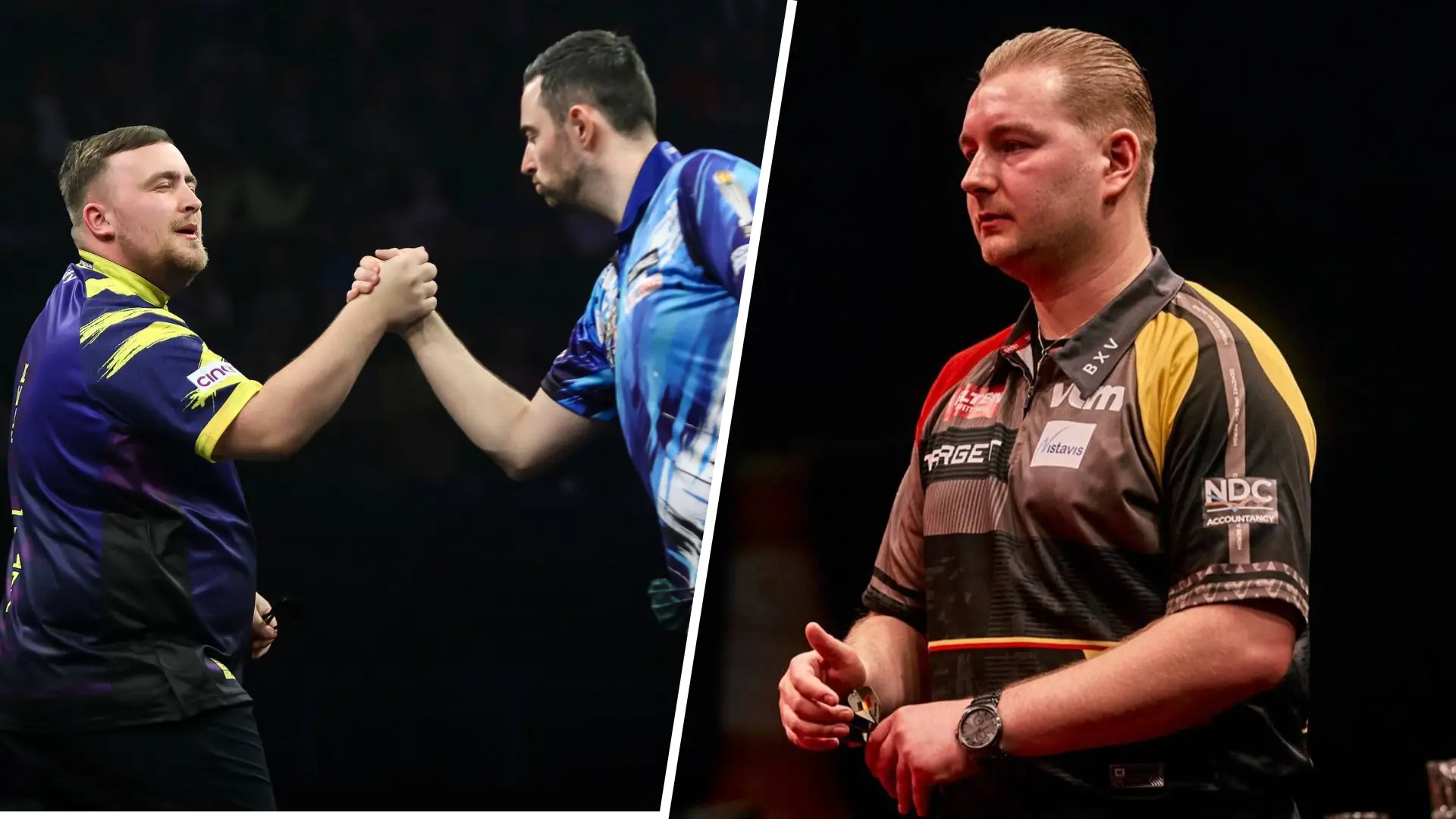
He returned to the Matchplay final the following year, losing to Peter Wright, before reaching the World Championship semi-finals in 2023. His second major title arrived at the 2024 UK Open, where he survived a remarkable comeback from reigning world champion Humphries and six missed championship darts before eventually prevailing 11-10.
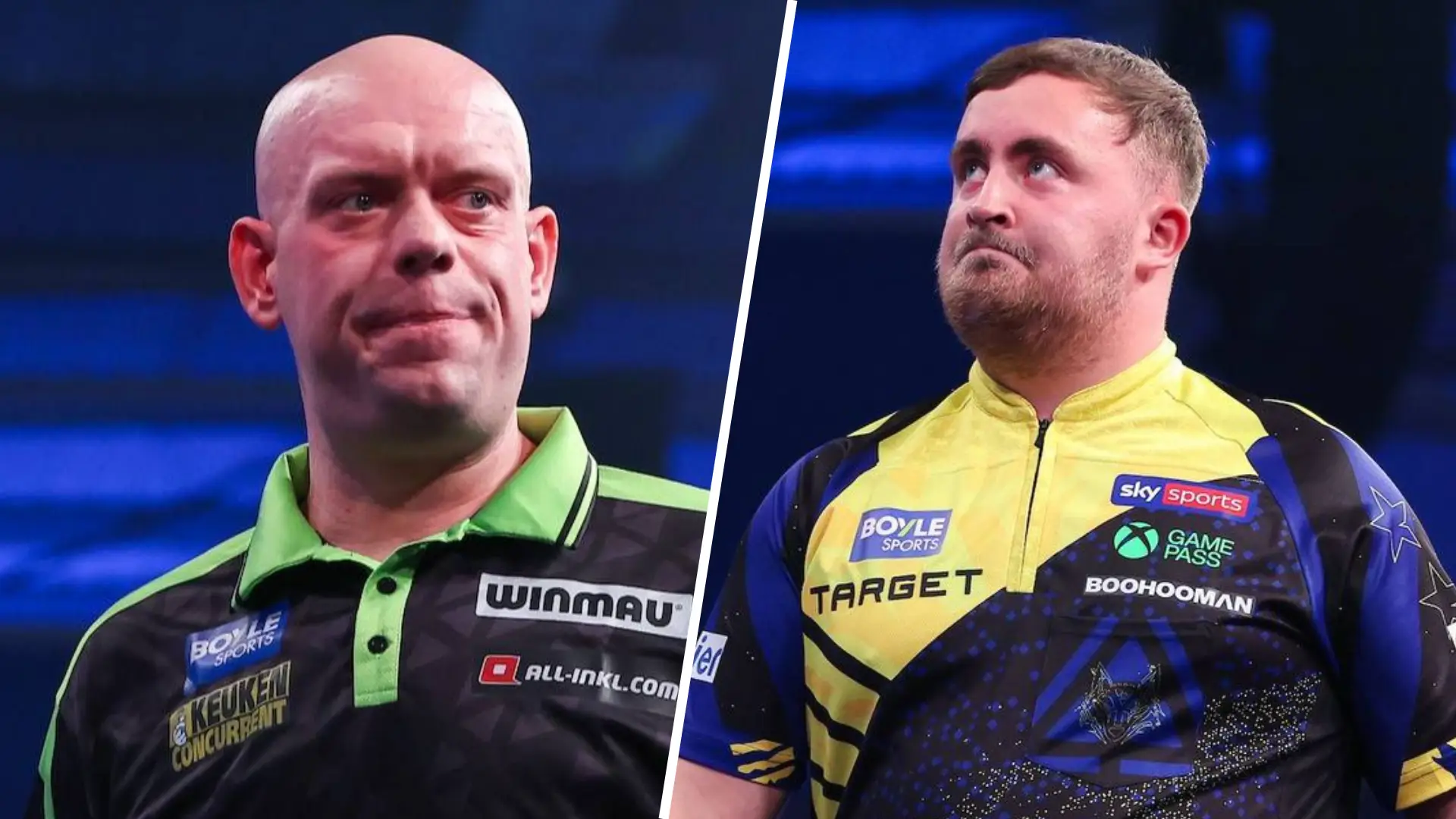
Even in February 2025, Van den Bergh was still capable of producing memorable moments on television, hitting a nine-darter against Michael van Gerwen during a run to the World Masters semi-finals. Now, his place on the PDC Tour is hanging by a thread.
Although Van den Bergh remains 60th on the Order of Merit with £135,500 in ranking prize money, he has failed to qualify for either the Grand Slam of Darts or Players Championship Finals. With the money earned at those tournaments in 2024 about to expire, alongside a further £25,000 from the previous World Championship, his position is considerably more precarious than the current rankings suggest.
ADVERTISEMENT
Altogether, £40,250 is due to disappear from his total, leaving him with £95,250 before any new earnings are considered. As such, provisional calculations place the Belgian outside the top 64 required to retain a Tour Card, with the eventual cut-off dependent on results elsewhere.
His final four Players Championship appearances of 2026 all ended in first-round defeats. The last two were particularly alarming: consecutive 6-0 losses against Joe Hunt and Rob Owen in Leicester, with averages of 71.81 and 75.91 respectively.
Another setback followed at the Grand Slam qualifier on 6 November. Van den Bergh averaged 73.28 in a 5-2 defeat to fellow Belgian Stefaan Henderyck, ending any hope of returning to Wolverhampton.
With the World Championship Tour Card Holder Qualifier approaching, those performances have left little indication that Van den Bergh is capable of the turnaround he requires.
"It's a shame to see a player of that calibre just fall off a cliff as he has," Samuel Gill said on the latest DartsNews Podcast. "It doesn't look like there's going to be a way back, really. I wouldn't be surprised if he doesn't even play Q-School in January and takes a year off to sort everything out."
ADVERTISEMENT
The throwing problems behind Van den Bergh's decline
The Belgian's difficulties stretch back well beyond his recent defeats in Leicester. In April 2025, Van den Bergh withdrew from a Players Championship event shortly before his scheduled match against Jose de Sousa and subsequently took a break from professional darts. He returned alongside Mike De Decker at the World Cup of Darts in June, but made clear that he did not intend to resume his previous full-time schedule.
Family life had become a greater priority, with Van den Bergh acknowledging the strain his playing commitments had placed on him away from the oche. He subsequently encountered problems with the throwing action that had served him throughout his career.
Speaking after defeating Alan Soutar at the Baltic Sea Darts Open in May 2026, Van den Bergh revealed that tension in his arm and fingers had affected his ability to throw naturally towards the end of the previous year. He described losing control of his throwing action and subsequently adopting a three-finger grip shortly before the UK Open in an attempt to address the problem.
The victory over Soutar ended a 418-day wait for a European Tour win, offering encouragement that the adjustment might eventually pay off. But there was no sustained improvement. Following another lengthy spell without official competition, Van den Bergh returned in September before suffering further defeats over the closing weeks of the ProTour season.
ADVERTISEMENT

Van den Bergh in action on the Euro Tour
During Friday's podcast, Kieran Wood raised the possibility of an extended break giving the former major champion an opportunity to rebuild, pointing to players who had returned after spending time away from the circuit.
"Do you actually think this is the end for Van den Bergh now?" Wood asked. "We've seen in the past people like Barney retire, have a year off, come back. Cristo Reyes has gone away for a few years and he's come back stronger. Even Adrian Lewis now, he's had that time off, and you see him in exhibitions averaging over 110 and things like that."
"It looks like a long way back for Dimitri now," Wood continued. "But do you feel like after that year, where he just has time to himself, he resets, stops overthinking things, he can get back to some kind of form and get back on the tour?"
Nicolas Gayer considered the distinction between a loss of confidence and an underlying technical problem particularly significant. Van den Bergh's own explanation of his throwing difficulties gives that question added weight, although the precise cause of his current struggles remains unclear.
ADVERTISEMENT
"I think it's always important, and of course we don't know that, but it would be important to know where the big issue is," Gayer explained. "If it's all based on an injury and him not being able to throw a dart like he was able to for 10 or 20 years, then that's a different discussion compared to him just being in a low or having too much going on."
Gayer made no claim to know Van den Bergh's present medical circumstances, but was concerned about the consequences if the Belgian could no longer reproduce his established action.
"If you have to rework your whole technique, that can be very, very difficult, and that can lead to you not being able to throw darts on that certain level ever again," he warned.
Despite recognising Van den Bergh's ability, Gayer could see little reason for optimism. "We all know that he has the game in himself, and I think if he wants to throw darts at that level, if there aren't any injury issues or anything, he should be able to get back to that level," he said. "But I don't know. I'm not too confident that he will ever be coming back onto the tour."
Why Q-School could prove another formidable obstacle
ADVERTISEMENT
Even if Van den Bergh decides to fight for his professional status in January, his two major titles would offer no advantage at Q-School. Players must negotiate several days of floor competition against a field of established former professionals and emerging talents, with Tour Cards available through automatic qualifying places and the Q-School rankings.
Gill believes that environment presents a particular challenge for a player whose greatest achievements have come under the television lights. "You've got to think with Dimi, he is a big-stage player," he argued. "He's always struggled on the floor. That's why in the past, he's barely qualified for events based on his ProTour ranking. He's barely won many ProTour titles."
Van den Bergh has enjoyed success away from television, but his World Matchplay and UK Open victories have defined his career. Recovering the consistency required to survive several days at Q-School would be a very different challenge from producing an inspired performance in a televised major.
"You have to go through the school of hard knocks, which is Q-School, which is a floor event," Gill continued. "It favours floor players who are very good on the floor. Do I expect him to rock up to Q-School, where he's not very good on the floor, and win a Tour Card? Probably not."
VAN DEN BERGH IS THE CHAMPION! 🏆 Dimitri Van den Bergh wins the 2024 Ladbrokes UK Open! One of the most dramatic endings you will ever see! 📺 https://t.co/D7iTWZMSbj #UKOpenDarts | Final https://t.co/y1TQ5rqPnU
— PDC Darts (@OfficialPDC) March 3, 2024
ADVERTISEMENT
Nathan Aspinall provides one example of a player rebuilding his career after losing professional status, returning through Q-School before going on to win major titles. Gill acknowledged that precedent, although he considered the circumstances very different.
"The only positive example I'll perhaps use is Nathan Aspinall," he said. "But of course, Nathan was at the front end of his career. He was very new to the sport when he lost his Tour Card and then came back."
For Van den Bergh, January would mean attempting to reclaim a position he has held for more than a decade, having already experienced the expectations that accompany winning major tournaments and reaching the world's top five. "I don't see him massively coming back," Gill admitted. "I see him perhaps trying once to come back and then maybe fading away and not playing again."
There is no indication that Van den Bergh has decided whether to enter Q-School. His previous decision to step away from the relentless professional schedule, however, makes the possibility of another break relevant.
"He will always be a bit of a what-if story" - A changing era for established stars
ADVERTISEMENT
Van den Bergh's troubles have unfolded during a difficult period for several other familiar names. Peter Wright has struggled for consistency, Michael Smith's ranking position has come under pressure, and Raymond van Barneveld has faced his own battle to secure major appearances. Gary Anderson, by contrast, has continued to produce high-quality performances despite playing a more limited schedule.
"We're going through a stage now where the crop of players that we watched growing up are kind of all going," Gill reflected. "Of course it's all about making new stars, but it still doesn't make it great when a player like Van den Bergh just falls away."
Unlike some of the veterans confronting the later stages of their careers, Van den Bergh is only 32. His second major title came at 29, and his World Masters semi-final was less than two years ago.
Gill admitted that he had never particularly enjoyed the Belgian's elaborate on-stage routines, including his attempts to compose himself during matches. Nevertheless, he found the decline difficult to watch. "When he was at his prime, I didn't really like watching him," he said. "It's kind of sad to see, and the same could be said for Peter Wright in particular."
Whatever happens next, Van den Bergh's World Matchplay and UK Open trophies will remain significant achievements. The question of how much more he could have accomplished is a different matter.
"He will always be a bit of a what-if story, albeit as a man who has won multiple major titles," Gill admitted. "If he retires tomorrow, he's had a great career. But it would be a massive shame."
Read also

Could 30 November mark his final PDC appearance?
Van den Bergh's immediate future now rests on the World Championship Tour Card Holder Qualifier in Leicester, where at least four places at Alexandra Palace will be available on 30 November.
Qualifying would only be the beginning of his escape attempt. Based on the provisional ranking calculations, he would probably need to win at least two World Championship matches to give himself a realistic chance of retaining his Tour Card. One victory could still leave him dependent on results elsewhere.
Failing to qualify would instead leave him outside the projected top 64, with Q-School offering the most direct opportunity to reclaim professional status in January.
Gill did not rule out Van den Bergh eventually finding his way back, particularly after a prolonged break from the competitive circuit. "I wouldn't be shocked if he gets through a few qualifiers for events and rolls back the years," he conceded. "But I also wouldn't be shocked if he takes a break and just fades away into obscurity for a bit, then maybe comes back like Benito van de Pas or Cristo Reyes, where the break did him good."
Van den Bergh has made no retirement announcement, and losing a Tour Card would not prevent him from seeking future opportunities through other PDC qualifying routes.
Nevertheless, should he fail in Leicester and decide against Q-School, 30 November could be his final appearance on the professional circuit for an extended period, perhaps even his last.
There is little room for another performance in the 70s. A player who defeated reigning world champion Luke Humphries for the UK Open title in March 2024 now faces the prospect of having to qualify for another World Championship simply to preserve his professional career.
It is an extraordinary reversal for a two-time major champion whose next appearance in Leicester could determine whether he remains part of the PDC Tour at all.
Kieran WoodDarts Journalist
Kieran Wood is a sports journalist based in Wales and has been active in journalism since 2022. He contributes to DartsNews.com, where he covers professional darts through news, match reports, analysis, and live coverage across the PDC calendar and major tournaments.
A key part of his work is on-site reporting from leading events. Kieran has covered the PDC World Darts Championship in person, reporting daily from the venue and providing first-hand insight from the tournament. During his coverage, he has conducted interviews with leading players including Luke Littler, Luke Humphries, and Gerwyn Price.
He is also one of the leading voices of the English-language Dartsnews Podcast, contributing regular analysis and discussion on developments across the professional darts circuit.
In his reporting, Kieran places strong emphasis on careful sourcing, editorial accuracy, and updating articles when new, verified information becomes available.
claps 0visitors 0
Just in


Popular news

Latest comments
- And why should he listen to you?Deduce635807-11-2026
- Ultimately it is a bye for whoever draws Barney. It will be another stroppy and sulky performance once he goes behind. Barney was excellent but really must completely call it a day now.richieburnettrocks07-11-2026
- I'm disappointed he was not able to secure a spot at the Grand Slam. With Carl Sneyd taking care of Daryl Gurney, he would have had to beat Andy Boulton before facing the winner of Sneyd vs Mensur Suljović for a Grand Slam spot. Unfortunately, after beating Filip Bereza comfortably, he succumbed to Boulton, and the board would ultimately be won by the highly inconsistent Carl Sneyd. Since he could instead have been drawn against the likes of Cristo Reyes, Dirk van Duijvenbode and Stephen Bunting, I think once Gurney was out of the picture he would have been favourite to win his board, and it seems like a massive missed opportunity to put 5 grand on his ranking and seal another major TV appearance ahead of the Worlds. The highs and lows of following Raymond van Barneveld!Deduce635806-11-2026
- Probably i will receive a lot of backlash and hate for this reaction, but well, so be it. I am more than sick and tired of those lies of you Barry Hearn. How dare you defend yourself over the back of Fallon’s son! He has a disability and not an illness, so let me correct that for you! I know because I have the exact same disability. I have tried to reach out to Fallon in the past, and offered her to help her and her son, because I was struggling with the same problems, and I understood the boy. I wanted him to have finally someone who understood him. However she told me that she did not want my help, and I have respected Fallon’s choice. I have never asked Fallon for money. They don’t need money in that case. I only ever wanted the best for Fallon and Rory, but I have to be honest about the situation. Fallon should tell the true story and not be forced to tell lies. I don’t hate Fallon, and I don’t begrudge or envy a single penny that she gets, but this situation/case is just not fair. I hate the lies and the dishonesty and injustice. I don’t want Fallon to be hated because there is an unfair disadvantage created. Don’t proclaim your false lies over the back of Rory! I only stand for integrity and justice. I am precisely the one who always sticks up for Fallon. And you don't, you don't give a damn about them. You were never there for them, and now you only want to save your own position! You are just trying to talk your way out of your own bad behavior at the expense of someone with a disability. And to Fallon, I don’t know if this may ever reach you, and you read it, but I want you to know I love you and I love your son Rory very much, I am sorry how things developed and went. I hope you and Harriet are still friends. I am sorry if I were too persistent to you, or you experienced it that way, but it was never my intention. Please understand I have autism as well. As Barry Hearn would say, I am only just a human being too, and I also make mistakes and misjudge things sometimes. I promise you I did everything out of the deepest love and care for you and Rory. If I were you, I should just keep all the money, only please never be dishonest or tell lies anymore for Barry Hearn, or anyone else. I hope you have the best life, and I wish nothing more than the best for you. I have always loved the two of you. Farewell.Hiddo05-11-2026
- She is a professional. If darts is her income, she is a professional. Same as Adrian Lewis, Martin Adams. A tour card just means someone can play on the PDC tour. You could even make a case that Clayton wasn't a professional (until recently I believe) because he had employment elsewhere.BandB04-11-2026
- She's technically not a professional though as she doesn't hold a pro tour card.mr-pablo04-11-2026
- Such a shame that lakeside has been reduced to this. Fantastic venue,and previously a great tournament. Not any morerick6703-11-2026
- Seems to me that the top 16 players pick and choose whatever they want to play. Good,all the money will get spread out more. They get more money from exhibitions than tournaments so let them all withdrawrick6703-11-2026
- Play all legs and the winners split the pot. Luke gets the lot of he wins them all. If your occupation is darts player you can't enter, regardless of ability.BandB01-11-2026
- I'm quite a jaded person all things considered, but to be honest I found Beat Luke Littler to be pretty entertaining. It certainly wasn't seamless, which is to be expected given the lack of precedence, but I actually think the pacing was pretty good, the production was impressive, and there was a good sense of humour and levity to it. I think it was a very ambitious undertaking but one that, for the most part, paid off. I liked the system with the four pots and I think it added to the drama and intrigue. I enjoyed seeing the diverse range of entrants and learning about their backstories. I think the interactivity was pretty clever and well-integrated. The panel was a little incoherent at times; Lee Mack shone however, and his improvisational skills were appreciated during some more awkward interstitial moments. As far as the darts is concerned, it was a shame that the format didn't allow Littler to get into full flow. You obviously don't want him to steamroll everyone but you want to feel like you're getting the full Littler package rather than seeing him struggling to get out of first gear. I will say that his leg against Jayden Walker was very impressive, but it was mostly downhill from there. The attraction revolves around Littler being this untouchable, indomitable force, yet the format doesn't really allow him to fulfil that characterisation. As for Fallon Sherrock, she was mightily impressive and deserved the victory. It is a testament to her unshakeable character that she was able to bang in a 14-darter under such mind-bending pressure. Everything that has been said about the misleading marketing is valid, though they were clear about their eligibility criteria and were able to offload the responsibility somewhat by bringing the viewers into the decision-making process in real time. What is clear though, is that Fallon played the game according to the rules, and she should not be criticised for that, much less abused. I will admit though that it is a kick in the teeth for those true amateurs who committed time and money to the course, and I would also question those who think pub players would have no chance, given that some of Littler's winning legs were dispatched in 7 visits to the board! The great thing about darts is that it isn't so much that amateurs cannot replicate the feats of brilliance pulled off by professionals of the sport, than it is that they simply cannot replicate the consistency of their output, something that this format almost entirely removes from the equation. It should also be noted that, financially, Fallon certainly stands to benefit much less in relative terms from the paycheque than would your average pub thrower, as I'm sure she nets a fair income from the lucrative exhibition circuit alone. What I do hope is that she might use this as an opportunity to really build up a head of steam heading into the new season, as it seems long overdue that she come through Q-School and really take it to the pros on a week-in week-out basis, but whatever she chooses to do, she has certainly achieved enough already for one if not several lifetimes, so who am I to dictate terms? To conclude though, I will state once again that I found Beat Luke Littler to be a pretty enjoyable evening of entertainment. I do feel for the contestants who never actually had the chance to try their luck against the world #1, although I suppose it comes with the format, but all which inevitably raises the question: will Netflix be tempted to do it all again next year? It's hard to say. Whether it would be financially viable, I can't weigh in there. One point I have been making though, and which I touched on earlier, is that the entire concept relies on a public perception that Littler is more or less unbeatable, and that certainly hasn't been the case of late. If the execs had been trying to pitch the show in recent months while Littler has seemed vulnerable, rather than when he was mopping up almost every major title on the calendar, it would certainly be a tougher sell. We will have to see in about 6 months' time whether Littler can still reliably command perception as a near-unstoppable force in darts, and then we'll have a clearer idea about whether we should expect a second helping. Even as a one-off experiment though, and with all the controversy taken into account, I still don't think they disgraced themselves by any means, and that will probably be my lingering assessment of the event when all is said and done.Deduce635801-11-2026