Michael van Gerwen and the World Grand Prix: Why was this tournament his playground for so many years?
PDC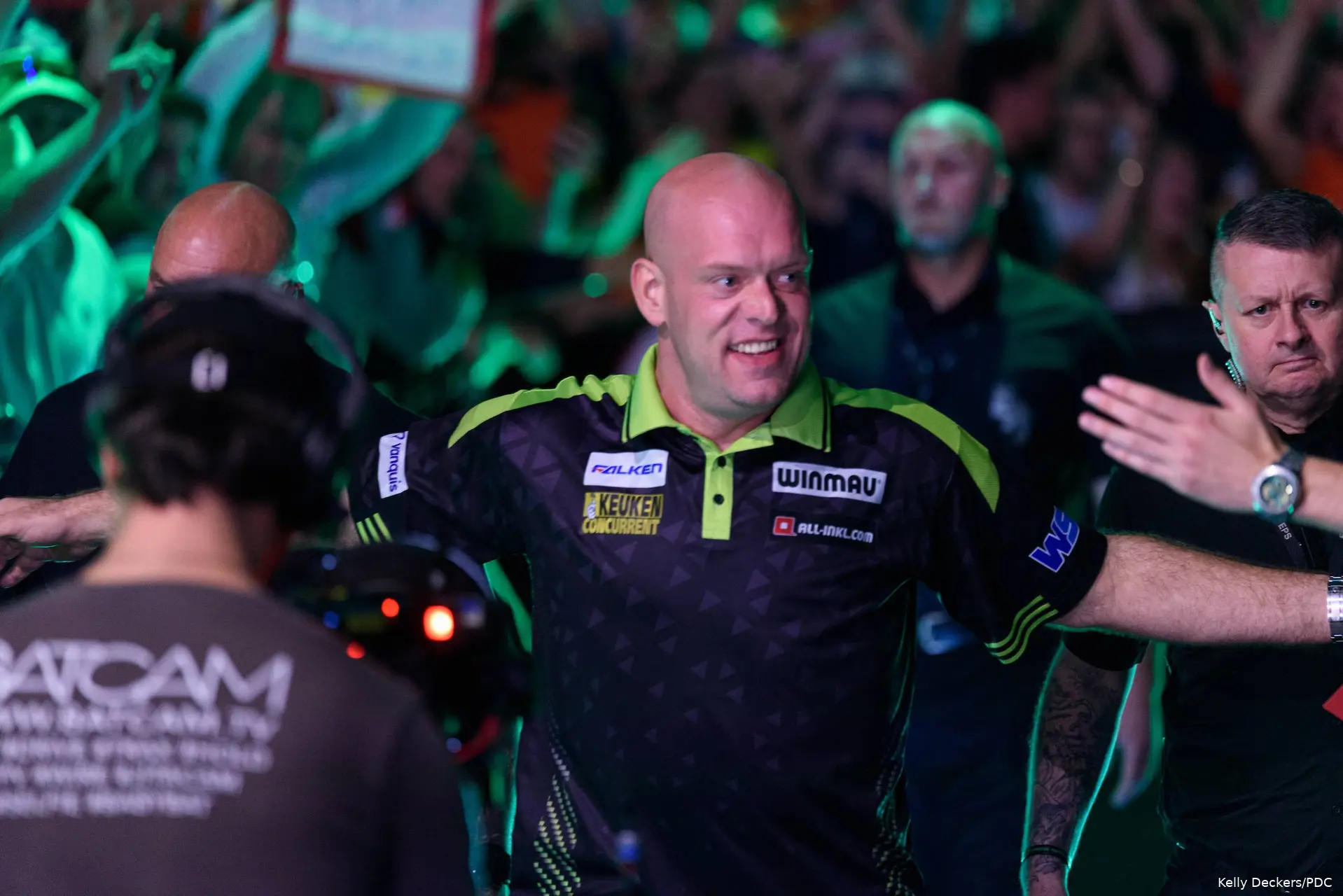
In the last two years, Michael Van Gerwen has exited the World Grand Prix in the first round, and the Dutchman looks to end a hat-trick of such in Leicester next week. In the past, it was never like this for the green machine. Six World Grand Prix titles with the double-in format being his debut PDC major title 14 years ago in 2012, the number nine seed comes into Monday being the most experienced man in the building. With recent failure, why was this major Van Gerwen’s favourite, and why did he find so much success?
ADVERTISEMENT
How good was he at the World Grand Prix
The World Grand Prix has been Van Gerwen’s bread and butter, and although in the past few years the Dutchman hasn’t been at the same heights as he was when he last won it in 2022, he will be a contender for the title due to his experience. With averages and the first nine statistics lower due to the double-in formula, comparison against other tournaments proves tricky. One stat that doesn’t change is the number of titles, and with only the Players Championship finals counting more trophies, Van Gerwen is clearly a fan of the double-in formula.
The standout year was 2016, and with adjusted metrics compared to other majors, it was the highest overall tournament average he produced: 99.97, the highest first nine of 119.11, and the joint highest 180s he produced of 22. Winning it in 2012, 2014, 2016, 2018, 2019 and 2022, the only times in the 2010s he failed to win when qualified was a final heartbreak against Robbert Thornoton, a quarter-final loss to Dave Chisnall in 2013 and a rare first-round loss in 2017. Five titles in eight appearances, and a 46% title rate in his 13 appearances, tells the story.
MVGs Six World Grand Prix Winning Runs
| Year | Tournament Avg | First Nine | Checkout % | 180s | Final Score | Final Opponent |
| 2016 | 99.97 | 119.11 | 49.92% | 22 | 5-2 | Gary Anderson |
| 2018 | 93.97 | 110.03 | 52.73% | 22 | 5-2 | Peter Wright |
| 2022 | 93.22 | 113.34 | 45.66% | 20 | 5-3 | Nathan Aspinall |
| 2019 | 92.03 | 111.76 | 47.13% | 16 | 5-2 | Dave Chisnall |
| 2014 | 90.81 | 116.53 | 42.86% | 9 | 5-3 | James Wade |
| 2012 | 87.53 | 104.86 | 38.33% | 5 | 6-4 | Mervyn King |
Although 2016 was the best performance, other years had similar formulas of success. In 2018, he hit a remarkable 85.71% of his doubles in his first round match against Steve Lennon. Doubles have to be your friend at the World Grand Prix, and Van Gerwen shows that.
His wins are built from this, and a mean checkout percentage across his six titles of 46.27% and a mean tournament average of 93.47, scoring is irrelevant if you can’t finish nor start the leg. Despite this, MVG found the synergy between scoring and finishing in this major, with a first nine of 113.16.
ADVERTISEMENT
Going more into the 2016 title, it proves the blueprint on how to win the World Grand Prix. Never averaging below 97, of course adjusted, and with the first nine never below 116, the scoring that, despite being secondary, still needs to be solid.
This explains why players like Ryan Joyce, who always sit near the top of the bookies' odds to win a double-in tournament, fail, as their scoring is not synergised with their finishing. Sustained excellence across the week and a checkout percentage of 49.92% show how Michael Van Gerwen won tournaments, but will he copy this blueprint in 2026?
The most revealing metric in Grand Prix history is the first-nine average. The sheer gap between Van Gerwen's scoring in his first three visits and his overall tournament average shows why this format suited him so uniquely. In his 2014 title, the first nine average was 116.53 compared to his tournament average of 90.81.

Michael van Gerwen hasn't been at his best for some time.
This 25.72-point gap is the largest we’ve seen from Van Gerwen in a winning campaign, and with a mean gap over his six titles of 19.68, it shows what his scoring was really producing before the format suppressed the headline figure. Across 2016, the first nine never sat below 116, and with a 113-119 first nine-level scoring pressure on opponents, he succeeded. He was devastating opponents before the double even became a question. This structural advantage of scoring dominance disguised in the format’s double-in is what the six titles were built on
ADVERTISEMENT
The First Nine vs Tournament Average Gap
| Year | First Nine | Tournament Avg | Gap |
| 2014 | 116.53 | 90.81 | 25.72 |
| 2022 | 113.34 | 93.22 | 20.12 |
| 2019 | 111.76 | 92.03 | 19.73 |
| 2016 | 119.11 | 99.97 | 19.14 |
| 2012 | 104.86 | 87.53 | 17.33 |
| 2018 | 110.03 | 93.97 | 16.06 |
| Mean | 112.61 | 92.92 | 19.69 |
Was it the World Grand Prix or was he just great?
Van Gerwen’s record at the World Grand Prix is, of course, impressive, but how much is this due to be a natural by-product of his top form over that year? The World Grand Prix averages are adjusted to other majors due to the double-in formula decreasing averages, and this has revealed that performances at the World Grand Prix, even when picking up the title, were far below other majors. In 2019, his World Grand Prix average was 92.03, but at other majors, for example, the World Championships, where he was crowned champion, he averaged 103.28 and even went further than that at the European Championships, where he averaged 105.10.
This mean event averages over the four main majors across the 2019 season reveal a 9.80 point gap, suggesting competition at the World Grand Prix was never high. The World Grand Prix never really brought the best out of Michael Van Gerwen, with there being at least one major in each winning year where he averaged higher compared to the World Grand Prix, but the tournament rewarded Van Gerwen’s form. He didn’t need his best, and at times didn’t even need his standard; all he needed was a format that amplified his scoring dominance regardless of overall level, and Van Gerwen was the best scorer in the 2010s.
ADVERTISEMENT
Even in the years where Van Gerwen didn’t win, it told the same story. In 2017, he was beaten in the first round by the Scotsman and eventual semi-finalist John Henderson, and with an average of just 87.64, the World Championship average nearly adds 20 points, with that average being 107.06. Winning three majors in 2017, this was the only time in his career where the three-time world champion won three majors in a season and failed to pick up the World Grand Prix.

Van Gerwen won the World Grand Prix no fewer than six times in his career.
The World Grand Prix starts “major season”, and although at his seasonal best, this didn’t guarantee the title. In 2020, he averaged 97.21 and was beaten in the quarter-finals by Simon Whitlock. His best overall seasons did not always translate to Grand Prix success. He needs to play the best World Grand Prix darts, not the best overall darts. This tailoring proves that the Grand Prix form and his general form are mostly independent. Being at his seasonal best didn’t guarantee winning the World Grand Prix, and the format explains this.
With a double-in format, missed opening doubles add wasted darts to the leg average without contributing to the score. In 2019, his first-round average of 84.59 was juxtaposed with a first nine of 105.08, showing elite visits before and after the opening double. In 2015, he reached the final with a checkout percentage of 32.26%. His 2018 first round checkout percentage of 85.71% produced the same result.
Regardless of the finishing, Michael Van Gerwen’s scoring carried him through rounds, and when the opening double clicked, that's when the unstoppable Van Gerwen came. But as mentioned, he didn’t need to be unstoppable. The formula was the first nine, putting the most pressure on the opponents, especially when he had the throw, mounting pressure on opponents to convert their own opening doubles. Other players struggle to find this and thus struggle with the format. But MVG benefitted and knows how to find the best World Grand Prix darts even when he’s not playing his best darts in the season. In 2026, Van Gerwen dropped out of the top four for the first time in 12 years. He’s not playing his best darts, and with other majors failing in front of his eyes, can he replicate it?
ADVERTISEMENT
MVG at the World Grand Prix 2016-2025: Full Record
| Year | WGP Avg | WGP Result |
| 2016 | 99.97 | Won |
| 2017 | 87.64 | First Round |
| 2018 | 93.97 | Won |
| 2019 | 92.03 | Won |
| 2020 | 97.21 | QF |
| 2021 | 90.55 | Last 32 |
| 2022 | 93.22 | Won |
| 2023 | 89.23 | Last 16 |
| 2024 | 86.94 | Last 32 |
| 2025 | 88.67 | Last 32 |
Can he replicate it?
Dropping out of the top four might have been a sudden movement after the World Matchplay, but it had been brewing. In the last two appearances, the Boxtel man has failed to win a match, and his mean average across this has been 88.28, and 2024 was the lowest average of any match he had played with 86.94.
There’s no argument to be had whether Michael Van Gerwen has lost his scoring power; his new throw has produced less rhythm, and his scoring has been less consistent than at his peak. He won’t outscore players. Specific deterioration in the World Grand Prix whilst he has been competitive enough to reach finals shows that the structural advantage this format had previously given him - failing in the year and a good first nine - has worn off.
ADVERTISEMENT
Read also

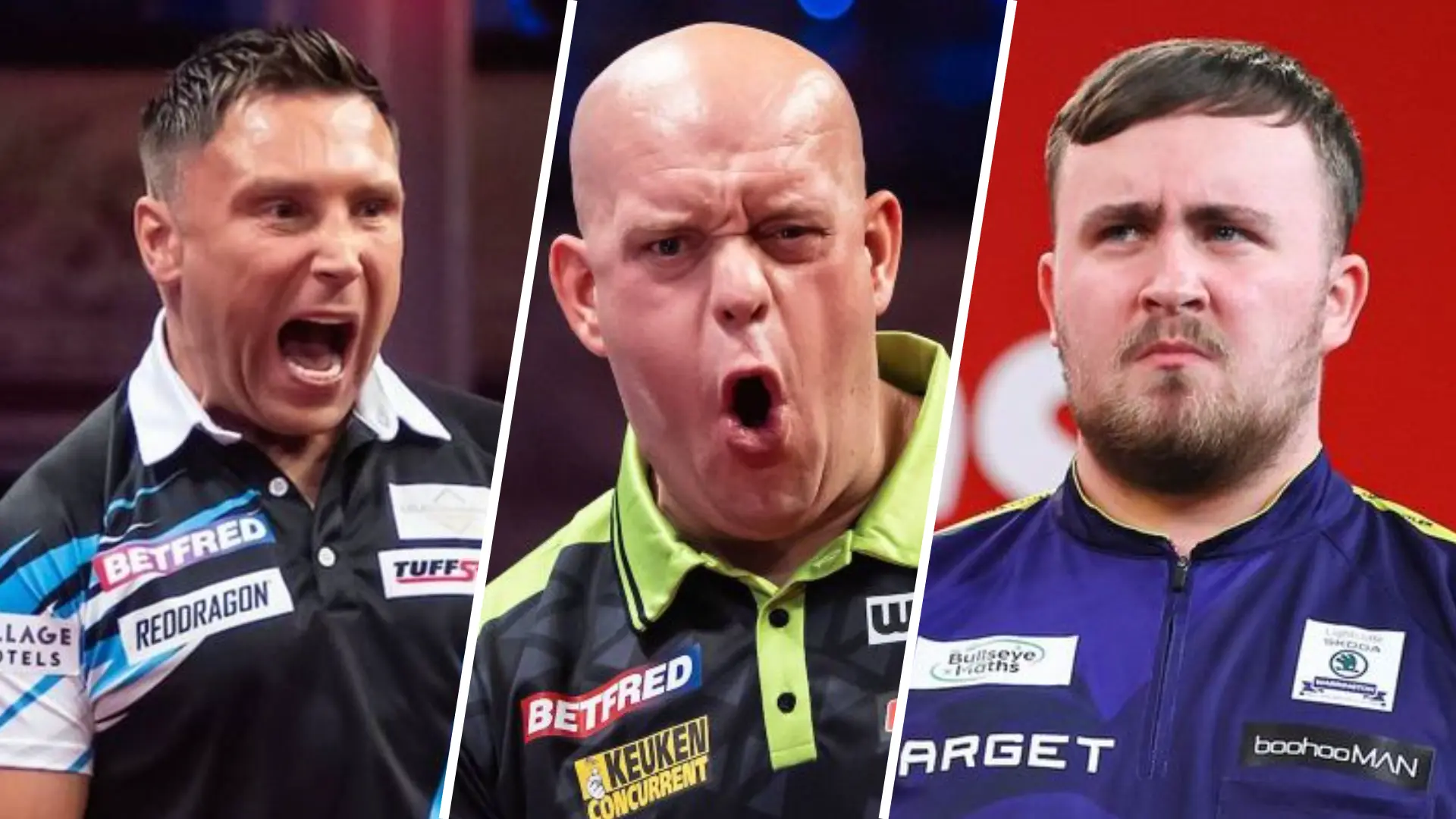
But Michael Van Gerwen defends just £7,500. He knows any money he can make between now and the World Championships, £200,000, is essential not just for his ranking but for his Premier League selection. With players like Ross Smith potentially taking this Premier League spot, he needs to focus on what has gone right this year. 122.34 against Schindler, Players Championship 15 winner.
There have been periods where Van Gerwen’s first nine have been to his 2010s standard. The period right now, however, the last 3 months, has dropped to 101.43. If he wants to win this title and make his old stomping ground a new home, he has to find the scoring power.

Ben James is a darts writer at DartsNews.com, covering professional darts with a focus on analysis, player storylines, and match context. He contributes articles on tournaments, player performances, and developments across the PDC calendar.
Ben is currently completing his A Levels in History, Sociology, and Business, with predicted grades of A, A, and A. He also completed an Extended Project Qualification (EPQ), awarded an A grade, titled “To what extent do psychological factors and equipment specifications determine performance in competitive darts?”, reflecting a strong interest in the analytical and psychological aspects of the sport.
He has published early work on platforms such as Medium, including articles on Joe Cullen and Niels Zonneveld, and is developing his experience in sports journalism. Ben is also set to attend a PDC event, building first-hand insight into the professional darts environment.
His interest in darts spans player narratives, match dynamics, scoring strategy, and the mathematical and psychological elements of performance. In his writing, he focuses on clear structure, contextual analysis, and accurate reporting.
claps 0visitors 0
Just in


Popular news

Latest comments
- I agree,I can't believe the lack of coverage of this sad loss. Always enjoyed watching him,but I guess now it's all about littler,well it seems that way. Darts has sadly lost a good manrick6717-10-2026
- In the absence of a report regarding the death of Stefan Lord, I'll assist. An excellent player in the late 70s and early 80s, he actually won the now defunct 3rd place match at two World Championships and a couple of the News of the World Championships. A fabulous player and easily the best Swedish player ever. Rest peacefully Stefan.richieburnettrocks16-10-2026
- Joking aside, it is the second most watched sport on sky (more than golf, F1 etc) behind football only, and in participation is second to only football and swimming. It doesn't get the attention or sponsorship of "bigger" sports because it's not as sexy, but it's right up there.BandB13-10-2026
- i love darts but you can't seriously believe it's the second most popular sport in the uk. even top five is pushing it. it may be the fastest growing, though.colt13-10-2026
- I'm a big Clayton fan, but he's got this completely wrong. Qualification criteria exists for a reason - so just as failing to make the top 32/64 for the Euro championships/PT Finals means you miss out, so does not lifting a title for this one.26sForFun12-10-2026
- The players who deliberately slow the game down are usually boring and win very little in the way of silverware. Horrible to watch.MrYnyslas197112-10-2026
- [“The Gentle” then used a sweeping and questionable phrase...] You anglocucks are hilariously finished in every sense of the word.Critical99911-10-2026
- I love Jonny but I disagree. The Grand Slam was always supposed to be "champion of champions" type competition. If the top 16 are guaranteed participation in everything there will be so much less jeopardy involved in qualifying and each major tournament will lose its unique flavour which the PDC has worked hard trying to develop. I enjoy following the qualification races towards the end of the year, and while consistency should have its rewards, the truth is Jonny hasn't reached a major final all year or won a single event on the Pro Tour. Being consistent is one thing, but that alone should have consequences as the sport's elite should not be prepared to accept consistently strong performances, their foremost motivation should be to win and this should be what separates them from the rest, not the consistency of their performances. Jonny is expecting that losing should be enough; it shouldn't be, at least not as far as the Grand Slam is concerned.Deduce635811-10-2026
- Well being honest,it doesn't matter what level you play at, there's always someone who slows it down to suit themselves,and extra swig of water, replacing flights, asking the ref what the score is. It happens wherever. I'm not saying it's professional,but I'm sure we've all seen it beforerick6711-10-2026
- Agree completely. Not sure how a ranking event can have a criteria not based on rankings. And he right on popularity. In the UK second only to football.BandB11-10-2026
Loading