The numbers behind Mike De Decker’s fall - From World Grand Prix winner to fighting for darting future
PDC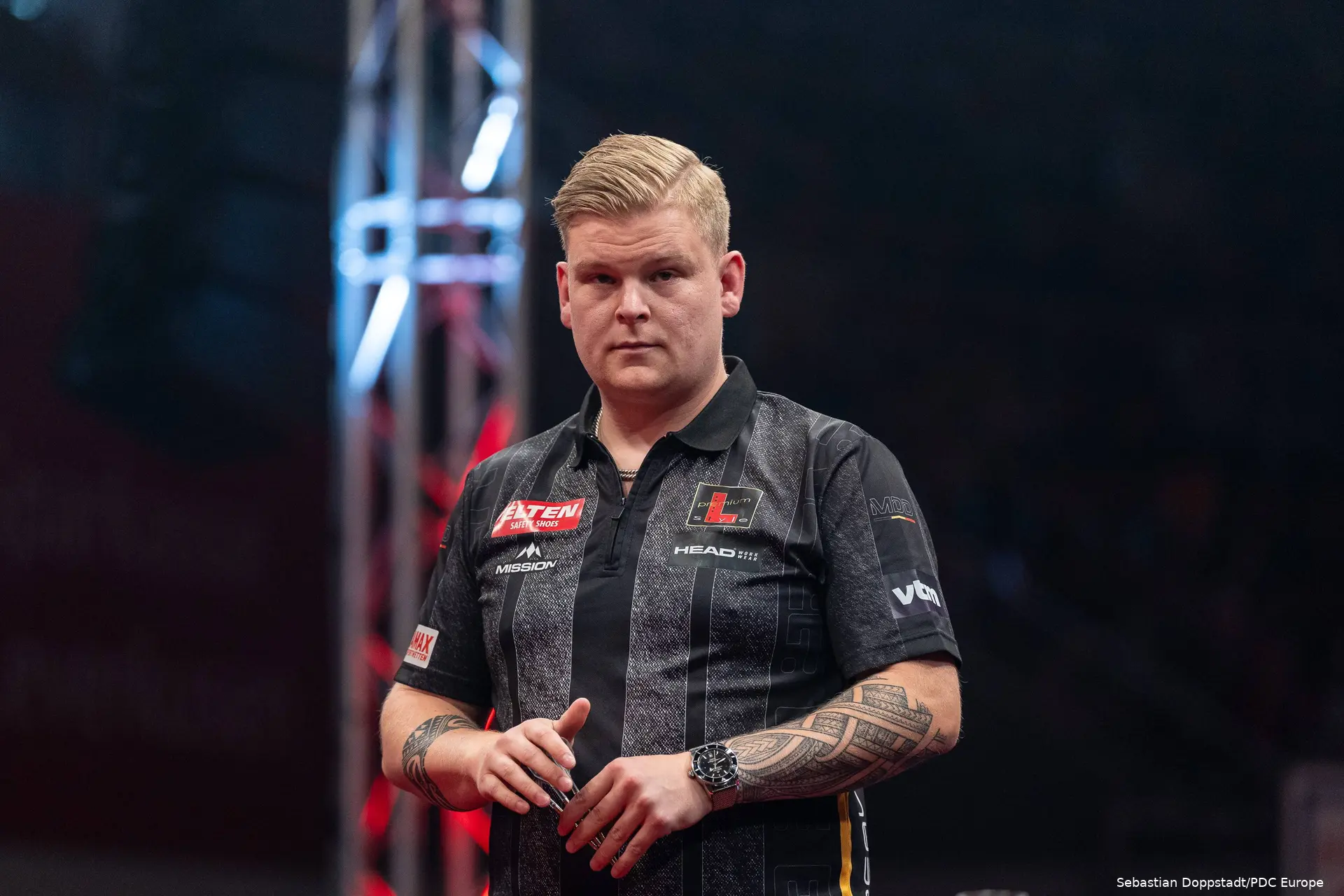
Following his World Grand Prix Title in 2024, Mike De Decker has failed to return to the top of darts and experienced a slow decline in the last two years. Defending £120,000 in October, De Decker risks falling outside the top 32 for the first time since he won the title in Leicester, turning a new chapter where the Belgian is not seen as a top player. Losing 61% of his games in 2026 and struggling to qualify for every major in the last 3 months of 2026, the numbers behind this explain the sudden fall after his maiden major title win.
ADVERTISEMENT
The stubbornness exposed
Throughout 2025, Mike De Decker qualified for most majors on the back of his Grand Prix win, riding the wave that saw him guaranteed prize money to keep his stay in the top 24 of darts. Now sitting World Number 24, the Belgian is only qualified for the World Championship and is below players without a tour card in the Players Championship finals race, including Tommy Morris and youngster Henry Coates. Defending £120,000 is a feat any player would be endangered by, but not qualifying for the event means the fear becomes impossible. Outside the World Grand Prix by £35,500, this money is bound to drop and this isn’t the only large sum of money dropping.
Outside the European Championship and Players Championship places, De Decker defends another £35,000 on top of this £120,000 sum, and this is explained by his stats. When qualifying for events, De Decker had a win percentage of 58%, a solid but most definitely below top level win percentage for the 30 year old. However, 2026 saw this figure drop to 39%, losing more than six of his ten matches which no matter how great the other four wins may be, will not sustain at the elite level of professional sport.
De Decker has benefited from seeded positions in many floor events yet failed to capitalize: 14 Players Championship exits and 8 European Tour exits. Furthermore, he has failed to average over 90 in 6 of those Players Championship events and 3 of the European Tour events. In the last 5 months, De Decker has averaged 90.78, which is far below tour level nevermind a player sitting inside the top 24. In the first 6 months of 2025, Mike De Decker averaged 94.50 and with a checkout percentage of 39.24%, his world ranking was completely justified.
These stats led him to the European Tour finals in Weise and his frustration at missing the Premier League in 2025 was understandable given his Grand Prix win. Yet, this doesn’t explain his stubbornness. Failing to attend the Dutch Darts Masters in 2025 as a result shows a lot of signs that explain the downfall. Danny Noppert would have felt snubbed this year, and James Wade, but they continued and didn’t have a public outcry.
On a psychological standpoint, this ego doesn’t produce performances and in the case of De Decker, has only caused a decline due to stubbornness to accept that he is in a performance dip. In an interview with Online Darts in 2025, De Decker said “At that time I thought I deserved it, but then if you look at 2025, it's a good thing that they didn't put me in”, showing a player who still believed he belonged at that level despite the evidence suggesting otherwise.
ADVERTISEMENT

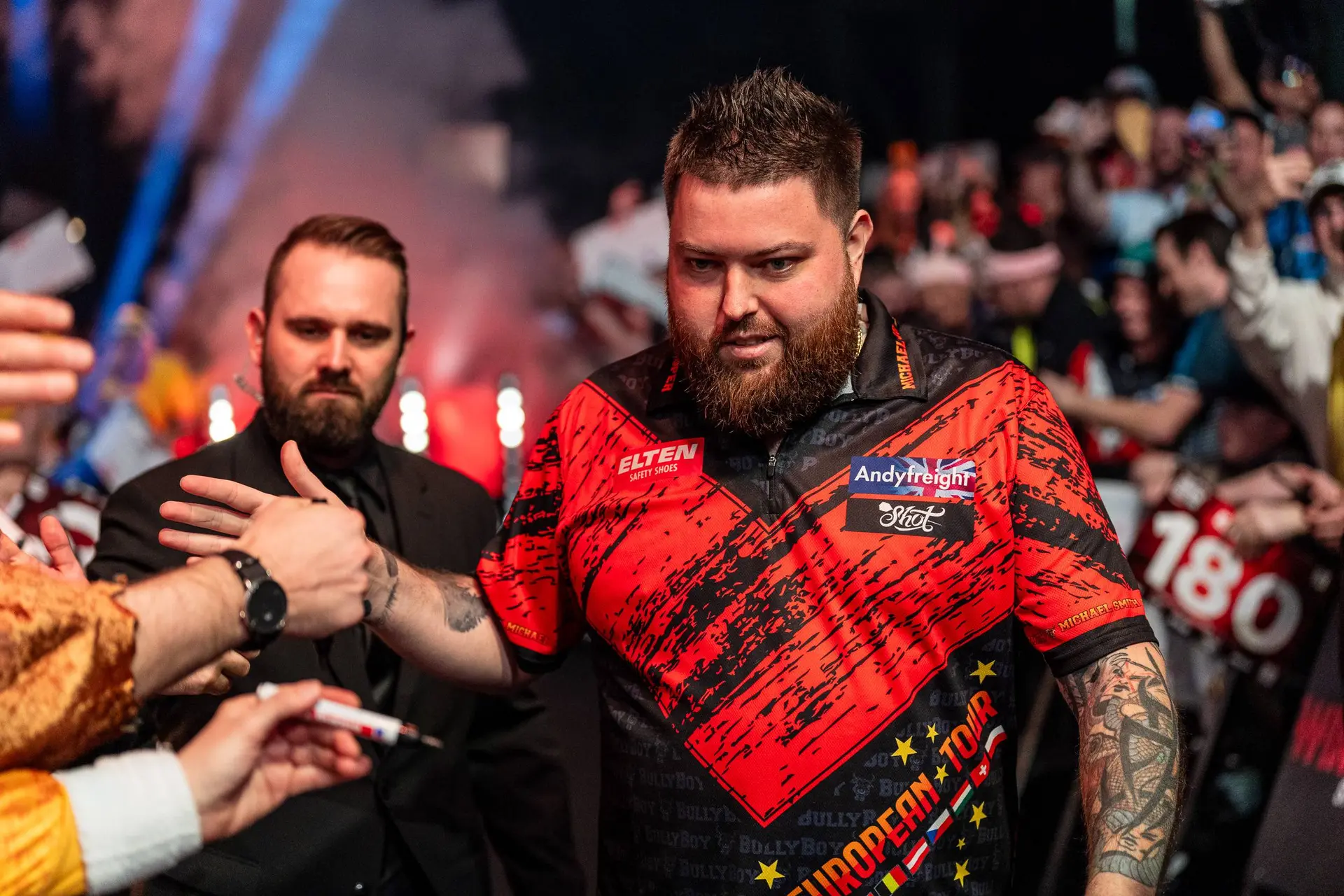
Mike De Decker formed a duo with Dimitri Van den Bergh at the World Cup of Darts
This shouldn't be a question when averaging in the low 90s and with his mindset. A clear change in his mindset can also be seen, seen when Mike De Decker exclaimed in the same interview “Hopefully I can go back to the feeling of end 2024. Then I would go into any game saying 'I will win this.' And last year I was hoping to win.". Hoping to win doesn’t produce results because De Decker would be pushing for darts to go into the treble bed, rather than trust himself for them to go into.
Now, with a 39% win percentage, a hope to win would be blinding optimism and this trust to win is a thought further away than his World Grand prix win. His game against David Munyua explained this. 2-0 up against the unknown African qualifier with little pushback is a comfortable position any player would know. Within an hour, Munyua was in London celebrating his first World Championships and put himself in the darts history books. Speaking after the match, De Decker exclaimed “There was something in me that said, 'Yeah, you're going to lose this.' And that's not a good thing to have when you're 2-0 or 2-1 up.".
That mindset is dangerous and it would have crept in on every lead Mike De Decker held in 2026, and it shows. His average is down by 4 points, his checkout percentage even more. This psychologically is the biggest illustration of how far he’s fallen.
The Collapse: Quarterly Stats 2025-2026
ADVERTISEMENT
| Metric | Feb-Aug 25 | Aug-Feb 26 | Feb-May 26 | May-Aug 26 |
| Average | 94.5 | 92.3 | 92.35 | 90.78 |
| Checkout % | 39.24% | 36.95% | 31.98% | 37.79% |
| First Nine | 102.34 | 100.51 | 100.65 | 99.09 |
| First Dart T20 % | 34.73% | 29.99% | 33.87% | 27.79% |
| 180s per Leg | 0.34 | 0.3 | 0.29 | 0.25 |
| Functional Doubles % | 45.61% | 44.38% | 36.42% | 43.42% |
| Deciding Leg Average | 93.2 | 92.46 | 97.4 | 92.69 |
| One Dart Checkout % | 74.23% | 70.99% | 60.23% | 71.43% |
The Practice Problem
For any player, practicing is needed to keep up the consistent level in the player’s game. Mike De Decker has admitted a problem to his attitude of practicing since his World Grand Prix win, with interviews revealing his attitude to practice is a structural distaste and failure to want to practice. Whether the Grand Prix win created a complacency that made practice feel unnecessary is impossible to say with certainty, but it explains the downfall. In an interview with Tungsten Tales in 2026, De Decker said “If I have to practice on my own, I get bored quite easily. So I try to invite some friends over to practice... because if I don't do it, then after an hour I just put them aside and stop because it is just so boring alone”. This attitude is, no doubt, the reason for his downfall. Without knowledge of his personal life, a professional sportsman whose job it is to play a sport must practice. It is not optional and De Decker now is facing the consequences of this.
He’s not going into tournaments sharp and although the Grand Prix and the back end of 2024 was successful, the rest of 2024 outside the Grand Prix win was not significantly stronger than 2025 or 2026 in terms of results. But, in 2026 the practice problem is revealing itself. In the first 5 months of 2026, De Decker played with a 92.35 average, and this dropped to 90.78 in the space of 3 months. the drop in average from 92.35 to 90.78 in three months, well beyond the equipment adjustment period, strongly suggests practice is a contributing factor Furthermore, inviting friends, not other darts professionals or strong amateurs is another problem. That isn’t practice. That is a game and it removes the mindset and the psychological stress of a game that can't be replicated when playing with friends to practice.
Doubles aren’t as important compared to a PDC match, a treble 20 to get down to 161 on 261 similar. He’s addressed this problem, but without the conviction that is needed; “I've been pushing myself to practice more going into 2026... a lot more than I did last year.". This isn't a guarantee to practice, more a pledge to practice on the back of his poor 2025. Now with his win percentage dropping 19%, this pledge clearly hasn't been fulfilled. What could go wrong has gone wrong for De Decker and his lack of practice can be scapegoated. Something else can as well.
ADVERTISEMENT

Mike de Decker faces a sharp fall.
The uncalculated error
Signed to Bulls throughout his career and playing with the same setup for eight or nine years, De Decker's switch to Mission after his Grand Prix win was the uncalculated error that set everything else in motion. Not switching his darts for 8 years since his change to Mission, a switch to a different set up is a jump that can’t be understated. New coating, new grip, new length, new tungsten. This took De Decker longer to get used to them than expected. In 2024, his BULLS set up included a natural tungsten barrel with micro ringed grooves and short stems. This can’t be criticized as it brought De Decker major success and his first PDC floor title, with it used through his whole PDC career. In 2026, De Decker is using a Gold Titanium PVD coated barrel, with dual zone square ring cuts and wide grooves, and pattern flights rather than clear red flights.
In 2024 with pure tungsten darts, the sliding between each dart produces predictable sliding deflections, meaning dart two and dart three glide down dart one and into the same bed. Yet Gold Tin PVD sliding against Gold Tin PVD, this creates a stick slip phenomena when barrels collide at high velocity, which is definitely likely with De Decker’s short stems and his powerful throw. Not just this, The shorter 2024 darts compared to a longer 2026 dart has shifted the balance point of the dart, altering the natural grip and now changing a throw built across nine years of the same darts. With all variables combining, a doubt loop has been caused and can be seen with his darts. This biomechanical analysis can be seen with his initial misses; bound to happen with any dart player and especially with a dart player who doesn’t practice as much as they are required to. After this, a micro adjustment failure is caused, and a loss of trust has been found. Now with every dart De Decker throws, there will be hesitation mid back-swing on high pressure scenarios. This explains his loss to David Munyua. Psychologically, De Decker isn’t the same player we saw in 2024 and his darts could be to blame.
Bulls vs Mission: The Biomechanical Breakdown
ADVERTISEMENT
| Component | 2024 Bulls Setup | 2026 Mission Setup |
| Barrel Finish | Natural Tungsten Raw/Uncoated | Gold Titanium Nitride PVD Coated |
| Grip Profile | Dense unbroken micro-radial ring cut full length | Segmented dual-zone square ring cuts with wide grooves |
| Point Tech | Silver rough-etched diamond-grip point | Blackened high-friction nano-textured surge point |
| Shaft/Stem | Intermediate Red Polycarbonate/Nylon | Short-Intermediate Clear Polycarbonate |
| Flight Geometry | Standard No.2 Red Translucent Smooth | Standard No.2 Grey/Tattoo Patterned Textured |
| Stacking Effect | Predictable tungsten-on-tungsten sliding deflections | Stick-slip phenomena causing erratic deflections into 1 and 5 beds |
The Stubbornness made it worse
With this new equipment change in 2025, he made a European tour final. A new chapter seemed to be turned, but with no knowledge about the repercussions of this, it could have been the worst thing to happen. It was a false positive, with De Decker admitting in the interview with Tungsten Tales “I was too stubborn to make a change early in the season. I made a final in Wieze and then I thought, 'Yeah, it can't be the setup.' But the whole season was with ups and downs... I knew something had to change and I think I just waited a bit too long with it.". Wieze made De Decker think his new darts were the answer, but he dismissed the evidence that it was negatively impacting his darts, and later appealed with repeated public mentioning of his Premier League Omission. Psychologically, this was damaging because all the negatives relieved itself and in due time, this premier league dismissal was admitted as correct.
Then, a Players Championship 5 semi-final. But overall, he won just £146,000 in 2025, a lower number than the amount he defended in the last 3 months of 2026. In the same interview, he dropped the line that summed up his downfall. “If you win one major, you think you can win any major, and that's how I went into tournaments. The switch to Mission didn't help at that time.". This complacency defines De DEcker and his season still hasn’;t recovered, and 2027 could be worse for him
The Ranking Money at Risk
ADVERTISEMENT
| Tournament | 2024 Result | Defending | Window |
| World Grand Prix | Winner | £120000 | October 2026 |
| European Championship | Last 16 | £15000 | October 2026 |
| Players Championship Finals | Quarter Final | £20000 | November 2026 |
| Grand Slam of Darts | Quarter Final | £12250 | November 2026 |
| ET12 and ET13 | Deep runs | £8500 | September-October 2026 |
| PC floor events | Various | £17000 | September-October 2026 |
| Total defending | £192750 | Sep-Dec 2026 |
The numbers behind De Decker's fall are damaging enough in isolation. Where they lead is more alarming. His current ranking total stands at £407,000 across two years, but 52.6% of that, £214,250, was earned in 2024. The majority of that 2024 money is spent between October and December 2026, with £120,000 of it coming from a single result: the World Grand Prix he won inLeicester. Defending champion. Forty-fourth in the qualifying standings. No where near the field. That is where De Decker stands heading into the most important event of his career since winning it. He has already missed the World Matchplay, failed to qualify for the European Championship and fallen outside the Players Championship Finals top sixty-four.
The World Championship is the only major he is guaranteed entry to, and that is not because of his 2026 form. It is because of his 2024 results buying him one more year of automatic inclusion. Without the Grand Prix win still in the window, that conversation changes too. A first or second round exit at the Grand Prix produces between £7,500 and £15,000. The net loss on that single event is approximately £105,000 to £112,500. Combined with the £35,000 he is defending across the European Championship and Players Championship Finals, events he has already failed to qualify for, the total defending exposure between October and December is approximately £192,750. His 2026 earnings so far: £46,750. The maths is straightforward and it is brutal.
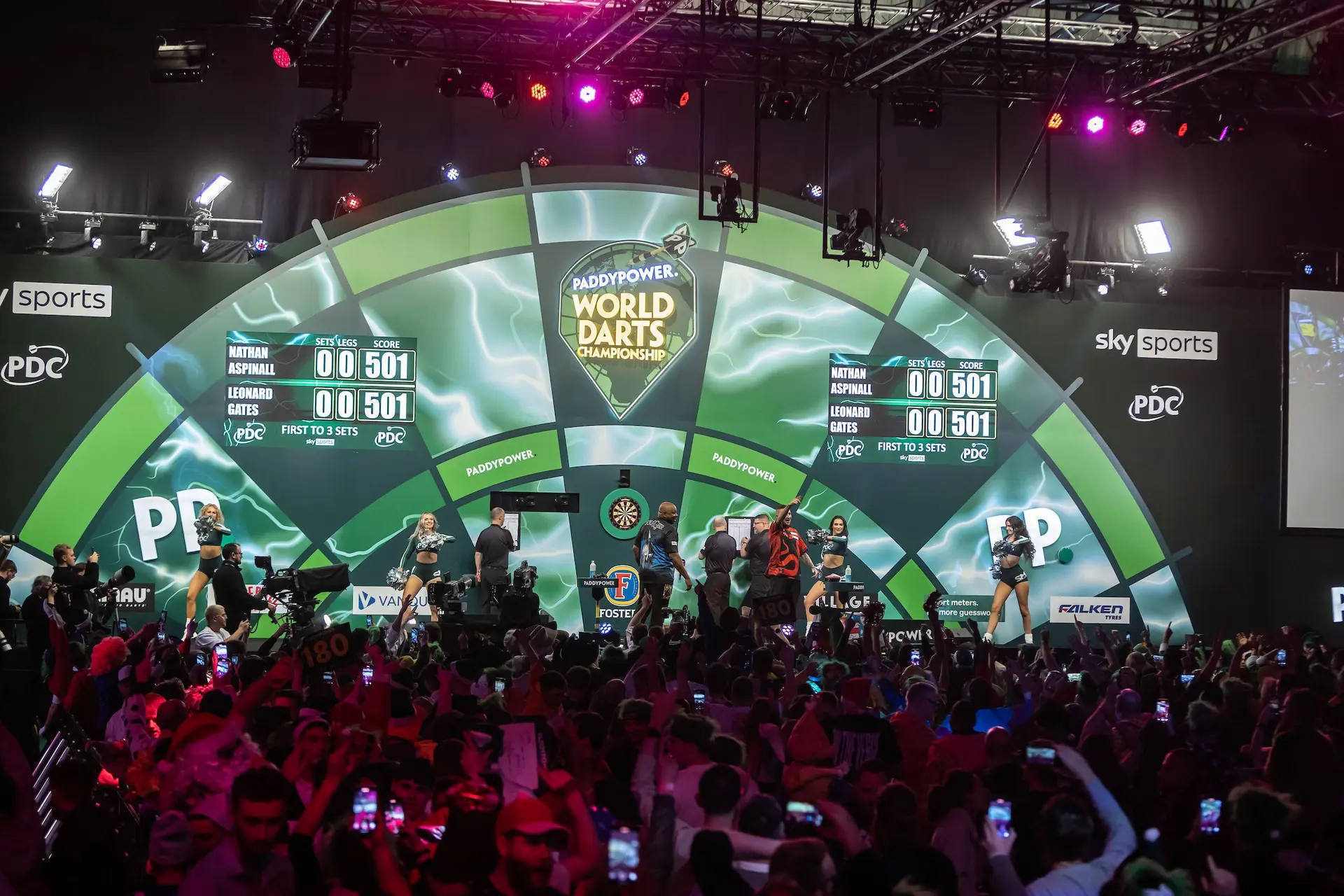
If the World Grand Prix produces a first round exit, his two-year total falls to approximately £294,500. That puts him around the world thirty-sixth to fortieth. Outside the top thirty-two means losing automatic World Matchplay qualification. Outside the top sixteen means losing World Grand Prix seeding. He is already outside both of those thresholds on current form and the defending window makes it structurally worse, not better. There is one honest positive.
ADVERTISEMENT
The Players Championship 12 quarter-final run beating Bunting, Vandenbogaerde and Ross Smith, and the 107.14 against O'Connor at European Tour Nine, show the ability has not left. The shorter shaft discovery showed comfort can return. But structure changing in August does not rescue a year that has already produced fourteen Players Championship first round exits, eight European Tour first round exits and a 39% win rate. October arrives in six weeks. £120,000 drops off in six weeks. A player who waited twelve months to fix a problem he knew about in month one has not shown the urgency that the next six weeks require.
Ben James is a darts writer at DartsNews.com, covering professional darts with a focus on analysis, player storylines, and match context. He contributes articles on tournaments, player performances, and developments across the PDC calendar.
Ben is currently completing his A Levels in History, Sociology, and Business, with predicted grades of A, A, and A. He also completed an Extended Project Qualification (EPQ), awarded an A grade, titled “To what extent do psychological factors and equipment specifications determine performance in competitive darts?”, reflecting a strong interest in the analytical and psychological aspects of the sport.
He has published early work on platforms such as Medium, including articles on Joe Cullen and Niels Zonneveld, and is developing his experience in sports journalism. Ben is also set to attend a PDC event, building first-hand insight into the professional darts environment.
His interest in darts spans player narratives, match dynamics, scoring strategy, and the mathematical and psychological elements of performance. In his writing, he focuses on clear structure, contextual analysis, and accurate reporting.
claps 0visitors 0
Just in

Popular news

Latest comments
- Doesn't matter who's in it,it's boringrick6710-10-2026
- Assuming you qualify as one of the "muppets" in question. Classist too. And since you're so clearly interested in academia, look up "linguistic descriptivism" while you're at it. Oh, and better stay away from the working class sport of darts and maybe offer your insightful analysis to, let's say, croquet instead?Deduce635806-10-2026
- The consequences of being uneducated and grammatically challenged. "To all THOSE muppets not THEM " Everytime I see Arsepinall, I have an image of him wearing a cap, standing behind the counter of a fast food establishment.richieburnettrocks05-10-2026
- I don't understand Littler's reason for playing this tournament.rick6705-10-2026
- James Wade has become James Wide. He has piled on the tonnage considerably, he barely fits in his shirt.richieburnettrocks03-10-2026
- Littler will play whatever tournaments he decides. But does every headline have to start with him? Bristow bought Taylor through,and he followed that with Lewis. I can't see littler doing the same. Let him choose,and lose,he's getting good at that lately!rick6702-10-2026
- I believe he has it in him to qualify for the Worlds as he consistently wins matches, even if it is only one or two at a time, although his recent PC quarter-final run was somewhat encouraging in that regard. I think there is a lot of pressure for him to retire, people in the media accusing him of tarnishing his legacy. I think that is a ridiculous line of thinking. How ungrateful it is to attach terms and conditions to the amazing moments he has provided us over the course of his career. What position are we in to dictate to him how he should manage his career when it is he who achieved those successes in the first place? What's more, this is his life and the passion that sustains it, it is not for us to decide when his career is over when it is he who must bear the genuine ramifications of that decision. Since I'm sure money is not a concern, the only question on which the decision should rest is whether he truly continues to enjoy competing. He has retired once before, but the desire to compete is what brought him back. We see a lot of negative body language and he does genuinely look miserable when he is not playing well, but only he will know when he wakes up the next day whether he wants to go and do it all over again. If he wants to compete, he should, it's as simple as that, this is a decision that should not involve anyone else but him and his family. He should not retire to indulge the whims of the media or the public. What satisfaction would he receive by being forced into retirement? What closure would it bring to such a brilliant career? When Phil Taylor decided to retire, his decision was final and resolute. I believe RvB needs to get to this point himself, no matter how many 70 averages it might take. We see the likes of John Part continue to compete on a regular basis well past his prime, I say more power to him, and who knows, further glory could be around the corner, it's darts after all, you just never know. Sometimes I worry that RvB is acutely aware of the clamour for him to retire and that this pressure may even have an impact on his performances as he begins to question whether there is even a place for him in darts anymore, further compounding his poor form and creating a vicious loop. Perhaps to take his future into his own hands would provide him with a levity and freedom that would lend itself to better performances, not to mention an improved wellbeing. In any case, it is under these conditions that one can clear-headedly and definitively settle an issue so profound as retirement, not when you feel you're being rushed out the door. If his performances can no longer sustain his presence on the tour, so be it; as it stands his card seems safe for this year but is in serious jeopardy next year. He could always allow himself to drop off the tour naturally rather than forfeiting his place in the top 64, this could provide a sense of finality while offering a route back through Q-School if he so desired; after all, he's done it before. In conclusion, I just hope that RvB can play - or not play - for his own sake, rather than anyone else's, so that when the time comes he can be in no doubt as to his decision, leaving no lingering questions, so that he can reflect with no regret or uncertainty on the marvelous career he has had.Deduce635826-09-2026
- Luke Littler has been good for the sport of darts, no question. But he is not above it. For his sake and ours, he needs to be put in his place sometimes, rather than having his every whim catered to. That is not how you build a good person nor a good sporting organisation, and it's beginning to have consequences.Deduce635826-09-2026
- Extremely disappointing decision. It used to be that, along with major events and Euro Tours, the Players Championship series constituted one of three standards against which successful darts players could be measured, one of three challenges every successful darts player should be expected to master to consider themself among the elite. Now they are dead weight in the darting calendar, and player turnout and the standard of competitiveness will reflect that. The truth is that Luke Littler and other big names would rather play lucrative exhibitions than put in the hard graft that being a successful dart player requires. It undermines the authority of the PDC and the game in general. So what do they do about it? Give them exactly what they want. Of course, why wouldn't they? They are their star attractions. It is ironic that an organisation formed in protest by the sport's elite should be undermined and disrespected by their contemporary equivalents, but the PDC had a chance to stand up to them with a firm message: play 2 events all year and expect the final to be played without you. Instead, they caved in. These events will be hardly worth playing anymore and this decision may have grave consequences for the future of floor events at the elite level. Some may say the calendar is overstuffed, yet these elite players have more than enough time to play plenty of exhibitions. The Premier League in particular is gruelling, but busy players are not expected to play every event, they are expected to manage their playing schedule carefully in order to apportion their time and energy appropriately. Clayton and Humphries, for instance, both sit in the top 20 of the Players Championship and European orders of merit, in addition to competing in the Premier League; they have proven it is absolutely possible and this change is an insult to their efforts in effectively managing their calendars. I think we are seeing players who simply think they are too good for Pro Tour events, arrogance which should be punished rather than rewarded as we are seeing here. Furthermore, why should success in Euro Tours qualify you for the Players Championship Final? The PDC are blurring the lines between those three disciplines of darting excellence, and in so doing destabilising the very foundations upon which the organisation and its success is built. Some may say I'm overreacting, but this, in addition to the PDC's subservience and snivelling obsequiousness toward their biggest assets, makes me fear for the future of professional darts.Deduce635826-09-2026
- I guess this will mean the top players will turn up even less? Taken all the excitement of qualifying away I think. Wish they made it top 32 to qualify and the finals to last all week.Baphomet26-09-2026
Loading