“The United States is a huge opportunity, as are China and Germany” – Target Darts aims for one hundred million players by 2030 thanks to Luke Littler’s popularity
PDC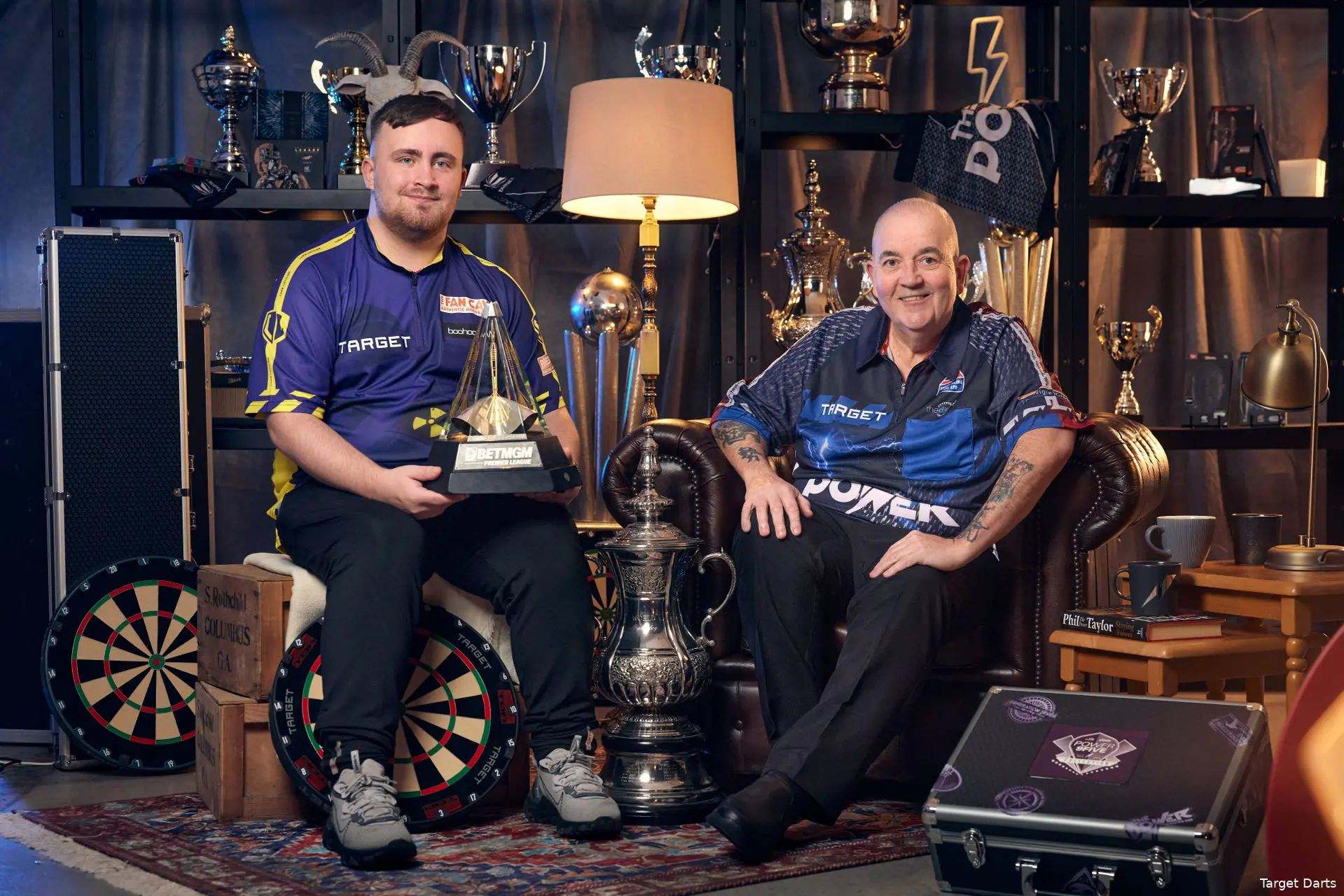
Darts is experiencing unprecedented global growth, and at Target Darts they are convinced the ceiling is still a long way off. The darts manufacturer has set an ambitious goal: by 2030, one hundred million people worldwide should be picking up the arrows. CEO James Tattersall sees enormous potential to further grow the sport, particularly in countries such as the United States, China, and Germany.
ADVERTISEMENT
At first glance, one hundred million players sounds almost unattainable, but Tattersall takes a different view. According to the chief executive, the current global playing base only needs to “merely” triple. “It's only three times more people than are playing today, so we believe it's there to be done,” Tattersall explained on talkSPORT. “There are so many markets where darts still hasn't reached its potential. The United States is a huge opportunity, as are China and Germany. For us, this is really just the beginning, and there are a few things we're going to do to help accelerate the growth of the game.”
Target aims to drive that growth in part by reinventing how darts is played. The company is looking squarely at technology. For instance, Target unveiled the Target Arcade, designed to add more game elements to traditional darts.
“There are a couple of big priorities," Tattersall said. "Firstly, it's about continuing to innovate and allowing people to play darts in new ways. Today we've unveiled Target Arcade, which is all about gamifying darts and giving people new ways to enjoy the sport. The professional players loved it when we demonstrated it to them."
Read also
But the plans go beyond entertainment. Tattersall also sees a major role for data, artificial intelligence, and motion tracking. While sports like tennis and Formula 1 are now analysed down to the smallest detail, darts is still relatively early on that front, he said. “The second area is performance. How can we help improve performance in darts? In many sports, as performance improves, so does the popularity of the sport.”
According to Tattersall, technology can play an important role in that. “We're looking at using technology, AI and motion tracking to bring new insights into darts because, when you think about it, there really isn't much data available at the moment. You have checkout percentages and averages, but there's so much more information that can be collected, and that can really help drive the sport forward.”
Luke Littler as a model for a new generation
ADVERTISEMENT
It is no surprise that Target is heavily focused on youth. The company sponsors and supports 75 youth academies worldwide. One of the biggest successes from that program is Luke Littler. The current world-class player was signed by Target at the age of twelve.
Even so, Tattersall stresses that the aim is not simply to hunt for “the next Littler.” "I don't think our job is to find the next Luke Littler. Our job is to create a system that gives thousands of young players the opportunity to succeed in the same way Luke has. That's a huge part of what we're building."
The progress within the youth academies makes him optimistic. "We already sponsor and manage 75 youth academies around the world, and the talent coming through them is truly fantastic. Of course, it was at one of those academies that we first discovered Luke Littler when he was just 12 years old, and that's when we signed him."

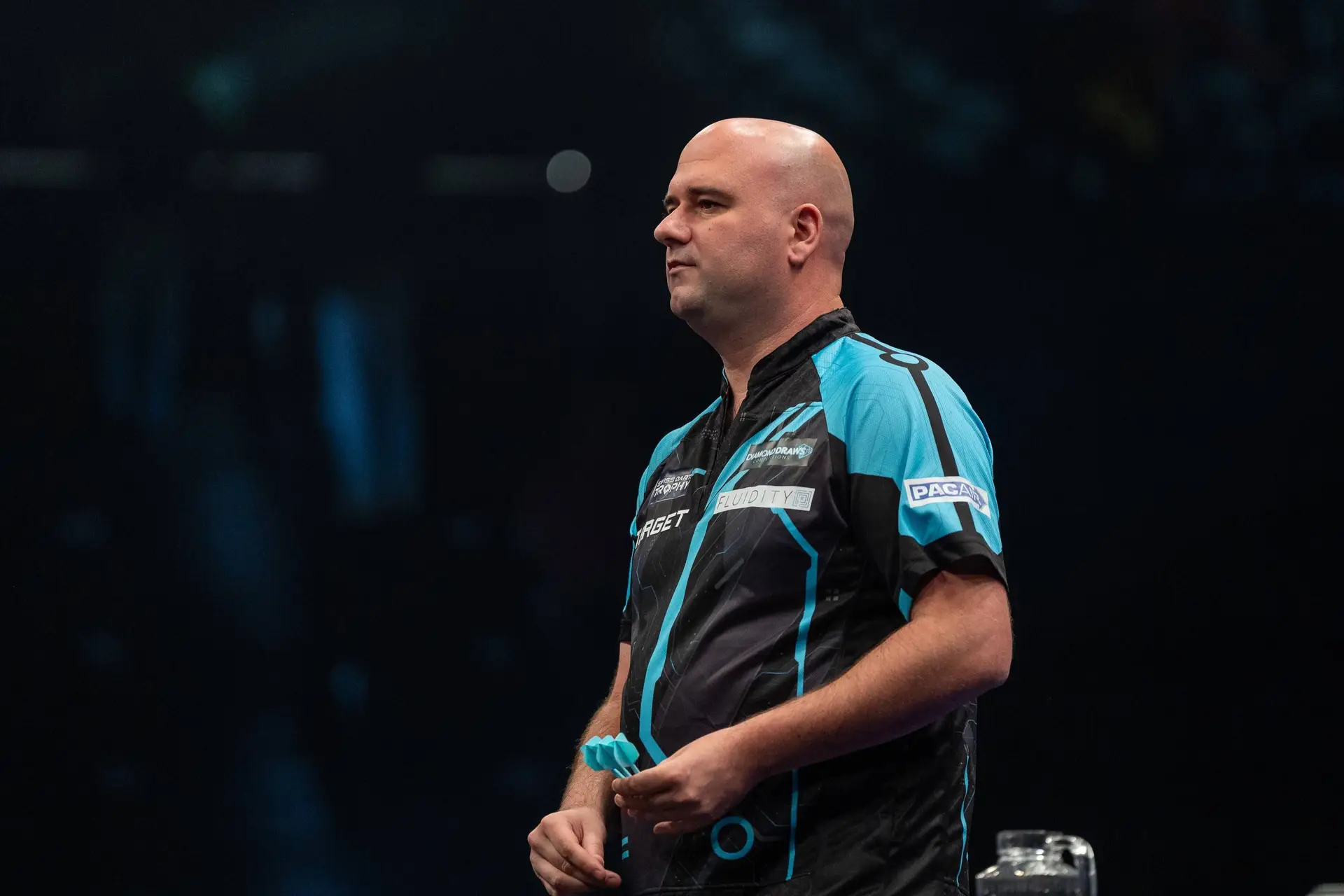
Luke Littler is the flagship figure for darts manufacturer Target Darts
Moving away from the traditional pub-sport image
ADVERTISEMENT
Another priority is changing the traditional image of darts. For years, the sport was mainly associated with pubs, but Target believes that view is outdated. Tattersall wants to take darts to new venues and, in doing so, reach new audiences.
“For us, it's about taking darts into the future. Why should it still carry the stigma of being just a pub sport?”
Target has therefore partnered with Powerleague. In 24 locations, darts should find a place alongside other sports. “Today we also announced a partnership with Powerleague, and we'll be installing darts in 24 Powerleague venues alongside football and padel. They're fantastic venues across the country, and putting darts into places like that helps build communities and makes the sport much more accessible.”
Systems that automatically track what a player throws should also help. With the Omni system, for example, darters can play online against others.
ADVERTISEMENT
Darts potentially as an educational tool
Tattersall also sees opportunities beyond traditional sporting environments. According to the CEO, Target is in talks with educational institutions in various countries about a possible role for darts.
The sport offers several advantages. “That's one of the great things about darts. Almost anyone can play it because there isn't a huge financial barrier to getting started.”
Then there is the sport’s mathematical aspect. During a match, players constantly calculate, from adding scores to determining the right finishes. According to the discussion partners, that could also make darts interesting as an educational tool.
For Target, it ultimately comes down to two things: introducing as many people as possible to darts and further professionalising the sport’s performance level. “That's the other side of it. Where is the sports science in darts? How do we get the sport to the same level as tennis or Formula One in terms of data?"
ADVERTISEMENT
“Darts is mainstream now”
Tattersall has a clear picture of where the sport should ultimately go. The status of professional darters, he believes, should be comparable to that of elite athletes in much larger and traditionally more professional sports.
“When a professional dart player arrives at a venue, we want it to feel like Roger Federer arriving at Wimbledon. That's the aspiration. Darts has become mainstream, and we want players to be treated like elite athletes.”
Read also
To achieve that, the Target boss says a different approach to analysis is also needed. An automated scoring system can currently register that a player missed double 16, but Tattersall is particularly interested in how that double is missed.
ADVERTISEMENT
“Take an auto-scoring system as an example. It might tell you that you missed double 16, but how did you miss it? Was it by five millimetres or by five centimetres.”

Lucas MichaelDarts Journalist
Lucas Michael is a darts journalist and reporter based in Cambridge, UK, and has been part of the DartsNews team since 2025. He covers professional darts through reports, analysis, round-ups, and live coverage, with a focus on clear context and accurate reporting across the PDC calendar.
A key part of his work is liveblogging major tournaments throughout the year, providing real-time updates, match coverage, and contextual reporting across the professional circuit. He also reports regularly from events on site and has covered the PDC World Darts Championship from the venue, delivering first-hand insight throughout the tournament.
Within the newsroom, Lucas works closely with the editorial team and supports coverage alongside Chief Content Officer Samuel Gill and reporter Kieran Wood.
Lucas holds a BA (Hons) in Sports Journalism. In his work, he places strong emphasis on careful sourcing, editorial accuracy, and updating content promptly when new, verified information becomes available.
claps 0visitors 0
Just in



Popular news


Latest comments
- I agree,I can't believe the lack of coverage of this sad loss. Always enjoyed watching him,but I guess now it's all about littler,well it seems that way. Darts has sadly lost a good manrick6717-10-2026
- In the absence of a report regarding the death of Stefan Lord, I'll assist. An excellent player in the late 70s and early 80s, he actually won the now defunct 3rd place match at two World Championships and a couple of the News of the World Championships. A fabulous player and easily the best Swedish player ever. Rest peacefully Stefan.richieburnettrocks16-10-2026
- Joking aside, it is the second most watched sport on sky (more than golf, F1 etc) behind football only, and in participation is second to only football and swimming. It doesn't get the attention or sponsorship of "bigger" sports because it's not as sexy, but it's right up there.BandB13-10-2026
- i love darts but you can't seriously believe it's the second most popular sport in the uk. even top five is pushing it. it may be the fastest growing, though.colt13-10-2026
- I'm a big Clayton fan, but he's got this completely wrong. Qualification criteria exists for a reason - so just as failing to make the top 32/64 for the Euro championships/PT Finals means you miss out, so does not lifting a title for this one.26sForFun12-10-2026
- The players who deliberately slow the game down are usually boring and win very little in the way of silverware. Horrible to watch.MrYnyslas197112-10-2026
- [“The Gentle” then used a sweeping and questionable phrase...] You anglocucks are hilariously finished in every sense of the word.Critical99911-10-2026
- I love Jonny but I disagree. The Grand Slam was always supposed to be "champion of champions" type competition. If the top 16 are guaranteed participation in everything there will be so much less jeopardy involved in qualifying and each major tournament will lose its unique flavour which the PDC has worked hard trying to develop. I enjoy following the qualification races towards the end of the year, and while consistency should have its rewards, the truth is Jonny hasn't reached a major final all year or won a single event on the Pro Tour. Being consistent is one thing, but that alone should have consequences as the sport's elite should not be prepared to accept consistently strong performances, their foremost motivation should be to win and this should be what separates them from the rest, not the consistency of their performances. Jonny is expecting that losing should be enough; it shouldn't be, at least not as far as the Grand Slam is concerned.Deduce635811-10-2026
- Well being honest,it doesn't matter what level you play at, there's always someone who slows it down to suit themselves,and extra swig of water, replacing flights, asking the ref what the score is. It happens wherever. I'm not saying it's professional,but I'm sure we've all seen it beforerick6711-10-2026
- Agree completely. Not sure how a ranking event can have a criteria not based on rankings. And he right on popularity. In the UK second only to football.BandB11-10-2026
Loading