Once the pinnacle of the world stage, where Van Barneveld and Bristow made history; now history itself: how the BDO headed for its own demise
BDO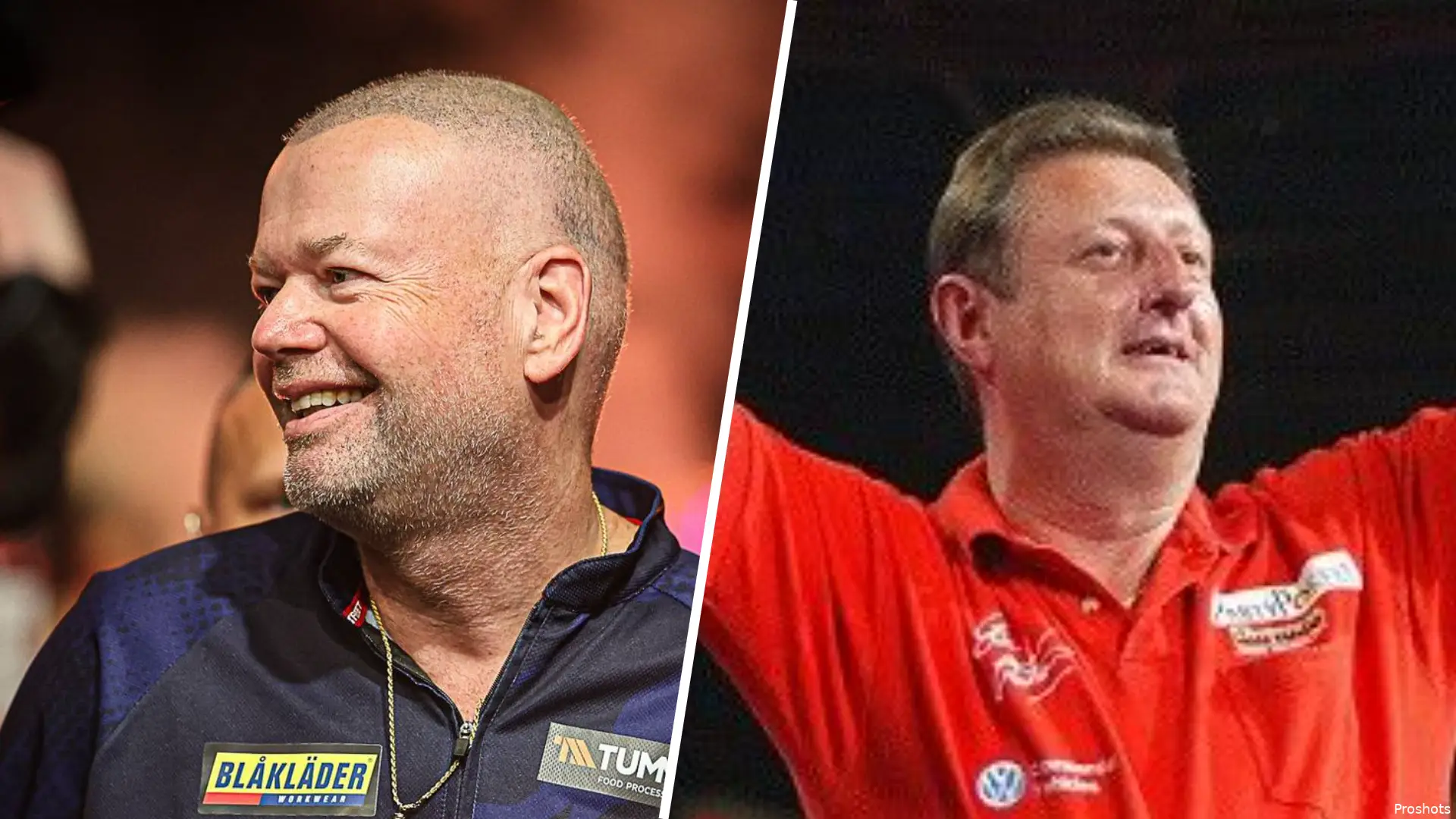
For almost half a century, the British Darts Organisation (BDO) was one of the leading bodies in the sport. Founded in 1973 as an initiative by Olly Croft, it grew into the organisation behind a world championship that brought together the sport’s very best for many years. But after years of mismanagement, the wheels came off in 2020 and the organisation was wound up.
ADVERTISEMENT
Legends such as Eric Bristow, John Lowe, Raymond van Barneveld and Phil Taylor made their names in an era when the BDO played a central role in international darts. Yet behind the success and historic finals lay a story of conflict, missed opportunities and a rival that kept growing stronger. The creation of the Professional Darts Corporation (PDC) in the 1990s changed the sport forever. As the PDC became the commercial face of professional darts, the BDO gradually lost its biggest stars, its television coverage and, ultimately, its financial clout. In September 2020, an organisation that had shaped the sport for 47 years came to an end.
Olly Croft lays the foundations for a new darts organisation
The BDO’s story began on 7 January 1973. On that day, Olly Croft founded the British Darts Organisation. The Englishman would remain the organisation’s figurehead for almost four decades and became one of the most influential administrators in darts history.
Before the BDO was founded, British darts was largely organised by the National Darts Association of Great Britain (NDAGB). Croft wanted to professionalise the sport’s administration and better coordinate its various competitions and regional structures.
The BDO gradually grew into an organisation with 66 affiliated counties. It was not focused solely on the elite. It also organised competitions for amateur players, semi-professionals and juniors. In doing so, the governing body played an important role in developing darts at every level.
Croft also left his mark on the sport’s rules and standards. The BDO established the standard dartboard dimensions and throwing distance still used today. The organisation was also one of the founding members of the World Darts Federation (WDF), which was formed in 1976.
But the BDO wanted to do more than provide a structure for local leagues. Croft also saw the potential to turn darts into a sport capable of reaching a large television audience.
ADVERTISEMENT
Darts received increasing attention on British television during the 1970s. Matches appeared on the BBC and ITV, gradually turning the best players into familiar faces. The growth of larger tournaments also opened the door to prize money and sponsorship deals.
A major milestone came in 1978, when the BDO staged the first World Professional Darts Championship. Darts now had an official world championship, bringing together the leading players of the era.
The tournament grew into the biggest event on the calendar and would eventually become the face of the BDO.
The World Championship becomes an institution
The first World Championship was held in 1978 at the Heart of the Midlands Club in Nottingham. Welshman Leighton Rees became world champion by beating John Lowe 11–7 in legs in the final. Rees received £3,000 for his title, while runner-up Lowe had to settle for just over half that amount.
ADVERTISEMENT
The tournament then moved to Stoke-on-Trent, where Eric Bristow would win the first three of his eventual five world titles.
In 1986, the World Championship moved to the Lakeside Country Club in Frimley Green. The venue would remain synonymous with the tournament for more than three decades.
Thanks to sponsorship from tobacco brand Embassy, the tournament was known for many years as the Embassy World Professional Darts Championship. That partnership lasted until 2003, when tobacco advertising was banned at sporting events in the United Kingdom. From 2004, the event became known as the Lakeside World Professional Darts Championship.
The World Championship became a fixture for darts fans. Unlike many modern sporting events, it was held in a relatively small venue, with players close to the crowd. That intimate atmosphere, combined with the tension of matches played over several sets, gave the tournament a character of its own.
ADVERTISEMENT
Lakeside became a stage where players could make their names. Although it was technically the “unofficial” World Championship—the BDO was affiliated with the World Darts Federation, which organised its own World Cup—there was never any doubt in the darts world. This was regarded as the only true World Championship. The world title was the biggest prize in professional darts, and the winner could call themselves world champion for a year.
The BDO therefore played a crucial role in the sport’s growth. The World Championship gave players a target to work towards and offered sponsors and broadcasters an event they could put their name to.
The World Masters, first held in 1974, also became a major tournament. Alongside the World Championship, it formed one of the pillars of the BDO calendar.
At the time, the organisation was much more than a governing body that arranged matches. It was the central point of contact for international elite darts and had a major say in which players appeared on the biggest stage.
But just as the sport’s popularity was growing, a problem emerged that would eventually transform the BDO’s future.
ADVERTISEMENT

Olly Croft with Andy Fordham and his wife
The glory years and the big names
During the 1970s and 1980s, darts became a popular television sport. The top players became household names, and the World Championship regularly produced thrilling finals.
Names such as Eric Bristow, John Lowe and Jocky Wilson became icons. They belonged to a generation that put darts on the map and secured its place in British sporting culture.
Bristow, nicknamed “The Crafty Cockney”, was one of the biggest stars of that era. His success and outspoken personality made him hugely popular. After winning three titles at the West Midlands Club, he went on to claim two more world titles at Lakeside. Lowe, meanwhile, was known for his calm demeanour and outstanding technique.
ADVERTISEMENT
Players such as Bob Anderson, Dennis Priestley and, later, Phil Taylor also played important roles in darts history. Taylor won his first two world titles with the BDO, then claimed another 14 with the PDC to become the record holder.
The sport’s popularity gave the BDO the chance to stage bigger events and secure commercial partnerships. Television appearances and sponsorship deals meant professional players could increasingly earn a living from darts.

Phil Taylor won his first two world titles with the BDO
Yet that growth proved fragile. By the end of the 1980s, darts had largely disappeared from major British television channels. Where several tournaments had once been broadcast, the World Championship was eventually the main event left on screen.
That had far-reaching consequences. Less television coverage meant less exposure for sponsors and fewer opportunities for players to build full-time professional careers.
ADVERTISEMENT
It was a pivotal moment for the BDO. The organisation had helped popularise the sport, but it could not maintain television coverage at the level of previous years.
Players grew increasingly dissatisfied. They felt too little was being done to create new tournaments, attract sponsors and expand the professional opportunities available in darts.
Tensions with the BDO leadership mounted. Olly Croft’s response to the demands of the top players would ultimately lead to a historic split.
The split that changed darts forever
A conflict between the BDO and a group of prominent players erupted in the early 1990s. The players wanted more professional tournaments, greater television coverage and better financial terms.
ADVERTISEMENT
In January 1992, a group of players founded the World Darts Council (WDC). They included 16 professional players, among them almost all the former world champions still competing. The new organisation wanted to stage its own events and make better use of darts’ commercial potential.
The players now had an alternative to the BDO system. Their initiative, however, sparked a lengthy struggle for control of the sport.
The BDO did not accept the breakaway without a fight. The conflict escalated in January 1993, when the rebels announced they would enter the 1994 World Championship only if it was staged under the WDC banner. The BDO responded by banning them from its tournaments. The split was complete.
The 1993 World Championship was the last to feature all the top players together. John Lowe won his third and final world title, beating Alan Warriner in the final. From 1994 onwards, the two organisations each staged their own World Championship.
The WDC later changed its name to the Professional Darts Corporation (PDC). It no longer aimed to govern darts as a whole, instead focusing on developing and promoting elite professional darts.
The legal battle between the two sides lasted for years. The BDO eventually had to accept that players were free to choose which organisation they represented. The PDC established itself as a permanent part of the darts landscape. The consequences were enormous. The sport now had two World Championships and two separate circuits.
For fans, that meant the best players could no longer all be seen on the same stage. For the BDO, it meant losing its position as the sole organisation behind the World Championship.
The split was undoubtedly one of the biggest turning points in darts history. It created a rival that would eventually overtake the BDO on almost every commercial front.

John Lowe was the last world champion before the PDC was formed
The PDC grows as the BDO loses ground
After the split, both organisations had to find their own path. The BDO kept its existing tournaments, county structure and World Championship at Lakeside. Meanwhile, the PDC began investing in a larger professional circuit.
The PDC staged more and more tournaments and secured new television deals and sponsors. This gave players the chance to earn more prize money and made a career in darts a more attractive prospect.
The gap between the two organisations gradually widened. For many players, the choice became clear. Those who wanted to compete at the highest level and pursue the biggest financial opportunities increasingly joined the PDC.
The BDO still played an important role in developing talent. Players could gain experience, compete in national and international tournaments and attract attention from the bigger organisations.
But that created a structural problem: the BDO developed players who left for its rival as soon as they had the chance. One of the best-known examples was Raymond van Barneveld. The Dutchman became one of the biggest stars in BDO history. He won four world titles with the organisation and helped make darts hugely popular in the Netherlands.
Van Barneveld joined the PDC in 2006. He wanted to test himself against the world’s best, including Phil Taylor. His move was a major boost for the PDC and a significant blow to the BDO.
A year later, Michael van Gerwen, Jelle Klaasen and Vincent van der Voort were among those who followed. The BDO had lost several more of the Netherlands’ biggest talents.
Several British and international stars also made the switch. Gary Anderson, Mark Webster, Simon Whitlock and Robert Thornton all left the BDO at different times.
Stephen Bunting followed in 2014, having recently become BDO world champion. In 2019, Glen Durrant made the same choice after winning three consecutive BDO world titles.
The departure of such players weakened the field and made it harder to maintain the appeal of BDO events.
Even so, the organisation remained an important stepping stone for many players. The BDO offered opportunities to those who were not yet ready for the PDC or wanted to develop their careers in a different way.
There was no doubt that the BDO continued to produce talent for many years. The problem was that it was increasingly unable to keep that talent for long.
Olly Croft eventually loses power
Although Olly Croft had been the face of the BDO for years, dissatisfaction with its policies also grew within the organisation.
In the years after the split, criticism grew louder. Too few new televised tournaments were added, commercial growth stalled and the gap with the PDC kept widening.
A major shift in power came in 2011. At the BDO’s annual general meeting, almost all the sitting board members lost their positions. Croft was also forced out, ending his time as the organisation’s dominant figure.
Croft’s departure marked the end of an era. He had led the BDO from its foundation and played a decisive role in the development of darts in Britain.
His legacy remained a matter of debate. On one hand, he built an organisation that made the World Championship possible and brought the sport to television. On the other, critics saw his approach as inflexible and insufficiently responsive to the changing needs of professional players.
The world of darts had changed. The PDC was becoming increasingly professional and investing in commercial growth, while the BDO struggled to hold its position.
After Croft’s departure, the organisation failed to gain the fresh momentum many had hoped for. Problems with revenue, sponsorship and television coverage remained.
The BDO had a rich history, but that history was not enough to secure its future.
The end of the BBC era
Another major blow came in 2016, when the BBC decided not to continue its partnership with the BDO World Championship. That ended a 38-year relationship between the broadcaster and the tournament. The BBC chose instead to shift its darts coverage to a new PDC event, the Champions League of Darts.
Losing the BBC was particularly painful for the BDO. The World Championship had been a fixture on British television for decades and had become synonymous with darts for many viewers.
After the BBC’s departure, the 2017 and 2018 editions were shown on Channel 4 and BT Sport. From 2019, the tournament aired on Quest and Eurosport.
Television coverage remained, but the broad exposure the BBC had provided for years was gone. That made it harder to attract new sponsors and reach a mass audience.
Meanwhile, the PDC benefited from its growing commercial clout. Its World Championship offered ever-larger prize funds and attracted more attention from broadcasters and sponsors.
The contrast between the two organisations became increasingly clear. While the PDC strengthened its position as the leading professional circuit, the BDO fought to preserve its existing events and revenue streams.
The financial problems became harder to hide. The World Championship remained a prestigious event, but the organisation behind it had less and less room to absorb setbacks.
Top five players with the most BDO world titles
| Player | Number of BDO world titles | Years |
| Eric Bristow | 5 | 1980, 1981, 1984, 1985, 1986 |
| Raymond van Barneveld | 4 | 1998, 1999, 2003, 2005 |
| John Lowe | 3 | 1979, 1987, 1993 |
| Martin Adams | 3 | 2007, 2010, 2011 |
| Glen Durrant | 3 | 2017, 2018, 2019 |
The disastrous year of 2019
The problems mounted further in 2019. One of the most damaging incidents occurred at the World Masters, one of the biggest tournaments on the BDO calendar.
Changes to the qualifying process caused confusion among players. Some competitors had not been registered correctly, while others were unaware of the new requirements. The draw was also chaotic, with names included that did not match actual participants.
The events drew widespread criticism of the organisation. The World Darts Federation (WDF) responded by downgrading the BDO to associate-member status and announcing that it would no longer recognise BDO tournaments. The WDF cited rule violations and changes to the draw during the competition.
It was a severe blow to an organisation that had already lost much of its international standing to the PDC. The problems were not limited to administration, either. The BDO’s finances were also worsening.
The BDO struggled to generate enough revenue and failed to find a new sponsor for the 2020 World Championship. Ticket sales fell far short of expectations, putting prize money under severe pressure.
The organisation had also decided to move the World Championship away from Lakeside after 33 years. The 2020 edition was relocated to the Indigo at London’s O2 complex. The move was meant to mark a fresh start, but it could not solve the underlying problems.
Wayne Warren wins the final World Championship
The 2020 World Championship would ultimately be the last staged under the BDO banner. Shortly before the tournament began, chairman Des Jacklin announced that the prize money had to be cut substantially. No new sponsor had been found, and only a small share of the available tickets had been sold.
The announcement sparked anger among the players. They had prepared for a World Championship without knowing how much money would ultimately be at stake.
The consequences were significant. Wayne Warren won the men’s title but received just £23,000 for his world championship. That was a drop of around 77 per cent from the winner’s prize a year earlier.
By comparison, Peter Wright earned £500,000 by winning the 2020 PDC World Championship. The difference showed just how far apart the two organisations had grown financially.
The financial situation also caused discontent in the women’s event. Fallon Sherrock, who had made history in 2019 by winning two matches at the PDC World Championship, withdrew from the BDO tournament in protest at the prize-money cut.
The 2020 edition was therefore marked not only by financial problems but also by a lack of trust in the organisation. The tournament went ahead nonetheless. Wayne Warren beat fellow Welshman Jim Williams in the final, making history as the last BDO men’s world champion.
It was a bitterly fitting end to an event that had been one of darts’ highlights for decades. Warren had won a world title, but the organisation that awarded it was on the brink of collapse.

Wayne Warren, the last BDO world champion
Des Jacklin and the final collapse
Des Jacklin, the husband of player Paula Jacklin, was the face of the BDO in its final years. He was tasked with guiding the governing body through a difficult period, but the financial problems proved too severe.
In March 2020, Jacklin announced his resignation as director, chairman and managing director. He had already warned about the consequences of poor ticket sales and the lack of sponsorship income. The organisation failed to improve its finances in a lasting way.
Barely a month later, Jacklin was back in charge. In September 2020, the BDO was finally placed into liquidation. That brought to an end, after 47 years, the organisation founded by Olly Croft in 1973.
It was a dramatic finish for a governing body that had once been the absolute centre of professional darts. The problems had built up over many years: loss of television coverage, the departure of top players, a lack of commercial growth and administrative mistakes in its final years.
The collapse did not mean the end of darts in Britain. The United Kingdom Darts Association (UKDA) took on an important role in organising county darts, while the WDF continued to run international competitions and later staged its own World Championship again.
But the BDO itself was gone.

Des Jacklin was the BDO’s final chairman
Iconic matches
The BDO, and especially the World Championship at Lakeside, produced many historic matches over the years. Choosing from all those memorable duels is difficult, but here are three that left a lasting impression.
First, there was the 1992 World Championship final between Phil Taylor and Mike Gregory. The two Englishmen served up a genuine thriller, with big scores and impressive finishes. The match went to a deciding 11th set, where a tie-break would settle the contest. Gregory had several chances to claim the world title but failed to take them. He missed two match darts at double 8, then two at tops, followed by another two at double 10. He became the first player to miss match darts at a double in a World Championship final and still lose the title. It happened again only in 2018, when Mark McGeeney also failed to take his chances against Glen Durrant in the BDO World Championship final.
Taylor made the most of his compatriot’s missed chances and forced a sudden-death leg. He kept his composure and came out on top to win his second world title. His 97.58 average in the final also remained a record for a BDO World Championship final, standing until the tournament ended in 2020.
The 2006 World Championship final also deserves a place in this list. It was the first and, to date, only all-Dutch final at the BDO World Championship, as well as the only all-Dutch final at a darts World Championship. Raymond van Barneveld faced the 21-year-old Jelle Klaasen, who produced a huge upset on his Lakeside debut.
Van Barneveld began the final as a clear favourite. The Dutchman was chasing his fifth BDO world title and had already lifted the trophy four times. With his idol Eric Bristow in attendance, everything seemed set for another “Barney” triumph. But the final took a very different turn. Klaasen played without fear and beat the experienced world champion 7–5 in sets. It was a huge disappointment for Van Barneveld, while Klaasen was crowned world champion at just 21.
Klaasen’s victory made history. After Van Barneveld, he became only the second Dutchman to win the BDO world title. Christian Kist joined them in 2012, beating Tony O’Shea 7–5 in the final to become the third Dutch winner. For Van Barneveld, the defeat marked the end of an era: it was his final BDO World Championship appearance. He soon moved to the PDC, where he continued his career at the highest level and later won another world title.
| Year | Dutch winner | Final opponent | Score |
| 1998 | Raymond van Barneveld | Richie Burnett | 6–5 |
| 1999 | Raymond van Barneveld | Ronnie Baxter | 6–5 |
| 2003 | Raymond van Barneveld | Ritchie Davies | 6–3 |
| 2005 | Raymond van Barneveld | Martin Adams | 6–2 |
| 2006 | Jelle Klaasen | Raymond van Barneveld | 7–5 |
| 2012 | Christian Kist | Tony O'Shea | 7–5 |
A year later, Lakeside staged a final that went down in history as one of the most extraordinary matches ever seen at the BDO World Championship. Martin Adams faced Phil Nixon in 2007 and looked set for a straightforward world title. Adams, who had previously lost World Championship finals to Raymond van Barneveld, built a commanding 6–0 lead in sets. No one at the Lakeside Country Club seemed to doubt the outcome. Preparations for the trophy presentation could almost begin.
Nixon had other ideas. The Englishman mounted a phenomenal comeback, fighting his way back into the match set by set. The score moved to 6–1, then 6–2, 6–3, 6–4 and 6–5. When Nixon also won the 12th set, the match was suddenly level at 6–6. The Lakeside crowd could hardly believe what it was seeing: a final that had looked over was wide open again.
Adams, though, managed to keep his nerve when it mattered. He found the edge in the final set and secured his first world title. For “Wolfie”, it was an emotional victory and the start of an impressive run. Adams would go on to win two more world titles, in 2010 and 2011, establishing himself as one of the biggest names in BDO history.
A legacy that lives on
The BDO’s history cannot be summed up as a story of failure alone. For almost half a century, the organisation made a fundamental contribution to the development of darts.
It established the first professional World Championship, helped standardise the rules and gave generations of players the chance to prove themselves at the highest level.
The darts landscape would undoubtedly look different today without the BDO. Many of the sport’s biggest names made their mark during the BDO era before, in some cases, moving to the PDC.
At the same time, its collapse shows the danger of a sports organisation failing to adapt to changes in the market. The PDC understood that professional players needed more tournaments, bigger prize funds and a wider commercial platform. The BDO failed to provide a convincing response.
The split in the 1990s was the decisive turning point. From then on, the BDO had to compete with an organisation that attracted ever more money and television coverage.
Read also
Losing its biggest players made that competition harder to sustain. When the BBC also walked away and financial problems mounted, the governing body’s future became increasingly uncertain.
The final World Championship in 2020 proved a fittingly tragic end: a champion fulfilled his dream but received far less than his predecessors, while the organisation behind the event breathed its last.
The BDO is gone, but its influence remains visible. The World Championship tradition, the memories of Lakeside and the careers of countless champions are all part of darts history.
What began as Olly Croft’s initiative grew into an institution. That institution ultimately failed to reinvent itself, but it laid much of the foundation on which modern professional darts could build.
Lucas MichaelDarts Journalist
Lucas Michael is a darts journalist and reporter based in Cambridge, UK, and has been part of the DartsNews team since 2025. He covers professional darts through reports, analysis, round-ups, and live coverage, with a focus on clear context and accurate reporting across the PDC calendar.
A key part of his work is liveblogging major tournaments throughout the year, providing real-time updates, match coverage, and contextual reporting across the professional circuit. He also reports regularly from events on site and has covered the PDC World Darts Championship from the venue, delivering first-hand insight throughout the tournament.
Within the newsroom, Lucas works closely with the editorial team and supports coverage alongside Chief Content Officer Samuel Gill and reporter Kieran Wood.
Lucas holds a BA (Hons) in Sports Journalism. In his work, he places strong emphasis on careful sourcing, editorial accuracy, and updating content promptly when new, verified information becomes available.
claps 0visitors 0
Just in


Popular news
Latest comments
- I'm a big Clayton fan, but he's got this completely wrong. Qualification criteria exists for a reason - so just as failing to make the top 32/64 for the Euro championships/PT Finals means you miss out, so does not lifting a title for this one.26sForFun12-10-2026
- The players who deliberately slow the game down are usually boring and win very little in the way of silverware. Horrible to watch.MrYnyslas197112-10-2026
- [“The Gentle” then used a sweeping and questionable phrase...] You anglocucks are hilariously finished in every sense of the word.Critical99911-10-2026
- I love Jonny but I disagree. The Grand Slam was always supposed to be "champion of champions" type competition. If the top 16 are guaranteed participation in everything there will be so much less jeopardy involved in qualifying and each major tournament will lose its unique flavour which the PDC has worked hard trying to develop. I enjoy following the qualification races towards the end of the year, and while consistency should have its rewards, the truth is Jonny hasn't reached a major final all year or won a single event on the Pro Tour. Being consistent is one thing, but that alone should have consequences as the sport's elite should not be prepared to accept consistently strong performances, their foremost motivation should be to win and this should be what separates them from the rest, not the consistency of their performances. Jonny is expecting that losing should be enough; it shouldn't be, at least not as far as the Grand Slam is concerned.Deduce635811-10-2026
- Well being honest,it doesn't matter what level you play at, there's always someone who slows it down to suit themselves,and extra swig of water, replacing flights, asking the ref what the score is. It happens wherever. I'm not saying it's professional,but I'm sure we've all seen it beforerick6711-10-2026
- Agree completely. Not sure how a ranking event can have a criteria not based on rankings. And he right on popularity. In the UK second only to football.BandB11-10-2026
- Doesn't matter who's in it,it's boringrick6710-10-2026
- Assuming you qualify as one of the "muppets" in question. Classist too. And since you're so clearly interested in academia, look up "linguistic descriptivism" while you're at it. Oh, and better stay away from the working class sport of darts and maybe offer your insightful analysis to, let's say, croquet instead?Deduce635806-10-2026
- The consequences of being uneducated and grammatically challenged. "To all THOSE muppets not THEM " Everytime I see Arsepinall, I have an image of him wearing a cap, standing behind the counter of a fast food establishment.richieburnettrocks05-10-2026
- I don't understand Littler's reason for playing this tournament.rick6705-10-2026
Loading