Who were the world No. 1s in the PDC Order of Merit, and how long did each reign last? Michael van Gerwen holds a remarkable PDC record
FAQ
The PDC Order of Merit is the ranking system for professional darts at the Professional Darts Corporation (PDC). Over the years, only thirteen players have led the world rankings in darts.
ADVERTISEMENT
These rankings are determined entirely by the prize money players earn at official PDC ranking tournaments. The current Order of Merit format has been used since the 2007 Darts World Cup and replaced the original PDC ranking system introduced in 1993. In that old system, players received points according to the status and prestige of a tournament.
Here is what the article contains:
1. How did the old PDC Order of Merit work?
2. How does the PDC Order of Merit work now?
3. Warriner-Little's first run as world number one
4. Taylor briefly in power in 1996 and 2000
5. New rivals for Taylor and 2032 day run
6. New king as Van Gerwen rules for over 2558 days, Humphries current leader
7. How long as World Number One
2. How does the PDC Order of Merit work now?
3. Warriner-Little's first run as world number one
4. Taylor briefly in power in 1996 and 2000
5. New rivals for Taylor and 2032 day run
6. New king as Van Gerwen rules for over 2558 days, Humphries current leader
7. How long as World Number One
1. How did the old PDC Order of Merit work?
Until 2007, the PDC worked with a classic points system. Players received ranking points according to the round they reached and the prestige of the tournament. There was no limit on the number of tournaments that counted for the total, so the highest ranked players were not necessarily also the strongest at the major majors.
A well-known example is Colin Lloyd, who was the PDC's number one player for most of 2005 and 2006, while the main titles during that period were mainly distributed among Phil Taylor, John Part and also Raymond van Barneveld.
At the time, winning the world title earned 50 points for the world rankings, and winning another PDC major earned 30 points. A Pro Tour title earned as many as 20 points. In other words, two Pro Tour titles and one quarterfinal earned as many points as winning the PDC World Championship.
While there were obviously far fewer Pro Tour tournaments played back then, it is unthinkable these days to grab the number-one position with merely good performances on the floor. The 2026 World Champion will receive one million pounds in prize money. A player must win 67 Players Championship tournaments to surpass that amount of prize money.
ADVERTISEMENT
2. How does the Order of Merit now work in the PDC?
The Professional Darts Corporation (PDC) switched to the current Order of Merit system in 2007. In this ranking system, the total prize money a player earns in PDC ranking tournaments within the applicable period counts. For players with a PDC Tour Card, that period is normally two years.
The World Darts Championship is considered the last tournament of the season. Immediately afterwards, the year-end rankings are drawn up and the top 64 players automatically receive a Tour Card for the following season. New Tour Card holders always start again at £0, even if they already had a Tour Card the previous year but finished outside the top 64. They must then regain their Tour Card through the Q-School qualifying tournament.
Even players without a Tour Card can earn prize money in PDC ranking tournaments during the season and thus gain a listing on the Order of Merit. The most famous example is Luke Littler during the 2024 World Darts Championship, who managed to enter the top-64 of the PDC Order of Merit in one fell swoop by reaching the World Cup final. However, if they do not reach the top-64 at the end of the year, their earned prize money is reset to £0.
ADVERTISEMENT
When two players finish tied and a decision is needed for placement or qualification, the total prize money in the four most recent ranking tournaments is looked at first. Then, if there is still no difference, they count backward from the most recent tournament until the difference becomes clear.
3. Warriner-Little first World Number One
When the World Darts Council (WDC) was founded in 1993, the forerunner of the PDC, Alan Warriner-Little became the world's first number one. He then managed to hold this position for 674 days.
Remarkable detail is that 'Wozza' did not manage to win a single PDC major during this period. On Nov. 6, 1994, World Championship winner Dennis Priestley took over the top spot following his participation in the 1994 Lada UK Masters. Rod Harrington took over the throne in April 1995 after his final appearance at the UK Matchplay, not to be confused with the World Matchplay in Blackpool.
ADVERTISEMENT

Alan Warriner was the first world number one at the WDC, the forerunner of the PDC
4. Taylor briefly in power in 1996 and 2000
In 1995, Phil Taylor took his first world title with the PDC, and on Jan. 1, 1996, "The Power" became world champion again. Yet it would not be until August 1996 that Taylor was allowed to top the PDC rankings for the first time.
However, Taylor could not enjoy this status for long, because after 31 days he had to cede the first spot to Warriner. Warriner's second period as world number one lasted 699 days, and from August 1, 1998, Harrington took over this role for 728 days. In 2000, Taylor returned to the number-one position, but this time it lasted only 57 days. Peter Manley relieved him on Sept. 24, 2000, and held the position for as many as 399 days.
Then the first spot returned to Warriner, who led the rankings from Oct. 28, 2001, to May 2002. During this period, he did have to share the first spot, as of Jan. 5, 2002, with Taylor for 28 days. In May 2002, Warriner lost the top spot for the last time, bringing his number of days as world number one to 1558 days. A number surpassed by only two players.
ADVERTISEMENT

| Rank | Name | How long spent as World Number One |
| 1 | Phil Taylor | 3343 |
| 2 | Michael van Gerwen | 2558 |
| 3 | Alan Warriner-Little | 1553 |
| 4 | Rod Harrington | 1205 |
| 5 | Luke Humphries | 683 |
| 6 | Colin Lloyd | 664 |
| 7 | Gerwyn Price | 562 |
| 8 | Peter Manley | 398 |
| 9 | Michael Smith | 364 |
| 10 | John Part | 202 |
| 11 | Peter Wright | 159 |
| 12 | Raymond van Barneveld | 158 |
| 13 | Dennis Priestley | 154 |
| 14 | Luke Littler |
5. New rivals for Taylor but 2032 day run begins
Taylor's fourth stint as best darter at the PDC was the first to last more than 100 days. He lost the number one spot after the legendary World Championship final against John Part in 2003, winning the world title and doubles to call himself number one in the world.
Later that year, Taylor reclaimed the first spot, then held it for 582 days until February 2005. Colin Lloyd then became the new world number one. Although Lloyd had won the World Grand Prix in 2004 and also took the title at the World Matchplay in 2005, he amassed his points mainly by playing significantly more Pro Tour tournaments than his major competitors.
ADVERTISEMENT
In June 2006, the first spot returned briefly to Taylor, who held first place again for a week. To date, that is still the shortest period that a player has held first place consecutively. Lloyd had retaken the top spot after one more and held it until the 2007 World Championship. Taylor lost to Raymond van Barneveld at this World Championship in a historic World Championship final, but did return to the head of the new PDC Order of Merit, which took effect as of the 2007 World Darts Championship.
This time, Taylor held the lead position for exactly one year. From Jan. 1, 2008, Raymond van Barneveld was allowed to lead the rankings. This lasted six months before Taylor began his longest period as number one. This run eventually lasted 2032 days.
6. New king as Van Gerwen rules for over 2558 days, Littler current king
January 1, 2014 marked the dawn of a new era. It was the day that Michael van Gerwen captured his first world title, also becoming the new world number one. It became a darter's longest period as a ranking leader. No less than seven consecutive years Van Gerwen was the leader of the PDC Order of Merit.
ADVERTISEMENT
After Van Gerwen's dominance, the number-one position changed hands more regularly. Gerwyn Price became the successor to 'Mighty Mike' after winning the world title in 2021. Then it was a change of fortunes with Peter Wright, who twice took the top spot from 'The Iceman'.
Price, however, was allowed to go to the 2023 World Darts Championship as the world number one and then lost the top spot for good. The first spot was taken over by Michael Smith, who had won over Van Gerwen in the 2023 World Darts Championship final on Jan. 3, 2023.
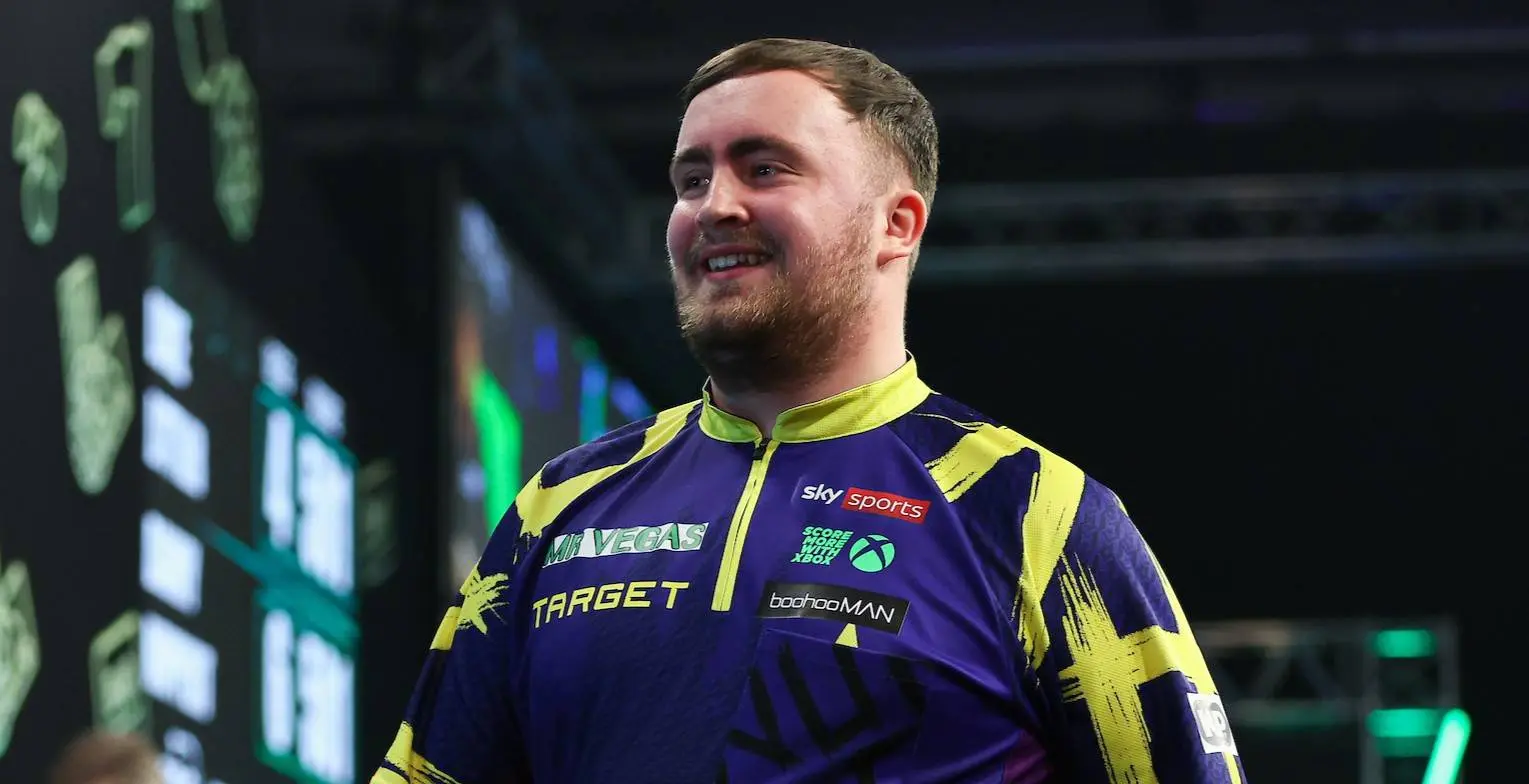
Smith held the top spot for exactly one year. Luke Humphries became the new leader after winning the world title in 2024. Cool Hand Luke lost this position to Luke Littler on 17 November 2025.
ADVERTISEMENT
7. Stints as World Number One
| Rank | Player | Date from | Datum till | Days as World Number One |
| 1 | Alan Warriner-Little | 1-1-1993 | 5-11-1994 | 673 |
| 2 | Dennis Priestley | 6-11-1994 | 9-4-1995 | 154 |
| 3 | Rod Harrington | 10-4-1995 | 31-7-1996 | 478 |
| 4 | Phil Taylor | 1-8-1996 | 31-8-1996 | 30 |
| 5 | Alan Warriner-Little | 1-9-1996 | 31-7-1998 | 698 |
| 6 | Rod Harrington | 1-8-1998 | 28-7-2000 | 727 |
| 7 | Phil Taylor | 29-7-2000 | 23-9-2000 | 56 |
| 8 | Peter Manley | 24-9-2000 | 27-10-2001 | 398 |
| 9 | Alan Warriner-Little | 28-10-2001 | 4-1-2002 | 68 |
| 10 | Alan Warriner-Little & Phil Taylor | 5-1-2002 | 1-2-2002 | 27 |
| 11 | Alan Warriner-Little | 2-2-2002 | 30-4-2002 | 87 |
| 12 | Phil Taylor | 1-5-2002 | 3-1-2003 | 247 |
| 13 | John Part | 4-1-2003 | 25-7-2003 | 202 |
| 14 | Phil Taylor | 26-7-2003 | 26-2-2005 | 581 |
| 15 | Colin Lloyd | 27-2-2005 | 10-6-2006 | 468 |
| 16 | Phil Taylor | 11-6-2006 | 17-6-2006 | 6 |
| 17 | Colin Lloyd | 18-6-2006 | 31-12-2006 | 196 |
| 18 | Phil Taylor | 1-1-2007 | 31-12-2007 | 364 |
| 19 | Raymond van Barneveld | 1-1-2008 | 7-6-2008 | 158 |
| 20 | Phil Taylor | 8-6-2008 | 31-12-2013 | 2032 |
| 21 | Michael van Gerwen | 1-1-2014 | 2-1-2021 | 2558 |
| 22 | Gerwyn Price | 3-1-2021 | 5-3-2022 | 422 |
| 23 | Peter Wright | 6-3-2022 | 23-7-2022 | 139 |
| 24 | Gerwyn Price | 24-7-2022 | 8-10-2022 | 76 |
| 25 | Peter Wright | 9-10-2022 | 29-10-2022 | 20 |
| 26 | Gerwyn Price | 30-10-2022 | 2-1-2023 | 64 |
| 27 | Michael Smith | 3-1-2023 | 2-1-2024 | 364 |
| 28 | Luke Humphries | 3-1-2024 | 16-11-2025 | 683 |
| 29 | Luke Littler | 17-11-2025 |

Samuel GillChief Content Officer
Samuel Gill is the Chief Content Officer (CCO) of DartsNews.com, a role he has held since 2020. He is responsible for editorial governance across the platform, including setting content standards, overseeing accuracy and consistency, and guiding long-term editorial strategy across professional darts coverage. Since joining, he has contributed more than 10,000 articles and editorial pieces, playing a central role in the development and daily operation of the site.
Based in Leicester, Samuel has extensive experience in darts media and has been closely involved in coverage of the professional darts circuit for several years. Within the UK darts community, he is a recognised figure known for his consistent editorial output and ongoing reporting on major tournaments and developments across the PDC calendar.
In his current role, Samuel works closely with editors and writers to ensure content meets clear journalistic standards, with a focus on source verification, editorial consistency, and timely updates when new, confirmed information becomes available.
claps 3visitors 3
Just in

Popular news
Latest comments
- I agree,I can't believe the lack of coverage of this sad loss. Always enjoyed watching him,but I guess now it's all about littler,well it seems that way. Darts has sadly lost a good manrick6717-10-2026
- In the absence of a report regarding the death of Stefan Lord, I'll assist. An excellent player in the late 70s and early 80s, he actually won the now defunct 3rd place match at two World Championships and a couple of the News of the World Championships. A fabulous player and easily the best Swedish player ever. Rest peacefully Stefan.richieburnettrocks16-10-2026
- Joking aside, it is the second most watched sport on sky (more than golf, F1 etc) behind football only, and in participation is second to only football and swimming. It doesn't get the attention or sponsorship of "bigger" sports because it's not as sexy, but it's right up there.BandB13-10-2026
- i love darts but you can't seriously believe it's the second most popular sport in the uk. even top five is pushing it. it may be the fastest growing, though.colt13-10-2026
- I'm a big Clayton fan, but he's got this completely wrong. Qualification criteria exists for a reason - so just as failing to make the top 32/64 for the Euro championships/PT Finals means you miss out, so does not lifting a title for this one.26sForFun12-10-2026
- The players who deliberately slow the game down are usually boring and win very little in the way of silverware. Horrible to watch.MrYnyslas197112-10-2026
- [“The Gentle” then used a sweeping and questionable phrase...] You anglocucks are hilariously finished in every sense of the word.Critical99911-10-2026
- I love Jonny but I disagree. The Grand Slam was always supposed to be "champion of champions" type competition. If the top 16 are guaranteed participation in everything there will be so much less jeopardy involved in qualifying and each major tournament will lose its unique flavour which the PDC has worked hard trying to develop. I enjoy following the qualification races towards the end of the year, and while consistency should have its rewards, the truth is Jonny hasn't reached a major final all year or won a single event on the Pro Tour. Being consistent is one thing, but that alone should have consequences as the sport's elite should not be prepared to accept consistently strong performances, their foremost motivation should be to win and this should be what separates them from the rest, not the consistency of their performances. Jonny is expecting that losing should be enough; it shouldn't be, at least not as far as the Grand Slam is concerned.Deduce635811-10-2026
- Well being honest,it doesn't matter what level you play at, there's always someone who slows it down to suit themselves,and extra swig of water, replacing flights, asking the ref what the score is. It happens wherever. I'm not saying it's professional,but I'm sure we've all seen it beforerick6711-10-2026
- Agree completely. Not sure how a ranking event can have a criteria not based on rankings. And he right on popularity. In the UK second only to football.BandB11-10-2026
Loading