"Helped me realise why I play the game in the first place": Graham Hall saw positive in losing Tour Card with MODUS Super Series as route back
MODUS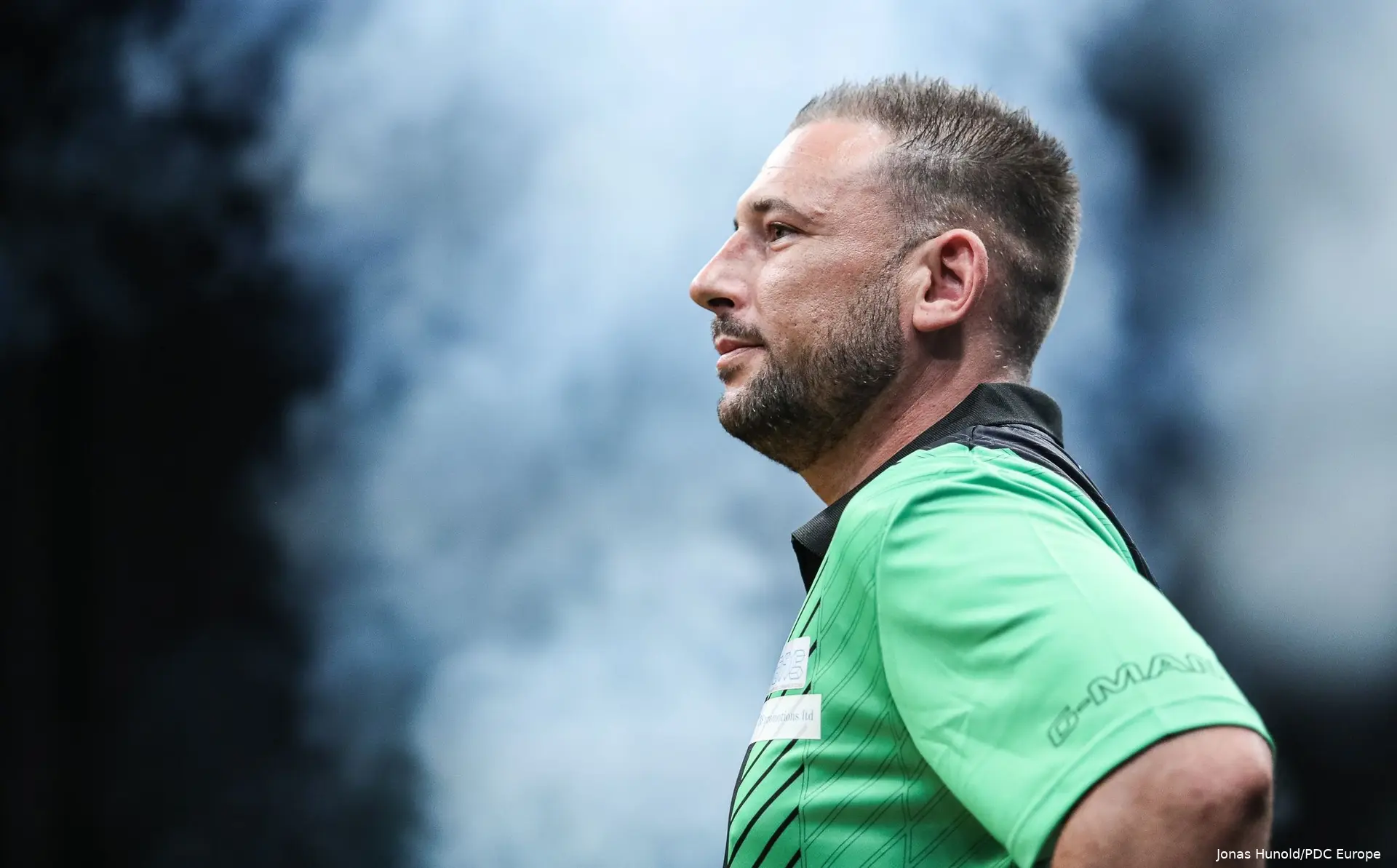
When Graham Hall first stepped into the Live League studio in Southampton, few could have predicted how influential that stage would become in shaping his darting journey. For a man who came into the sport relatively late and almost by accident, the MODUS Super Series has not only been a proving ground — it’s become the launchpad, the reset button, and the reminder of why he fell in love with the game in the first place.
ADVERTISEMENT
"Definitely, the Super Series helped my game a lot," Hall told Tungsten Talk in Portsmouth. "Coming here and playing better players — yeah, definitely improves your game."
It all started in a friend’s bedroom — quite literally. "It wasn’t until I was about 18, really," Hall said. "All my mates were into computer games and stuff like that, and my mate had a dartboard up in his room. While they were all playing Xbox, I just got on the dartboard — and that’s pretty much where it all started." He wasn’t bad either. "You knew there was something there — I could play reasonably well straight away."
From there, it moved quickly: invited by a mate to the local pub league, playing local competitions, then winning them. "It weren’t long after that I thought, I’ll take it a bit further. Started doing local competitions, started winning. I thought, yeah — we’ve got a chance."

Hall admits he never fancied county darts much — "didn’t really interest me that much" — but the travelling, weekend competitions, and camaraderie of pub leagues gave him a foundation.
Like so many players, Hall didn’t take the usual path. "Nine times out of ten, if you ask a top player, it’s generally a friend of a friend that gets them going. And then you’re suddenly in a team, you’re one of the better players, then it’s Super League... then maybe you realise you can earn a few quid locally rather than county."
It was the Super Series — then known as the Live League — where Hall really started to get noticed. "The exposure — you can’t beat it really," he said. "When you’re a player and you’re used to winning, and you go there and start getting your backside handed to you a few times — there’s nothing better for you to learn." That sharp learning curve forced Hall to level up — mentally and technically. "None of us like losing. There’s only so many times you’ll take it before you get back on that practice board and sort it out."
ADVERTISEMENT

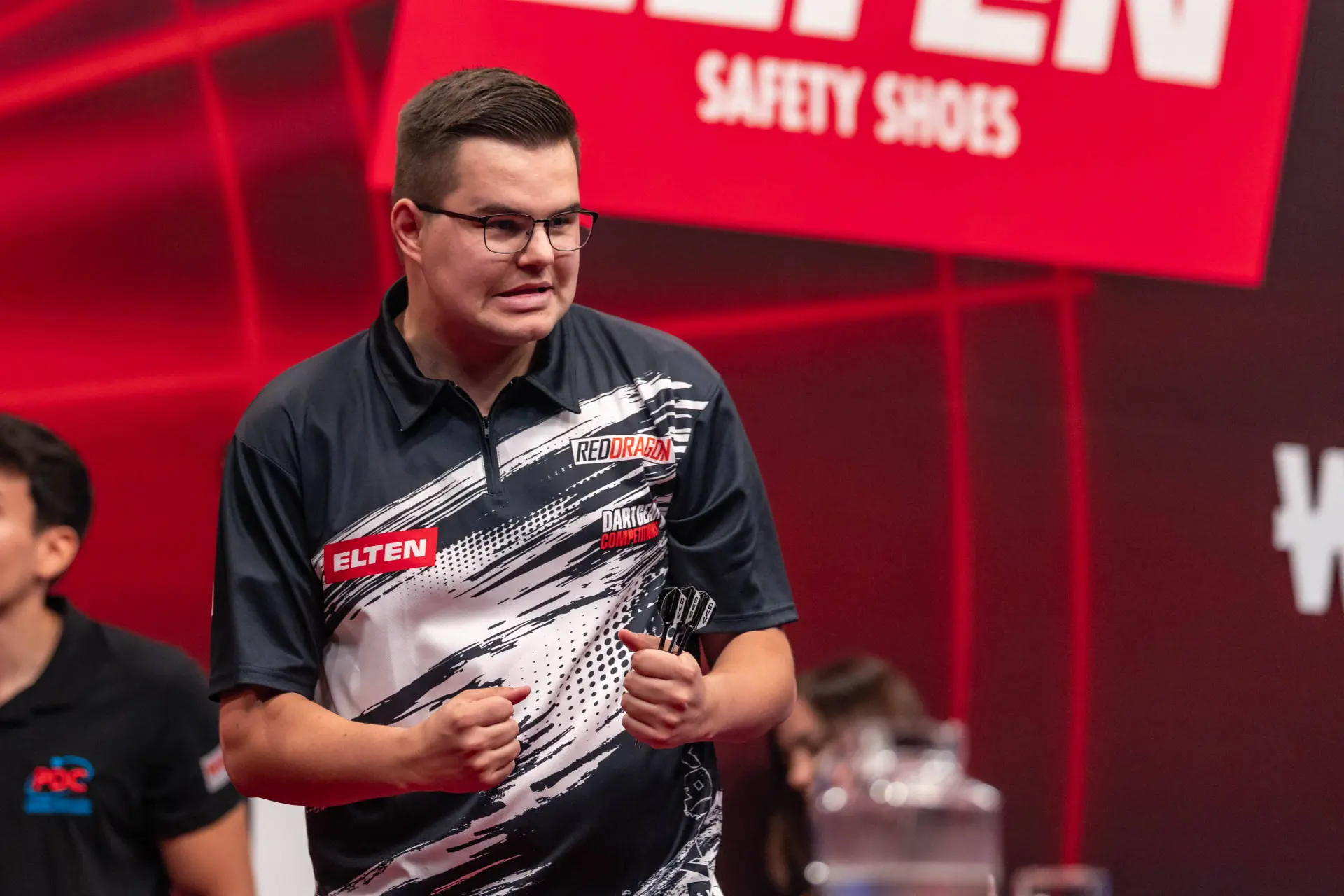
Graham Hall previously held a Tour Card.
He soon became known as one of the first wave of players to break through via the MODUS system — a model that’s since become a recognised route to success. "At that time, the Live League was bringing new players through and we were going, 'Wow, who are these players?'" co-host Scott Mitchell said. "They were performing under pressure in a studio, on camera, for the first time."
Hall didn’t just show up — he stood out. His breakthrough week at the Super Series came at the very same old Southampton venue where he first emerged, in a group filled with high-calibre opposition. "Yeah, definitely one of my better weeks to be honest," Hall said. "I feel like my game’s there at the moment, I’m playing really well — I’m just giving away silly games at silly times."
He topped Group A that week with a margin "we've probably never seen before and might never see again," and earned himself a place at the brand-new MODUS venue in Portsmouth. "We didn’t know what to expect when we got here — but yeah, definitely a great venue to play in. A lot better than Southampton, I’d say."
Using MODUS Super Series again as route back
ADVERTISEMENT
Now part of a professional setup streamed globally via platforms like Pluto TV, the Super Series is regarded as a destination in its own right. "It’s become a venue where players want to come and perform," said Mitchell. "It’s purpose-built for players to perform their best."
That level of preparation served Hall well in his next step — earning a PDC Tour Card. But as he freely admits, the challenge of staying on tour was a different beast entirely.
"I think at the time, I did fall out of love with the game a little bit towards the second year," Hall said. "But I was quite happy to lose it in a way — because I’m back enjoying the game again. It’s given me that little spark that I need to hopefully get it back next year. Losing it helped me realise why I play the game in the first place."
Mitchell agreed, noting the mental toll of the second year on tour: "You know what you've got to start performing — otherwise you're going to lose your card. There’s added pressure. The Pro Tours are intense and week in, week out, it’s hard to stay mentally strong if things aren’t going well."
ADVERTISEMENT
But Hall has used that setback as fuel. Since coming off tour, he’s found form again — not just in the Super Series but across the ADC and Challenge Tour circuits.
"You’ve had a really good run of it on the ADC Tour," the host pointed out. "Looks like you're probably going to be at the Tour Finals, and there's a good chance of qualifying for the Global Championship. Like I said, I think I just needed that little break from the Pro Tour — just enjoy myself and play my game that I know I can play."
And now, the results are following. Top ten on the Challenge Tour. Strong showings in the ADC. All while rediscovering that vital confidence. "Some people drop off the tour and it’s not positive for them," Mitchell said. "For Graham, it’s been really positive. He’s taken what he’s learnt from the Pro Tour and brought it into the Challenge Tour and ADC — and that’s what’s making him a success."
Hall has his eyes firmly set on the Global Championship. "That’s what I’m striving for at the moment. There’s some good money in the game now, even in the ADC."
He’s not alone. Bradley Brooks took a similar route last year, falling off the tour, rebuilding via the Super Series and ADC, and returning stronger. Hall may be on a similar arc. "It’s about timing," said Mitchell. "Getting to September time, feeling ready, going into Q School playing your best. And the only way to do that is putting in the hours at home on the board."
ADVERTISEMENT
Eyes set on return to PDC
Hall feels that all those hours — and setbacks — are finally beginning to pay off. "I think I’ve definitely learnt to hold my nerve a little bit more," he said. "Still on the odd occasion, nerves creep in, but that’s a good thing — you’ve just got to learn to deal with it."
His confidence now carries a different edge. "I go into every game believing I should be winning. It’s not always the case, but you’ve got to believe it."
Mitchell agrees: "A year, 18 months ago, I don’t think anybody minded playing you. Now, you’re a different sort of obstacle. There’s a look on your face when you walk to the oche. A look that says, 'I’m going to win this game, and you’re going to have to do something special to stop me.'"
So what would a good year look like for Graham Hall?
ADVERTISEMENT
"At the moment? Get my card back and get on the world stage," he said without hesitation. "Players Championship. The Worlds. I definitely want a good crack at that."
He’s a man who’s fallen out of love with darts — and fallen right back in. And in doing so, Graham Hall has found both purpose and momentum. "Losing it helped me realise why I play the game in the first place."

Samuel GillChief Content Officer
Samuel Gill is the Chief Content Officer (CCO) of DartsNews.com, a role he has held since 2020. He is responsible for editorial governance across the platform, including setting content standards, overseeing accuracy and consistency, and guiding long-term editorial strategy across professional darts coverage. Since joining, he has contributed more than 10,000 articles and editorial pieces, playing a central role in the development and daily operation of the site.
Based in Leicester, Samuel has extensive experience in darts media and has been closely involved in coverage of the professional darts circuit for several years. Within the UK darts community, he is a recognised figure known for his consistent editorial output and ongoing reporting on major tournaments and developments across the PDC calendar.
In his current role, Samuel works closely with editors and writers to ensure content meets clear journalistic standards, with a focus on source verification, editorial consistency, and timely updates when new, confirmed information becomes available.
claps 0visitors 0
Just in


Popular news
Latest comments
- I agree,I can't believe the lack of coverage of this sad loss. Always enjoyed watching him,but I guess now it's all about littler,well it seems that way. Darts has sadly lost a good manrick6717-10-2026
- In the absence of a report regarding the death of Stefan Lord, I'll assist. An excellent player in the late 70s and early 80s, he actually won the now defunct 3rd place match at two World Championships and a couple of the News of the World Championships. A fabulous player and easily the best Swedish player ever. Rest peacefully Stefan.richieburnettrocks16-10-2026
- Joking aside, it is the second most watched sport on sky (more than golf, F1 etc) behind football only, and in participation is second to only football and swimming. It doesn't get the attention or sponsorship of "bigger" sports because it's not as sexy, but it's right up there.BandB13-10-2026
- i love darts but you can't seriously believe it's the second most popular sport in the uk. even top five is pushing it. it may be the fastest growing, though.colt13-10-2026
- I'm a big Clayton fan, but he's got this completely wrong. Qualification criteria exists for a reason - so just as failing to make the top 32/64 for the Euro championships/PT Finals means you miss out, so does not lifting a title for this one.26sForFun12-10-2026
- The players who deliberately slow the game down are usually boring and win very little in the way of silverware. Horrible to watch.MrYnyslas197112-10-2026
- [“The Gentle” then used a sweeping and questionable phrase...] You anglocucks are hilariously finished in every sense of the word.Critical99911-10-2026
- I love Jonny but I disagree. The Grand Slam was always supposed to be "champion of champions" type competition. If the top 16 are guaranteed participation in everything there will be so much less jeopardy involved in qualifying and each major tournament will lose its unique flavour which the PDC has worked hard trying to develop. I enjoy following the qualification races towards the end of the year, and while consistency should have its rewards, the truth is Jonny hasn't reached a major final all year or won a single event on the Pro Tour. Being consistent is one thing, but that alone should have consequences as the sport's elite should not be prepared to accept consistently strong performances, their foremost motivation should be to win and this should be what separates them from the rest, not the consistency of their performances. Jonny is expecting that losing should be enough; it shouldn't be, at least not as far as the Grand Slam is concerned.Deduce635811-10-2026
- Well being honest,it doesn't matter what level you play at, there's always someone who slows it down to suit themselves,and extra swig of water, replacing flights, asking the ref what the score is. It happens wherever. I'm not saying it's professional,but I'm sure we've all seen it beforerick6711-10-2026
- Agree completely. Not sure how a ranking event can have a criteria not based on rankings. And he right on popularity. In the UK second only to football.BandB11-10-2026
Loading