"Can hardly imagine him bouncing around the circuit as number 24": Elmar Paulke and Florian Hempel debate Michael Van Gerwen's future amid ranking downfall
PDC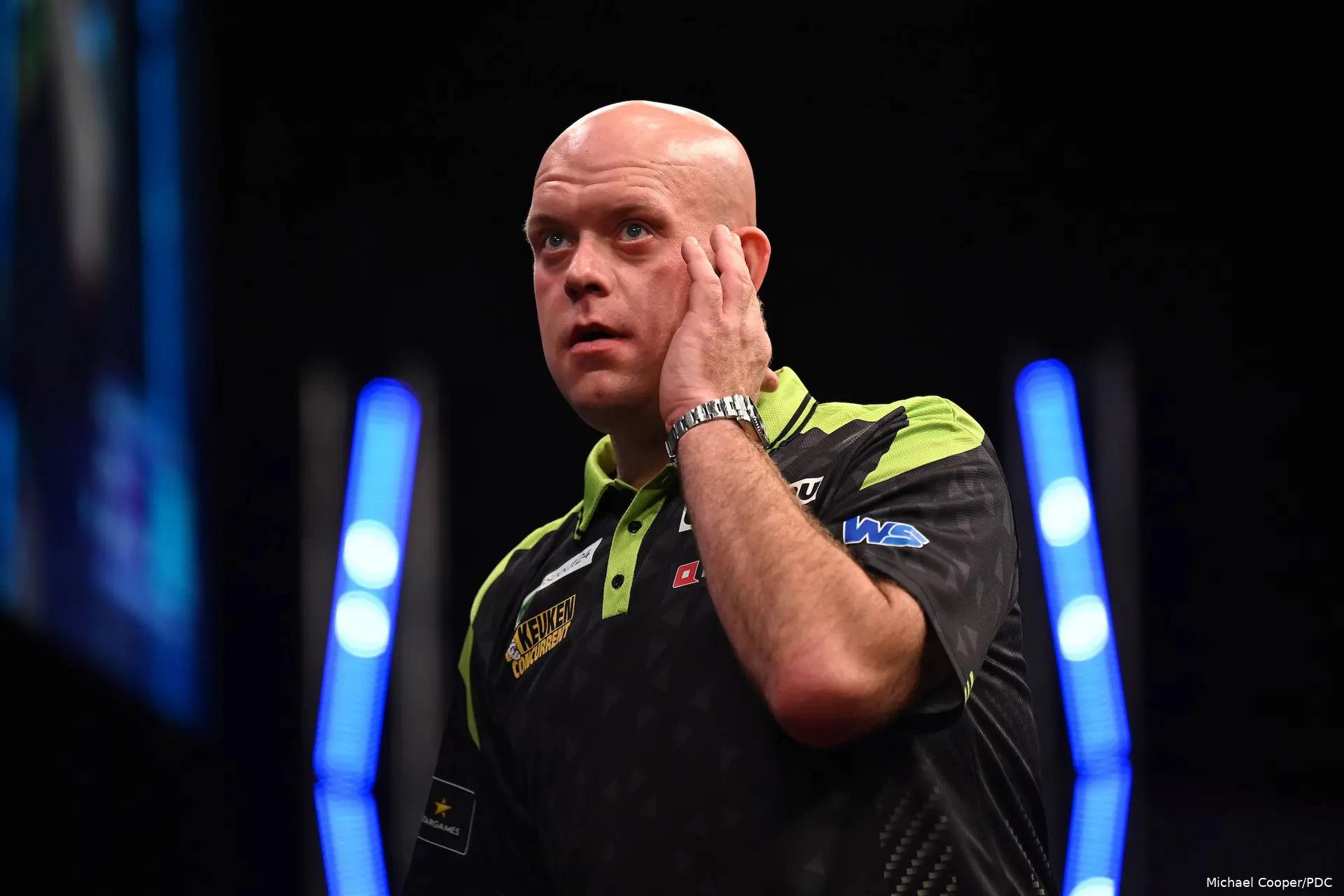
There was a time when Michael van Gerwen looked almost unstoppable on the world’s darts stages. When the Dutchman stepped up to the oche, the result often seemed a foregone conclusion – even when he was behind. His presence, pace, and ruthless scoring defined an era in which he not only dominated the game but also changed it.
ADVERTISEMENT
Commentator and darts expert Elmar Paulke, together with former Tour Card holder Florian Hempel, looked back on exactly that period in the latest episode of the “Game On” podcast. The occasion was a look back at the 2016 UK Open – the tournament where van Gerwen defended his title and joined an exclusive club.
The time when van Gerwen changed the game
When van Gerwen won the UK Open again in 2016, he became only the third player after Phil Taylor and Raymond van Barneveld to successfully defend the title at the “FA Cup of Darts.” Only this past weekend, Luke Littler became the next player to pull off the feat.

Schied im Achtelfinale der UK Open 2026 deutlich mit 3:10 gegen James Wade aus: Michael van Gerwen
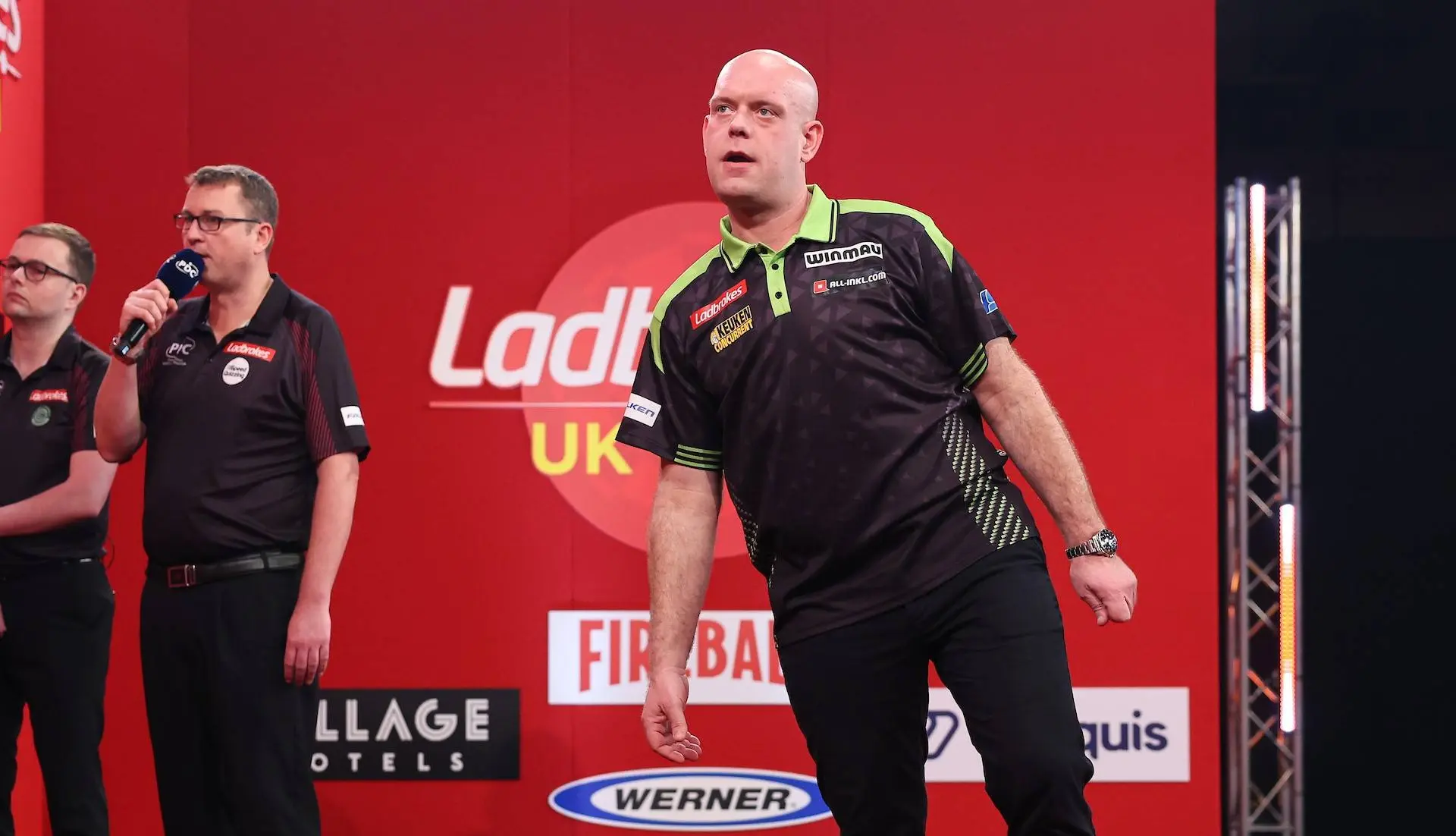
For Hempel, that time is still closely tied to the first years of his own passion for darts. “There isn’t much of that left in the Man in Green, who doesn’t even play in green anymore – which, by the way, took some getting used to for me,” he said.
The images from that period still leave him in awe. “I’m immediately transported back to my early days in darts. In 2016 I had nothing to do with darts at all; I only picked up my first darts in 2017. But what that guy did back then – how he dominated the European Tour, the Pro Tour, how he set record averages, including in the Premier League – that was Phil Taylor combined with absolute power scoring.”
ADVERTISEMENT
Paulke sees van Gerwen above all as the player who forced a new style on the tour. “The cool thing about van Gerwen was that he established a new game on tour. That aggressive game – which annoyed Phil Taylor as well. That way of playing darts didn’t exist before.”
For Paulke, a particularly striking example was the 2016 UK Open semifinal. “When I saw those images: he somehow looked twenty years younger. The way he stood on stage, with such conviction – even when he trailed Phil Taylor 1-4 in the semifinal and turned it around. As a spectator, you didn’t feel for a second that he could lose that match.”
The start of a new era
For Hempel, van Gerwen was not only a dominant player but also a trailblazer for a new generation. His emotional style, his outbursts on stage, and his aggressive body language were unusual at the time.
“He brought a completely different vibe to the stage,” Hempel explained. “It didn’t just get on Phil Taylor’s nerves. We also remember the skirmishes with Mervyn King, who had no idea what van Gerwen was doing and how he was letting it all out.”
ADVERTISEMENT
It is interesting that similar behavior was later judged much more harshly in other players. “Gerwyn Price was heavily criticized for it at times – even though van Gerwen had been doing it long before him. He just never really got the same backlash.”
For Hempel, that period marked a turning point in modern darts. “That was the start of a new era. Today we see even more young guns, even more emotion, even more interaction with the fans. We really owe van Gerwen a great deal.”
Why the dominator is no longer the same
But the van Gerwen of old now only flashes up occasionally. For Paulke, that is not only down to stronger competition, but also to changes in the Dutchman’s life.
ADVERTISEMENT
“I really feel – similar to Dimitri Van den Bergh – that he finds it hard to play well if he isn’t fully focused on darts,” said Paulke.
A look at the start of van Gerwen’s career explains a lot from his point of view. “If you look at his life story, he says himself: He wasn’t particularly good at football and didn’t get any recognition there. Darts was the sport that earned him that recognition.”
That motivation shaped his dominant years. “Back then he did everything for darts. If you look at how many tournaments he played – he didn’t take any breaks. Even at home in the Netherlands he still played pub tournaments. For him, it was basically only darts.”
Hempel confirms that picture. “He worked at darts. He was truly a darts grafter who spent every free second throwing arrows at the board.”
Today, the situation is different. “On the one hand, there are private issues, and on the other, health topics. And of course there’s also this: if you’re successful for a long time and earn a lot of money, you get a bit spoilt. I wouldn’t say complacent – but you live more calmly. Those last three percent of hunger for the next title or the next prize money just fade.”
ADVERTISEMENT
Between family, pressure, and reality
Another factor, according to Paulke, is the change in his private life. Van Gerwen has long been a family man — a role that automatically brings new priorities.
“Once you have a family, you can’t just say: I only play darts and that’s my life,” said Paulke. “You get distracted, your outlook widens. I genuinely believe it’s difficult for him to balance both perfectly.”
Hempel draws a comparison with another current superstar: Luke Littler. “He’s in a completely different place than Littler is today. Littler still lives with his parents, the laundry gets done, there’s cooking. That’s a totally different situation from having two kids at home.”
The open question for 2026
ADVERTISEMENT
On the sporting side, there were positive signs this season. Van Gerwen enjoyed a strong start to the World Series campaign in Bahrain and Saudi Arabia and also began the Premier League well, winning a night straight away and reaching another final.
But health issues set him back. “He had to take antibiotics and couldn’t compete,” Paulke recalled. “I think that pulled him out of that little wave of success again.”
That uncertainty was also evident at the UK Open. “He plays a superb match against Nathan Aspinall,” said Paulke. “But then the way he goes out against James Wade — I get the feeling he no longer dares to step on stage with that presence. Maybe because he’s afraid he can’t sustain it in terms of performance.”
Hempel also sees an issue with the Dutchman’s self-image. “He used to always say: I beat everyone here, they all play three levels below me. That’s part of the MvG DNA.”
But when results and averages no longer match that, the stance quickly loses its effect. “If you start celebrating a 180 or the 23rd dart that hits double 1, it just doesn’t come across the way it used to.”
ADVERTISEMENT
That leaves a big question open, which also concerns Paulke: “What does van Gerwen bring in 2026?”
The potential movement in the world rankings, which can already be theoretically examined in the virtual rankings after the 2027 World Championship, is hardly imaginable for many observers. “The topic this year is: How far does he drop?” said Paulke. Hempel summed up the current snapshot: “As it stands, he drops to 24th.”
And that very thought seems almost surreal in the context of his career. “What does van Gerwen do if he’s number 24 in the world?” asked Paulke. “I can hardly imagine him bouncing around the circuit as number 24.”
Whether it really comes to that remains open. For Hempel, at least one thing is clear: “He’s too young to quit.”
ADVERTISEMENT

Samuel GillChief Content Officer
Samuel Gill is the Chief Content Officer (CCO) of DartsNews.com, a role he has held since 2020. He is responsible for editorial governance across the platform, including setting content standards, overseeing accuracy and consistency, and guiding long-term editorial strategy across professional darts coverage. Since joining, he has contributed more than 10,000 articles and editorial pieces, playing a central role in the development and daily operation of the site.
Based in Leicester, Samuel has extensive experience in darts media and has been closely involved in coverage of the professional darts circuit for several years. Within the UK darts community, he is a recognised figure known for his consistent editorial output and ongoing reporting on major tournaments and developments across the PDC calendar.
In his current role, Samuel works closely with editors and writers to ensure content meets clear journalistic standards, with a focus on source verification, editorial consistency, and timely updates when new, confirmed information becomes available.
claps 1visitors 1
Just in

Popular news
Latest comments
- I agree,I can't believe the lack of coverage of this sad loss. Always enjoyed watching him,but I guess now it's all about littler,well it seems that way. Darts has sadly lost a good manrick6717-10-2026
- In the absence of a report regarding the death of Stefan Lord, I'll assist. An excellent player in the late 70s and early 80s, he actually won the now defunct 3rd place match at two World Championships and a couple of the News of the World Championships. A fabulous player and easily the best Swedish player ever. Rest peacefully Stefan.richieburnettrocks16-10-2026
- Joking aside, it is the second most watched sport on sky (more than golf, F1 etc) behind football only, and in participation is second to only football and swimming. It doesn't get the attention or sponsorship of "bigger" sports because it's not as sexy, but it's right up there.BandB13-10-2026
- i love darts but you can't seriously believe it's the second most popular sport in the uk. even top five is pushing it. it may be the fastest growing, though.colt13-10-2026
- I'm a big Clayton fan, but he's got this completely wrong. Qualification criteria exists for a reason - so just as failing to make the top 32/64 for the Euro championships/PT Finals means you miss out, so does not lifting a title for this one.26sForFun12-10-2026
- The players who deliberately slow the game down are usually boring and win very little in the way of silverware. Horrible to watch.MrYnyslas197112-10-2026
- [“The Gentle” then used a sweeping and questionable phrase...] You anglocucks are hilariously finished in every sense of the word.Critical99911-10-2026
- I love Jonny but I disagree. The Grand Slam was always supposed to be "champion of champions" type competition. If the top 16 are guaranteed participation in everything there will be so much less jeopardy involved in qualifying and each major tournament will lose its unique flavour which the PDC has worked hard trying to develop. I enjoy following the qualification races towards the end of the year, and while consistency should have its rewards, the truth is Jonny hasn't reached a major final all year or won a single event on the Pro Tour. Being consistent is one thing, but that alone should have consequences as the sport's elite should not be prepared to accept consistently strong performances, their foremost motivation should be to win and this should be what separates them from the rest, not the consistency of their performances. Jonny is expecting that losing should be enough; it shouldn't be, at least not as far as the Grand Slam is concerned.Deduce635811-10-2026
- Well being honest,it doesn't matter what level you play at, there's always someone who slows it down to suit themselves,and extra swig of water, replacing flights, asking the ref what the score is. It happens wherever. I'm not saying it's professional,but I'm sure we've all seen it beforerick6711-10-2026
- Agree completely. Not sure how a ranking event can have a criteria not based on rankings. And he right on popularity. In the UK second only to football.BandB11-10-2026
Loading