With the first ranking event of the 2026 season kicking off in Milton Keynes this week, stats guru Richard Ashdown delved into the numbers. Who drops off the PDC circuit, who returns, and which new names get to test themselves against the world’s best over the next twelve months?
ADVERTISEMENT
Since the PDC introduced the Tour Card system in 2011, a total of 465 different players have earned a place on the annual list of 128 Tour Card holders. Heading into 2026, we bid farewell to 29 players, eight former Tour Card holders return, and 21 debutants make their first appearance on the professional circuit.
Tour Card lost
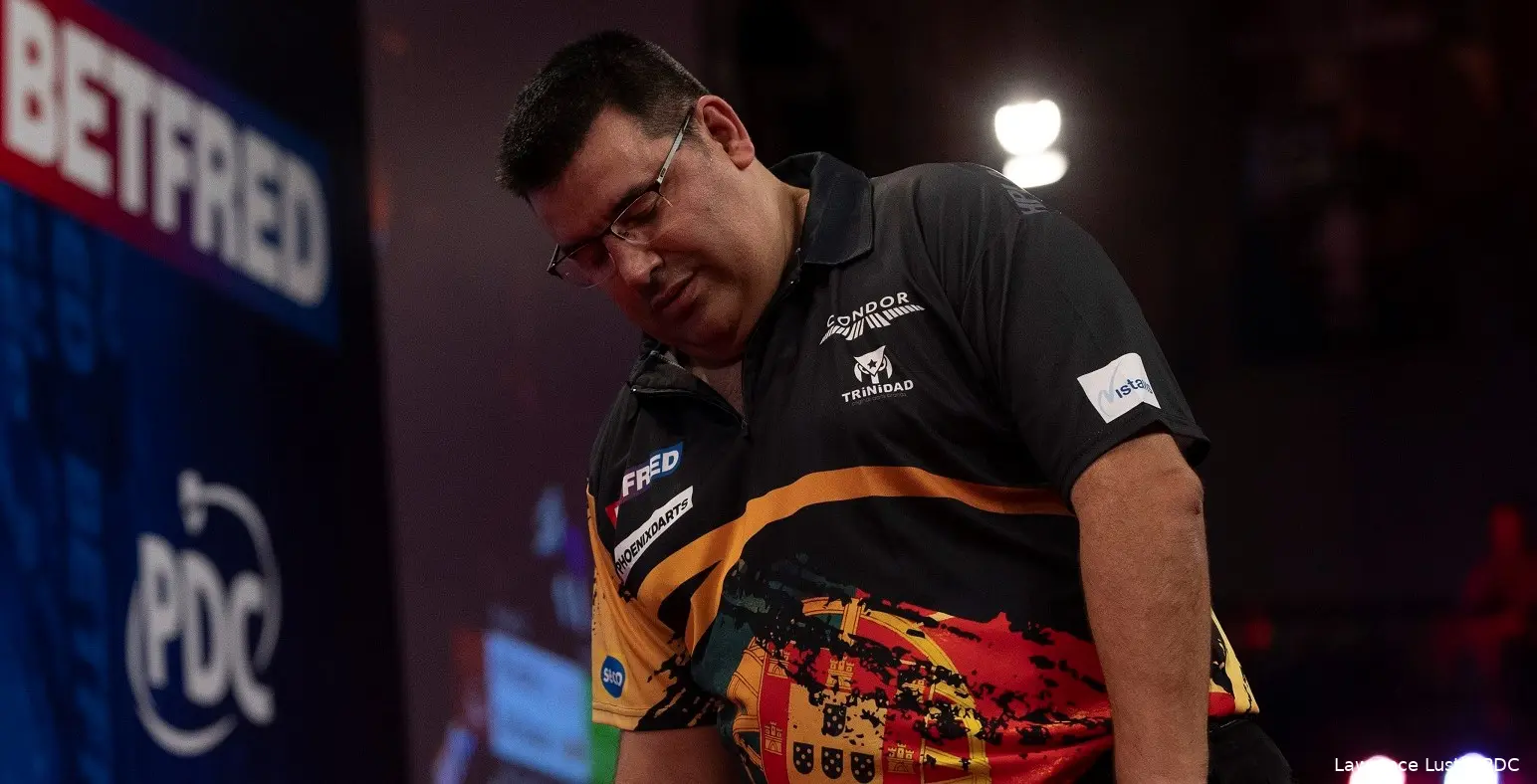
Of the 29 players who lost their Tour Card in 2025, 23 tried to bounce straight back via Q School. Notable absentees in 2026 after dropping out of the top 64 include José de Sousa (Tour Card since 2019), Matt Campbell and Jim Williams (since 2022 via the Challenge Tour), and Dylan Slevin, who came through Q School as recently as 2023.
Jelle Klaasen, who held a Tour Card in 13 of the past 15 seasons (2011–2021, 2024/2025), failed to qualify this time at European Q School in Kalkar. In Milton Keynes, Adam Hunt missed out on a new Tour Card for the fifth time, while George Killington fell short for the fourth time.

Steve Lennon saw hopes of a tenth consecutive season dashed on the final day, falling short on leg difference. William Borland, Brett Claydon, Matthew Dennant, Nathan Rafferty, and Radek Szaganski also failed to secure a Tour Card for the third time in their careers.
After five years on the ProTour, Florian Hempel chose to play only one day at Q School’s First Stage, which left no path to qualification. Berry van Peer (three-time Tour Card holder since 2016) and Jules van Dongen (since 2022) opted to skip Q School entirely.
ADVERTISEMENT
For nine players who turned professional for the first time in 2024/2025, there was no repeat of that success. Andy Baetens, Darren Beveridge, Martijn Dragt, Patrick Geeraerts, Robert Grundy, Danny Lauby, Benjamin Reus, Michele Turetta, and Jitse van der Val missed out on a new Tour Card.
Haupai Puha, Joshua Richardson, and Tim Wolters also decided not to take part this year after their Q School success in 2024, while Dom Taylor was unable to compete due to an ongoing DRA suspension.

Jose de Sousa is one of the most notable names to have lost his Tour Card.
Year after year
Twelve players will begin their sixteenth consecutive PDC season in 2026. Nine of them have remained ever-present in the top 64 since the Tour Card system was introduced and never needed Q School: Gary Anderson, Joe Cullen, Brendan Dolan, Michael van Gerwen, Michael Smith, Mensur Suljovic, James Wade, Ian White, and Peter Wright.
ADVERTISEMENT
Dave Chisnall has retained his Tour Card since 2011 via the inaugural Q School, while Mickey Mansell only kept his streak alive by requalifying in 2017 and 2022. William O'Connor has also been ever-present, with direct Q School returns in 2014 and 2015.
Read also
Raymond van Barneveld features in fifteen of the sixteen seasons, with only 2020 missing after his temporary retirement. Kim Huybrechts and Ross Smith both begin their fifteenth consecutive season.
Q School proved a springboard to sustained success for many, including Ricky Evans and Daryl Gurney (since 2013), Gerwyn Price (2014), and Jonny Clayton, Chris Dobey, and Jermaine Wattimena (2015).
Andrew Gilding starts his thirteenth season in fifteen years in 2026, while Stephen Bunting also enters his thirteenth ProTour year since earning his Tour Card in 2014.
ADVERTISEMENT
One year wonders
The primary target for every Tour Card holder remains a place in the top 64 after two years. Four players from the 2024/2025 intake have already achieved that: James Hurrell (48), Thibault Tricole (61), Lukas Wenig (62), and Mario Vandenbogaerde (64).
It is even more impressive to do it in a debut year, like Justin Hood (50). He follows in the footsteps of, among others, Nathan Aspinall, Danny Noppert, Dirk van Duijvenbode, Damon Heta, Josh Rock, Gian van Veen, and Jeffrey de Graaf.
Niko Springer (54), who earned his Tour Card via the Development Tour, also reached the top 64 in a single season—a feat previously achieved by the likes of Dimitri Van den Bergh, Luke Humphries, and Rob Cross.
Q School comebacks
ADVERTISEMENT
Of the 26 players who tried to return immediately via Q School after 2025, only three succeeded. Rhys Griffin was the quickest, winning outright on day one in Milton Keynes. Chris Landman qualified via the European Order of Merit, while Stephen Burton broke through Q School for a third time.
Among the 76 former Tour Card holders who took part were some iconic names. Steve Beaton came close but narrowly missed out. Mervyn King, on the other hand, had a regal final day and returns in 2026, nearing 60, as the oldest Tour Card holder.
In Kalkar, Cristo Reyes enjoyed a warm reunion after nearly six years away. Jeffrey Sparidaans, Jeffrey de Zwaan (for the fourth time), Jurjen van der Velde, and Adam Gawlas also secured their return.
Challenge & Development Tour
ADVERTISEMENT
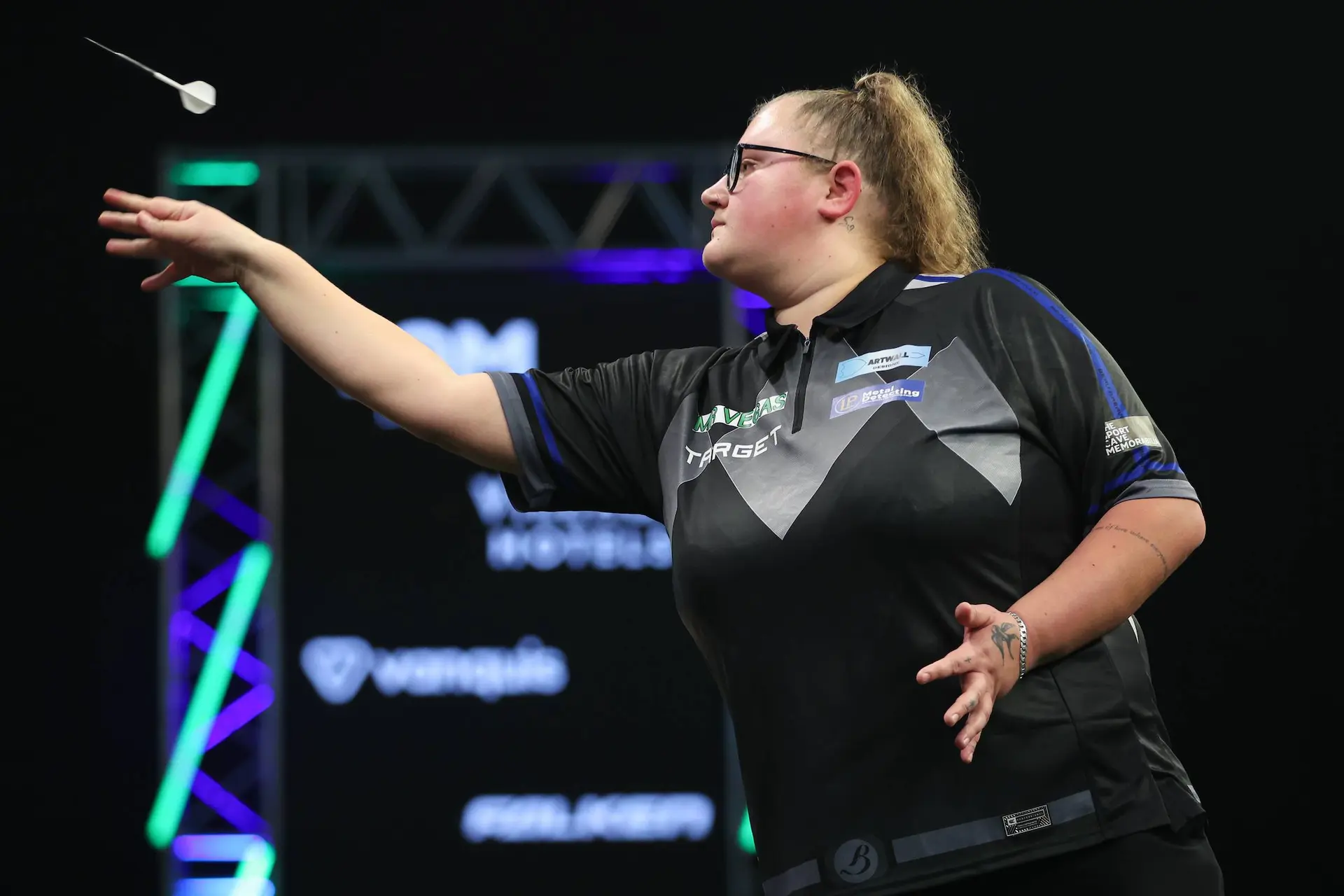
Through the Challenge Tour, Stefan Bellmont and Darius Labanauskas sealed Tour Cards. Bellmont made history as the first-ever Swiss Tour Card holder. On the Development Tour, Beau Greaves finished second, becoming the fourth woman ever to earn a PDC Tour Card.
Owen Bates also regained a Tour Card, while Sebastian Białecki aims to build on his strong start in his second year.
In 2026, the field features 128 Tour Card holders from 22 countries. Slovenia joins the list thanks to Benjamin Pratnemer, while Germany sets a record with fifteen players. The youngest participant is Yorick Hofkens (18), five months younger than Luke Littler at his breakthrough.

Greaves will test herself on the PDC Pro Tour for the first time in 2026.
Final tally of Tour Cards 2026
ADVERTISEMENT
- 128 Tour Card holders in total
- 64 from the United Kingdom/Ireland (43 from England, 7 from Scotland, 6 from Wales, 4 from Northern Ireland, and 3 from Republic of Ireland)
- 47 from Western Europe (22 from the Netherlands, 15 from Germany, 5 from Belgium, 2 from Austria, 1 from Spain, France, and Switzerland)
- 8 from Eastern Europe (4 from Poland, 2 from Czechia, 1 from Croatia and Switzerland)
- 6 from Northern & Baltic Europe (3 from Sweden, 1 from Latvia, Lithuania, and Norway)
- 3 from the rest of the world (2 from Australia and 1 from Canada)
Lucas MichaelDarts Journalist
Lucas Michael is a darts journalist and reporter based in Cambridge, UK, and has been part of the DartsNews team since 2025. He covers professional darts through reports, analysis, round-ups, and live coverage, with a focus on clear context and accurate reporting across the PDC calendar.
A key part of his work is liveblogging major tournaments throughout the year, providing real-time updates, match coverage, and contextual reporting across the professional circuit. He also reports regularly from events on site and has covered the PDC World Darts Championship from the venue, delivering first-hand insight throughout the tournament.
Within the newsroom, Lucas works closely with the editorial team and supports coverage alongside Chief Content Officer Samuel Gill and reporter Kieran Wood.
Lucas holds a BA (Hons) in Sports Journalism. In his work, he places strong emphasis on careful sourcing, editorial accuracy, and updating content promptly when new, verified information becomes available.
claps 0visitors 0
Just in

Popular news
Latest comments
- I agree,I can't believe the lack of coverage of this sad loss. Always enjoyed watching him,but I guess now it's all about littler,well it seems that way. Darts has sadly lost a good manrick6717-10-2026
- In the absence of a report regarding the death of Stefan Lord, I'll assist. An excellent player in the late 70s and early 80s, he actually won the now defunct 3rd place match at two World Championships and a couple of the News of the World Championships. A fabulous player and easily the best Swedish player ever. Rest peacefully Stefan.richieburnettrocks16-10-2026
- Joking aside, it is the second most watched sport on sky (more than golf, F1 etc) behind football only, and in participation is second to only football and swimming. It doesn't get the attention or sponsorship of "bigger" sports because it's not as sexy, but it's right up there.BandB13-10-2026
- i love darts but you can't seriously believe it's the second most popular sport in the uk. even top five is pushing it. it may be the fastest growing, though.colt13-10-2026
- I'm a big Clayton fan, but he's got this completely wrong. Qualification criteria exists for a reason - so just as failing to make the top 32/64 for the Euro championships/PT Finals means you miss out, so does not lifting a title for this one.26sForFun12-10-2026
- The players who deliberately slow the game down are usually boring and win very little in the way of silverware. Horrible to watch.MrYnyslas197112-10-2026
- [“The Gentle” then used a sweeping and questionable phrase...] You anglocucks are hilariously finished in every sense of the word.Critical99911-10-2026
- I love Jonny but I disagree. The Grand Slam was always supposed to be "champion of champions" type competition. If the top 16 are guaranteed participation in everything there will be so much less jeopardy involved in qualifying and each major tournament will lose its unique flavour which the PDC has worked hard trying to develop. I enjoy following the qualification races towards the end of the year, and while consistency should have its rewards, the truth is Jonny hasn't reached a major final all year or won a single event on the Pro Tour. Being consistent is one thing, but that alone should have consequences as the sport's elite should not be prepared to accept consistently strong performances, their foremost motivation should be to win and this should be what separates them from the rest, not the consistency of their performances. Jonny is expecting that losing should be enough; it shouldn't be, at least not as far as the Grand Slam is concerned.Deduce635811-10-2026
- Well being honest,it doesn't matter what level you play at, there's always someone who slows it down to suit themselves,and extra swig of water, replacing flights, asking the ref what the score is. It happens wherever. I'm not saying it's professional,but I'm sure we've all seen it beforerick6711-10-2026
- Agree completely. Not sure how a ranking event can have a criteria not based on rankings. And he right on popularity. In the UK second only to football.BandB11-10-2026
Loading


