“Cooking? I know absolutely nothing about it" - Luke Littler and Premier League rivals debate complicated relationship with food
PDC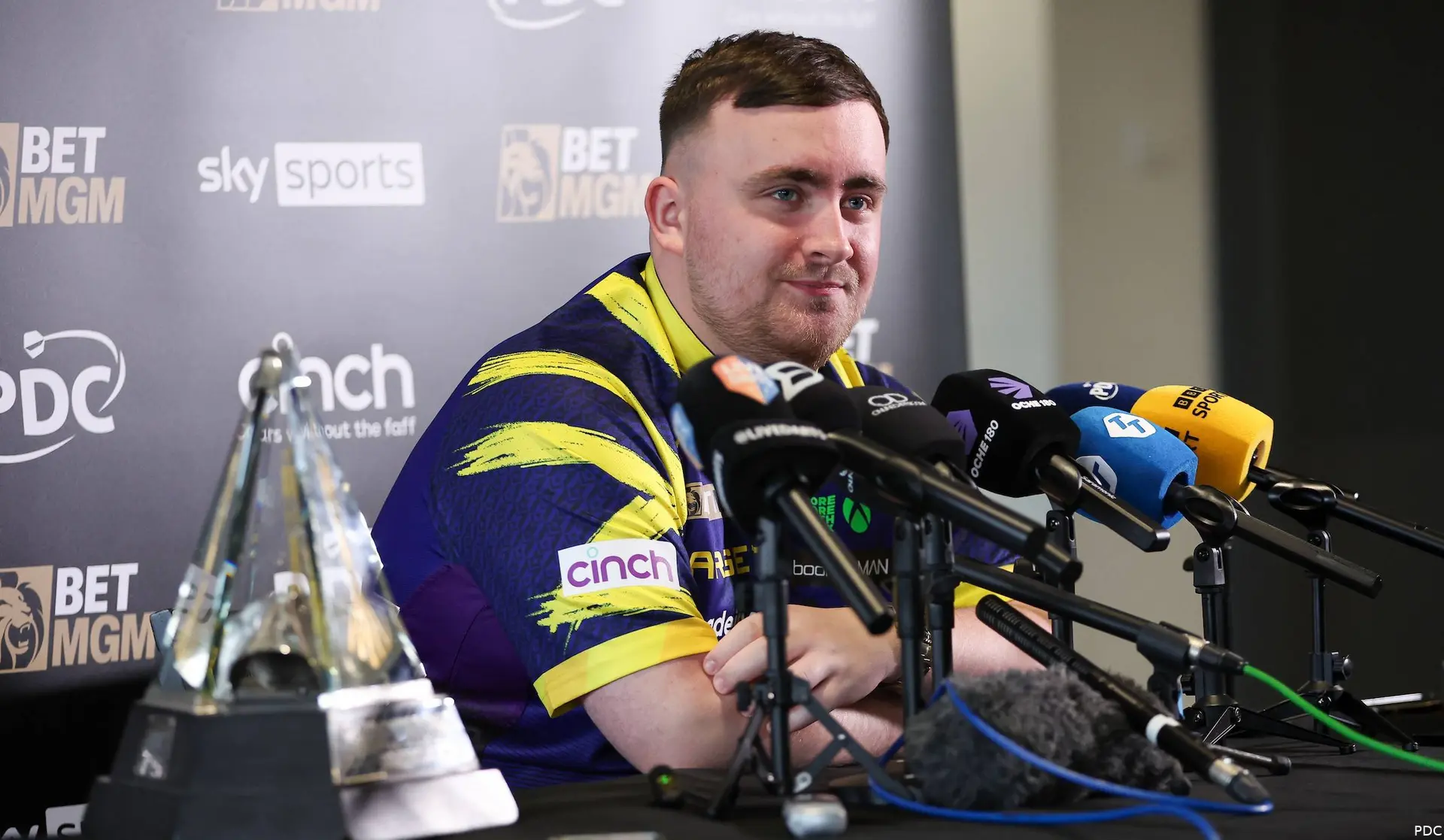
The life of a professional darts player may seem simple to outsiders: throw a few darts, travel a bit, and pick up the odd title. But behind the scenes lies a very different reality.
ADVERTISEMENT
The calendar is packed, with Pro Tours during the week, European Tours and majors from Friday to Sunday, and exhibition events in between. Add hours of travel, hotel stays, and irregular schedules, and you get a lifestyle that is far from ideal, especially when it comes to nutrition.
Living out of a suitcase
A commonly underestimated aspect of life on the darts circuit is how hard it is to eat healthily. Players literally live out of a suitcase and are rarely at home. The kitchen often goes unused. That has consequences, as several top players readily admit.
Jonny Clayton, now an established name and still among the world’s elite, is strikingly honest about his eating habits. “My diet isn’t great,” he says with a laugh to VTM. “If something looks good, I’ll eat it. Maybe that’s not so great. But I’m 51 now. So if I fancy something, I just eat it. I love food, I love kebab.”
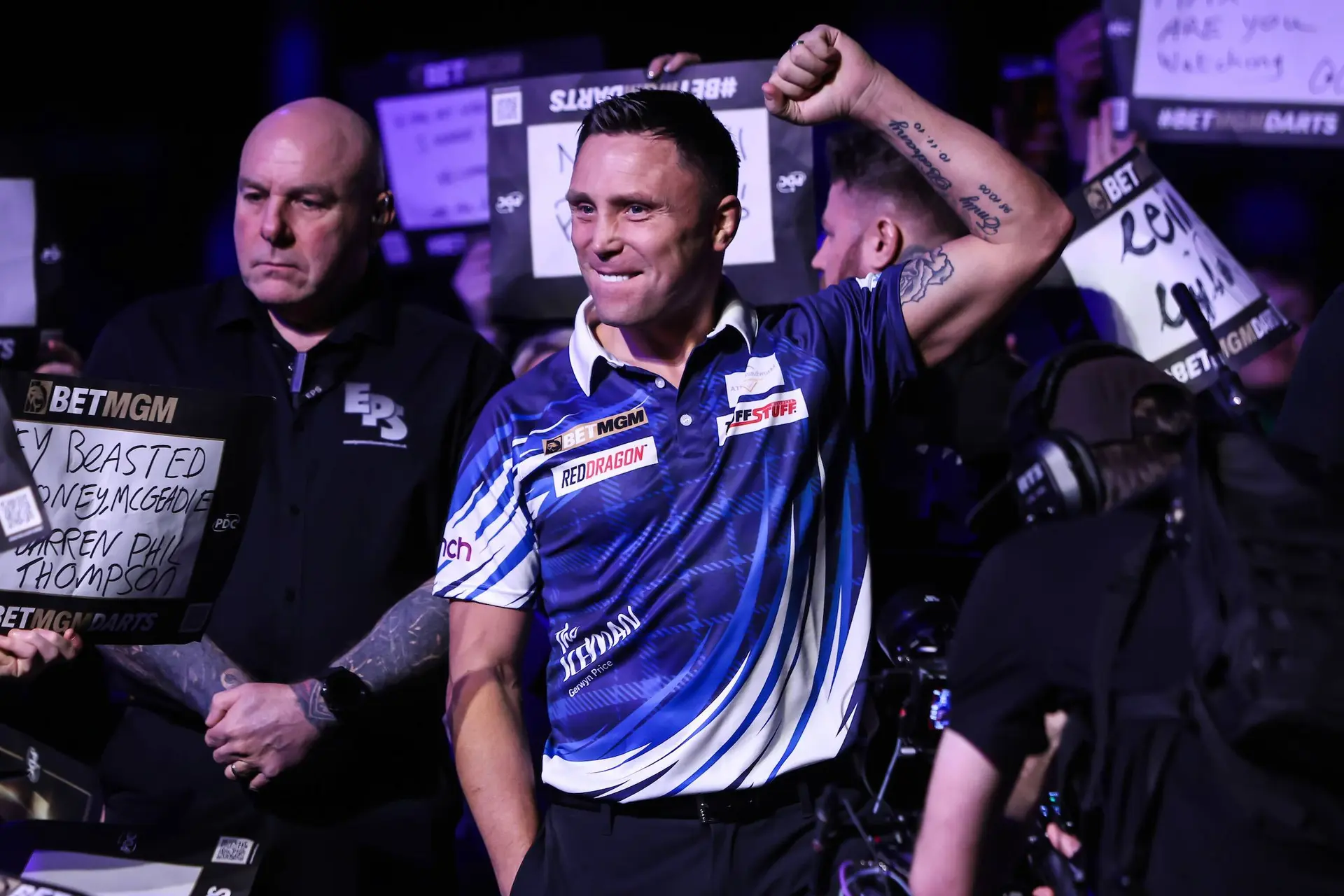
Gerwyn Price, one of the most driven players on tour, recognizes the issue too. Yet he has undergone an impressive transformation in recent years. He lost more than fifteen kilos and is trying to be more mindful about nutrition. Strikingly, he sometimes manages that better on the road than at home. “I tend to always go to the same places,” he says. “But when I’m at home, I go to the ‘rubbish cupboard’. Crisps, chocolate... So I’m actually eating healthier when I’m away from home at the moment. Steak, Nando’s…”
Read also

“It’s really tough at times”
ADVERTISEMENT
Not everyone shares that experience. Stephen Bunting points to a practical issue many players recognize: timing. “It’s really tough at times,” he says. “Because there are tournaments where you’re not done before nine or ten at night. And then many healthy restaurants are already closed.”
For the younger generation, with players like Luke Littler, the temptation is at least as great. “It’s very tempting for us,” he admits. “At those times there’s nothing healthy to eat.”
Still, he tries to compensate at home. “At home you can make up for it a bit, we just eat standard meals. Or we go out and choose something relatively healthy, like chicken with rice.”
Notably, Littler barely sets foot in the kitchen himself. “Cooking? I know absolutely nothing about it,” he says without shame. “I’ve really no idea how to make anything. Maybe some toast, but that’s about it.”

Luke Littler is a two-time world champion
ADVERTISEMENT
“Making up for it at home matters”
Michael van Gerwen, for years the dominant force on the circuit, acknowledges that healthy living on tour remains a challenge. “On tour it’s tough, I have to admit,” he says. “But it’s very important that you can make up for it at home and also keep moving well.”
For Van Gerwen, the key lies in balance: accept that it won’t be perfect on the road, but make the right choices at home. He is also one of the few who says he can cook. “Especially when the kids are at home,” he explains. “If I’m at home by myself, I prefer to eat out. I can cook. I can do everything myself.”
With a wink he adds: “There’s one thing I don’t do at home, and that’s ironing. Other than that I do everything myself.”
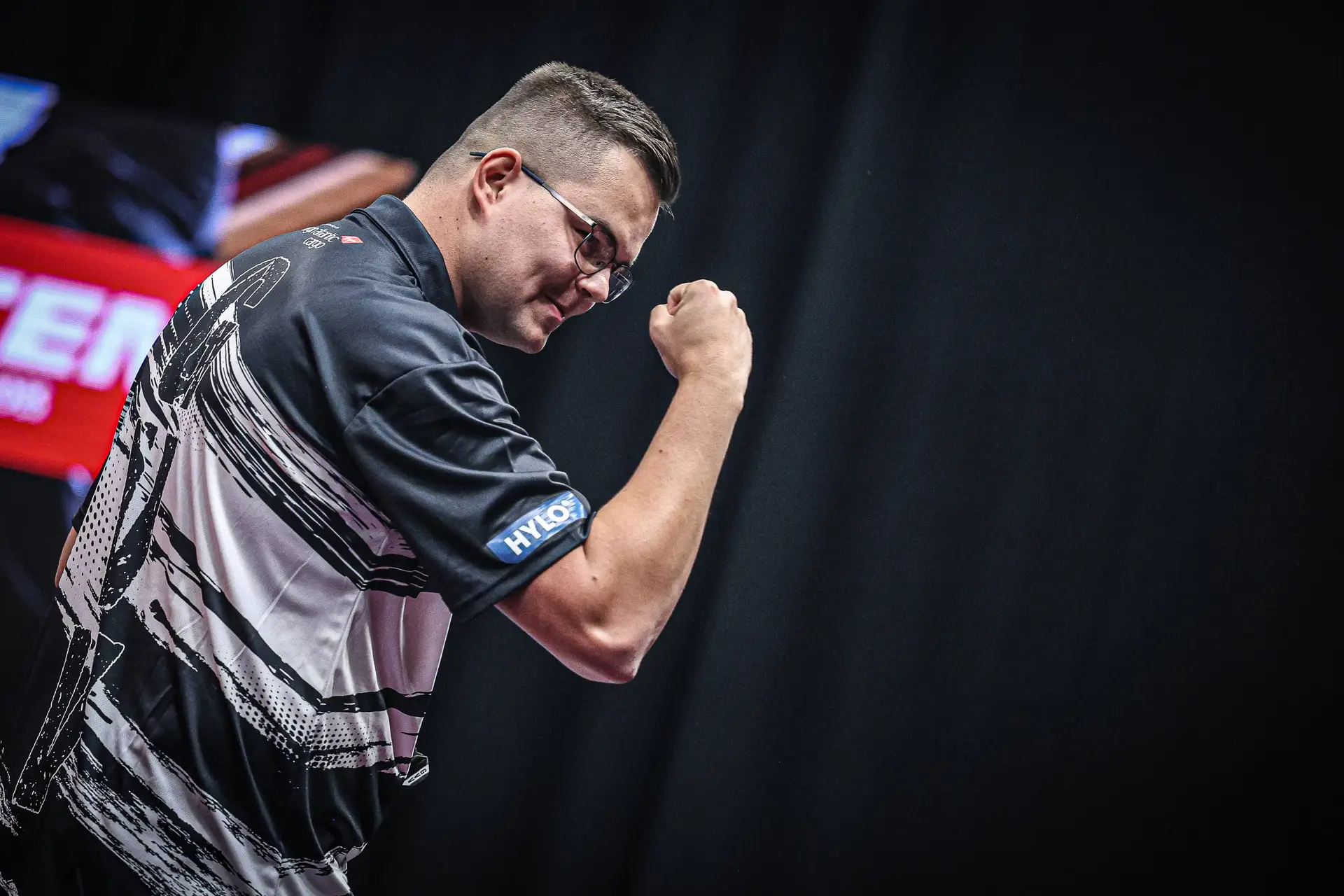
For others, the responsibility clearly lies elsewhere. Gian van Veen largely leaves cooking to his partner. “Cooking? No, I don’t do that,” he says with a laugh. “My girlfriend trained as a chef. That’s ideal, she can cook delicious meals for me.”
ADVERTISEMENT
“Unwinding after busy weeks on Tour”
Luke Humphries, by contrast, is among the minority who genuinely enjoy cooking. For him, it’s even a way to unwind after hectic weeks on Tour. “When I’m at home, I don’t even think about going out to eat or ordering in,” he says. “If I come home after three or four days and I’ve only got a short break, I actually want to cook tasty, nutritious things that are good for me.”
He doesn’t see cooking merely as a necessity, but as a deliberate choice. “I’m not going to say I’m a great chef who can cook everything, but I do cook at home. I make good pastas, but really anything that’s nutritious for me, my partner, and the kids. I love doing that when I’m at home.”
In a sport where routine and focus are crucial, Humphries seems to have found a way to keep control of his lifestyle.
ADVERTISEMENT
Josh Rock sits somewhere in between. He can cook, but prefers to rely on his wife. “I can cook myself as well, but she’s better than me,” he admits. “She loves cooking Italian, like spaghetti bolognese, one of my favourite dishes. She enjoys cooking, and I look after the kids while she’s in the kitchen.”
What all these stories have in common is that life on the darts tour is far from ideal for a healthy lifestyle. Long days, late matches, and limited options make it hard to make consistently good choices. Fast food is often not a conscious choice, but a practical solution.
Yet there is growing awareness that nutrition and physical condition are becoming increasingly important in the sport. Where darts used to be associated with beer bellies and unhealthy habits, a clear evolution is visible today. Players like Price and Van Gerwen show that a better lifestyle can also contribute to performance.
The reality, however, remains that perfection is unattainable. Even the most disciplined players have to improvise and make compromises. The difference often lies in what happens away from the tour: at home, in the few days of rest they get.
ADVERTISEMENT

Kieran WoodDarts Journalist
Kieran Wood is a sports journalist based in Wales and has been active in journalism since 2022. He contributes to DartsNews.com, where he covers professional darts through news, match reports, analysis, and live coverage across the PDC calendar and major tournaments.
A key part of his work is on-site reporting from leading events. Kieran has covered the PDC World Darts Championship in person, reporting daily from the venue and providing first-hand insight from the tournament. During his coverage, he has conducted interviews with leading players including Luke Littler, Luke Humphries, and Gerwyn Price.
He is also one of the leading voices of the English-language Dartsnews Podcast, contributing regular analysis and discussion on developments across the professional darts circuit.
In his reporting, Kieran places strong emphasis on careful sourcing, editorial accuracy, and updating articles when new, verified information becomes available.
claps 1visitors 1
Just in


Popular news

Latest comments
- I agree,I can't believe the lack of coverage of this sad loss. Always enjoyed watching him,but I guess now it's all about littler,well it seems that way. Darts has sadly lost a good manrick6717-10-2026
- In the absence of a report regarding the death of Stefan Lord, I'll assist. An excellent player in the late 70s and early 80s, he actually won the now defunct 3rd place match at two World Championships and a couple of the News of the World Championships. A fabulous player and easily the best Swedish player ever. Rest peacefully Stefan.richieburnettrocks16-10-2026
- Joking aside, it is the second most watched sport on sky (more than golf, F1 etc) behind football only, and in participation is second to only football and swimming. It doesn't get the attention or sponsorship of "bigger" sports because it's not as sexy, but it's right up there.BandB13-10-2026
- i love darts but you can't seriously believe it's the second most popular sport in the uk. even top five is pushing it. it may be the fastest growing, though.colt13-10-2026
- I'm a big Clayton fan, but he's got this completely wrong. Qualification criteria exists for a reason - so just as failing to make the top 32/64 for the Euro championships/PT Finals means you miss out, so does not lifting a title for this one.26sForFun12-10-2026
- The players who deliberately slow the game down are usually boring and win very little in the way of silverware. Horrible to watch.MrYnyslas197112-10-2026
- [“The Gentle” then used a sweeping and questionable phrase...] You anglocucks are hilariously finished in every sense of the word.Critical99911-10-2026
- I love Jonny but I disagree. The Grand Slam was always supposed to be "champion of champions" type competition. If the top 16 are guaranteed participation in everything there will be so much less jeopardy involved in qualifying and each major tournament will lose its unique flavour which the PDC has worked hard trying to develop. I enjoy following the qualification races towards the end of the year, and while consistency should have its rewards, the truth is Jonny hasn't reached a major final all year or won a single event on the Pro Tour. Being consistent is one thing, but that alone should have consequences as the sport's elite should not be prepared to accept consistently strong performances, their foremost motivation should be to win and this should be what separates them from the rest, not the consistency of their performances. Jonny is expecting that losing should be enough; it shouldn't be, at least not as far as the Grand Slam is concerned.Deduce635811-10-2026
- Well being honest,it doesn't matter what level you play at, there's always someone who slows it down to suit themselves,and extra swig of water, replacing flights, asking the ref what the score is. It happens wherever. I'm not saying it's professional,but I'm sure we've all seen it beforerick6711-10-2026
- Agree completely. Not sure how a ranking event can have a criteria not based on rankings. And he right on popularity. In the UK second only to football.BandB11-10-2026
Loading