DartsNews Podcast | “I’d love to see him knuckle down for 12 months... How good could he be?” – Ryan Searle’s laid-back approach leaves one big question
PDC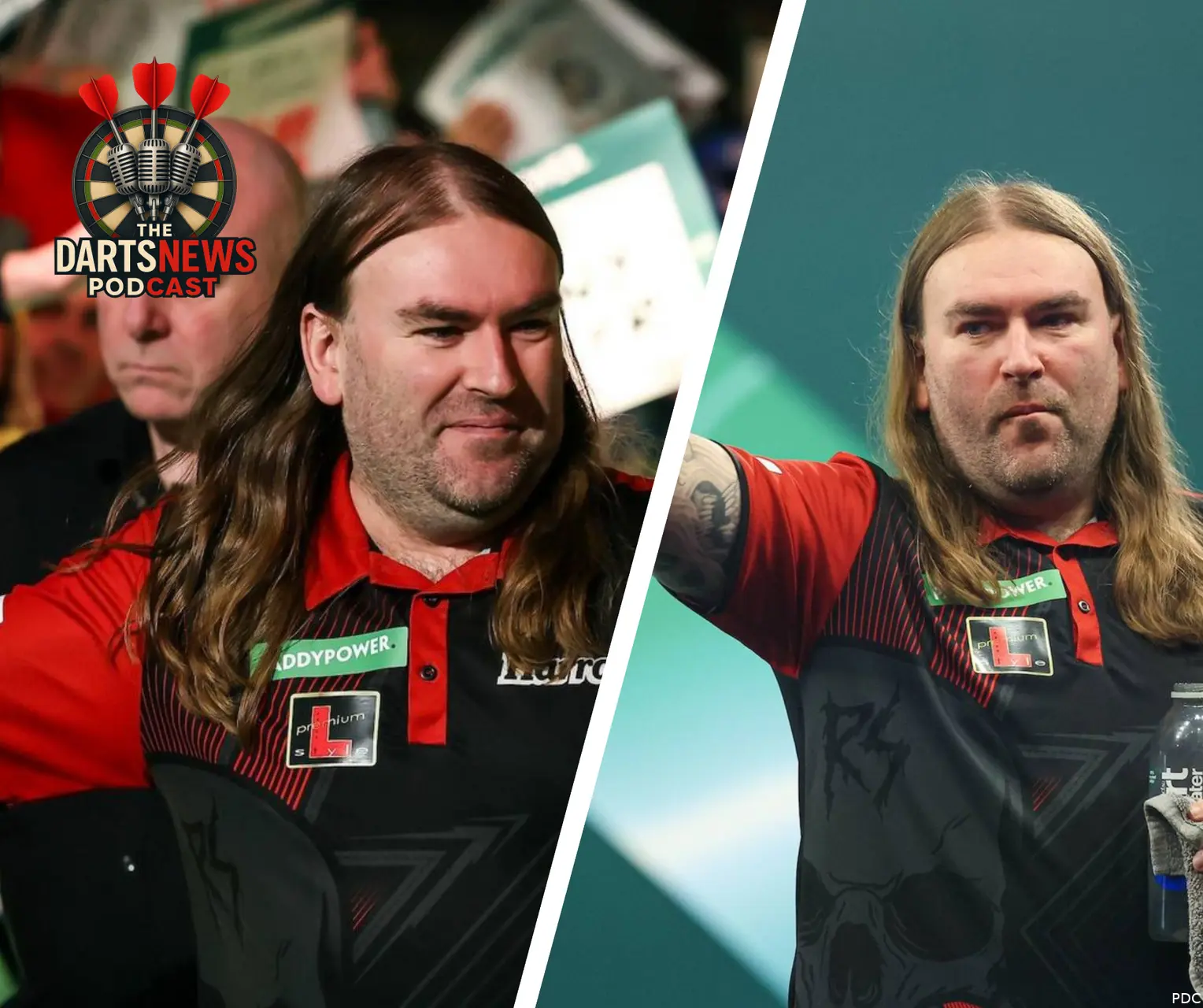
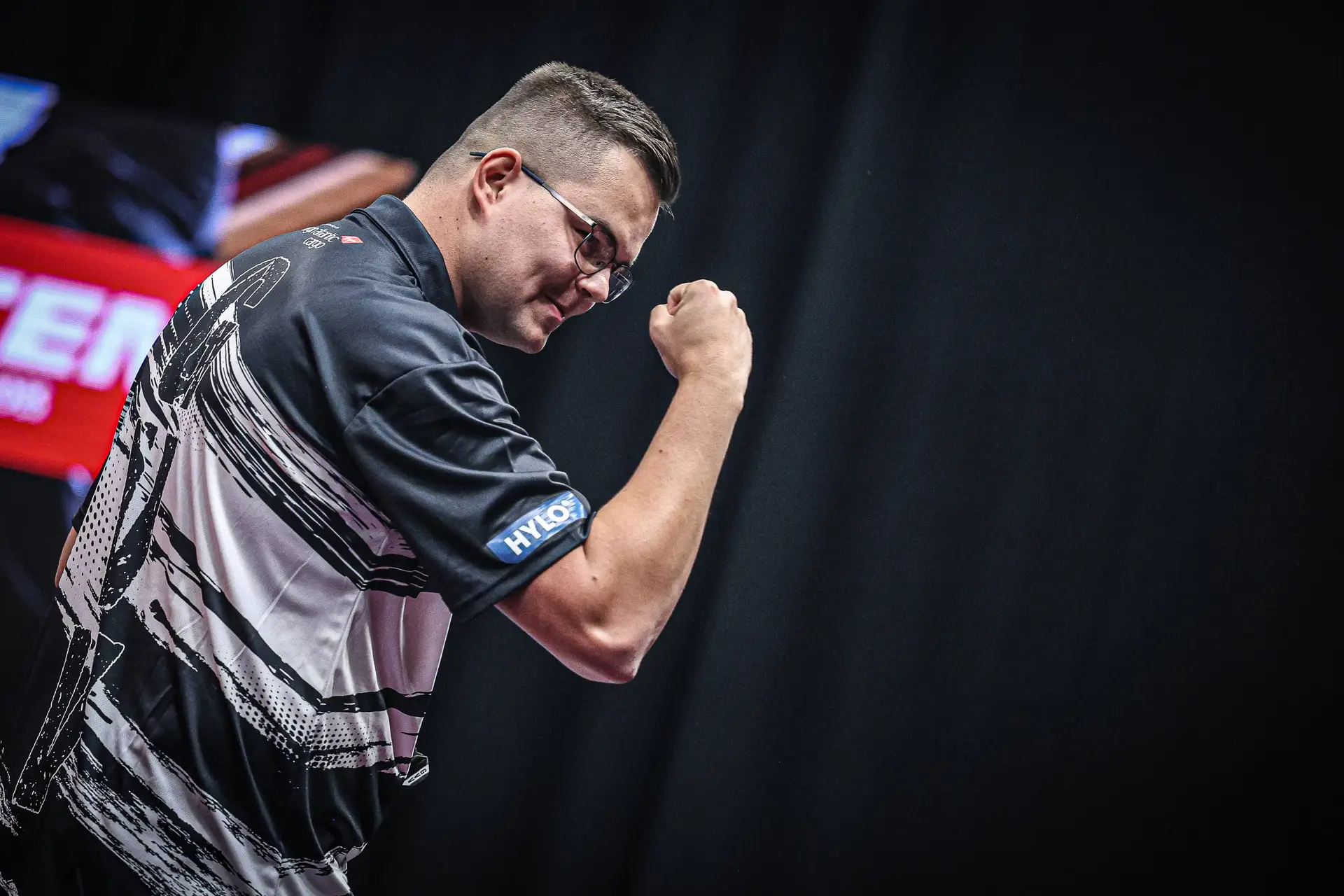
Ryan Searle is one of the most intriguing players in modern darts, a consistent winner, a World Championship semi-finalist and yet still a figure surrounded by one lingering question, a theme explored in depth on the latest episode of the DartsNews Podcast. Despite operating at an elite level and overcoming challenges that would stop most players in their tracks, “Heavy Metal” continues to divide opinion over just how far he could go.
ADVERTISEMENT
Our regular team of expert hosts, Kieran Wood and Nicolas Gayer, broke down Searle’s unique career path, weighing up whether his laid-back approach is holding him back or whether it is, in fact, the very reason behind his success.
A career that “somehow flies under the radar”
That lingering question around Ryan Searle is rooted in a career that, despite its consistency and success, still seems to exist just outside the sport’s main spotlight. Gayer put it plainly: “The question of how a career will pan out is one I wanted to ask regarding Ryan Searle. He made headlines by winning his eighth title in seven years, seven consecutive years, only getting the double last year in 2025.”
It is a level of consistency few players can match, particularly on the ProTour, where Searle has quietly built a reputation as one of the most reliable performers in the field. “Searle always amazes me, because he’s now a World Championship semi-finalist, he got up to around number seven after the Worlds, he is a PDC title winner for the seventh consecutive year, and he still somehow manages to fly under the radar for most of the year.”
The results are there. The ranking reflects it. And yet, the spotlight rarely follows.
ADVERTISEMENT
“How good could he be if he really tried?”
If Searle’s results raise eyebrows, his own attitude towards the game raises even more questions. “He’s been very honest about the fact that he doesn’t put that much effort in,” Wood explained. “He sort of coasts through his career, but he’s fine with it because he’s doing so well.”
It is a rare admission in elite sport, where marginal gains and obsessive preparation are often seen as essential. “He’s happy with the level he’s at, picking up one title a year, the odd TV run, always being around the top 16 or top 32, and he even got to the top seven last year.”
That level of output only sharpens the central debate. “I just want to see what he would be like if he had 12 months where he really took it seriously and knuckled down. How good could he be?”
It is the question that continues to follow Searle. Not what he is, but what he might still become.
ADVERTISEMENT

Searle reached the semi-finals of the 2026 PDC World Darts Championship
Natural ability that defies logic
For Gayer, the answer lies deeper than preparation. “I think he has to be one of the most naturally gifted players we’ve ever seen,” he said. “The guy can barely see. He’s literally almost blind, and still he’s playing as one of the best players in the world at times.”
Searle’s well-documented eyesight issues only make his achievements more remarkable. In a sport built on precision, he continues to compete and win at the very highest level. “And that, as you said, is not only with the fact that he has limited eyesight, but also with the fact that he doesn’t invest much into practice and all that,” Gayer continued. “So yes, if he really did knuckle down for a few months… it would be fascinating to see.”
It is that contrast, natural talent against minimal preparation, that makes Searle such a unique case. “Maybe it wouldn’t even take him higher because that’s just exactly the person he is, and maybe that’s what he needs. We don’t know. But it would be very exciting to find out.”
ADVERTISEMENT

Is less actually more?
That uncertainty is what makes the debate so compelling. “That’s the thing, isn’t it?” Wood added. “You don’t know whether the fact that he is so relaxed is what makes him so good in the first place.”
In an era where many players chase perfection through repetition, Searle stands apart. “He’s like the complete opposite of a Damon Heta, who would spend hours on the board practising the smallest little errors in his game, just working and working and working on them, while Searle just rocks up and says, right, just throw three darts.”
It is an approach that should not work at this level. And yet, it continues to deliver. “That’s exactly what he’s doing. Totally,” Gayer said. “And I think that’s also what makes darts so great, because in what other sport would you talk about one of the world’s elite players as someone who has just said that right now he enjoys playing Call of Duty more than being on the practice board, and it still works out? So fair enough. He’s living the dream.”
ADVERTISEMENT
A question that refuses to go away
For all the numbers, the rankings and the titles, there is still something refreshingly different about Ryan Searle. In a sport increasingly shaped by precision, preparation and repetition, he continues to do things his own way, without apology and without overcomplicating the process. “You’ve got to love his honesty, don’t you?” Wood said in conclusion.
It is that honesty that perhaps defines Searle more than anything else. A player capable of competing with the very best, achieving more than most, and yet doing it entirely on his own terms, still leaving the feeling that there could be something even greater just beneath the surface.
Kieran WoodDarts Journalist
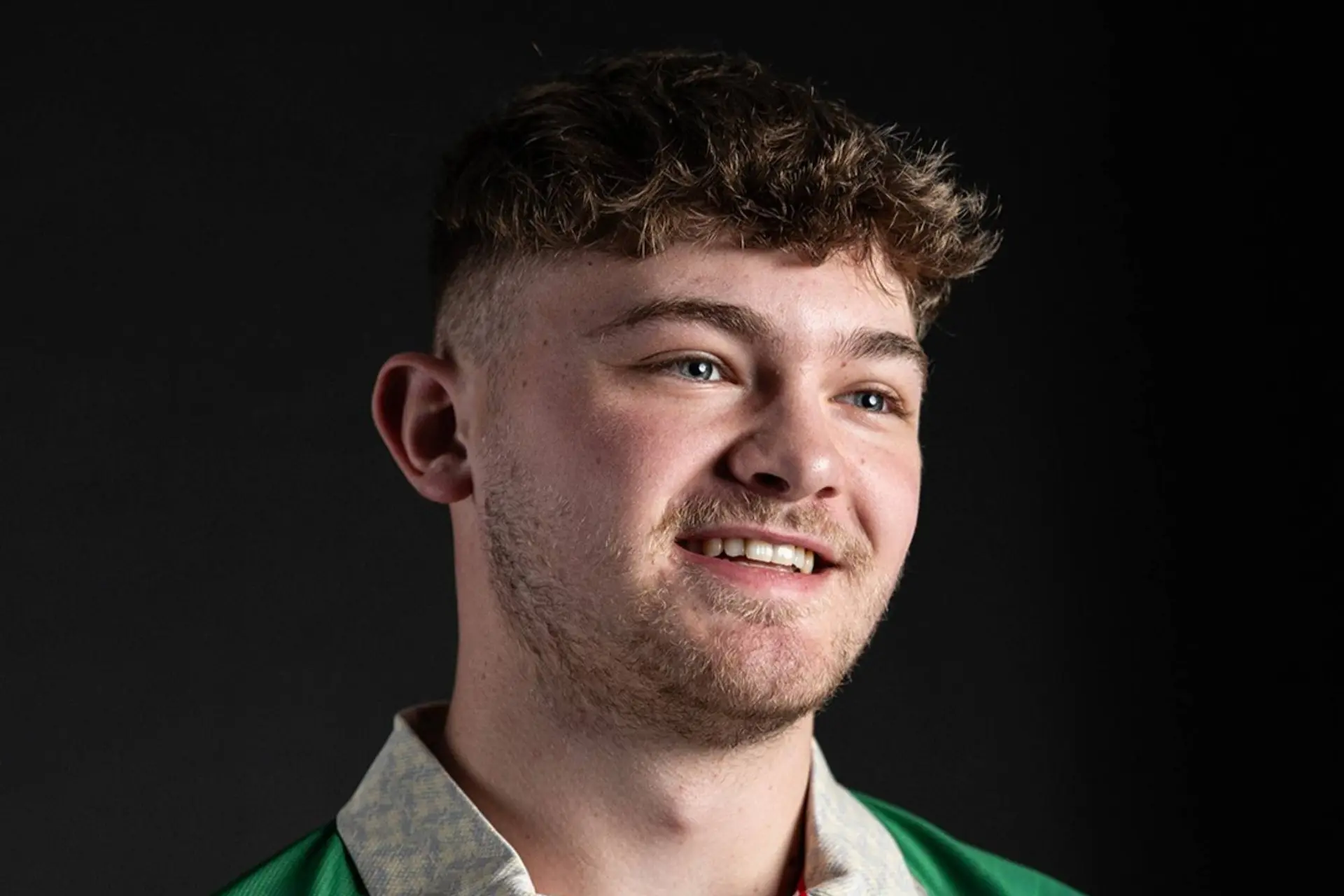
Kieran Wood is a sports journalist based in Wales and has been active in journalism since 2022. He contributes to DartsNews.com, where he covers professional darts through news, match reports, analysis, and live coverage across the PDC calendar and major tournaments.
A key part of his work is on-site reporting from leading events. Kieran has covered the PDC World Darts Championship in person, reporting daily from the venue and providing first-hand insight from the tournament. During his coverage, he has conducted interviews with leading players including Luke Littler, Luke Humphries, and Gerwyn Price.
He is also one of the leading voices of the English-language Dartsnews Podcast, contributing regular analysis and discussion on developments across the professional darts circuit.
In his reporting, Kieran places strong emphasis on careful sourcing, editorial accuracy, and updating articles when new, verified information becomes available.
claps 1visitors 1
Just in

Popular news

Latest comments
- I agree,I can't believe the lack of coverage of this sad loss. Always enjoyed watching him,but I guess now it's all about littler,well it seems that way. Darts has sadly lost a good manrick6717-10-2026
- In the absence of a report regarding the death of Stefan Lord, I'll assist. An excellent player in the late 70s and early 80s, he actually won the now defunct 3rd place match at two World Championships and a couple of the News of the World Championships. A fabulous player and easily the best Swedish player ever. Rest peacefully Stefan.richieburnettrocks16-10-2026
- Joking aside, it is the second most watched sport on sky (more than golf, F1 etc) behind football only, and in participation is second to only football and swimming. It doesn't get the attention or sponsorship of "bigger" sports because it's not as sexy, but it's right up there.BandB13-10-2026
- i love darts but you can't seriously believe it's the second most popular sport in the uk. even top five is pushing it. it may be the fastest growing, though.colt13-10-2026
- I'm a big Clayton fan, but he's got this completely wrong. Qualification criteria exists for a reason - so just as failing to make the top 32/64 for the Euro championships/PT Finals means you miss out, so does not lifting a title for this one.26sForFun12-10-2026
- The players who deliberately slow the game down are usually boring and win very little in the way of silverware. Horrible to watch.MrYnyslas197112-10-2026
- [“The Gentle” then used a sweeping and questionable phrase...] You anglocucks are hilariously finished in every sense of the word.Critical99911-10-2026
- I love Jonny but I disagree. The Grand Slam was always supposed to be "champion of champions" type competition. If the top 16 are guaranteed participation in everything there will be so much less jeopardy involved in qualifying and each major tournament will lose its unique flavour which the PDC has worked hard trying to develop. I enjoy following the qualification races towards the end of the year, and while consistency should have its rewards, the truth is Jonny hasn't reached a major final all year or won a single event on the Pro Tour. Being consistent is one thing, but that alone should have consequences as the sport's elite should not be prepared to accept consistently strong performances, their foremost motivation should be to win and this should be what separates them from the rest, not the consistency of their performances. Jonny is expecting that losing should be enough; it shouldn't be, at least not as far as the Grand Slam is concerned.Deduce635811-10-2026
- Well being honest,it doesn't matter what level you play at, there's always someone who slows it down to suit themselves,and extra swig of water, replacing flights, asking the ref what the score is. It happens wherever. I'm not saying it's professional,but I'm sure we've all seen it beforerick6711-10-2026
- Agree completely. Not sure how a ranking event can have a criteria not based on rankings. And he right on popularity. In the UK second only to football.BandB11-10-2026
Loading