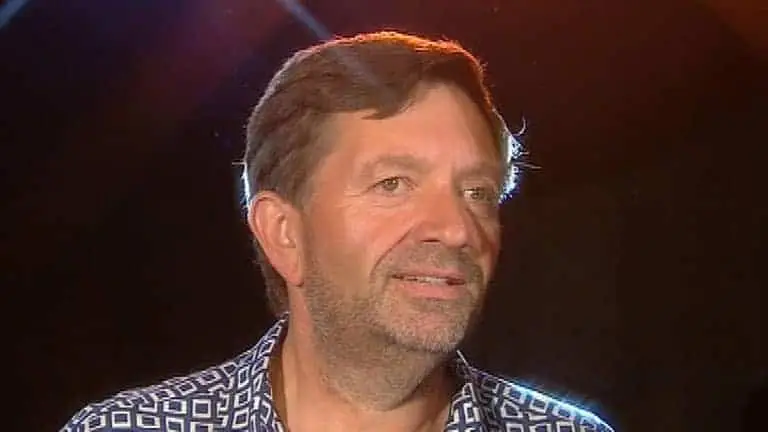
In this series, we regularly look back at the career of a particular darts player. Today, it is the turn of Denis Ovens.
ADVERTISEMENT
Denis Ovens was born on 1 July 1957 in Enfield. The Englishman was a familiar face on the professional darts circuit for many years. Playing under the nickname ‘The Heat’, Ovens was not someone who constantly made headlines with world titles or major televised triumphs. Nevertheless, he built an impressive career, holding his own among the best darts players in the world for many years. With a quarter-final appearance at the PDC World Championship, three consecutive semi-finals at the UK Open and a final appearance at the inaugural German Darts Championship, Ovens proved that he could compete with the very best on his day.
His career also tells the story of a darts player from a different generation. Ovens began his career during the period when the BDO dominated international darts. When the professional game underwent significant changes during the 1990s and around the turn of the millennium, he made the switch to the PDC. He would subsequently become a regular presence at the organisation’s biggest tournaments for many years.
The first steps in the world of darts
Ovens began playing darts in 1976, when he was 19 years old. He was therefore embarking on his professional career at a time when international darts was a very different sport from the one we see today.
During the 1970s and 1980s, darts grew into a popular spectator sport, particularly in Great Britain. The BDO’s major tournaments attracted considerable attention, and players could build a reputation through strong performances in a relatively small but highly competitive world.

Ovens looks on at Barney.
Ovens developed into a serious competitor in that environment. He joined the BDO circuit in 1984, gradually attempting to establish himself among the established names. However, it would take some time before he began attracting significant attention.
ADVERTISEMENT
One of his first notable results came in 1984, when he reached the quarter-finals of the Double Diamond Masters. It was an encouraging performance from a player who was still at the beginning of his development at the highest level.
In 1986, Ovens made his debut at the World Masters. The tournament was one of the most important events on the BDO calendar, offering players the opportunity to test themselves against the international elite. Ovens reached the last 16, demonstrating that he could produce results on a bigger stage.
A year later, he made headlines again. In 1987, he reached the semi-finals of the Double Diamond Masters. Although he had yet to win a major title, he was gaining experience in matches where the pressure continued to increase.
His development did not follow the path of a player who would break into the absolute world elite within a few years. Ovens had to remain patient, continue working and wait for opportunities to establish his name more firmly. That long road to recognition would later become a defining feature of his career.
A breakthrough towards the end of the 1990s
ADVERTISEMENT
During the second half of the 1990s, Ovens began producing increasingly impressive results. His performances became more consistent, and he managed to progress further in bigger tournaments.
An important moment came in 1999, when he won the Scottish Open. That victory was one of the highlights of his BDO career and gave his progress fresh momentum. Winning an international open tournament demonstrated that he was capable of more than producing the occasional good performance: he could also take control of an event and win it.
In the same year, Ovens reached the quarter-finals of the World Masters. It was another valuable result during a period in which he was becoming an increasingly prominent figure on the circuit.
Combining his Scottish Open victory with a strong World Masters performance gave his name greater standing within the game. For a player who had been active on the BDO circuit since 1984, those results represented a reward for years of hard work.
By then, Ovens had built up a lengthy career, but the most important phase of his journey was still to come. As darts prepared to enter a new era, he too faced an important decision.
ADVERTISEMENT
A brief World Championship appearance with the BDO
In 2000, Ovens had the opportunity to prove himself on the BDO’s biggest stage. That year, he made his debut at the BDO World Championship, which occupied a central place in international darts at the time.
However, his debut ended in the first round. He lost to English crowd favourite Bobby George, one of the best-known personalities in darts history.
For Ovens, it was a disappointing conclusion to his first World Championship campaign. He had spent years developing within the BDO circuit and naturally wanted to demonstrate that he could perform at the World Championship. An early elimination gave him little opportunity to do so.
Nevertheless, the result did not mean that his potential at the highest level had been exhausted. On the contrary, he decided to take a new direction later that same year.
ADVERTISEMENT
Around the turn of the millennium, professional darts was going through a period of change. The PDC had established itself as an alternative to the BDO and was attracting an increasing number of players. The organisation was building its own circuit, featuring major televised tournaments and a growing international reach.
For Ovens, this represented an opportunity to give his career fresh impetus. Later in 2000, he switched to the PDC. It marked the beginning of the chapter for which he would become known among a large proportion of darts fans.
The switch to the PDC
Moving from the BDO to the PDC was an important decision. Ovens left behind the organisation in which he had developed for many years and chose a circuit that was becoming increasingly professional.
The PDC offered new opportunities, but the competition was fierce. Players such as Phil Taylor dominated the circuit, while other top names were constantly competing for the biggest prizes. Anyone hoping to succeed at that level needed not only strong scoring power but also the ability to maintain their standard at decisive moments.
ADVERTISEMENT
Ovens made his PDC World Championship debut in 2001. His first appearance ended in the opening round, where he lost to Les Fitton. It immediately exposed some of the challenges involved in moving to a different organisation.
However, he refused to be discouraged. That same year, he recorded several victories on the circuit. He won the Irish Masters, the Claims Solutions Classic and the Jersey Darts Festival. Taken together, those results demonstrated how quickly he could adapt to his new surroundings.
The Irish Masters would also become an important tournament in his career. Ovens managed to win the title again in 2002, proving that his success the previous year had not been a one-off achievement.
His results at smaller tournaments were important too. In a professional environment where players regularly competed for prize money and ranking points, a series of strong performances could make all the difference. Ovens managed to remain competitive among players who often received more attention because of their televised success.
His PDC career was therefore not immediately a story of major triumphs, but rather one of steady progress and the ability to remain competitive year after year.
ADVERTISEMENT
Also read: Looking Back – Colin Osborne: The Englishman who reportedly once threw a 143.14 average.
The early years at the PDC World Championship
Although Ovens won titles at smaller tournaments, the World Championship remained a difficult challenge. His debut in 2001 had ended early, and in 2002 he again had a relatively limited run.
At the 2002 World Championship, he lost in the second round to Richie Burnett. The Welshman was an experienced player who had already enjoyed considerable success. For Ovens, the defeat once again meant that he had yet to establish himself among the players capable of consistently making deep runs at the World Championship.
He took a step forward in 2003 by reaching the third round, where Dennis Smith proved too strong. A year later, he reached the third round again. This time, Ovens lost 4–3 in sets to Alex Roy after a closely contested match.
ADVERTISEMENT
That result illustrated the stage of his career at the time. He could compete with experienced opponents and regularly came close to reaching the next round, but he was still struggling to overcome the final obstacles.
His career would later often be described as that of a player who came close to a major breakthrough without ever quite achieving it. That assessment was not entirely unfair, but it also overlooked his consistent presence at the highest level.
Also read: Looking Back – John Part: The Canadian who dethroned ‘invincible’ Phil Taylor after 44 consecutive World Championship wins and eight world titles.
The 2005 World Championship: His best result at the Worlds
The 2005 PDC World Championship became the most important World Championship in Ovens’ career. For the first time, the Englishman reached the quarter-finals, recording his best-ever result at the tournament.
After previous exits in the first, second and third rounds, he managed to overcome several opponents. His performances demonstrated that he could raise his level at the right moment and that he was capable of competing with the best on a major stage.
Mark Dudbridge awaited him in the quarter-finals. Dudbridge had already built an impressive reputation of his own and was a former World Masters champion. Later in 2005, he would also reach the PDC World Championship final, where he lost to Phil Taylor.
Ovens’ run ended against Dudbridge. He lost 5–3 in sets, seeing his hopes of reaching the semi-finals come to an end.
The missed nine-darter that stayed with him
The 2007 World Championship produced one of the most talked-about moments of Ovens’ career. In the second round, he faced Alan Tabern in a match that culminated in a nerve-wracking finish.
The contest was decided in a sudden-death leg. Both players found themselves in a situation where a single leg would determine whether they were eliminated or progressed to the next round.
Ovens had the opportunity to throw a nine-darter. The Englishman came close to achieving the historic feat but missed double 12. As a result, he not only lost his chance to record a nine-darter but also missed out on a £15,000 bonus that was attached to the perfect leg at the time.
The moment became even more significant because Tabern ultimately won the match. Ovens therefore lost not only the chance to achieve something special but also the contest itself.
A regular at the World Matchplay and World Grand Prix
Although his World Championship results varied, Ovens qualified for other major PDC tournaments for many years. His consistency at the World Matchplay and World Grand Prix was particularly impressive.
He qualified for the World Matchplay for 12 consecutive years, from 2000 through to 2011. That was an impressive run, especially given the standard of the competition and the growing number of players attempting to qualify for the major events.
Ovens regularly managed to progress beyond the opening rounds. His best result was reaching the last 16, a stage he achieved in several different years. These included 2000, 2002, 2003, 2004, 2005, 2009 and 2011.
He never reached the semi-finals or final of the tournament, but his consistent qualification record spoke volumes. Ovens was not a player who enjoyed just one successful season before disappearing from view. He remained a presence on one of the sport’s biggest stages for many years.
He demonstrated similar consistency at the World Grand Prix. From 2001 through to 2011, he qualified for the tournament in 11 consecutive years. His best performances there were last-16 appearances, including in 2001, 2003 and 2011.
Reaching the final of the inaugural German Darts Championship
One of the biggest highlights of Ovens’ career came in 2007, when he reached the final of the inaugural German Darts Championship.
The tournament was an important part of the PDC’s growing international ambitions. The organisation was seeking to develop darts beyond Great Britain, with Germany becoming a key market.
Ovens successfully navigated the field to reach the final. Waiting for him was Phil Taylor, the player who dominated the sport during that period and spent many years winning almost every major title available.
Taylor proved an extremely difficult opponent. Ovens lost the final 4–1 in sets and had to settle for the runner-up position.
A chance to compete at the Grand Slam of Darts
Thanks to his runner-up finish at the German Darts Championship, Ovens qualified for the 2008 Grand Slam of Darts. The tournament brought players from different darts organisations together, creating a unique contest between competitors from a variety of backgrounds.
Ovens produced another respectable performance, reaching the last 16. It confirmed that he could remain competitive across several major stages.
He also reached the last 16 at the 2008 European Championship. In addition, he made the semi-finals of the Championship League Darts that year.
The UK Open: Three consecutive semi-finals
The UK Open became the tournament where Ovens produced his most notable run during the later stages of his career. Between 2010 and 2012, he reached the semi-finals three years in a row.
The tournament had a distinctive place on the PDC calendar. With its open draw and the way the field was assembled, players could face a variety of opponents. As a result, the route to the final was not always predictable. Ovens proved particularly well suited to the event.
In 2010, he reached the semi-finals, where he faced Phil Taylor. The Englishman remained the benchmark in the sport at the time and once again proved a difficult obstacle to overcome.
A year later, Ovens returned to the last four. Having again battled his way through the field, he had another opportunity to reach the final. This time, his opponent was Wes Newton, who won the semi-final 10–6. That ended Ovens’ second consecutive semi-final appearance, leaving him once again just short of the final.
In 2012, he had a third opportunity. Ovens had only recently returned from injury after being forced to retire during his opening-round match against Kevin Münch at the World Championship because of a trapped nerve in his back.
However, he was back in action at the UK Open and reached the semi-finals for the third consecutive year, establishing a remarkable run. Once again, he faced Phil Taylor. ‘The Power’ ultimately won the match, ending Ovens’ hopes of reaching the final.
A player with a distinctive personality
Ovens was known for more than his results. His appearance and nickname also made him a recognisable figure on the darts circuit.
His nickname was ‘The Heat’, a name that suited the intensity associated with the sport. As a player, he constantly had to concentrate on his scoring, his doubles and the pressure applied by his opponents.
His walk-on music was ‘The Heat Is On’ by Glenn Frey. It gave him a recognisable introduction whenever he stepped onto the stage.
Ovens was also frequently noted for his unshaven appearance. His look distinguished him from players who pursued a more polished image. In a sport where personality and recognisability were becoming increasingly important, this contributed to his profile.
Ovens also explained that he had developed an unusual habit regarding shaving. According to the Englishman, he often experienced bad luck whenever he shaved before a match. At some point, he therefore decided to stop doing so.
A brief return to the BDO
After many years on the professional circuit, Ovens’ time with the PDC came to an end in 2015. By then, he had spent approximately 15 years with the organisation and competed in a long list of major tournaments.
However, his story did not end entirely with his departure from the PDC. In 2016, he made a brief return to the BDO circuit.
Almost two years after his last appearance, he returned to action at the Swedish Open. His comeback did not produce any major results. It was primarily a sign that he had not completely said goodbye to the sport.
After a long career at the highest level, darts evidently remained an important part of his life.
His return was short-lived, however, and did not lead to another period of regular appearances at major international tournaments.
Denis Ovens’ World Championship record
| Year | Organisation | Round reached | Opponent | Result |
| 2000 | BDO | Last 32 | Bobby George | 1–3 |
| 2001 | PDC | Last 32 | Les Fitton | 1–3 |
| 2002 | PDC | Last 16 | Richie Burnett | 4–6 |
| 2003 | PDC | Last 32 | Dennis Smith | 1–5 |
| 2004 | PDC | Last 32 | Alex Roy | 3–4 |
| 2005 | PDC | Quarter-finals | Mark Dudbridge | 3–5 |
| 2006 | PDC | Last 32 | Steve Alker | 1–4 |
| 2007 | PDC | Last 32 | Alan Tabern | 3–4 |
| 2008 | PDC | Last 32 | Jan van der Rassel | 1–4 |
| 2009 | PDC | Last 32 | Ronnie Baxter | 1–4 |
| 2010 | PDC | Last 32 | Colin Lloyd | 3–4 |
| 2011 | PDC | Last 32 | Simon Whitlock | 0–4 |
| 2012 | PDC | Last 64 | Kevin Münch | Retired at 0–1 down |
| 2013 | PDC | Last 32 | Adrian Lewis | 1–4 |
The legacy of ‘The Heat’
Denis Ovens will not be placed in the same category as the great world champions who shaped modern darts. His name does not sit at the top of the list of players who won dozens of major televised titles and dominated the rankings for years.
Nevertheless, his career deserves recognition. Ovens remained active at the highest level for a long period and held his own in a sport that became increasingly professional and international.
Read also
He was not always the player who attracted the most attention, but he was an opponent who had to be taken seriously for many years. He could progress deep into major tournaments, had the experience to handle pressure and repeatedly qualified for the sport’s most important events.
That consistency made ‘The Heat’ a respected figure in professional darts, even without the major individual title that might have defined his career differently.

Samuel GillChief Content Officer
Samuel Gill is the Chief Content Officer (CCO) of DartsNews.com, a role he has held since 2020. He is responsible for editorial governance across the platform, including setting content standards, overseeing accuracy and consistency, and guiding long-term editorial strategy across professional darts coverage. Since joining, he has contributed more than 10,000 articles and editorial pieces, playing a central role in the development and daily operation of the site.
Based in Leicester, Samuel has extensive experience in darts media and has been closely involved in coverage of the professional darts circuit for several years. Within the UK darts community, he is a recognised figure known for his consistent editorial output and ongoing reporting on major tournaments and developments across the PDC calendar.
In his current role, Samuel works closely with editors and writers to ensure content meets clear journalistic standards, with a focus on source verification, editorial consistency, and timely updates when new, confirmed information becomes available.
claps 8visitors 6
Just in


Popular news
Latest comments
- He produced some impressive numbers in that qualifying campaign. I'm excited to see him compete at the World Championship once again, even if it will be difficult to replicate last year's success even with an improved performance, with the draw playing a huge role in determining his fortunes.Deduce635811-11-2026
- I often think about this very question. I think they should revive the format. They could even invite representatives from MODUS Super Series, with four series winners from the past year, and the ADC, with finalists from the Global Championship and perhaps other events. Why not throw in eligible representatives from the JDC and even the soft-tip game too?Deduce635811-11-2026
- So what if littler missed out, he doesnt have to enter everythingant10-11-2026
- Good, absolutely no loss if we never see this dancing goof ever again......no that is not fair. He absolutely cannot and has never been remotely able to dance!richieburnettrocks10-11-2026
- Yes Phil,now the money in the game is bigger than ever,you'd play littler. Well so would I! Retire on your memory Phil,and your successful careerrick6709-11-2026
- And why should he listen to you?Deduce635807-11-2026
- Ultimately it is a bye for whoever draws Barney. It will be another stroppy and sulky performance once he goes behind. Barney was excellent but really must completely call it a day now.richieburnettrocks07-11-2026
- I'm disappointed he was not able to secure a spot at the Grand Slam. With Carl Sneyd taking care of Daryl Gurney, he would have had to beat Andy Boulton before facing the winner of Sneyd vs Mensur Suljović for a Grand Slam spot. Unfortunately, after beating Filip Bereza comfortably, he succumbed to Boulton, and the board would ultimately be won by the highly inconsistent Carl Sneyd. Since he could instead have been drawn against the likes of Cristo Reyes, Dirk van Duijvenbode and Stephen Bunting, I think once Gurney was out of the picture he would have been favourite to win his board, and it seems like a massive missed opportunity to put 5 grand on his ranking and seal another major TV appearance ahead of the Worlds. The highs and lows of following Raymond van Barneveld!Deduce635806-11-2026
- Probably i will receive a lot of backlash and hate for this reaction, but well, so be it. I am more than sick and tired of those lies of you Barry Hearn. How dare you defend yourself over the back of Fallon’s son! He has a disability and not an illness, so let me correct that for you! I know because I have the exact same disability. I have tried to reach out to Fallon in the past, and offered her to help her and her son, because I was struggling with the same problems, and I understood the boy. I wanted him to have finally someone who understood him. However she told me that she did not want my help, and I have respected Fallon’s choice. I have never asked Fallon for money. They don’t need money in that case. I only ever wanted the best for Fallon and Rory, but I have to be honest about the situation. Fallon should tell the true story and not be forced to tell lies. I don’t hate Fallon, and I don’t begrudge or envy a single penny that she gets, but this situation/case is just not fair. I hate the lies and the dishonesty and injustice. I don’t want Fallon to be hated because there is an unfair disadvantage created. Don’t proclaim your false lies over the back of Rory! I only stand for integrity and justice. I am precisely the one who always sticks up for Fallon. And you don't, you don't give a damn about them. You were never there for them, and now you only want to save your own position! You are just trying to talk your way out of your own bad behavior at the expense of someone with a disability. And to Fallon, I don’t know if this may ever reach you, and you read it, but I want you to know I love you and I love your son Rory very much, I am sorry how things developed and went. I hope you and Harriet are still friends. I am sorry if I were too persistent to you, or you experienced it that way, but it was never my intention. Please understand I have autism as well. As Barry Hearn would say, I am only just a human being too, and I also make mistakes and misjudge things sometimes. I promise you I did everything out of the deepest love and care for you and Rory. If I were you, I should just keep all the money, only please never be dishonest or tell lies anymore for Barry Hearn, or anyone else. I hope you have the best life, and I wish nothing more than the best for you. I have always loved the two of you. Farewell.Hiddo05-11-2026
- She is a professional. If darts is her income, she is a professional. Same as Adrian Lewis, Martin Adams. A tour card just means someone can play on the PDC tour. You could even make a case that Clayton wasn't a professional (until recently I believe) because he had employment elsewhere.BandB04-11-2026