BACK IN THE DAY WITH: Gary Mawson: the Canadian-American who ended Raymond van Barneveld’s winning streak at the UK Open
PDC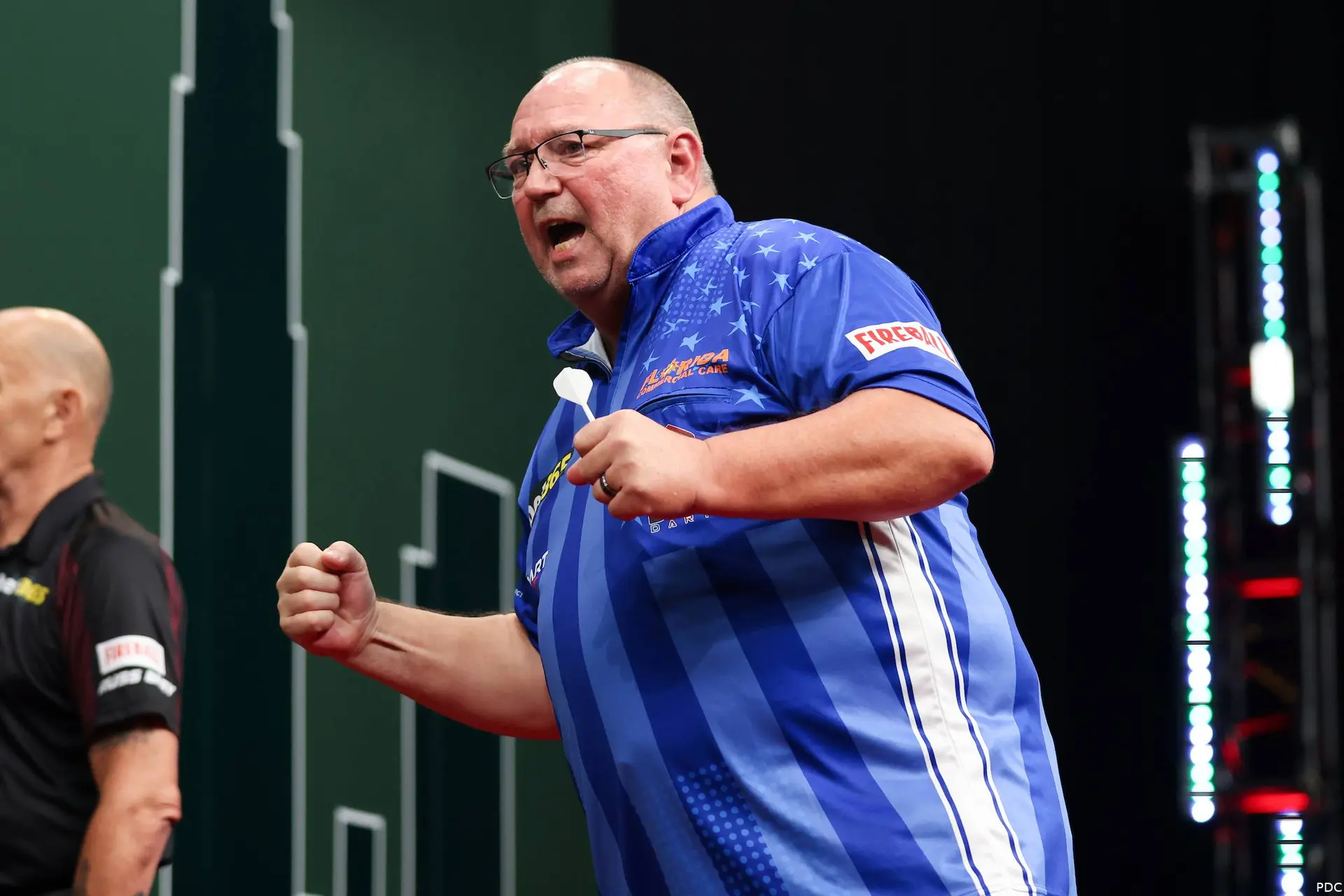
In this feature, we regularly look back at a darts player from the past. Today, the spotlight is on Canadian star Gary Mawson, who made headlines by reaching the final of the 2008 UK Open.
ADVERTISEMENT
Mawson is one of the most notable North American darts players ever to compete at the highest level. Although his name never achieved the same status as the sport's greatest world champions, he regularly impressed at major PDC tournaments throughout the 1990s and the first decade of this century. His international background, representing multiple countries, and his surprise victories over some of the biggest names in darts make him a unique figure in the history of the sport.
Son of British parents
Mawson was born in Canada to British parents. At a young age, his family moved to Bolton, England, where he lived between the ages of three and seven before returning to Canada. Thanks to his British heritage and childhood in England, he holds both Canadian and British citizenship.
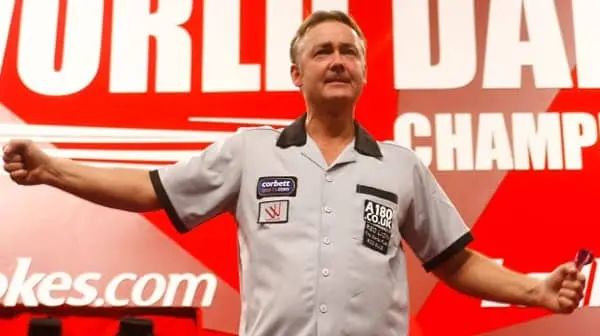
He later settled in the United States and, after living there for many years, also obtained American citizenship. As a result, he represented both Canada and the United States during his career before later competing under the Canadian flag once again. He represented Canada at the 2019 US Darts Masters.
His first attempt to break through on the professional darts circuit came in 1989. Mawson travelled to Great Britain to test himself against the world's best players, but the timing proved unfortunate. Darts was going through a difficult period, with sponsors and television broadcasters having largely withdrawn from the sport. Opportunities for overseas players were therefore limited, prompting Mawson to return to Canada to continue his career there.
In 1992, he competed in the Canadian National Darts Championship for the first time. Although he was eliminated in the last 16, he showed he possessed enough talent to compete with North America's leading players. Two years later, the professional darts landscape changed dramatically with the formation of the World Darts Council, the organisation that later became the Professional Darts Corporation (PDC). Alongside the 14 British players who had broken away from the British Darts Organisation, several North American players were invited to complete the field. Mawson was among that first wave of international competitors.
ADVERTISEMENT
Television debut at the 1995 World Matchplay
His television debut came at the 1995 World Matchplay, where he immediately faced Phil Taylor, already recognised as the dominant force in world darts. Mawson stunned spectators by taking an early lead, but Taylor eventually restored order to win the match 8-5. Despite the defeat, Mawson demonstrated he could compete on the biggest stage.
Throughout the second half of the 1990s, he became a regular Canadian representative at the biggest PDC tournaments. Between 1995 and 2000 he competed in every World Matchplay and also made several appearances at both the World Grand Prix and the PDC World Championship. His best result during that period came at the 1998 World Grand Prix, where he reached the quarter-finals, a performance that remained his best result at a major PDC event for many years.
After the turn of the century, Mawson remained active on the North American circuit, now representing the United States, where he built a strong reputation. His performances earned him a place at the 2007 Las Vegas Desert Classic. There he equalled his best televised tournament performance by once again reaching the quarter-finals. Thanks to his consistency, he also qualified for the inaugural Grand Slam of Darts, marking his return to one of the PDC's biggest stages after several years away.

Gary Mawson continues to play now.
ADVERTISEMENT
The year 2008 proved to be the highlight of his career. At the US Open, Mawson produced an impressive victory over Raymond van Barneveld in the last 32. He advanced to the last 16 and proved he was capable of defeating the very best in the world.
Stunning run at the 2008 UK Open
Even more remarkable was his performance a few weeks later at the UK Open. His participation initially appeared to be in doubt after he accidentally left his Canadian passport at John F. Kennedy International Airport in New York. Fortunately, he still had his British passport with him, allowing him to enter Great Britain via Manchester Airport without any problems and compete in the tournament after all.
Once on the oche, Mawson embarked on an outstanding run, defeating Darren Johnson, Mark Frost, Alex Roy, Mark Lawrence, Mark Dudbridge and Wayne Jones in succession. That unexpected run earned him a place in the semi-finals, where he faced Raymond van Barneveld once again. The Dutchman had won the UK Open in both 2006 and 2007 and had gone unbeaten in his previous 16 matches at the tournament.
Mawson produced one of the biggest shocks of the event by defeating Van Barneveld 10-8. With the match broadcast live on television, his achievement received widespread attention. It was also the second time in just a few weeks that he had defeated the Dutch superstar. Van Barneveld had beaten Phil Taylor in several major finals in previous years and was widely regarded as one of the favourites for the title. Mawson's victory was therefore viewed as a sensational upset.
ADVERTISEMENT
In the final, he faced James Wade. Although Mawson once again produced an excellent display, Wade ultimately proved too strong, leaving the North American to settle for the runner-up spot. Nevertheless, reaching the final represented by far the greatest achievement of his professional career and firmly established his name on the international darts stage.
Resemblance to Rafael Benitez
During that memorable UK Open run, another remarkable story emerged. British fans noticed that Mawson bore a striking resemblance to then-popular Liverpool manager Rafael Benitez. Throughout the tournament, chants of "Rafa, give us a wave" and "Rafa Rafael" echoed around the venue.
Mawson took it all in good humour. When jokingly asked afterwards whether he should change his nickname to Rafa, he replied that Rafael Benitez should instead change his name to Gary Mawson and that Liverpool's new manager was now Gary Mawson. The quip was fondly remembered by darts fans and only added to his popularity with the British crowd.
ADVERTISEMENT
His run to the UK Open final also secured him a place at the 2008 Grand Slam of Darts. However, he was unable to progress beyond the group stage, meaning another major breakthrough did not follow.
World Cup of Darts
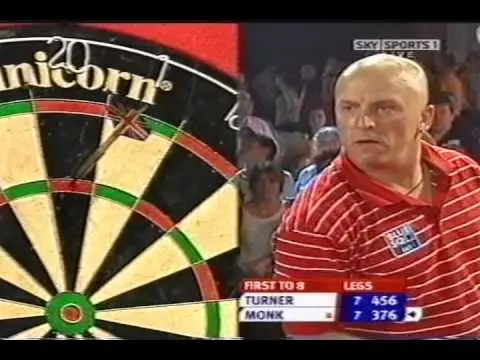
Mawson continued to feature regularly at international tournaments in the years that followed. In 2012, he represented the United States alongside Darin Young at the World Cup of Darts. The American pair reached the quarter-finals before England proved too strong, winning 3-1.
Mawson did, however, produce one of the standout moments of the tie by defeating 15-time world champion Phil Taylor in their singles match. It was one of the most impressive individual victories of his career.
ADVERTISEMENT
A year later, Mawson made history once again on North American soil. During the 2013 Las Vegas Open, he produced a perfect nine-dart finish—the shortest possible leg in darts. He capped off that outstanding display by winning the tournament with a victory over Wes Newton in the final.
After several years away from the spotlight, Mawson returned to an official PDC tournament in 2019. Through the North American qualification rankings, he secured a place at the US Darts Masters. Notably, he once again represented Canada, returning to the country he had represented for much of the early part of his career.
In the opening round, he pushed Gerwyn Price all the way before eventually losing 6-4 to the future world champion.
A place in darts history
Although Gary Mawson never won a world title, he remains one of the most successful North American darts players of his generation. His surprise victories over legends such as Raymond van Barneveld and Phil Taylor, his run to the UK Open final, and an international career representing three different nationalities have secured him a unique place in the history of international darts.
ADVERTISEMENT
Gary Mawson's World Championship results
| Year | Result | Opponent(s) | Result |
| 1997 | Last 24 (Group Stage) | Bob Anderson / Eric Bristow | Lost 1-3 to Bob Anderson, defeated Eric Bristow 3-1 |
| 1998 | Last 24 (Group Stage) | John Lowe / Peter Manley | Defeated John Lowe 3-0, lost 0-3 to Peter Manley |
| 1999 | Second Round | John Ferrell | Lost 2-3 |
| 2000 | First Round | Keith Deller | Lost 0-3 |
| 2008 | First Round | Kevin Painter | Lost 0-3 |
| 2011 | First Round | Phil Taylor | Lost 0-3 |
Still competing in 2026
Now 63 years old, Mawson remains active on the North American circuit. Most recently, he qualified for the US Darts Masters, one of the tournaments on the World Series of Darts calendar. At Madison Square Garden, he was beaten 6-2 by Jonny Clayton in the opening round.
He also appeared in the MODUS Super Series last year. Despite his advancing years, Mawson's passion for the sport continues to burn brightly, and there is every chance we will still see him competing at PDC events for years to come.
ADVERTISEMENT

Samuel GillChief Content Officer
Samuel Gill is the Chief Content Officer (CCO) of DartsNews.com, a role he has held since 2020. He is responsible for editorial governance across the platform, including setting content standards, overseeing accuracy and consistency, and guiding long-term editorial strategy across professional darts coverage. Since joining, he has contributed more than 10,000 articles and editorial pieces, playing a central role in the development and daily operation of the site.
Based in Leicester, Samuel has extensive experience in darts media and has been closely involved in coverage of the professional darts circuit for several years. Within the UK darts community, he is a recognised figure known for his consistent editorial output and ongoing reporting on major tournaments and developments across the PDC calendar.
In his current role, Samuel works closely with editors and writers to ensure content meets clear journalistic standards, with a focus on source verification, editorial consistency, and timely updates when new, confirmed information becomes available.
claps 11visitors 1
Just in

Popular news

Latest comments
- I agree,I can't believe the lack of coverage of this sad loss. Always enjoyed watching him,but I guess now it's all about littler,well it seems that way. Darts has sadly lost a good manrick6717-10-2026
- In the absence of a report regarding the death of Stefan Lord, I'll assist. An excellent player in the late 70s and early 80s, he actually won the now defunct 3rd place match at two World Championships and a couple of the News of the World Championships. A fabulous player and easily the best Swedish player ever. Rest peacefully Stefan.richieburnettrocks16-10-2026
- Joking aside, it is the second most watched sport on sky (more than golf, F1 etc) behind football only, and in participation is second to only football and swimming. It doesn't get the attention or sponsorship of "bigger" sports because it's not as sexy, but it's right up there.BandB13-10-2026
- i love darts but you can't seriously believe it's the second most popular sport in the uk. even top five is pushing it. it may be the fastest growing, though.colt13-10-2026
- I'm a big Clayton fan, but he's got this completely wrong. Qualification criteria exists for a reason - so just as failing to make the top 32/64 for the Euro championships/PT Finals means you miss out, so does not lifting a title for this one.26sForFun12-10-2026
- The players who deliberately slow the game down are usually boring and win very little in the way of silverware. Horrible to watch.MrYnyslas197112-10-2026
- [“The Gentle” then used a sweeping and questionable phrase...] You anglocucks are hilariously finished in every sense of the word.Critical99911-10-2026
- I love Jonny but I disagree. The Grand Slam was always supposed to be "champion of champions" type competition. If the top 16 are guaranteed participation in everything there will be so much less jeopardy involved in qualifying and each major tournament will lose its unique flavour which the PDC has worked hard trying to develop. I enjoy following the qualification races towards the end of the year, and while consistency should have its rewards, the truth is Jonny hasn't reached a major final all year or won a single event on the Pro Tour. Being consistent is one thing, but that alone should have consequences as the sport's elite should not be prepared to accept consistently strong performances, their foremost motivation should be to win and this should be what separates them from the rest, not the consistency of their performances. Jonny is expecting that losing should be enough; it shouldn't be, at least not as far as the Grand Slam is concerned.Deduce635811-10-2026
- Well being honest,it doesn't matter what level you play at, there's always someone who slows it down to suit themselves,and extra swig of water, replacing flights, asking the ref what the score is. It happens wherever. I'm not saying it's professional,but I'm sure we've all seen it beforerick6711-10-2026
- Agree completely. Not sure how a ranking event can have a criteria not based on rankings. And he right on popularity. In the UK second only to football.BandB11-10-2026
Loading