“Generally they’ve got a head start” – Wayne Mardle explains why being good at football, golf, cricket or tennis can help you at darts
PDC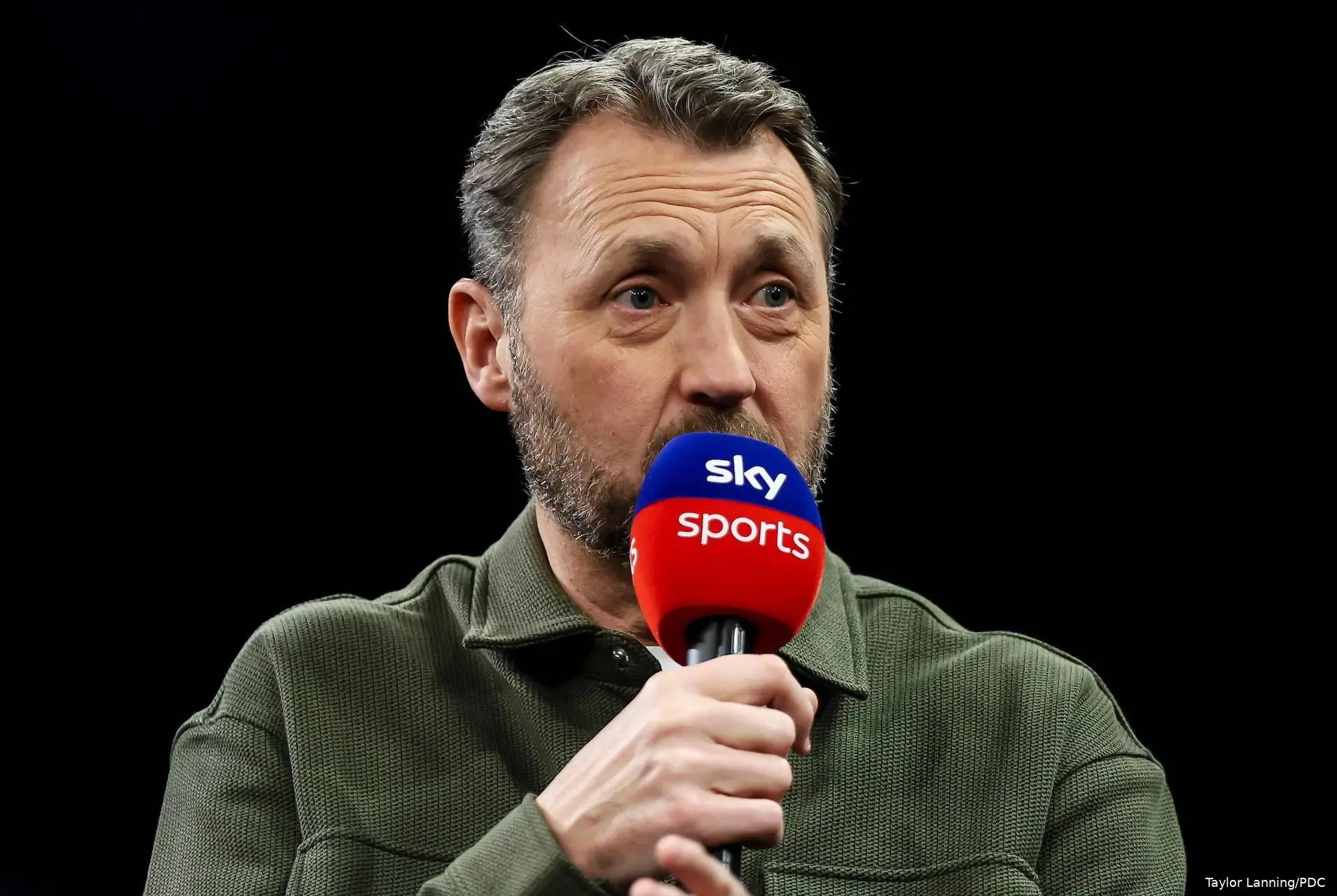
Wayne Mardle believes players who arrive in darts with a background in another sport can already have an important advantage before they start working seriously on their throw.
ADVERTISEMENT
The former World Championship semi-finalist points to football, golf, cricket and tennis as examples, arguing that players from those sports often already understand timing and rhythm. But before Mardle gets to that stage when assessing a throw, his first focus is much more basic.
Speaking to Winmau Darts, Mardle explained that stance, posture and arm movement are all connected rather than separate parts of the action. “Straight away, yes, I’m looking for the basics,” Mardle explained. “And the basics are the stance that leads to the posture, that leads literally to the arm raising and the follow-through. That is about it.”
The finer details come next. Mardle looks at everything from the position of the back leg to the height of the shoulder, with one seemingly minor issue capable of affecting several other parts of the throw. “But there are other little nuances in there,” he continued. “Like, how far back is the trailing leg? Is it to the side? Is it behind them? Is the shoulder low? Which means the elbow’s low, which means the chin will be low, which means the head will be low.”
Rather than identifying one obvious flaw and attempting to fix it in isolation, Mardle believes players need to understand how different parts of the action feed into each other. “One thing leads on to another. It’s seldom just a fix,” he said. “There’s always something that can fix something else.”
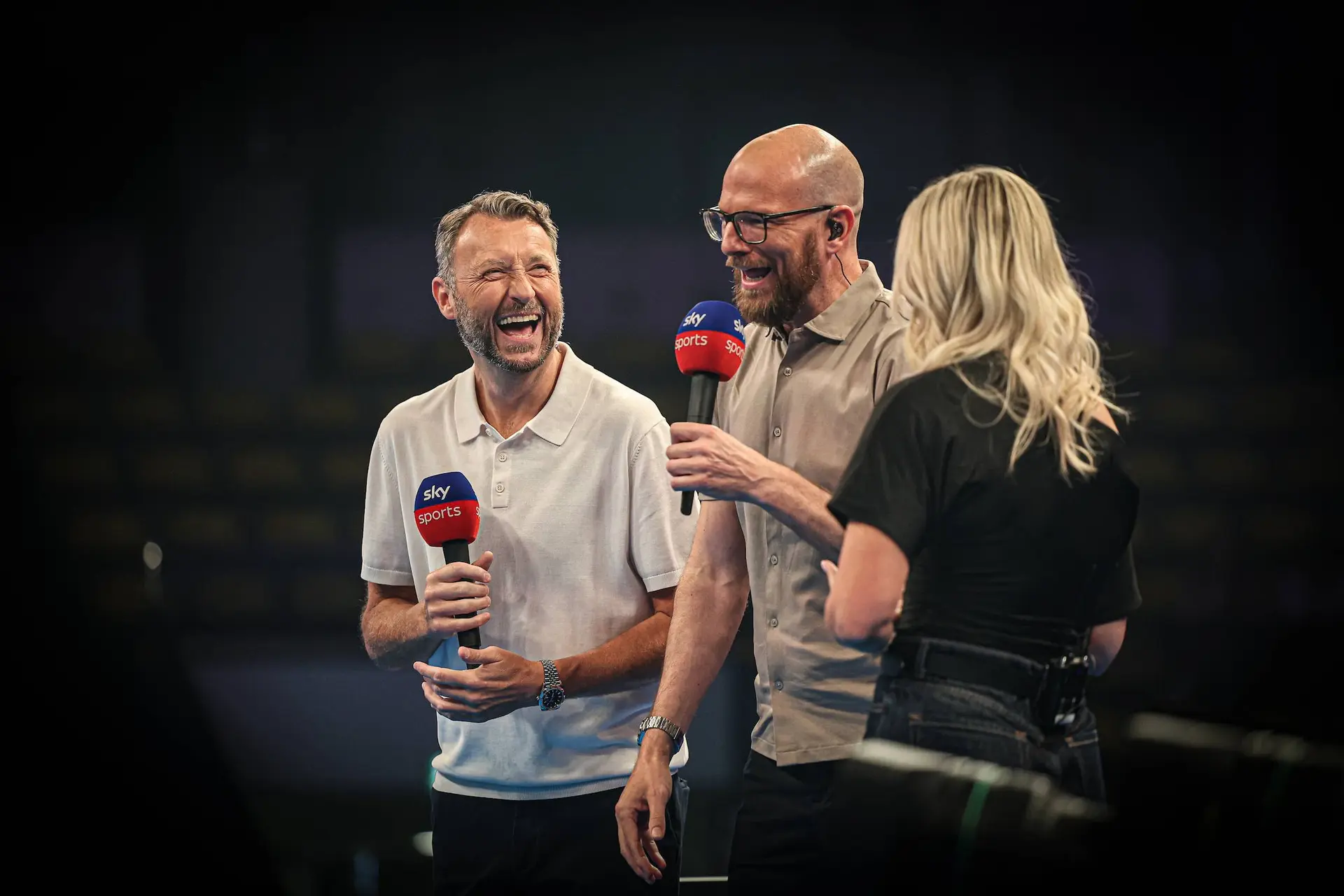
Why other sports can give players a head start
Once those foundations are in place, Mardle’s attention moves away from the mechanics of the throw towards two things he considers just as important: routine and rhythm. “So basically, I’m looking for just the basics to be decent,” he explained. “And then after that, it’s routine and rhythm.”
ADVERTISEMENT
That is where Mardle believes experience in another sport can become particularly useful. Football, golf, cricket and tennis may all demand very different movements, but each requires an understanding of timing, coordination and repeating an action consistently. In Mardle’s view, players who have already developed those qualities elsewhere often bring something valuable with them when they turn to darts.
“Most sportsmen, so if someone comes in and says, ‘I’m good at football, I’m good at golf, I’m good at cricket, tennis,’ generally they’ve got a head start because they understand the timing and rhythm element of sport,” Mardle said. “And you need that in darts.”
For Mardle, that rhythm is what eventually turns a technically solid action into a repeatable throw. Foot position, posture and arm movement can all be corrected, but the player still has to bring those elements together naturally and reproduce the same action visit after visit.
His approach therefore puts far less emphasis on searching for one dramatic technical fix. The fundamentals have to be in the right place first, but once they are, timing and rhythm become just as important in turning a good action into one a player can trust under pressure.
ADVERTISEMENT

Kieran WoodDarts Journalist
Kieran Wood is a sports journalist based in Wales and has been active in journalism since 2022. He contributes to DartsNews.com, where he covers professional darts through news, match reports, analysis, and live coverage across the PDC calendar and major tournaments.
A key part of his work is on-site reporting from leading events. Kieran has covered the PDC World Darts Championship in person, reporting daily from the venue and providing first-hand insight from the tournament. During his coverage, he has conducted interviews with leading players including Luke Littler, Luke Humphries, and Gerwyn Price.
He is also one of the leading voices of the English-language Dartsnews Podcast, contributing regular analysis and discussion on developments across the professional darts circuit.
In his reporting, Kieran places strong emphasis on careful sourcing, editorial accuracy, and updating articles when new, verified information becomes available.
claps 0visitors 0
Just in




Popular news

Latest comments
- The players who deliberately slow the game down are usually boring and win very little in the way of silverware. Horrible to watch.MrYnyslas197112-10-2026
- [“The Gentle” then used a sweeping and questionable phrase...] You anglocucks are hilariously finished in every sense of the word.Critical99911-10-2026
- I love Jonny but I disagree. The Grand Slam was always supposed to be "champion of champions" type competition. If the top 16 are guaranteed participation in everything there will be so much less jeopardy involved in qualifying and each major tournament will lose its unique flavour which the PDC has worked hard trying to develop. I enjoy following the qualification races towards the end of the year, and while consistency should have its rewards, the truth is Jonny hasn't reached a major final all year or won a single event on the Pro Tour. Being consistent is one thing, but that alone should have consequences as the sport's elite should not be prepared to accept consistently strong performances, their foremost motivation should be to win and this should be what separates them from the rest, not the consistency of their performances. Jonny is expecting that losing should be enough; it shouldn't be, at least not as far as the Grand Slam is concerned.Deduce635811-10-2026
- Well being honest,it doesn't matter what level you play at, there's always someone who slows it down to suit themselves,and extra swig of water, replacing flights, asking the ref what the score is. It happens wherever. I'm not saying it's professional,but I'm sure we've all seen it beforerick6711-10-2026
- Agree completely. Not sure how a ranking event can have a criteria not based on rankings. And he right on popularity. In the UK second only to football.BandB11-10-2026
- Doesn't matter who's in it,it's boringrick6710-10-2026
- Assuming you qualify as one of the "muppets" in question. Classist too. And since you're so clearly interested in academia, look up "linguistic descriptivism" while you're at it. Oh, and better stay away from the working class sport of darts and maybe offer your insightful analysis to, let's say, croquet instead?Deduce635806-10-2026
- The consequences of being uneducated and grammatically challenged. "To all THOSE muppets not THEM " Everytime I see Arsepinall, I have an image of him wearing a cap, standing behind the counter of a fast food establishment.richieburnettrocks05-10-2026
- I don't understand Littler's reason for playing this tournament.rick6705-10-2026
- James Wade has become James Wide. He has piled on the tonnage considerably, he barely fits in his shirt.richieburnettrocks03-10-2026
Loading