“If it's something new, it's a case of 'What's bad about this? What can I post on social media?'" – Paul Nicholson bunks off criticism surrounding ITV change in darts coverage
PDC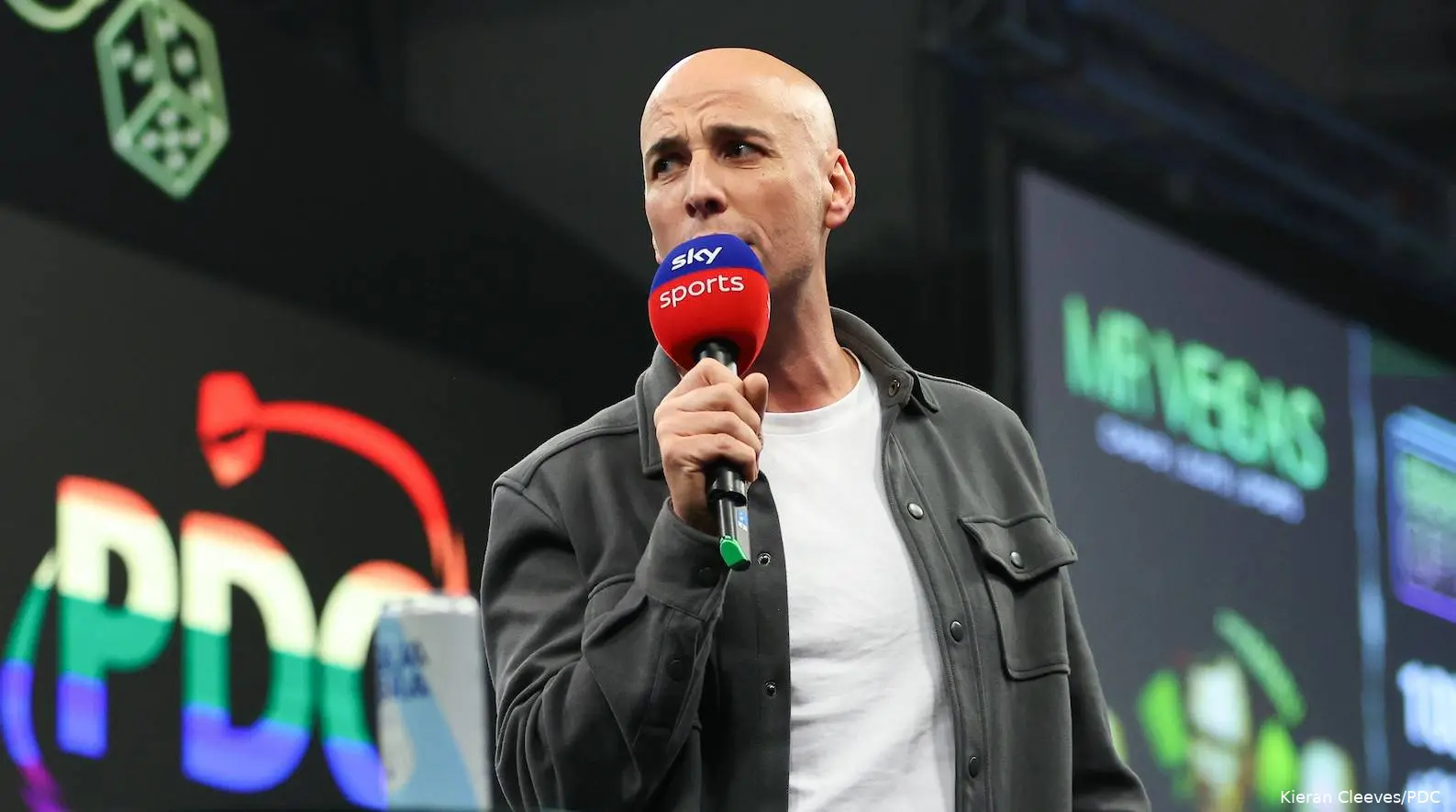
The revamped darts production for tournaments on the British broadcaster ITV has drawn mixed reactions in the early months of the season. According to Paul Nicholson, however, that is a logical consequence of the sweeping changes behind the scenes.
ADVERTISEMENT
“When Matchroom decided to take over from ITV for this production and do things themselves, there were always going to be changes,” Nicholson states in his column for SportingLife. “Changes to staff, changes to production, changes to infrastructure.”
That choice came with an almost complete refresh of the team both in front of and behind the cameras. According to Nicholson, that automatically carries risks.
“What people who have a very strong opinion about this don't seem to understand is just how much work has had to go into this. There are always going to be teething problems when there's wholesale changes made to new productions, especially for an event in Minehead which is a logistical challenge due to the multiple rooms and stages.”
Criticism on social media: judgments made too quickly
The criticism on social media was fierce, but Nicholson adds clear caveats. He believes people are judging a new product too quickly.

“I saw a lot of negatives on social media but I think for a first domestic event, I think they did a great job,” he says. “Was it perfect? No. But then again, what production is perfect?”
ADVERTISEMENT
He notes that viewers nowadays tend to look primarily for flaws. “It seems like no matter what the viewers watch these days, if it's something new, it's a case of "What's bad about this? What can I post on social media? Forget about the fact that all of that was done free to view for your benefit, but lets just look at the negatives.”
The new-look line-up for ITV’s darting coverage has been unveiled ahead of the start of the 2026 season! 🙌
— PDC Darts (@OfficialPDC) January 15, 2026
👉 https://t.co/4eabMb4s5d pic.twitter.com/NiyOlyLuMz
Comparisons with Sky Sports
A common complaint is that the new ITV broadcasts increasingly resemble those of Sky Sports. Nicholson understands where that feeling comes from. “There is obviously a lot of crossover talent that is being used compared to the past,” he explains. “With the introduction of Wayne Mardle and Glen Durrant, while Mark Webster and Dan Dawson remain voices on both productions.”
As a result, he says, a familiar yet more uniform sound emerges. “So I can understand that they might be getting a lot of the same opinions and outlooks from people who work for both productions, but… Chris Mason's presence means there's still a little bit of traditional ITV stock."
ADVERTISEMENT
Presenter Pete Graves, in particular, is under the microscope. Nicholson believes that criticism is premature. “Pete Graves is a great journalist,” he states. “What we should do is give him the rest of the year to understand the intricacies of darts, because he's a football guy, everybody knows that.”
He draws a comparison with previous changes in the darts world. “When Dave Clark took over people initially didn't like the change. But then, obviously, everyone ended up loving Dave and were gutted when he decided to step back. Emma Paton then came in and that transition is probably the best transition we've ever had in our sport, because she is fantastic and we were very lucky to get her.”

According to Nicholson, it’s unrealistic to judge someone based on one tournament. “But over the course of the year I think the fans will warm to him and the chemistry between himself, Wayne, and the team will improve. You don't judge someone on the first broadcast, you give them time.”
Another innovation is the role of reporters closer to the crowd, such as Alexa Rendall. Nicholson says that’s a deliberate choice. “I think what they're trying to do is bring a little bit of vibrancy. They're trying to have a bit more connectivity with the fans,” he says. “if you look at what they've done traditionally with ITV, there was a bit of a disconnect between the balcony at the top in Minehead, and the fans downstairs.”
ADVERTISEMENT
Still, he believes that role is particularly challenging. “Alexa probably has the toughest job because she's got 4,500 partygoers and nobody knows which ones have any idea about darts or which ones will be coherent! It's very much a party atmosphere for three days.”

Paul Nicholson, former professional darter, now plays his trade as a pundit and commentator
Criticism of graphics
Not everything, however, is met with understanding. Nicholson is critical of the new graphics, especially the scoreboard. “The only thing I take an exception with," he says. "Which is a lot of us within the production have, is that we don't believe the previous graphics needed to be replaced."
Still, he understands that changes are sometimes necessary. “When you have these wholesale infrastructure changes and licensing issues to deal with, you may have to use your own new graphics and they will always get attention due to how prominent and fundamental they are to the coverage.”
ADVERTISEMENT
He does expect this to be improved quickly. “Are they perfect? No. They're not. And everybody knows it. But like everything else, if they're not right by the middle of the year, when we go to other World Series events, like New York, then there's a problem."
New mastercaller under pressure
The new mastercaller Lewis Jones also drew plenty of criticism. According to Nicholson, that was inevitable. “I think that was going to be inevitable for whoever was going to attempt to fill the huge vocal chords of John McDonald,” he says. “We've had just two MCs in the PDC since 1993. And the longer there's no change, the harder it is for the public to accept change when it does come."
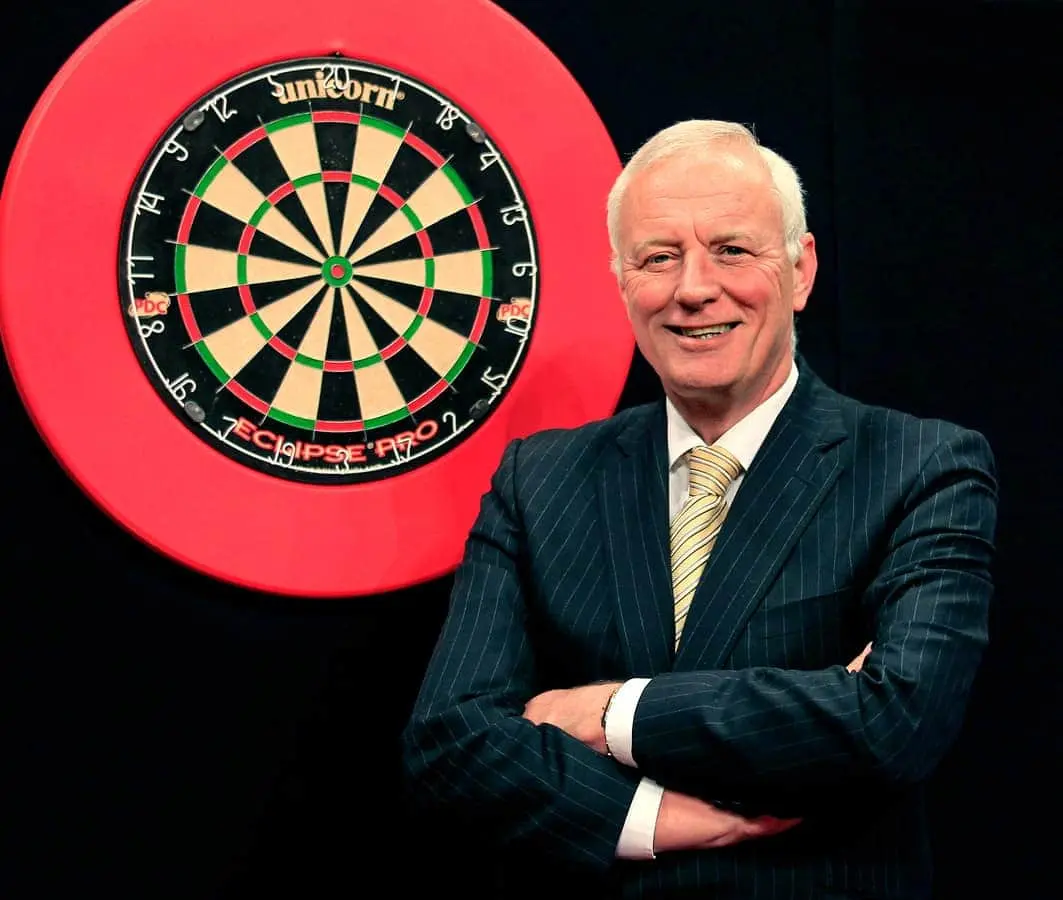
Nicholson knows Jones personally and sees that he is taking his role seriously. “He loves doing the job and has sought the right advice from voice coaches and other ways to try and project himself better. He's not standing there and simply reading a cue card. He's actively trying to better himself."
ADVERTISEMENT
He believes comparison with his predecessor is inevitable but not always fair. “John McDonald was nervous at the beginning and he didn't know much about Phil Taylor, Dennis Priestley and all these guys. But over time he grew into the role and that's what we'll see with Lewis, who is nurturing his own style week by week and clearly improving with every passing tournament."
Lucas MichaelDarts Journalist
Lucas Michael is a darts journalist and reporter based in Cambridge, UK, and has been part of the DartsNews team since 2025. He covers professional darts through reports, analysis, round-ups, and live coverage, with a focus on clear context and accurate reporting across the PDC calendar.
A key part of his work is liveblogging major tournaments throughout the year, providing real-time updates, match coverage, and contextual reporting across the professional circuit. He also reports regularly from events on site and has covered the PDC World Darts Championship from the venue, delivering first-hand insight throughout the tournament.
Within the newsroom, Lucas works closely with the editorial team and supports coverage alongside Chief Content Officer Samuel Gill and reporter Kieran Wood.
Lucas holds a BA (Hons) in Sports Journalism. In his work, he places strong emphasis on careful sourcing, editorial accuracy, and updating content promptly when new, verified information becomes available.
claps 0visitors 0
Just in


Popular news
Latest comments
- I agree,I can't believe the lack of coverage of this sad loss. Always enjoyed watching him,but I guess now it's all about littler,well it seems that way. Darts has sadly lost a good manrick6717-10-2026
- In the absence of a report regarding the death of Stefan Lord, I'll assist. An excellent player in the late 70s and early 80s, he actually won the now defunct 3rd place match at two World Championships and a couple of the News of the World Championships. A fabulous player and easily the best Swedish player ever. Rest peacefully Stefan.richieburnettrocks16-10-2026
- Joking aside, it is the second most watched sport on sky (more than golf, F1 etc) behind football only, and in participation is second to only football and swimming. It doesn't get the attention or sponsorship of "bigger" sports because it's not as sexy, but it's right up there.BandB13-10-2026
- i love darts but you can't seriously believe it's the second most popular sport in the uk. even top five is pushing it. it may be the fastest growing, though.colt13-10-2026
- I'm a big Clayton fan, but he's got this completely wrong. Qualification criteria exists for a reason - so just as failing to make the top 32/64 for the Euro championships/PT Finals means you miss out, so does not lifting a title for this one.26sForFun12-10-2026
- The players who deliberately slow the game down are usually boring and win very little in the way of silverware. Horrible to watch.MrYnyslas197112-10-2026
- [“The Gentle” then used a sweeping and questionable phrase...] You anglocucks are hilariously finished in every sense of the word.Critical99911-10-2026
- I love Jonny but I disagree. The Grand Slam was always supposed to be "champion of champions" type competition. If the top 16 are guaranteed participation in everything there will be so much less jeopardy involved in qualifying and each major tournament will lose its unique flavour which the PDC has worked hard trying to develop. I enjoy following the qualification races towards the end of the year, and while consistency should have its rewards, the truth is Jonny hasn't reached a major final all year or won a single event on the Pro Tour. Being consistent is one thing, but that alone should have consequences as the sport's elite should not be prepared to accept consistently strong performances, their foremost motivation should be to win and this should be what separates them from the rest, not the consistency of their performances. Jonny is expecting that losing should be enough; it shouldn't be, at least not as far as the Grand Slam is concerned.Deduce635811-10-2026
- Well being honest,it doesn't matter what level you play at, there's always someone who slows it down to suit themselves,and extra swig of water, replacing flights, asking the ref what the score is. It happens wherever. I'm not saying it's professional,but I'm sure we've all seen it beforerick6711-10-2026
- Agree completely. Not sure how a ranking event can have a criteria not based on rankings. And he right on popularity. In the UK second only to football.BandB11-10-2026
Loading