“I’d rather see some tension and a bit of hostility on stage than everyone being overly friendly all the time.” – Vincent van der Voort entertained by Smith-Mansell antics on stage
PDC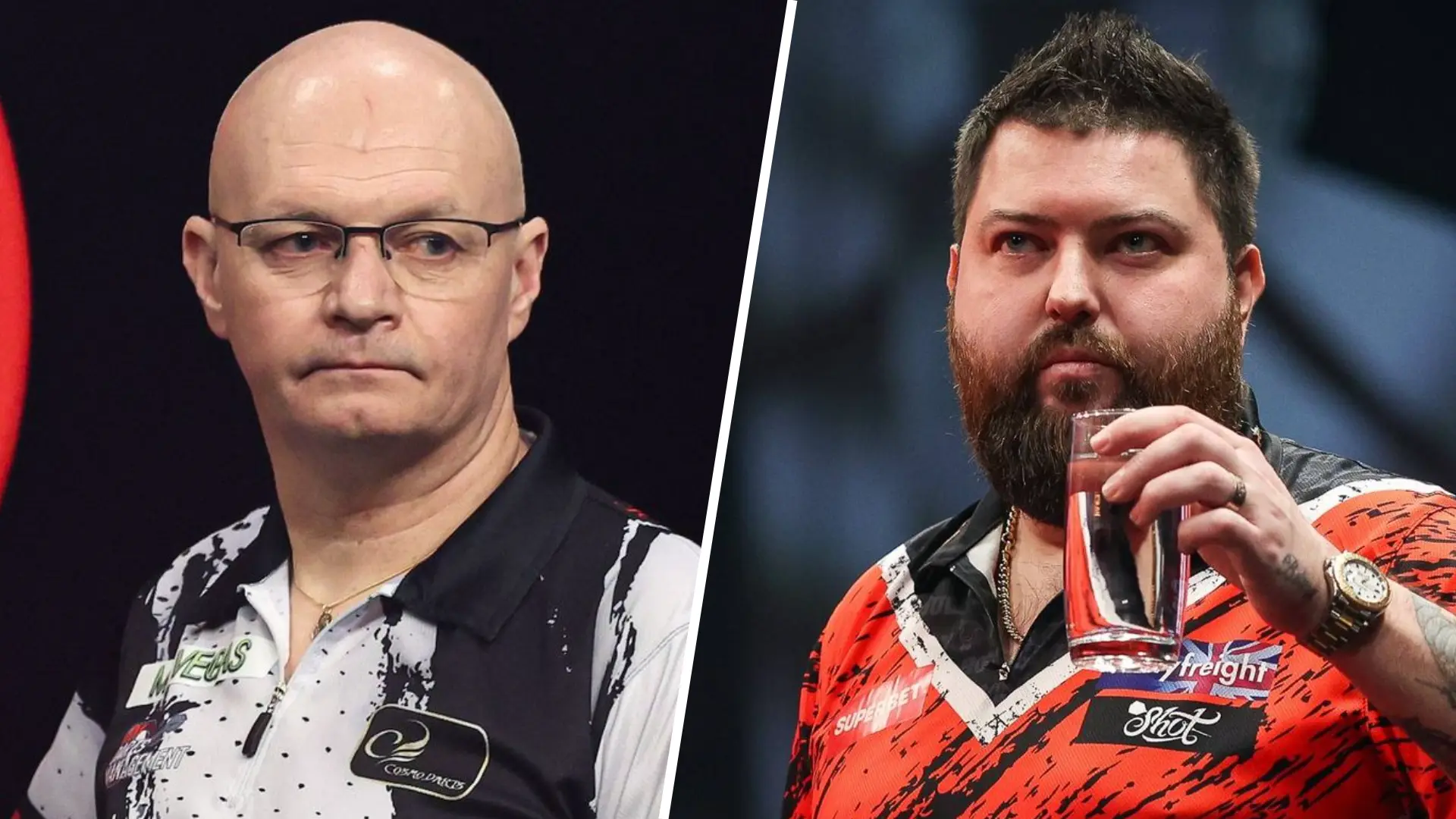
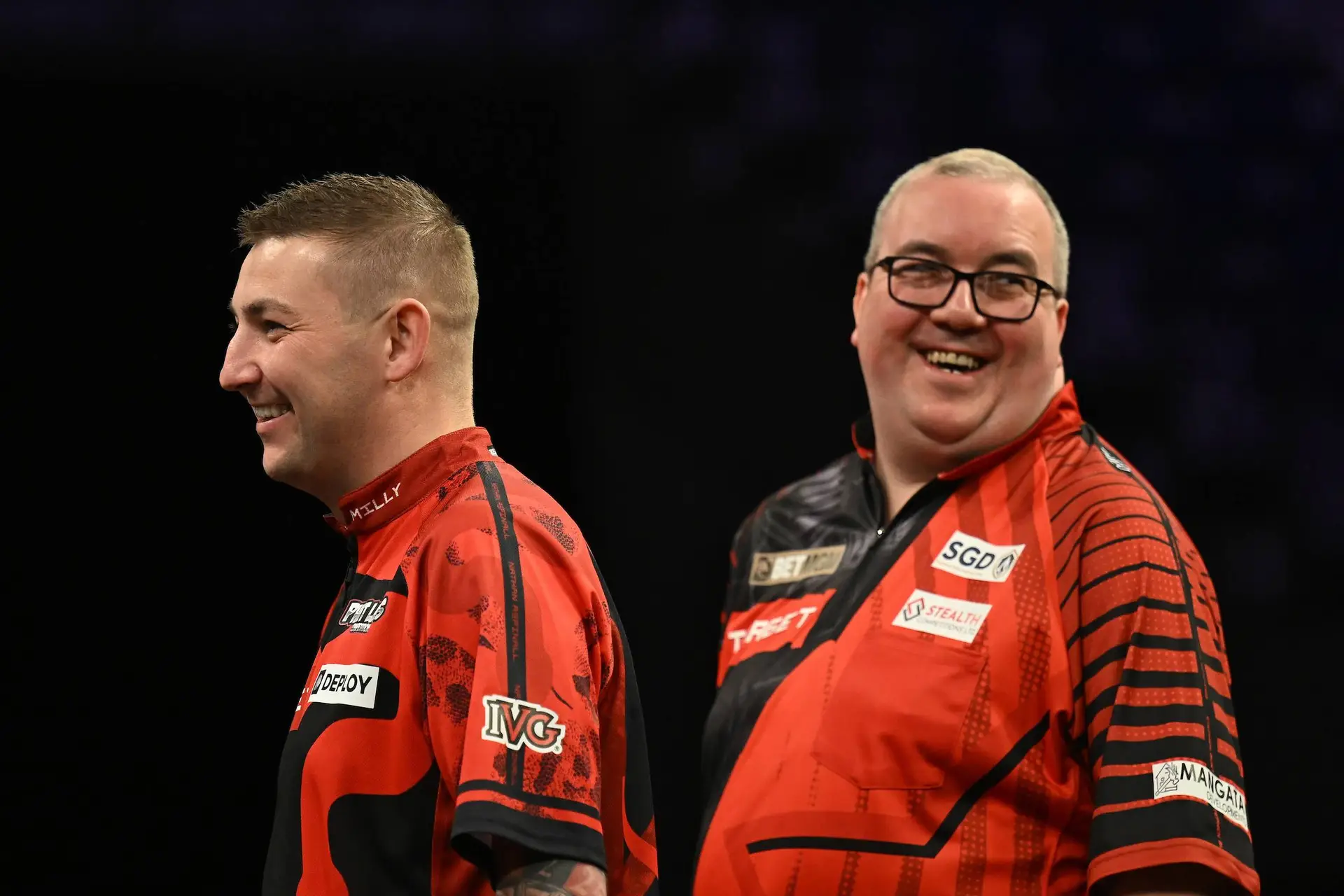
The darts world in Wieze was treated not only to a sporting spectacle last weekend, but also to a rare moment of visible tension on stage. The encounter between Michael Smith and Mickey Mansell raised eyebrows after the traditional pre-match handshake failed to materialise.
ADVERTISEMENT
According to Vincent van der Voort, that didn’t come out of the blue. “They don’t really get along,” said the former professional darter on the Darts Draait Door podcast. “The last time on the Pro Tour, things went a bit wrong—Smith said something about Mansell, Mansell responded, and then Smith’s wife got involved, which always adds fuel to the fire.”
The most striking moment came before the first dart was thrown. Mansell refused to shake his opponent’s hand, a rarity in professional darts. Van der Voort understands the choice, though he adds a caveat. “At the end of the day, a handshake is a sign of respect. If you don’t have that respect, then don’t shake hands. It did look a bit strange though. It’s such a normal thing to shake hands before a match, or at least give a fist bump.”
Remarkably, there was a brief handshake afterwards, though there was no real reconciliation. That moment, in particular, raises questions for Van der Voort. “Then you should stick to your decision and not do it at all. It definitely wasn’t a warm handshake. Then just say no again—it looked a bit petty.”
While some are irritated by such incidents, Van der Voort actually sees a positive side. He believes a bit more emotion and rivalry on stage is no bad thing. “I’d rather see some tension and a bit of hostility on stage than everyone being overly friendly all the time. They don’t need to be sitting on each other’s laps.”
At the same time, he stresses that the backstage atmosphere is often completely different. "Even in the practice room, it’s just one big friendly group. But you’re about to play that guy—you should want to beat him.”
No pre-match handshake between Michael Smith and Mickey Mansell 👀 pic.twitter.com/iCjsaapbZA
— Live Darts (@livedarts) March 20, 2026
ADVERTISEMENT
Euro Tour continues growth to TV level
Beyond the on-stage tensions, the further professionalisation of the Euro Tour stood out most. Where this series of tournaments had a modest character a few years ago, that image has now completely changed.
“It’s basically become like a compact TV tournament throughout the year. When I won one, it was just on a stream—it was much harder to follow back then.”
The growth is clearly visible in the international coverage, he says. “Now, for example, in Göttingen it was on free-to-air TV. This weekend in Wieze it was on VTM. In Poland you can watch it on free TV as well. In the Netherlands, you can watch it on Viaplay with Dutch commentary. So you can follow everything live now. They’ve basically become mini TV tournaments."
That development makes the Euro Tour more attractive than ever in Van der Voort’s view, though he feels the prize money still lags behind the tournaments’ status. “It’s around £35,000 for the winner now. Compared to something like the World Series Finals, where you can win close to £100,000, it’s quite a difference.”
ADVERTISEMENT

National interests increasingly important
As the circuit grows, the importance of national players increases as well, especially for viewing figures. That is often underestimated, according to Van der Voort. “It’s very important for a broadcaster to have local players. I know with Viaplay—when the Dutch players are out, viewing figures drop quickly. So it’s really important that a home player does well."
With the new TV deal that will see the Euro Tour fully broadcast on VTM, that is a point of attention. Belgium currently has only a limited number of players competing consistently at the highest level. “Mike De Decker is just about inside the rankings, but that’s it. He’s not in top form either."
Travel increasingly a problem
ADVERTISEMENT
Another theme that crops up more and more is the logistical burden on players. Especially after Brexit, many darters experience problems traveling across Europe. “Traveling is a nightmare,” said Van der Voort. “Sometimes you’re standing at customs for two hours."
It’s not only British players who are affected. “They only have to leave the country occasionally—we always have to go their way. You can’t just fly into England anymore. You have to arrange things in advance, like visa applications. It’s not ideal,” said Van der Voort.
Lucas MichaelDarts Journalist
Lucas Michael is a darts journalist and reporter based in Cambridge, UK, and has been part of the DartsNews team since 2025. He covers professional darts through reports, analysis, round-ups, and live coverage, with a focus on clear context and accurate reporting across the PDC calendar.
A key part of his work is liveblogging major tournaments throughout the year, providing real-time updates, match coverage, and contextual reporting across the professional circuit. He also reports regularly from events on site and has covered the PDC World Darts Championship from the venue, delivering first-hand insight throughout the tournament.
Within the newsroom, Lucas works closely with the editorial team and supports coverage alongside Chief Content Officer Samuel Gill and reporter Kieran Wood.
Lucas holds a BA (Hons) in Sports Journalism. In his work, he places strong emphasis on careful sourcing, editorial accuracy, and updating content promptly when new, verified information becomes available.
claps 0visitors 0
Just in

Popular news
Latest comments
- I agree,I can't believe the lack of coverage of this sad loss. Always enjoyed watching him,but I guess now it's all about littler,well it seems that way. Darts has sadly lost a good manrick6717-10-2026
- In the absence of a report regarding the death of Stefan Lord, I'll assist. An excellent player in the late 70s and early 80s, he actually won the now defunct 3rd place match at two World Championships and a couple of the News of the World Championships. A fabulous player and easily the best Swedish player ever. Rest peacefully Stefan.richieburnettrocks16-10-2026
- Joking aside, it is the second most watched sport on sky (more than golf, F1 etc) behind football only, and in participation is second to only football and swimming. It doesn't get the attention or sponsorship of "bigger" sports because it's not as sexy, but it's right up there.BandB13-10-2026
- i love darts but you can't seriously believe it's the second most popular sport in the uk. even top five is pushing it. it may be the fastest growing, though.colt13-10-2026
- I'm a big Clayton fan, but he's got this completely wrong. Qualification criteria exists for a reason - so just as failing to make the top 32/64 for the Euro championships/PT Finals means you miss out, so does not lifting a title for this one.26sForFun12-10-2026
- The players who deliberately slow the game down are usually boring and win very little in the way of silverware. Horrible to watch.MrYnyslas197112-10-2026
- [“The Gentle” then used a sweeping and questionable phrase...] You anglocucks are hilariously finished in every sense of the word.Critical99911-10-2026
- I love Jonny but I disagree. The Grand Slam was always supposed to be "champion of champions" type competition. If the top 16 are guaranteed participation in everything there will be so much less jeopardy involved in qualifying and each major tournament will lose its unique flavour which the PDC has worked hard trying to develop. I enjoy following the qualification races towards the end of the year, and while consistency should have its rewards, the truth is Jonny hasn't reached a major final all year or won a single event on the Pro Tour. Being consistent is one thing, but that alone should have consequences as the sport's elite should not be prepared to accept consistently strong performances, their foremost motivation should be to win and this should be what separates them from the rest, not the consistency of their performances. Jonny is expecting that losing should be enough; it shouldn't be, at least not as far as the Grand Slam is concerned.Deduce635811-10-2026
- Well being honest,it doesn't matter what level you play at, there's always someone who slows it down to suit themselves,and extra swig of water, replacing flights, asking the ref what the score is. It happens wherever. I'm not saying it's professional,but I'm sure we've all seen it beforerick6711-10-2026
- Agree completely. Not sure how a ranking event can have a criteria not based on rankings. And he right on popularity. In the UK second only to football.BandB11-10-2026
Loading