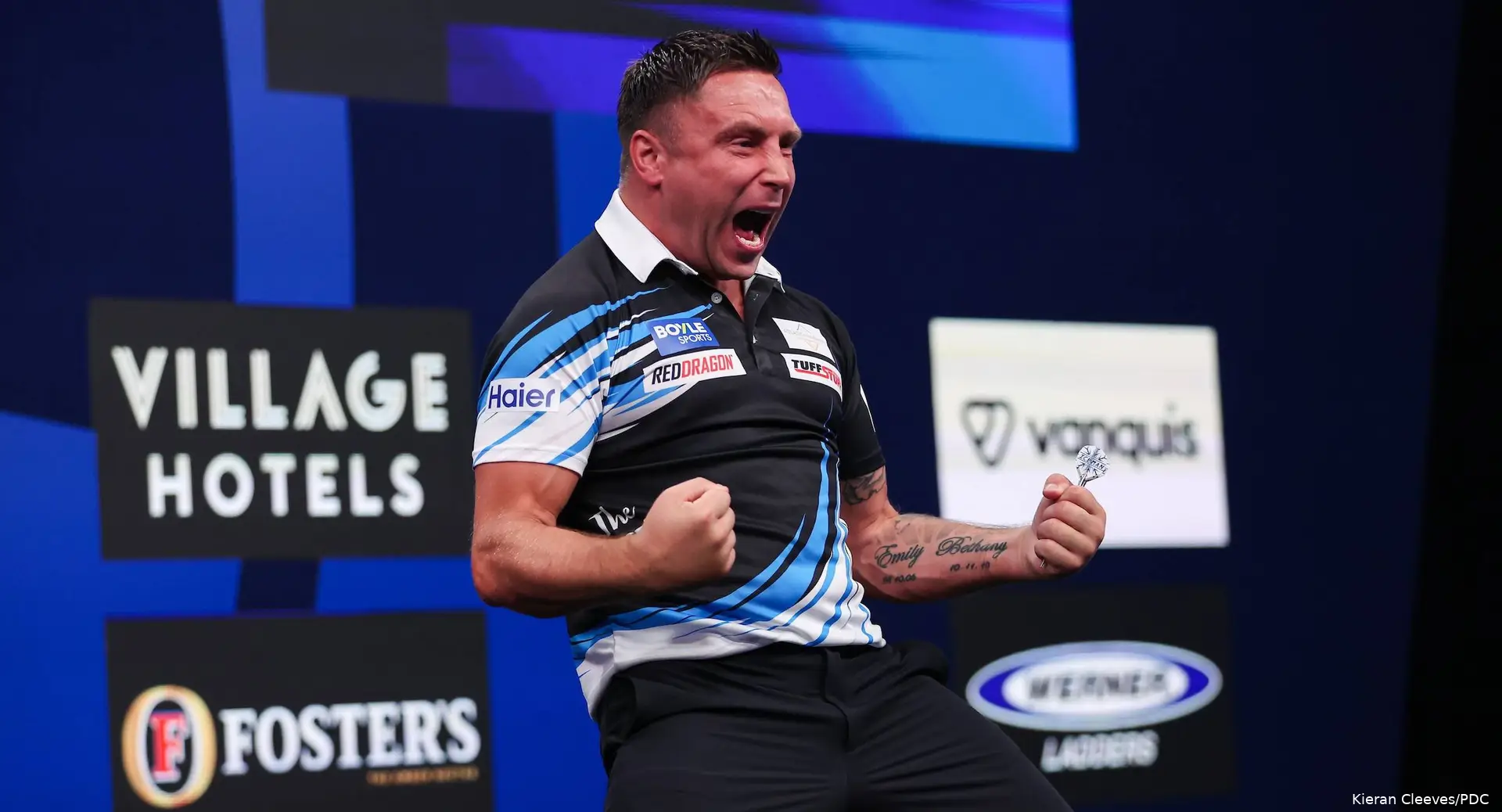
Following last week's World Grand Prix event,
Gerwyn Price has made three major finals in 2026 and so far has only walked
away with runner-up trophies. Price’s last major title in the PDC was the 2021
Grand Slam of Darts, meaning if he doesn’t win the European Championship later
on this month, he will enter a five-year drought without a major title. Yet, it
feels different than this.
ADVERTISEMENT
In the past three finals, Price had started well and
dwindled, with the most obvious of these being last week's final against
Humphries, where he led 3-0 in sets before losing to the 2024 World Champion
6-4. He clearly has the quality needed to win a title, and players have won
majors in the past five years who were not, on any metric, better than Price.
This year alone, he ranks third in highest overall averages and, in the last
five years, has been in the top five averages three times, with his lowest
being seventh. With Ritchie Edhouse, Mike De Decker, Andrew Gilding and other
rogue names winning majors in the last five years, why hasn’t Price? Is it
unlucky, or has he hit form in the wrong era? If Gerwyn Price were in this form
10 years ago, would he be a 15-time major champion instead of just a seven-time
champion?
Any era in darts is hard to compete in, but
with the two Lukes, strong young coverage like Van Veen and a strong tour, it
is harder than ever to win a major due to the competition. In 2015, the story
had a similar title but different chapters. Michael Van Gerwen was at his peak,
and Phil Taylor was in his twilight years, but still competitive nonetheless.
From 2015-2017, Van Gerwen averaged 102.83 on TV and Taylor 99.91, with Glen
Durrant closing the top five averages on TV with 97.20. This two-year period will
be the era where Price can compare, because although he played in this
competing era, most famously in the 2016 World Matchplay, where he lost to
Adrian Lewis 11-5 in dramatic style, he wasn’t the same player as the 2026
Price is. How many majors would Price win based on averages and checkout
percentages?
Although there is no guarantee he would win
any titles, especially with the five-year drought suggesting it is going far
beyond high averages, it gives a good indication of whether Price could have
picked up more majors. On the TV, Price has averaged 99.38, which in 2015-2017
puts him firmly as the fifth-highest average, with Anderson and Cross just
above him but 0.32 and 0.09, respectively. With such minimal margins, Price is
comfortably within the conversation of a major win in this time period. As Price
has found out, averages don’t win titles, but his composure and experience in
this field could. In his prime, Michael Van Gerwen was just 3 years from his
maiden major title at the 2012 World Grand Prix, and with the inexperienced Rob
Cross, Glen Durrant, and an emerging Peter Wright in this field, Price would
theoretically be in a good position to use his experience to beat his
opponents.
Price’s scoring power is his strongest attribute, and this isn’t
quite represented in 2017, ranking 6th in this list just behind Peter Wright.
With Price hitting a first 9 average of 107.33 in 2026 and Wright hitting a
107.59 in 2015-2017, the usual names of Van Gerwen, Anderson and Taylor all
outscore him. Although his experience may be used, his main attribute that carries
such weight in modern-day darts can’t be used in 2015-2017, again theoretically
damaging his chances at a title but still putting him among the favourites for
a title. Where Price succeeds in both eras is his checkout percentage, being
third in both eras with a 43.3% checkout percentage. With all the stats to
suggest he couldn’t beat Van Gerwen or Taylor but had a favourable chance
against any other player in the field, what majors could he have won?
2015–2017 TV Averages: Where Price Fits
| Player | TV Average | Era Rank |
| Michael van Gerwen | 102.83 | 1st |
| Phil Taylor | 99.91 | 2nd |
| Gary Anderson | 99.7 | 3rd |
| Rob Cross | 99.47 | 4th |
| Gerwyn Price (2026 form) | 99.38 | 5th (projected) |
| Peter Wright | 98.8 | 6th |
Out of the 28 TV majors played from 2015-2017,
Michael van Gerwen won 19 out of 28. This is dominance that goes beyond what
Littler is doing and rivals the joint effort between Littler and Humphries to
pick up major titles. With both Van Gerwen and Taylor both statistically
outclassing Price, their 21 titles picked up leave just seven for Price.
Anderson holds three of these titles, and with both of them statistically tied,
meaning the 2026 Price, who seems to fold under the pressure of matched
competition, seven becomes four: 2015 World Grand Prix, 2017 UK Open,2017 World
Grand Prix and the 2017 Champions League. With Gerwyn Price’s positive record
at the World Grand Prix following his final and his 2020 title, it is clear
these are the opportunities to see whether Price would have this long of a
drought in this era.
ADVERTISEMENT
In 2015, Robert Thornton won the World Grand Prix in one
of the best finals ever against Van Gerwen. Being outside the top 10 on any
metric Price was named in the top 5 for, it is a fair argument to say Gerwyn
Price had a strong chance, and theoretically, would have picked up the 2015
World Grand Prix. Similarly to the 2017 Grand Prix, Gurney was not in these top
10s Price appeared in, and although he was immense in 2017, he was
inexperienced, and under the pressure of a Price rather than a Simon Whitlock
in a final, the Welshman could be a three-time World Grand Prix champion.
Mensur Sulijovic would have faced the same fate in the 2017 Champions League,
with him only appearing in the top 10 checkout percentages during this era.
Overall, this shows that in the 2015-2017 era,
Price could have won three major titles and could be a 10-time major champion.
Yet, this is built on “if” variables. If he faced Gurney, if he faced Thornton,
but when was it that he lost to Tricole in the 2024 Players Championship final
and to Welsey Plasier in last year's World Championship? The foundations of
these theories prove that Price isn’t in the wrong era, but there’s a
fundamental block to him winning these titles. He should have beaten Smith in
Amsterdam in September, and in the position he was in against Humphries, he
should be a two-time major winner in 2026. But factors that stats can’t account
for influenced his performance, and he isn’t. So what has happened?

Gerwyn Price has not won a major title for over four years
These Stats Should Win Titles
Since his 2021 Grand Slam title, Price has
seen players ranked significantly lower than him in the rankings pick up
titles. Most recognisably, Edhouse’s 2024 European Championship win and
Gilding’s 2023 UK Open. Price has also watched players like Noppert, De Decker,
Cullen, Bunting and Dobey win a major title. This is the most damning evidence
that averages don’t win titles, but composure does.
ADVERTISEMENT
Price is the second-best
player in terms of averages in this five-year drought, and especially in the
last 2 years, he has consistently averaged above 98. Hitting 99.17 in the first
six months of 2026, there’s no doubt the Iceman has the pieces, but putting the
jigsaw together hasn’t clicked. What’s most confusing to the naked eye is the
lack of movement and consistency in these numbers over two years. The range is
consistently minimal, with the first nine less than a point and checkout
percentage fluctuating from 41–44%. Explicitly, this consistency breeds these
long runs, but with these numbers, Price will feel a huge weight on his
shoulders, feeling at one point that something has to give, and that something
is a title. This flatness explains his title drought. He reaches the latter
stages of the tournament, and when the rest of the field finds the extra gear,
as seen with Humphries reeling off 6 sets of the final 7 in last week's final
and Smith finding 6 consecutive legs in the World Series of Darts finals, Price
plateaus.
Price’s Metric Flatness 2025-2026
| Period | TV Average | First Nine | Checkout % |
| Mar 2025 – Sep 2025 | 98.38 | 107.35 | 42.62% |
| Sep 2025 – Mar 2026 | 98.31 | 107.38 | 42.48% |
| Mar 2026 – Jun 2026 | 98.93 | 106.09 | 42.17% |
| Jun 2026 – Sep 2026 | 98.57 | 107.95 | 43.15% |
Averaging 98 would win a title in theory, but
in finals, Price keeps dropping off. Using last week's final as an example,
Price averaged 109.84 in the first three sets in World Grand Prix format, which
would be in a standard match heading north of 115+. This outburst of that last
gear then bites Price and almost obliges him to drop his standard to his flat
rate of 98, or in this match, the final 7 sets averaging 91.47. This would be
around his 98 average in a standard game, but this shows that in the context of
a major final, Price no longer suits them. Humphries hit back after going 3-0
down with 3 sets averaging 100+, and Price had no response. Against good
competition that outscores him and outdoubles him, he struggles to pick himself
back up and go again.
Ross Smith ran him ragged in the last 6 legs of the World
Series of Darts finals, with a hat-trick of broken throws putting Price through
mental torture. This showed a weakness of Price, where he submitted to defeat;
throwing darts away and not putting on adequate pressure to influence the
outcome of his opponent's darts, he pretty much handed Smith the World Series
of Darts trophy. Off TV, he has won six PDC titles because the format suits
him. He can go into overdrive for 8 legs and beat opponents 6-2. When it comes
to long-format games, he plateaus at his 98 average and in the most competitive
era of darts, opponents will comfortably reel off 15 dart legs to beat him.
ADVERTISEMENT
The clearest obstacle is Luke Littler. At
nineteen, Littler is doing something that even Van Gerwen's peak did not quite
replicate in terms of trajectory, and Price has had the misfortune of standing
directly in front of it on multiple occasions in 2026. The World Matchplay
final is the most obvious example. Price was three sets up, averaging above
109, playing some of the best darts of his career. Littler won the next six.
That sequence did not expose a weakness in Price so much as it illustrated the
scale of what Littler is currently doing to every player in the field. Peter
Wright would not have come back from that. Neither would Michael Smith. The
problem for Price is that he keeps drawing the one player capable of producing
that kind of response.
What makes that particularly costly is the
timing. Price is forty-one, in the form of his career by most measurable
standards, and the window for converting that form into titles is not
indefinitely open. Littler is not going anywhere, Humphries continues to grow,
and the margins in major finals are too fine to absorb repeated near-misses.
Every final Price loses to one of them is a final he cannot reclaim, and the
weight of that accumulates in ways that statistics do not capture, but players
absolutely feel.
Read also
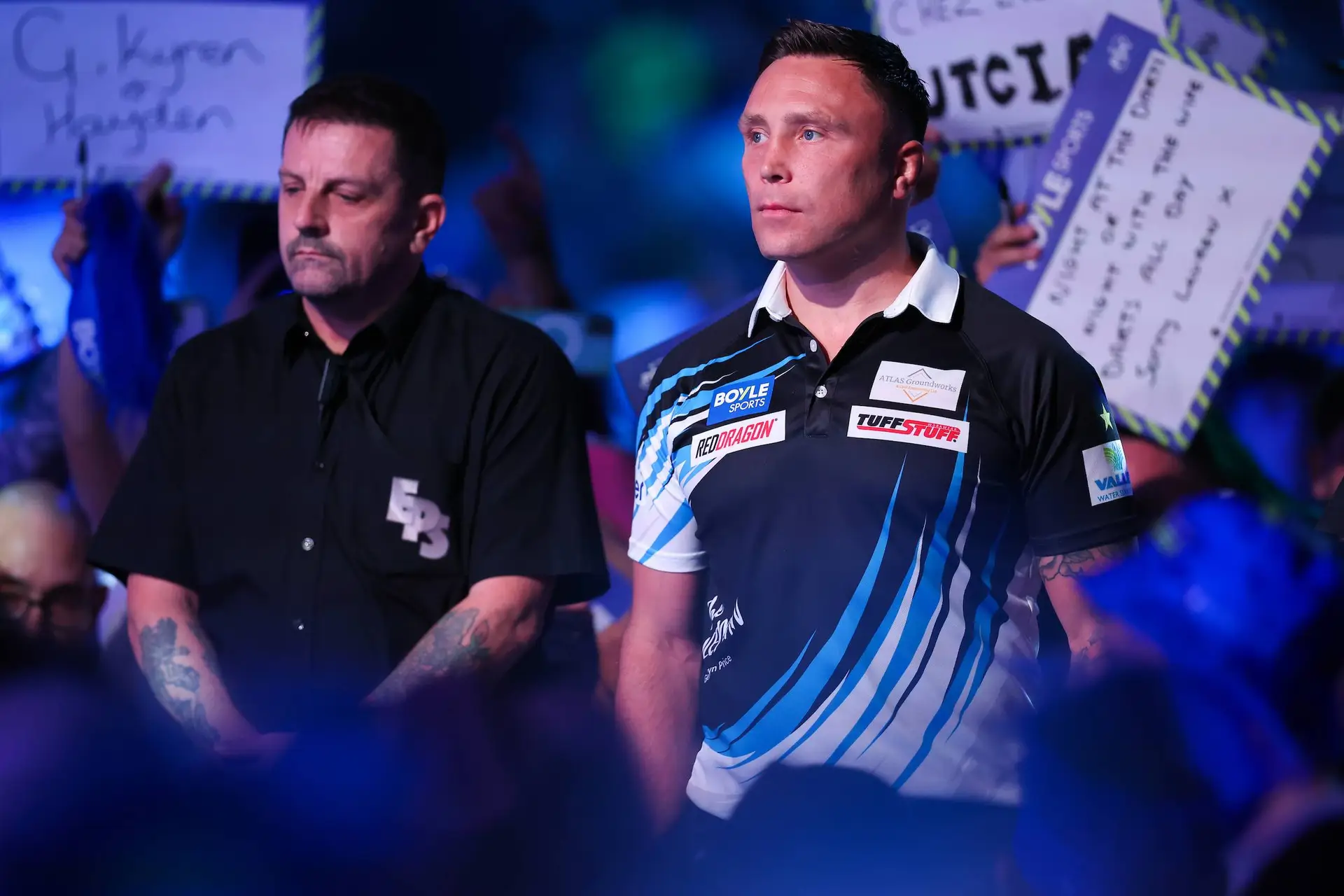
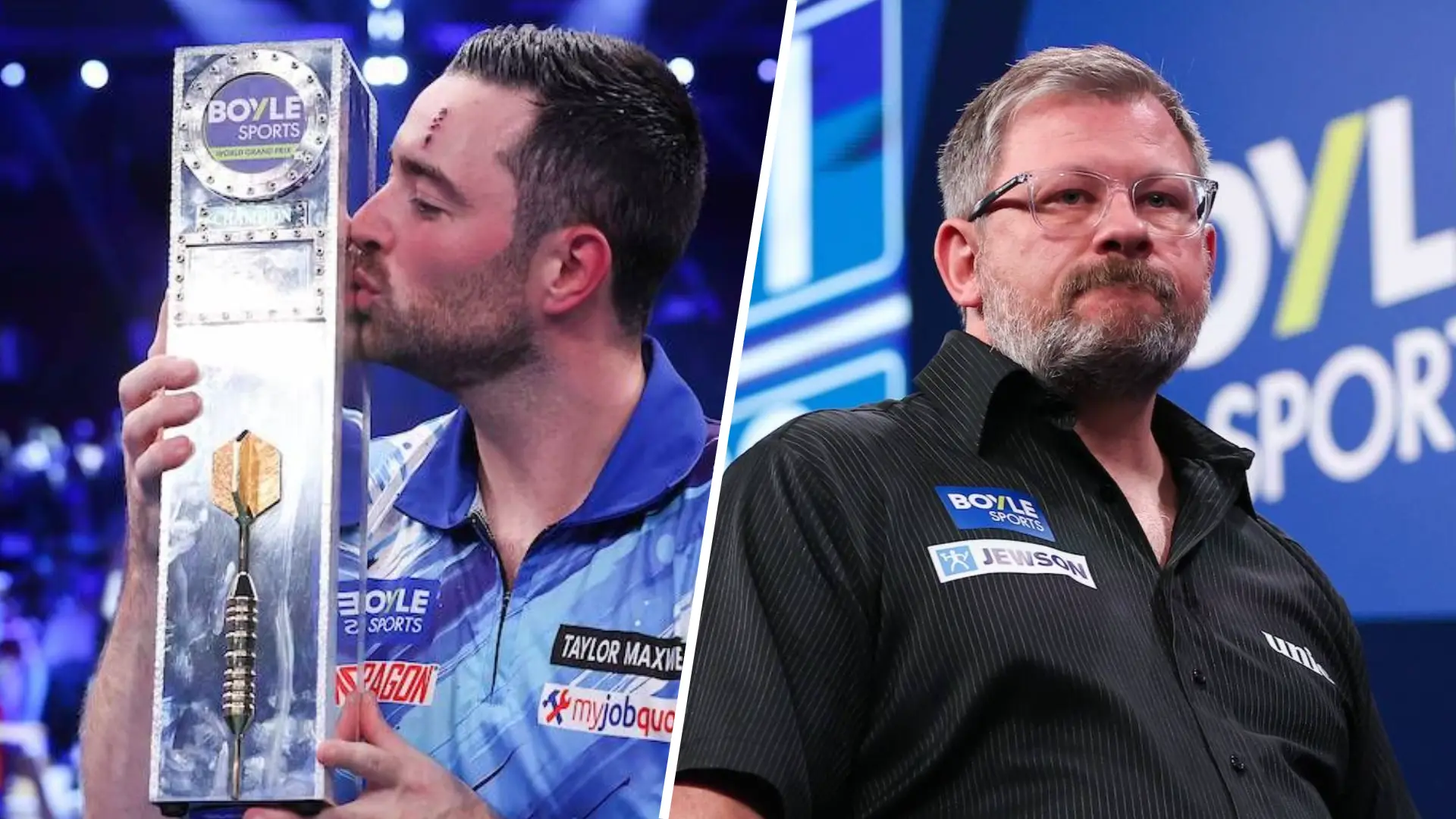
Amsterdam is the more honest mirror. Ross
Smith did not outplay Price across the board. He won six consecutive legs at
the end, and Price stopped competing rather than forcing him to earn it. That
is a different problem from the one Humphries and Littler exposed, and it
matters because it sits outside anything an era comparison can explain.
Averages and checkout percentages cannot account for the moment a player
decides the match is over before it is.
The European Championship later this month is
the clearest test of where Price actually stands. If Littler and Humphries land
in the opposite half of the draw, his numbers are good enough to win it. They
have been good enough for most of this year. Whether he is in the wrong era or
simply carrying a block that statistics were never going to identify, the
answer will not come from the data. It will come from what he does when the
draw gives him the chance he keeps insisting he deserves.
ADVERTISEMENT
Ben James is a darts writer at DartsNews.com, covering professional darts with a focus on analysis, player storylines, and match context. He contributes articles on tournaments, player performances, and developments across the PDC calendar.
Ben is currently completing his A Levels in History, Sociology, and Business, with predicted grades of A, A, and A. He also completed an Extended Project Qualification (EPQ), awarded an A grade, titled “To what extent do psychological factors and equipment specifications determine performance in competitive darts?”, reflecting a strong interest in the analytical and psychological aspects of the sport.
He has published early work on platforms such as Medium, including articles on Joe Cullen and Niels Zonneveld, and is developing his experience in sports journalism. Ben is also set to attend a PDC event, building first-hand insight into the professional darts environment.
His interest in darts spans player narratives, match dynamics, scoring strategy, and the mathematical and psychological elements of performance. In his writing, he focuses on clear structure, contextual analysis, and accurate reporting.
claps 0visitors 0
Just in

Popular news
Latest comments
- Assuming you qualify as one of the "muppets" in question. Classist too. And since you're so clearly interested in academia, look up "linguistic descriptivism" while you're at it. Oh, and better stay away from the working class sport of darts and maybe offer your insightful analysis to, let's say, croquet instead?Deduce635806-10-2026
- The consequences of being uneducated and grammatically challenged. "To all THOSE muppets not THEM " Everytime I see Arsepinall, I have an image of him wearing a cap, standing behind the counter of a fast food establishment.richieburnettrocks05-10-2026
- I don't understand Littler's reason for playing this tournament.rick6705-10-2026
- James Wade has become James Wide. He has piled on the tonnage considerably, he barely fits in his shirt.richieburnettrocks03-10-2026
- Littler will play whatever tournaments he decides. But does every headline have to start with him? Bristow bought Taylor through,and he followed that with Lewis. I can't see littler doing the same. Let him choose,and lose,he's getting good at that lately!rick6702-10-2026
- I believe he has it in him to qualify for the Worlds as he consistently wins matches, even if it is only one or two at a time, although his recent PC quarter-final run was somewhat encouraging in that regard. I think there is a lot of pressure for him to retire, people in the media accusing him of tarnishing his legacy. I think that is a ridiculous line of thinking. How ungrateful it is to attach terms and conditions to the amazing moments he has provided us over the course of his career. What position are we in to dictate to him how he should manage his career when it is he who achieved those successes in the first place? What's more, this is his life and the passion that sustains it, it is not for us to decide when his career is over when it is he who must bear the genuine ramifications of that decision. Since I'm sure money is not a concern, the only question on which the decision should rest is whether he truly continues to enjoy competing. He has retired once before, but the desire to compete is what brought him back. We see a lot of negative body language and he does genuinely look miserable when he is not playing well, but only he will know when he wakes up the next day whether he wants to go and do it all over again. If he wants to compete, he should, it's as simple as that, this is a decision that should not involve anyone else but him and his family. He should not retire to indulge the whims of the media or the public. What satisfaction would he receive by being forced into retirement? What closure would it bring to such a brilliant career? When Phil Taylor decided to retire, his decision was final and resolute. I believe RvB needs to get to this point himself, no matter how many 70 averages it might take. We see the likes of John Part continue to compete on a regular basis well past his prime, I say more power to him, and who knows, further glory could be around the corner, it's darts after all, you just never know. Sometimes I worry that RvB is acutely aware of the clamour for him to retire and that this pressure may even have an impact on his performances as he begins to question whether there is even a place for him in darts anymore, further compounding his poor form and creating a vicious loop. Perhaps to take his future into his own hands would provide him with a levity and freedom that would lend itself to better performances, not to mention an improved wellbeing. In any case, it is under these conditions that one can clear-headedly and definitively settle an issue so profound as retirement, not when you feel you're being rushed out the door. If his performances can no longer sustain his presence on the tour, so be it; as it stands his card seems safe for this year but is in serious jeopardy next year. He could always allow himself to drop off the tour naturally rather than forfeiting his place in the top 64, this could provide a sense of finality while offering a route back through Q-School if he so desired; after all, he's done it before. In conclusion, I just hope that RvB can play - or not play - for his own sake, rather than anyone else's, so that when the time comes he can be in no doubt as to his decision, leaving no lingering questions, so that he can reflect with no regret or uncertainty on the marvelous career he has had.Deduce635826-09-2026
- Luke Littler has been good for the sport of darts, no question. But he is not above it. For his sake and ours, he needs to be put in his place sometimes, rather than having his every whim catered to. That is not how you build a good person nor a good sporting organisation, and it's beginning to have consequences.Deduce635826-09-2026
- Extremely disappointing decision. It used to be that, along with major events and Euro Tours, the Players Championship series constituted one of three standards against which successful darts players could be measured, one of three challenges every successful darts player should be expected to master to consider themself among the elite. Now they are dead weight in the darting calendar, and player turnout and the standard of competitiveness will reflect that. The truth is that Luke Littler and other big names would rather play lucrative exhibitions than put in the hard graft that being a successful dart player requires. It undermines the authority of the PDC and the game in general. So what do they do about it? Give them exactly what they want. Of course, why wouldn't they? They are their star attractions. It is ironic that an organisation formed in protest by the sport's elite should be undermined and disrespected by their contemporary equivalents, but the PDC had a chance to stand up to them with a firm message: play 2 events all year and expect the final to be played without you. Instead, they caved in. These events will be hardly worth playing anymore and this decision may have grave consequences for the future of floor events at the elite level. Some may say the calendar is overstuffed, yet these elite players have more than enough time to play plenty of exhibitions. The Premier League in particular is gruelling, but busy players are not expected to play every event, they are expected to manage their playing schedule carefully in order to apportion their time and energy appropriately. Clayton and Humphries, for instance, both sit in the top 20 of the Players Championship and European orders of merit, in addition to competing in the Premier League; they have proven it is absolutely possible and this change is an insult to their efforts in effectively managing their calendars. I think we are seeing players who simply think they are too good for Pro Tour events, arrogance which should be punished rather than rewarded as we are seeing here. Furthermore, why should success in Euro Tours qualify you for the Players Championship Final? The PDC are blurring the lines between those three disciplines of darting excellence, and in so doing destabilising the very foundations upon which the organisation and its success is built. Some may say I'm overreacting, but this, in addition to the PDC's subservience and snivelling obsequiousness toward their biggest assets, makes me fear for the future of professional darts.Deduce635826-09-2026
- I guess this will mean the top players will turn up even less? Taken all the excitement of qualifying away I think. Wish they made it top 32 to qualify and the finals to last all week.Baphomet26-09-2026
- Great article - but not written by this site. It's taken wholesale from last Sunday's Observer with this interview published online on Saturday.Scoobedybop22-09-2026
Loading