"She's played in 13 World Championships!" - Matthew Edgar calls out Netflix for presenting Fallon Sherrock as a hairdresser after £501,000 Luke Littler win
PDC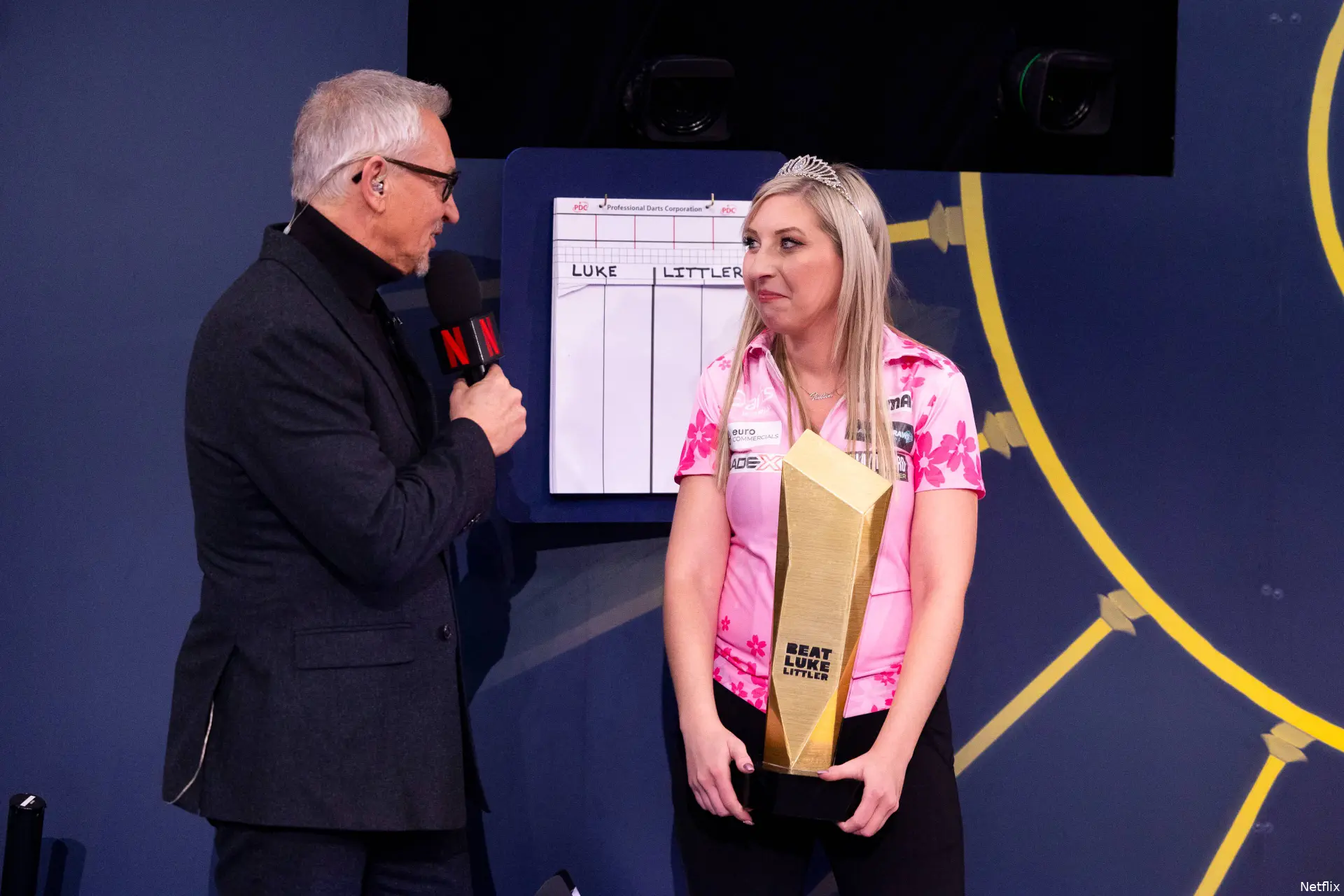
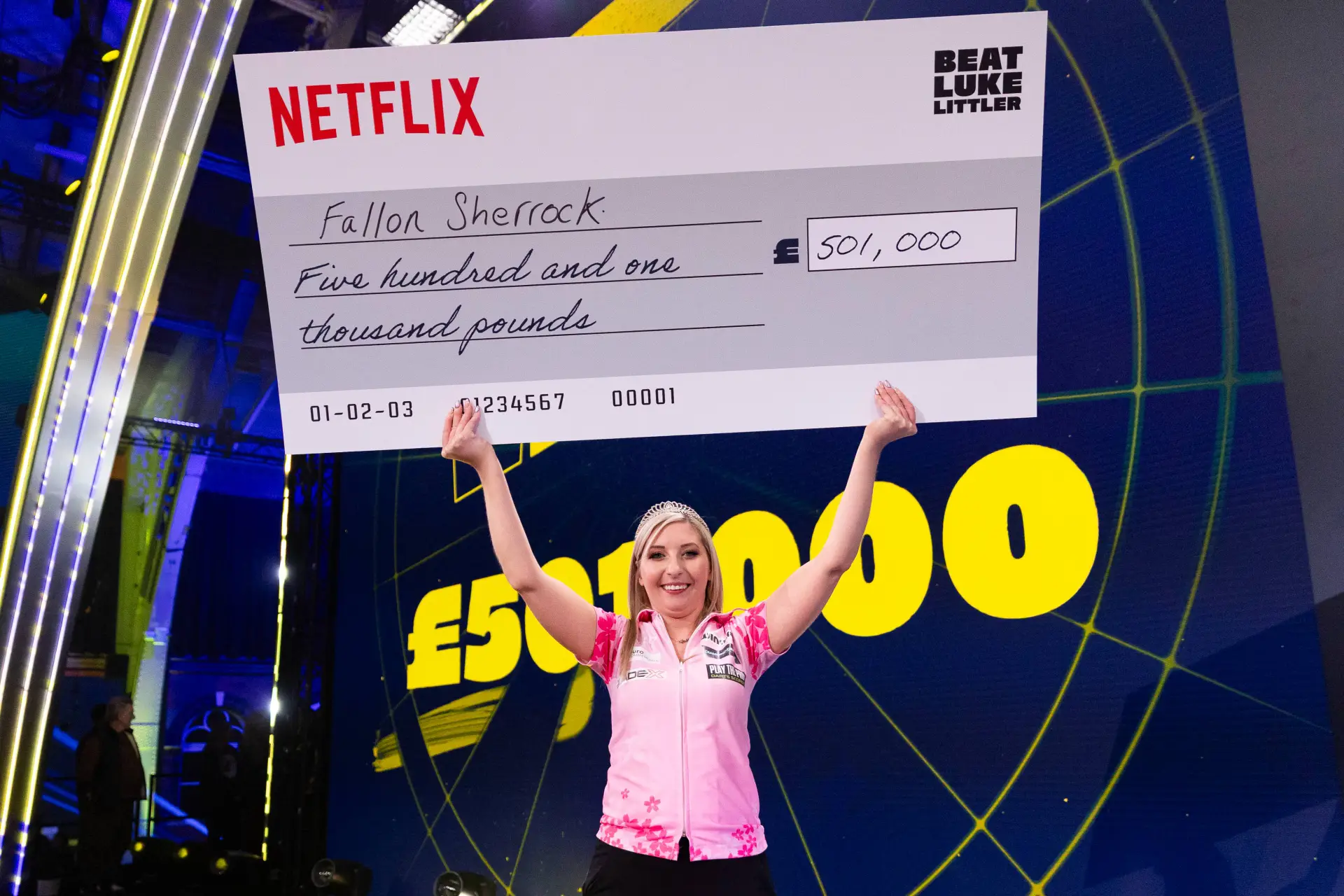
The first edition of Netflix's Beat Luke Littler has sparked plenty of reaction across the darts world. Fallon Sherrock walked away with the £501,000 top prize after defeating Luke Littler in a single leg, with former professional Matthew Edgar offering his own detailed assessment of the event on his Edgar TV YouTube channel. Although impressed by the production and excited about what the format could lead to, Edgar questioned both the way Sherrock was presented to viewers and the structure of the show itself.
ADVERTISEMENT
Edgar began his assessment by praising the organisers, particularly the presentation of the arena. Having previously experienced LED backdrops at tournaments in Romania and Las Vegas, the Englishman believes they could become a more prominent feature of darts events in the future. "I absolutely loved the production," he said. "I've been a big, big fan of the LED backboard, and I feel like that's maybe the future rather than these sort of canvas backdrops."
The overall presentation impressed him just as much, with the arena looking and feeling unlike a traditional darts event. "It felt special. It looked special. If you're just tuning in for the very first time into that, you would have gone, 'Wow, this is top drawer.'"
One moment that particularly caught Edgar's attention was Pearse Mackle's opportunity to land the bullseye and claim the top prize. As Mackle prepared for his decisive dart, the visual effects added another layer of pressure. "You're hearing that noise. You've got the pressure of hitting that bullseye, and you're seeing that backdrop as well."
Edgar also enjoyed the contestants' walk-ons, although he felt some were overly theatrical. He particularly appreciated the decision to introduce each player during their walk to the stage, allowing viewers to learn more about the competitors without unnecessarily slowing down proceedings.

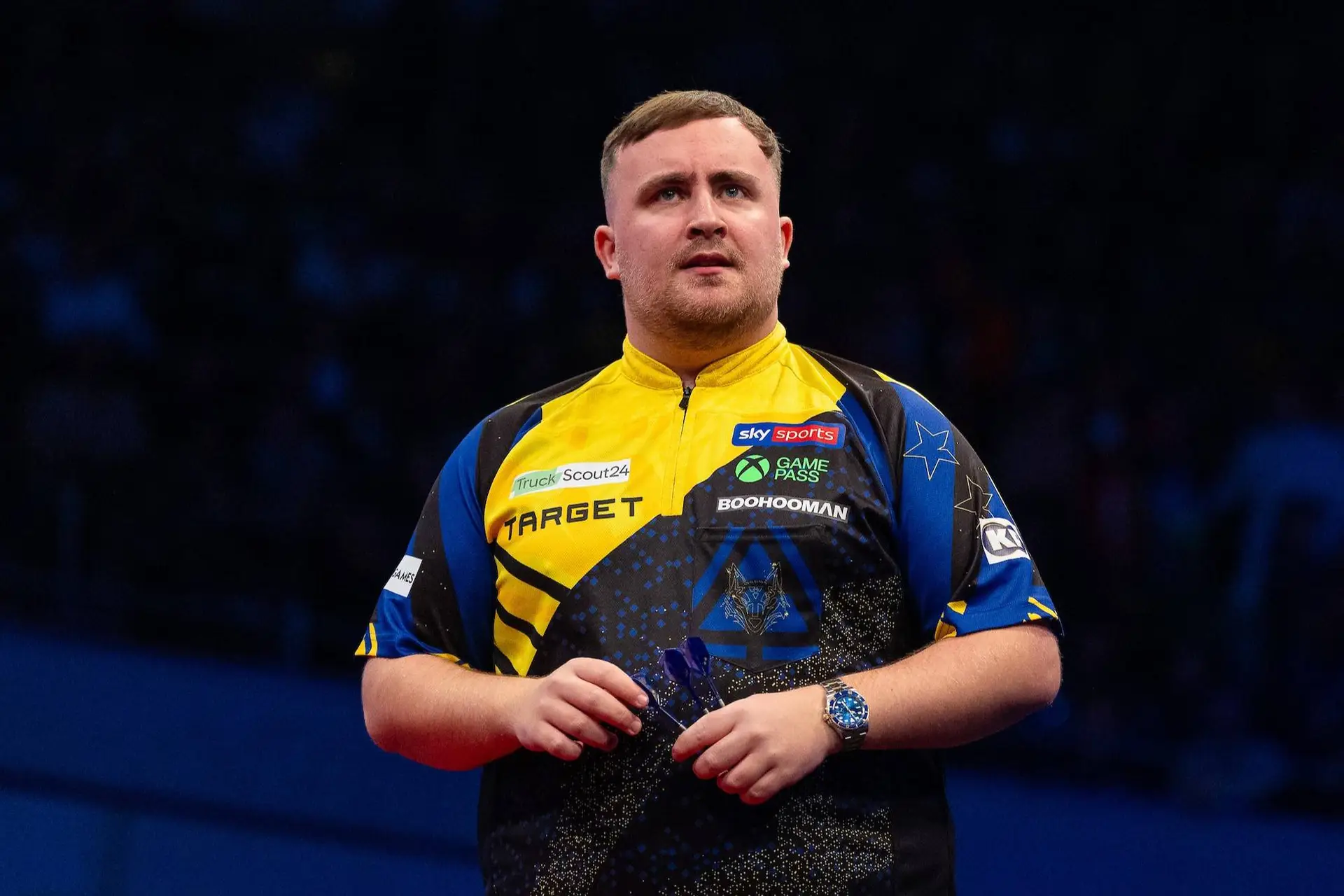
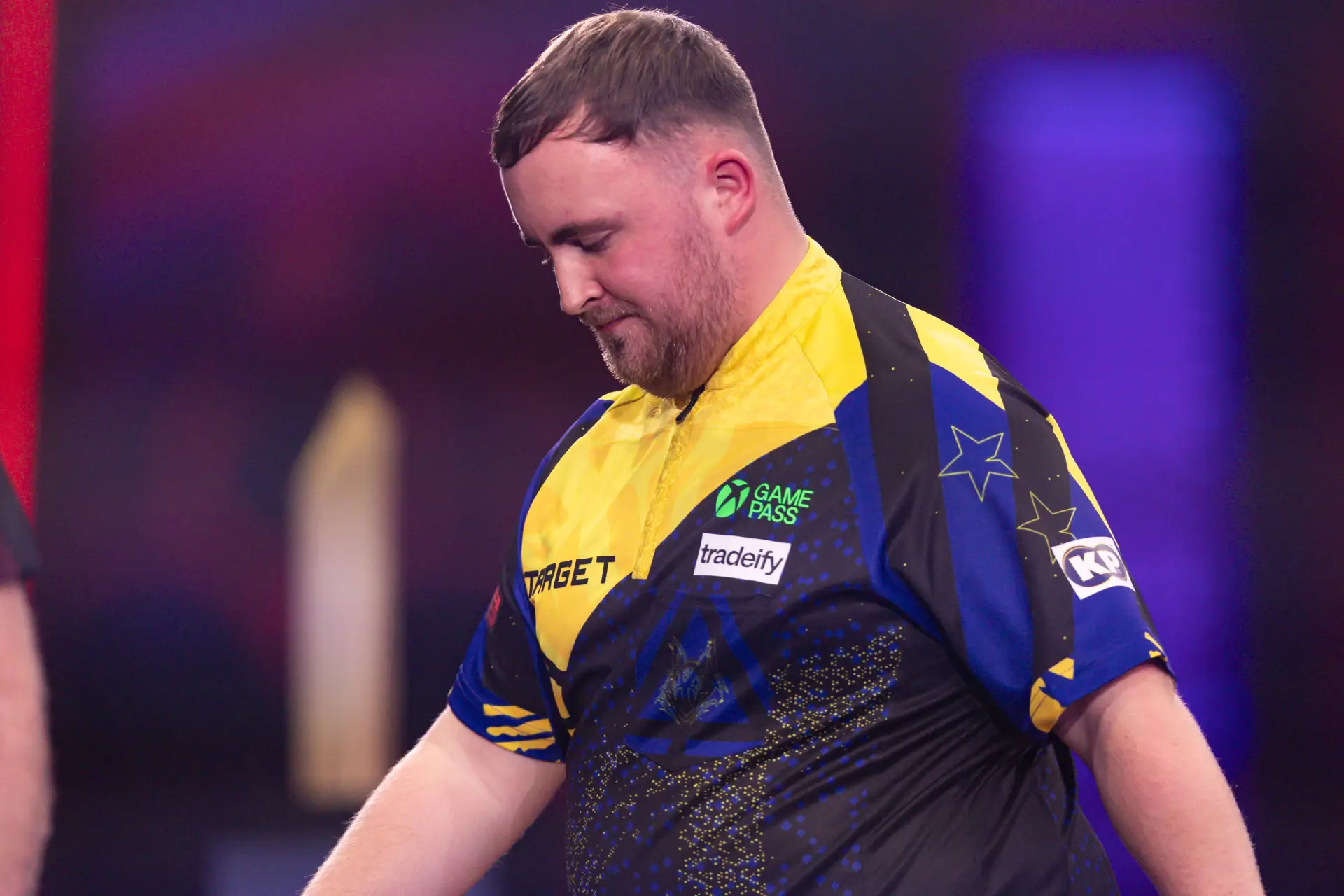
Luke Littler at Beat Luke Littler on Netflix
Edgar sees potential for another Netflix series
Despite his enthusiasm, Edgar would have liked to see more of the selection process. He believes Netflix could even build a separate series around the applicants before the live event. "When you watch things like X Factor or Britain's Got Talent, part of the fun is the people that maybe didn't get in. There was probably some amazing stories that we didn't get to hear of people who applied for this show."
ADVERTISEMENT
Edgar suggested a miniseries of four to six episodes leading into the live event, giving viewers the opportunity to become familiar with the contestants and their stories beforehand.
He also believes the programme is unlikely to be a one-off. Although official viewing figures were not yet available to him, the amount of discussion generated on social media convinced him that the format has a future. "I don't know the viewing numbers that Netflix got. I can't wait to see what they are, but I can certainly see the numbers that are on social media right now," he explained, adding: "Absolutely, I think we're going to see something like this again."
Among the possibilities Edgar discussed was a Royal Rumble-style darts competition, with players entering in quick succession. He also believes there is considerable interest in a direct confrontation between Littler and 15-year-old Mitchell Lawrie, who ultimately did not get the opportunity to face the world champion.
"I think there's a big audience out there right now who want to see Mitchell Lawrie versus Luke Littler," he said. "I think maybe not even on Netflix, maybe just on YouTube. There's demand right now to see that showdown."
Edgar admitted that missing out on the potential clash was a personal disappointment. "That was one of the disappointing factors of last night, that we never got to see that showdown, even for one leg."
ADVERTISEMENT
The moment Fallon Sherrock hit a 180 before going on to #BeatLukeLittler and win £501k! https://t.co/jrpkPvWBFw
— Netflix UK & Ireland (@NetflixUK) October 30, 2026
Criticism of how Fallon Sherrock was presented
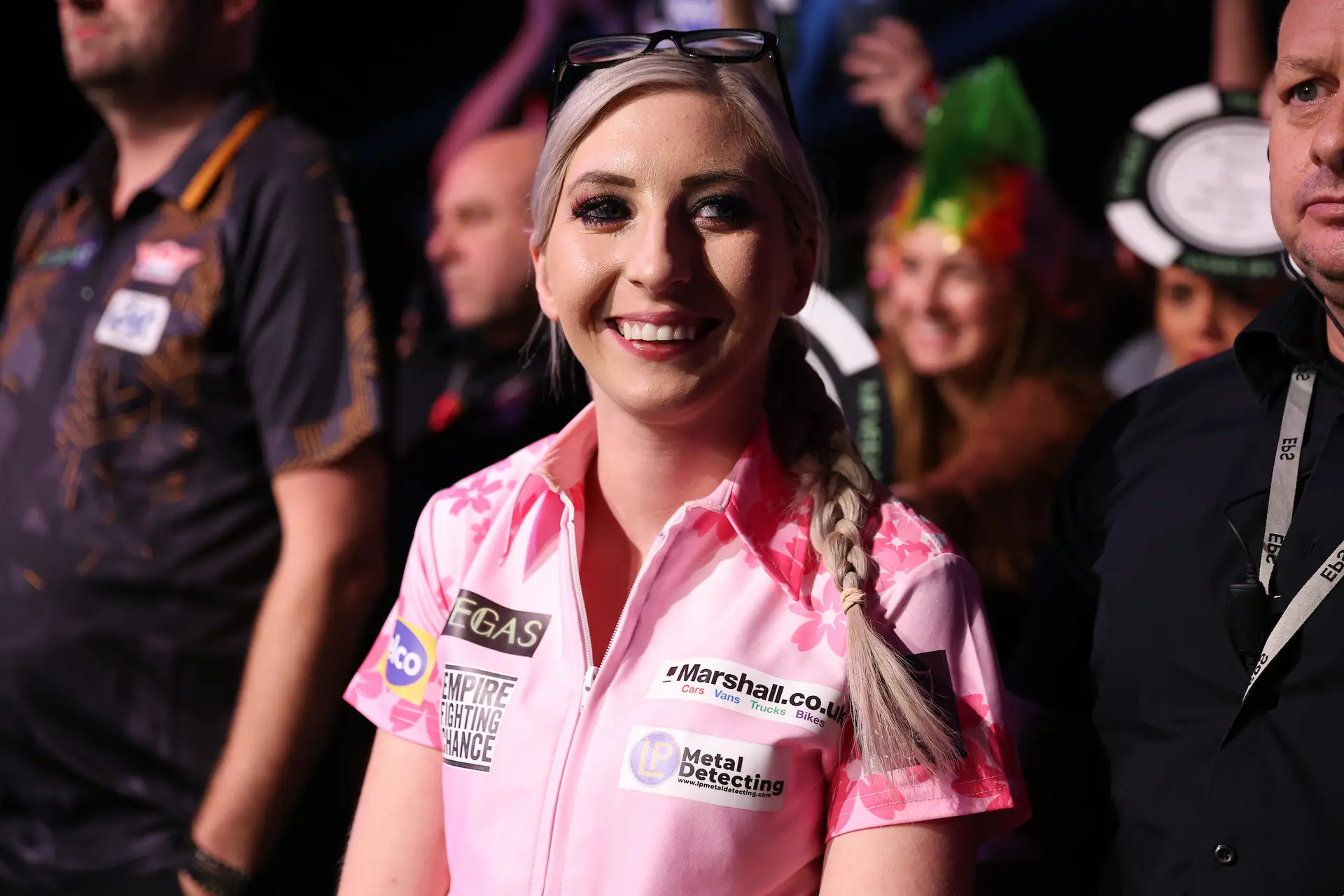
Edgar's biggest criticism, however, concerned Fallon Sherrock. His objection was not to her participation, but to the way Netflix portrayed her to viewers. Sherrock was eligible to compete because she does not hold a PDC Tour Card, but Edgar felt the programme failed to properly acknowledge her extensive experience at the highest level.
"Personally, I didn't like it," he admitted, pointing to what he considered a lack of authenticity. "She's about to play in what a seventh PDC World Championship. She's in this year's Alexandra Palace. If you include the BDO days, I think it's like 13 World Championships that she's played in."
For Edgar, the problem was the emphasis placed on Sherrock's occupation and hometown rather than her established darts career. "She's been a professional darts player for a long time, but introduced as a hairdresser. And even at the end, a hairdresser from Milton Keynes has come and done it. No, she's played in 13 World Championships."
ADVERTISEMENT
The former professional stressed that he had no objection to Sherrock being allowed to compete or to her eventual victory. His frustration was directed entirely at how her background was presented. "Was she entitled to play? Yes. Does she fit the rules? Yes. Do I have an issue with that? No. What I have an issue with is them pretending that she's not who she is. That's the bit that does me."
Edgar also noted the contrast between the criticism directed at Sherrock on social media and the support she apparently received from viewers. He claimed that 75 per cent of the viewing audience voted for her, questioning whether the most vocal negative reactions were necessarily representative of wider public opinion.
Read also

Format left Edgar losing interest
Beyond the Sherrock controversy, Edgar questioned the order in which contestants appeared. The challengers were divided into four pots according to their ability, but he felt repeatedly switching between stronger and weaker players undermined the tension as the evening progressed.
ADVERTISEMENT
"After a couple of hours, halfway through towards the back end of the show, I was starting to get a little bit bored," he admitted. "And the reason I was starting to get a little bit bored is cuz they built it. Pot four, pot three, pot two, pot one. These are the good players. Yes. And then you go back to pot four again."
Edgar would have preferred the standard of opposition to increase progressively throughout the evening, with the strongest challengers saved for the finale. By repeatedly returning to the lowest-ranked group, he felt the programme was asking viewers to invest in contests they had already been encouraged to regard as one-sided.
"You've already told us that these players are not good enough. You've already told us that these players are sort of like bottom of the rung, and now you're going to give us another one of them," he explained. "So it's like, 'Okay, we've got to wait another 20 minutes for a genuine challenger to come up now.'"
Despite those criticisms, Edgar's overall verdict remained overwhelmingly positive. He believes the Netflix production represented an important opportunity to introduce darts to a much wider audience.
"Never since the days of Bullseye has entertainment crossed over successfully into our sport before," he said. "So I think everyone involved in this deserves a huge round of applause, and I can only see this being the start of something special."
ADVERTISEMENT
For Edgar, relatively minor changes to the format could make any future edition even stronger, with the former professional concluding: "Overall, I thought it was a success. Few tweaks, and could be onto a winner here."
Kieran WoodDarts Journalist
Kieran Wood is a sports journalist based in Wales and has been active in journalism since 2022. He contributes to DartsNews.com, where he covers professional darts through news, match reports, analysis, and live coverage across the PDC calendar and major tournaments.
A key part of his work is on-site reporting from leading events. Kieran has covered the PDC World Darts Championship in person, reporting daily from the venue and providing first-hand insight from the tournament. During his coverage, he has conducted interviews with leading players including Luke Littler, Luke Humphries, and Gerwyn Price.
He is also one of the leading voices of the English-language Dartsnews Podcast, contributing regular analysis and discussion on developments across the professional darts circuit.
In his reporting, Kieran places strong emphasis on careful sourcing, editorial accuracy, and updating articles when new, verified information becomes available.
claps 0visitors 0
Just in


Popular news

Latest comments
- I'm quite a jaded person all things considered, but to be honest I found Beat Luke Littler to be pretty entertaining. It certainly wasn't seamless, which is to be expected given the lack of precedence, but I actually think the pacing was pretty good, the production was impressive, and there was a good sense of humour and levity to it. I think it was a very ambitious undertaking but one that, for the most part, paid off. I liked the system with the four pots and I think it added to the drama and intrigue. I enjoyed seeing the diverse range of entrants and learning about their backstories. I think the interactivity was pretty clever and well-integrated. The panel was a little incoherent at times; Lee Mack shone however, and his improvisational skills were appreciated during some more awkward interstitial moments. As far as the darts is concerned, it was a shame that the format didn't allow Littler to get into full flow. You obviously don't want him to steamroll everyone but you want to feel like you're getting the full Littler package rather than seeing him struggling to get out of first gear. I will say that his leg against Jayden Walker was very impressive, but it was mostly downhill from there. The attraction revolves around Littler being this untouchable, indomitable force, yet the format doesn't really allow him to fulfil that characterisation. As for Fallon Sherrock, she was mightily impressive and deserved the victory. It is a testament to her unshakeable character that she was able to bang in a 14-darter under such mind-bending pressure. Everything that has been said about the misleading marketing is valid, though they were clear about their eligibility criteria and were able to offload the responsibility somewhat by bringing the viewers into the decision-making process in real time. What is clear though, is that Fallon played the game according to the rules, and she should not be criticised for that, much less abused. I will admit though that it is a kick in the teeth for those true amateurs who committed time and money to the course, and I would also question those who think pub players would have no chance, given that some of Littler's winning legs were dispatched in 7 visits to the board! The great thing about darts is that it isn't so much that amateurs cannot replicate the feats of brilliance pulled off by professionals of the sport, than it is that they simply cannot replicate the consistency of their output, something that this format almost entirely removes from the equation. It should also be noted that, financially, Fallon certainly stands to benefit much less in relative terms from the paycheque than would your average pub thrower, as I'm sure she nets a fair income from the lucrative exhibition circuit alone. What I do hope is that she might use this as an opportunity to really build up a head of steam heading into the new season, as it seems long overdue that she come through Q-School and really take it to the pros on a week-in week-out basis, but whatever she chooses to do, she has certainly achieved enough already for one if not several lifetimes, so who am I to dictate terms? To conclude though, I will state once again that I found Beat Luke Littler to be a pretty enjoyable evening of entertainment. I do feel for the contestants who never actually had the chance to try their luck against the world #1, although I suppose it comes with the format, but all which inevitably raises the question: will Netflix be tempted to do it all again next year? It's hard to say. Whether it would be financially viable, I can't weigh in there. One point I have been making though, and which I touched on earlier, is that the entire concept relies on a public perception that Littler is more or less unbeatable, and that certainly hasn't been the case of late. If the execs had been trying to pitch the show in recent months while Littler has seemed vulnerable, rather than when he was mopping up almost every major title on the calendar, it would certainly be a tougher sell. We will have to see in about 6 months' time whether Littler can still reliably command perception as a near-unstoppable force in darts, and then we'll have a clearer idea about whether we should expect a second helping. Even as a one-off experiment though, and with all the controversy taken into account, I still don't think they disgraced themselves by any means, and that will probably be my lingering assessment of the event when all is said and done.Deduce635801-11-2026
- Fair play to Fallon. But...shows the mockery when a professional players wins what was meant to be an amateur v Pro event, Littlers performance was poor, and what about the players who didn't get a game? Would have been better if the pot was split amoungst all the winners and they all got a leg.BandB31-10-2026
- Not even slightly interestedrick6730-10-2026
- And yet the PDC has decided to aggravate this problem by doubling the Players Championship Finals field from 2027. I can't imagine there will be fewer withdrawals next year with even less reason to turn up. I can only hope that a whole slew of Challenge Tour top-up players receive enough prize money in the absence of much of the elite, that some of the more complacent among them struggle to scrape into even a heavily diluted field! More semi-pro players will get to test their mettle, but the standard of competition will be much inferior. It could hardly be said that the Players Championship series will provide an opportunity for darts' second string to test their Tour Card credentials anymore, but at least it will underscore the achievements of those Challenge Tour players of current and previous years, who were able to prove themselves as more than capable of competing with, and beating, the elite of the sport on a consistent basis, and reaping the due rewards.Deduce635828-10-2026
- No point in being there? Champions want to win.Deduce635828-10-2026
- Littler lost to crabtree in the youth/junior/whatever you call it. He had no point in being there. He's unfortunately now got to the stage,he feels all he has to do is get on the stage to win. Well,I hope he realises part of his fear factor has gone. Happened to Taylor,then van gerwen,and it's causing him to realise pretty sharp,he isn't unstoppable. It's good for the sport,not 1 single player in my 60 years has ever,or will ever be, unbeatable.rick6725-10-2026
- I think it's great to see Mark Webster looking good,good ladrick6725-10-2026
- I agree,I can't believe the lack of coverage of this sad loss. Always enjoyed watching him,but I guess now it's all about littler,well it seems that way. Darts has sadly lost a good manrick6717-10-2026
- In the absence of a report regarding the death of Stefan Lord, I'll assist. An excellent player in the late 70s and early 80s, he actually won the now defunct 3rd place match at two World Championships and a couple of the News of the World Championships. A fabulous player and easily the best Swedish player ever. Rest peacefully Stefan.richieburnettrocks16-10-2026
- Joking aside, it is the second most watched sport on sky (more than golf, F1 etc) behind football only, and in participation is second to only football and swimming. It doesn't get the attention or sponsorship of "bigger" sports because it's not as sexy, but it's right up there.BandB13-10-2026
Loading