“Someone reported me. Because they knew they couldn't beat me on the dartboard" - Dennis Priestley recalls time he was almost kicked out of competition
PDC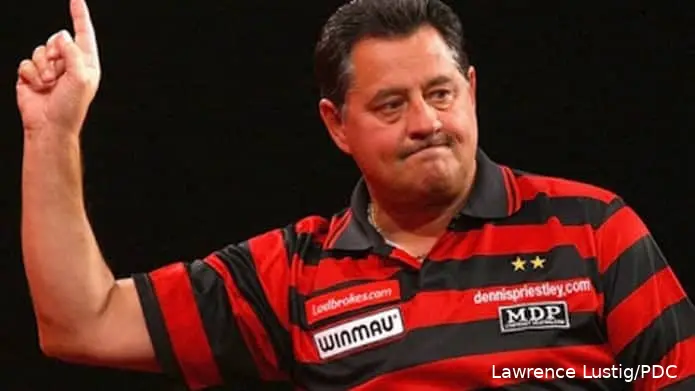
Dennis Priestley ranks among the greats in darts history. The two-time world champion, however, did not follow an obvious path to the top. He only started taking darts seriously in his mid-twenties and then needed years to break through to the England team via the county circuit. In an extensive interview, “Dennis the Menace” looks back on his first arrows, his distinctive throw, criticism of his slow pace of play, and the historic split that ultimately led to the creation of the PDC.
ADVERTISEMENT
Priestley has been enjoying retirement for several years now. The Englishman no longer even plays exhibition matches. In fact, his darts have not come out of the case for quite some time.
“November of this year, it'll be five years since I did my last exhibition, and I haven't picked them up since,” he told the Tops & Tales podcast hosted by referee Huw Ware.
That closes a remarkable chapter. Priestley was active for decades and witnessed firsthand how darts evolved from a traditional pub game into a professional TV sport. His own introduction to the sport came relatively late.
Winning bet delivered first tungsten darts
Priestley was in his mid-twenties when darts began to play a more serious role in his life. Remarkably, his first set of tungsten darts came thanks to a winning bet on the horse races.
“had a bet on the 1975 Derby and Grundy won it. Pat Eddery was the jockey. And I had £6 on it at 11-2, so that won me 33 quid, and I bought my first set of tungsten darts from there.”

ADVERTISEMENT
Before that, Priestley was already throwing weekly with brass darts. That also happened under conditions quite different from modern darts. He played on a Yorkshire board, which has no trebles.
“Before, well, I was playing with brass darts just once a week on a Monday on a Yorkshire board, which is doubles only, no trebles, and we stood nine inches closer to the board.”
Priestley then experienced changes to the throwing distance as well. He recalls, for instance, the World Championship finals between Leighton Rees and John Lowe at the end of the 1970s. Players constantly had to adapt to different distances.
“We got used to seven foot six. You know, you'd find your darts not quite getting there, so you got to adjust. And after time, you do. It's the same with moving—we were playing seven foot nine when the news at World were reinvented, and that was eight foot. So, you know, you got used to it."

Dennis Priestley became the first PDC world champion
ADVERTISEMENT
Unique grip became his trademark
Anyone who watched Priestley in his prime will instantly recognise his distinctive style. He took his time before the first dart and also had a unique grip. The point of his dart actually rested on his finger before he threw.
“So the point was on me. And at some stage, I moved from having it resting on my nail there, but then somewhere along the line, I started resting it on my finger.”
That ultimately proved part of an important development in his game. Priestley discovered that in his early years he used different throwing methods. Only when he chose one fixed technique did his level rise consistently.
“I found in the early years, in the late '70s, I could play two or three different ways. And once I sussed out that I'd got to stick to that one way, what was the best for me, and concentrated on playing that one way instead of different ways, I'd become more consistent.”
ADVERTISEMENT
His striking grip also had a downside. Priestley could not play with particularly long points. Those longer points are now popular with players like Luke Littler and Luke Humphries, as they can create more room in the scoring bed.
“I always said about long points, such an advantage—this is going back into the '80s—but I couldn't have the long point because I had the point of the dart on my finger. So the length of my point had to be quite short.”
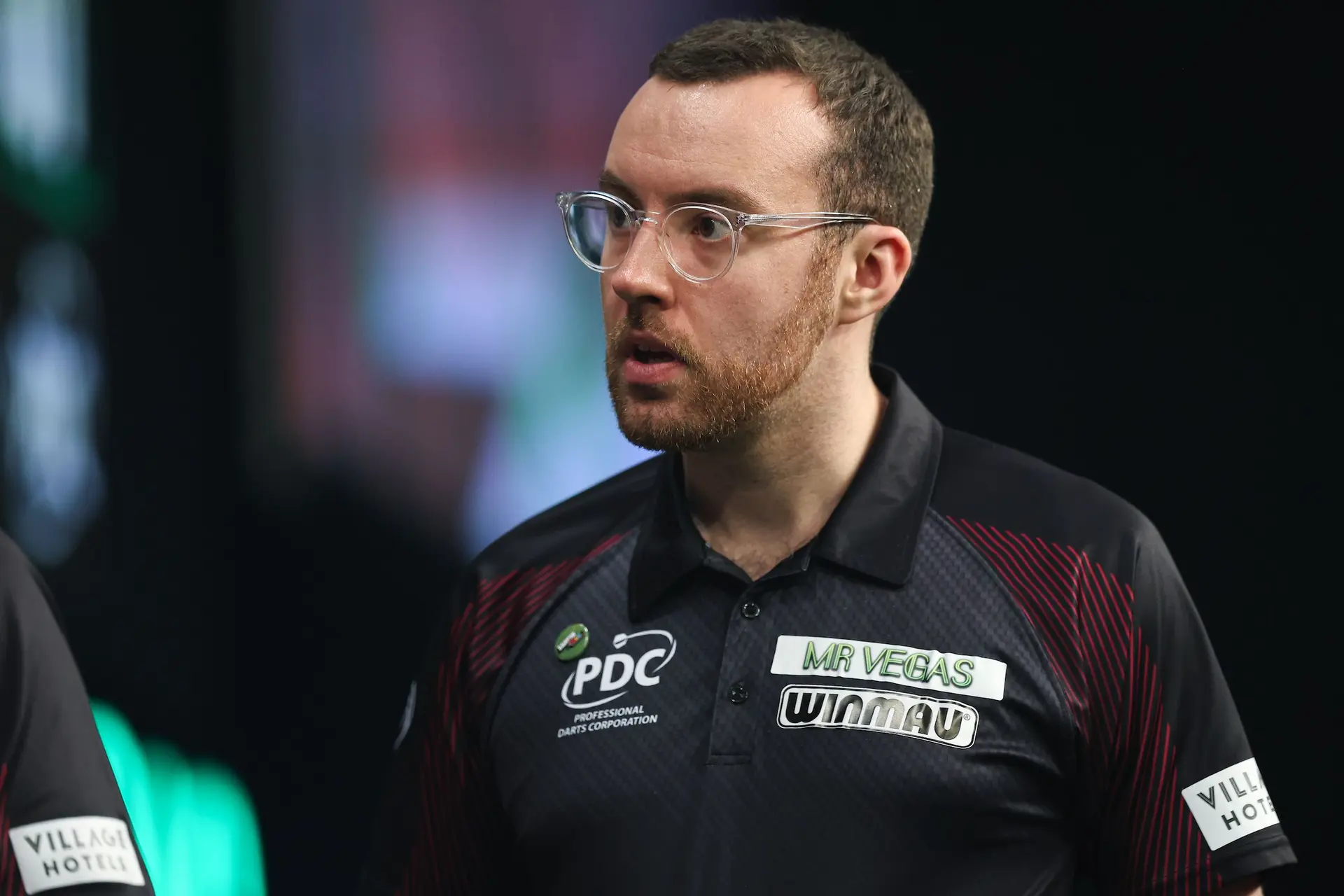
Criticism of slow tempo irritated Priestley
It wasn’t just his grip that made Priestley recognisable. His pace of play was also a talking point for years. Especially before his first dart, the Englishman took his time. Commentators regularly highlighted it, and that could really annoy Priestley.
ADVERTISEMENT
“Getting that first dart ready. I've always said—in fact, I got fed up of commentators and TV people saying, "Oh, it takes 17 seconds." Well, Phil Taylor was 15 seconds. I mean, a couple of seconds amongst friends is nothing, is it? You know what I mean? In fact, I got fed up of listening to it at one point. It used to annoy me."
According to Priestley, a false impression arose because it was mainly his preparation for the first dart that was slow. Once that first arrow was in, the other two followed much faster.
“Once I got my stance right and got my arm up and stopped it shaking, my hand shaking, my first dart—let my first dart go. And if it was where I wanted it to be, the other two were just as fast as any other player..”
His pace only really slowed once Priestley started appearing on television. That had everything to do with the pressure he put on himself.
“Once I got on TV, I think I did become a couple of seconds slower because I wanted to be successful. I didn't want to make a fool of myself being on TV. So I took that little bit more time and obviously it worked.”
ADVERTISEMENT
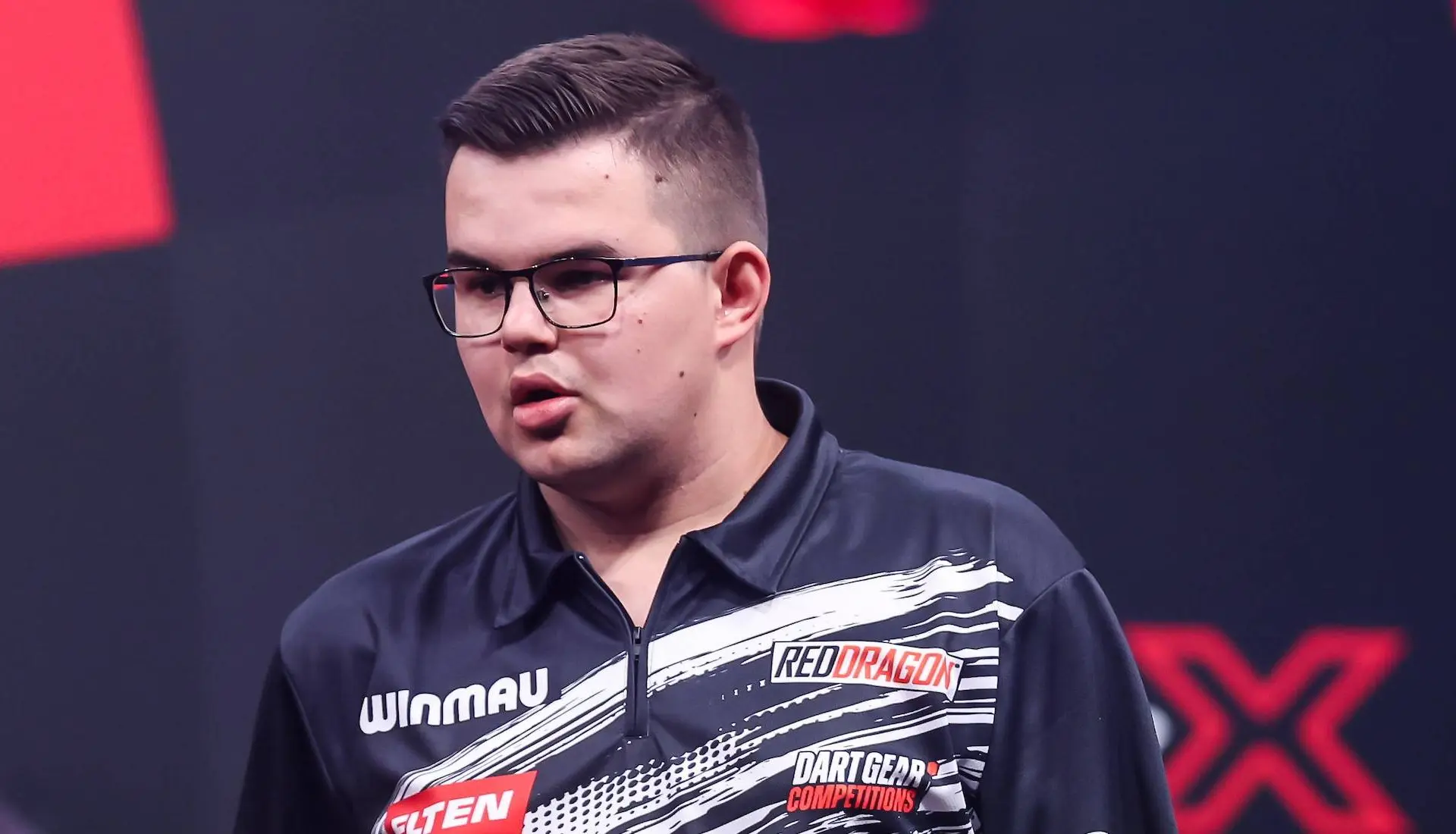
Van der Voort struggled with Priestley’s pace
Priestley’s measured style sometimes clashed with that of his opponents. Fast throwers in particular could find it hard to keep their own rhythm. Vincent van der Voort is cited by Priestley as an example.
“Well, obviously the speedsters would have found it quite difficult playing against me. Vincent van der Voort was very fast. He always found it very hard to play against me.”
Conversely, Priestley had to be careful not to get dragged into his opponent’s tempo. That even happened to him once against Michael van Gerwen.
ADVERTISEMENT
“I just knew that I had to go at my own pace when I was playing faster players. Sometimes they can hurry you on. And I noticed it a couple of times. Once when I was playing Michael van Gerwen, I thought, "I'm out of breath here, going back." He's rushing me too much. So, you know, I played at my pace."
Despite all the comments about his speed, Priestley can’t recall opponents complaining to him directly about it. However, someone once tried to get him thrown out of a tournament in a very different way.
Opponent tried to get Priestley thrown out of a tournament over shoes
At an event in Oldham, strict dress codes applied according to Priestley. Players had to wear black trousers and smart black shoes. Priestley turned up in all-black Reebok sneakers. That proved sufficient reason for someone to file a complaint.
ADVERTISEMENT
“Someone reported me. Because they knew they couldn't beat me on the dartboard, so they wanted me thrown out of the competition because I got the wrong footwear.”
With the current eye-catching outfits of some pros in mind, Priestley can laugh about it now. “Just imagine that nowadays with Peter Wright and players like that.”
Years-long road to the world elite
Priestley’s career didn’t take off overnight. Whereas modern talents sometimes progress from the Development Tour to major PDC stages within months, Priestley says it took him seven or eight years to climb from local darts to the international elite.
“Probably something in the region of seven or eight years. You know, I got picked for Yorkshire, I think it was '83. Then it was probably five years before I gradually made it into, or became good enough to play for England."
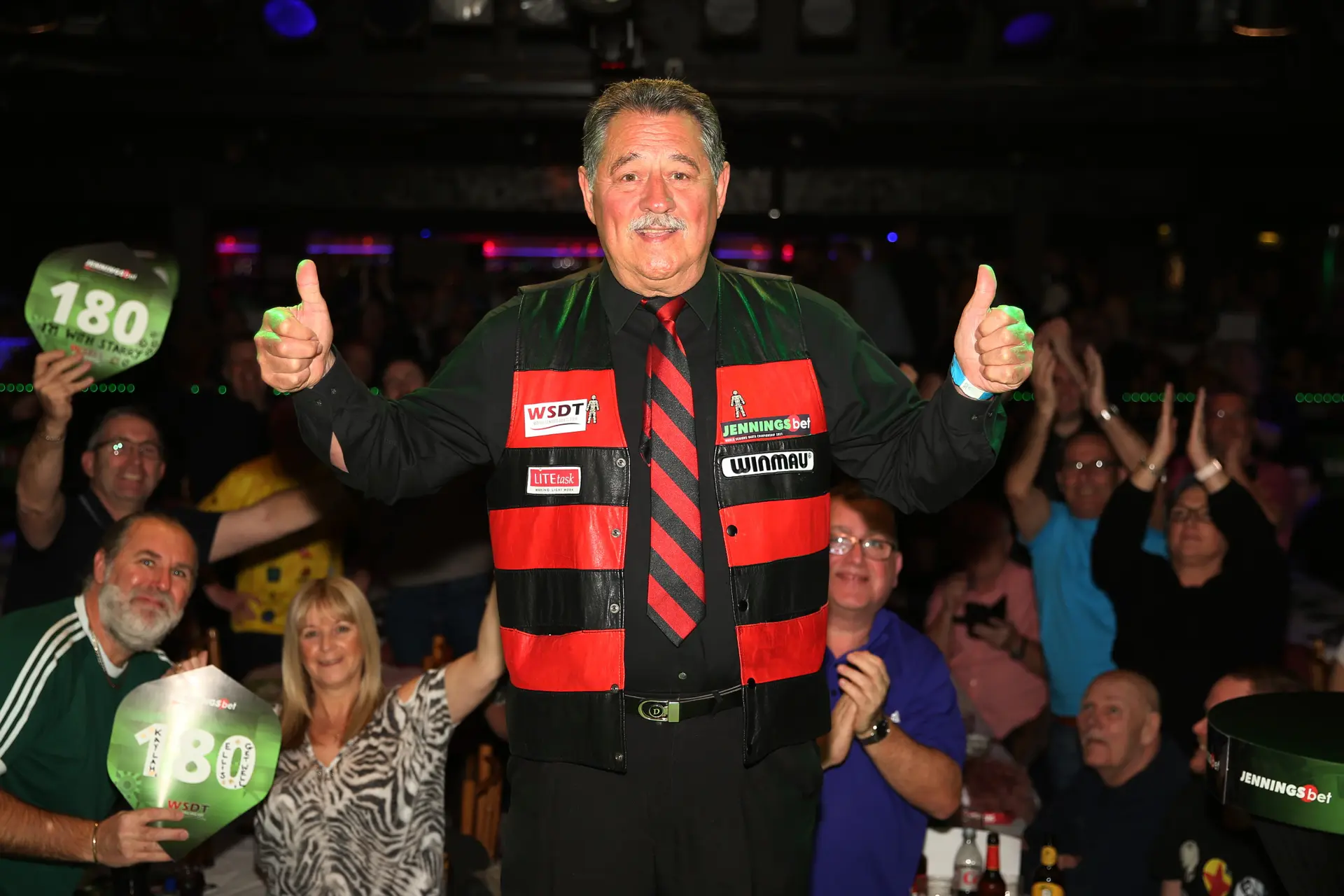
Priestley eventually even rose to world number one. In the early nineties he was among the absolute elite and, moreover, he was set to become England captain in 1993.
That was precisely when darts underwent its historic split. Priestley was among the players who broke away from the existing darts body, a development that ultimately led to what is now the PDC.
That choice had major personal consequences for Priestley. His planned spell as England captain did not go ahead. “I mean, that was one of the things with the split. I was due to be the captain for 1993, that full year, and I never got the honour.”
Looking back, Priestley realises how much he put on the line at that moment. He had just reached the very top and held a position many players try to secure throughout their careers.
“I mean, I could be down in the mouth about that particular time. I had probably the most to lose out of all the 16 that broke away. I was world number one at the time. I got picked to be England captain, you know, and never got a chance to do any of them."

Lucas MichaelDarts Journalist
Lucas Michael is a darts journalist and reporter based in Cambridge, UK, and has been part of the DartsNews team since 2025. He covers professional darts through reports, analysis, round-ups, and live coverage, with a focus on clear context and accurate reporting across the PDC calendar.
A key part of his work is liveblogging major tournaments throughout the year, providing real-time updates, match coverage, and contextual reporting across the professional circuit. He also reports regularly from events on site and has covered the PDC World Darts Championship from the venue, delivering first-hand insight throughout the tournament.
Within the newsroom, Lucas works closely with the editorial team and supports coverage alongside Chief Content Officer Samuel Gill and reporter Kieran Wood.
Lucas holds a BA (Hons) in Sports Journalism. In his work, he places strong emphasis on careful sourcing, editorial accuracy, and updating content promptly when new, verified information becomes available.
claps 0visitors 0
Just in


Popular news
Latest comments
- I agree,I can't believe the lack of coverage of this sad loss. Always enjoyed watching him,but I guess now it's all about littler,well it seems that way. Darts has sadly lost a good manrick6717-10-2026
- In the absence of a report regarding the death of Stefan Lord, I'll assist. An excellent player in the late 70s and early 80s, he actually won the now defunct 3rd place match at two World Championships and a couple of the News of the World Championships. A fabulous player and easily the best Swedish player ever. Rest peacefully Stefan.richieburnettrocks16-10-2026
- Joking aside, it is the second most watched sport on sky (more than golf, F1 etc) behind football only, and in participation is second to only football and swimming. It doesn't get the attention or sponsorship of "bigger" sports because it's not as sexy, but it's right up there.BandB13-10-2026
- i love darts but you can't seriously believe it's the second most popular sport in the uk. even top five is pushing it. it may be the fastest growing, though.colt13-10-2026
- I'm a big Clayton fan, but he's got this completely wrong. Qualification criteria exists for a reason - so just as failing to make the top 32/64 for the Euro championships/PT Finals means you miss out, so does not lifting a title for this one.26sForFun12-10-2026
- The players who deliberately slow the game down are usually boring and win very little in the way of silverware. Horrible to watch.MrYnyslas197112-10-2026
- [“The Gentle” then used a sweeping and questionable phrase...] You anglocucks are hilariously finished in every sense of the word.Critical99911-10-2026
- I love Jonny but I disagree. The Grand Slam was always supposed to be "champion of champions" type competition. If the top 16 are guaranteed participation in everything there will be so much less jeopardy involved in qualifying and each major tournament will lose its unique flavour which the PDC has worked hard trying to develop. I enjoy following the qualification races towards the end of the year, and while consistency should have its rewards, the truth is Jonny hasn't reached a major final all year or won a single event on the Pro Tour. Being consistent is one thing, but that alone should have consequences as the sport's elite should not be prepared to accept consistently strong performances, their foremost motivation should be to win and this should be what separates them from the rest, not the consistency of their performances. Jonny is expecting that losing should be enough; it shouldn't be, at least not as far as the Grand Slam is concerned.Deduce635811-10-2026
- Well being honest,it doesn't matter what level you play at, there's always someone who slows it down to suit themselves,and extra swig of water, replacing flights, asking the ref what the score is. It happens wherever. I'm not saying it's professional,but I'm sure we've all seen it beforerick6711-10-2026
- Agree completely. Not sure how a ranking event can have a criteria not based on rankings. And he right on popularity. In the UK second only to football.BandB11-10-2026
Loading