“Alcohol simply calms the nerves” - Dennis Priestley claims darts stars still drink before matches to handle pressure
PDC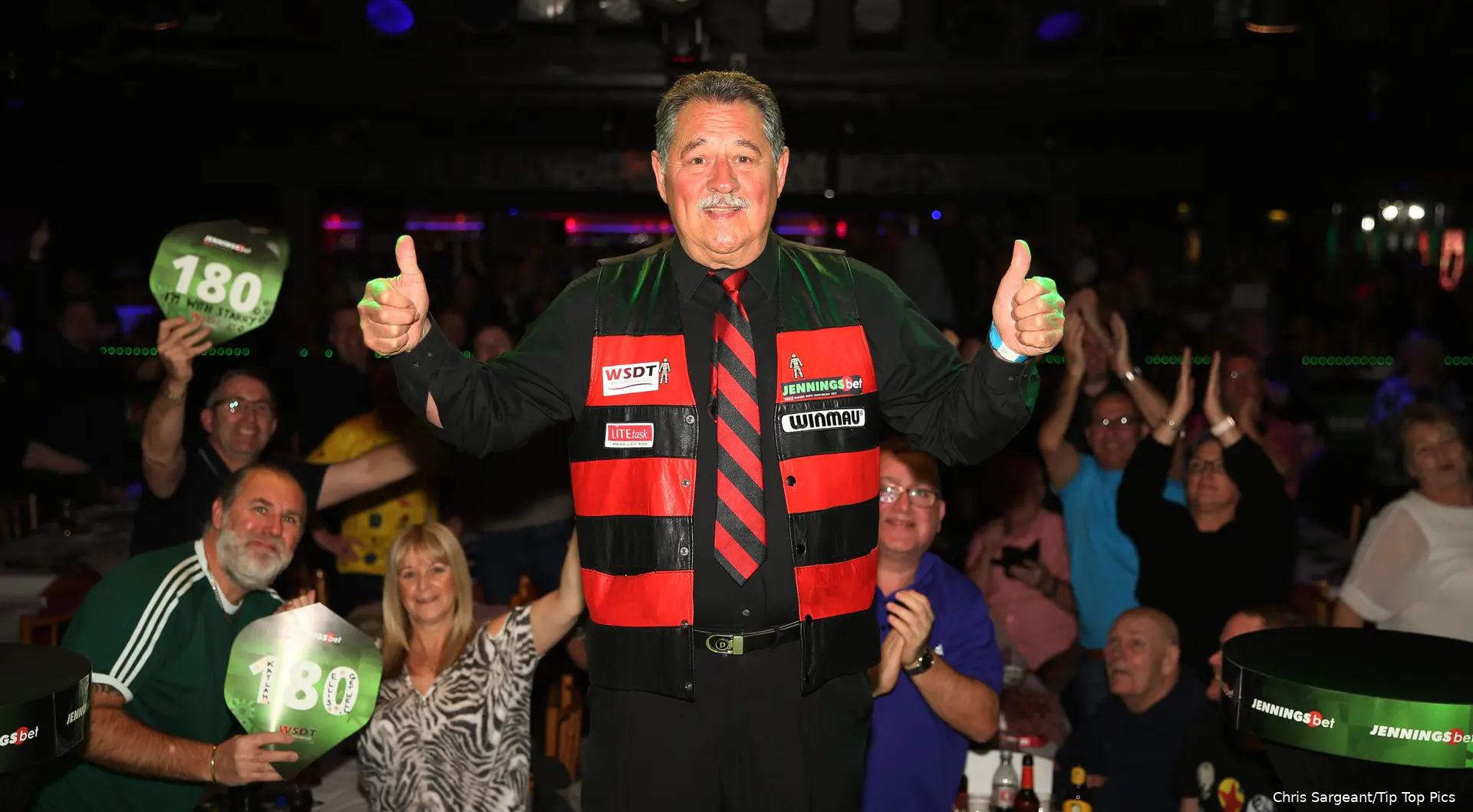
Darts has changed almost beyond recognition from the pub-rooted sport Dennis Priestley knew at the height of his career. The smoky stages, casual drinking culture and old-school tournament atmosphere have largely disappeared, replaced by sold-out arenas, packed calendars, major prize money and a far more professional environment.
ADVERTISEMENT
One connection, though, has never fully left the sport’s image. Alcohol remains part of the wider darts culture, particularly among fans, and Priestley believes it may still play a bigger role behind the scenes than many assume.
The 75-year-old former world champion has reignited a familiar debate by suggesting that some professionals still use alcohol to handle the pressure of major matches. Priestley, the 1994 world champion and one of the early PDC pioneers, believes the appeal is simple.
“Alcohol simply calms the nerves,” Priestley told Bild. “You just have to know exactly how much you need to stay relaxed without it affecting your game.”

Priestley points to darts’ old drinking culture
Priestley’s comments touch on one of the most sensitive subjects in modern darts. The sport has worked hard to move away from the old stereotype of players drinking and smoking around the oche, with fitness, preparation and mental discipline now much more prominent at the elite level.
Even so, Priestley can understand why some players might still be tempted to reach for a drink before stepping on stage. “The pressure in modern darts is enormous. Everyone looks at averages, rankings and results. Some players look for ways to reduce that tension. In the past, that often happened with a drink.”
ADVERTISEMENT
Priestley is speaking from an era when that was far less controversial. In previous interviews, he has recalled a very different darts world in the 1980s and 1990s, when drinking around tournaments was not treated as unusual. He has even said before that he won his 1994 world title after having four glasses of beer beforehand.
Other players from that period have also spoken openly about the old culture of the sport, when travelling to events, spending time in pubs and competing at tournaments were often closely linked. “That was the culture of the sport back then,” Priestley said. “Nobody found it unusual. It was simply part of it.”
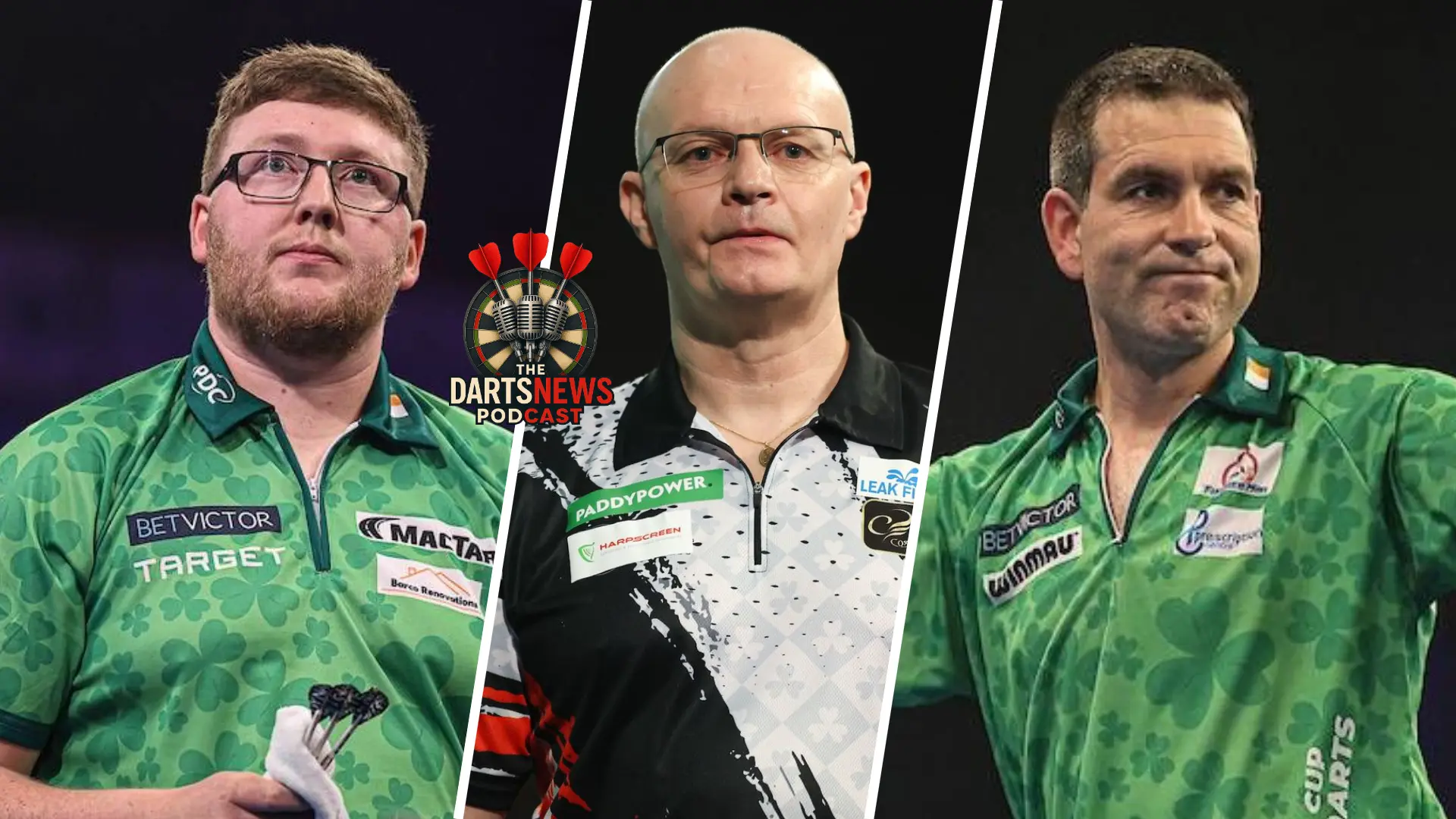
The contrast with the current generation is stark. Players such as Luke Humphries, Luke Littler and Gian van Veen belong to a very different darts landscape, one in which nutrition, practice structure, recovery and mental preparation are now part of the conversation around elite performance.
Gerwyn Price is another regular example of that shift. The former rugby player’s athletic build is far removed from the traditional image of a darts professional, and his presence underlines how much the sport’s physical profile has changed.
The workload has changed too. Players now face a crowded calendar and far more international travel than previous generations, with tournaments across Europe, North America, Asia and Oceania. Living like players did in the past is no longer widely viewed as compatible with staying at the top of the modern game.
ADVERTISEMENT
PDC chief insists there is no alcohol problem to control
Despite Priestley’s comments, the PDC does not currently believe extra measures are needed.
Chief executive Matt Porter said there is no sign that alcohol has become a structural issue on the professional tour. “We do not feel this is something that needs to be controlled,” Porter said previously. “Simply because it is not a problem that is getting out of control.”
Porter also compared the situation to other sports, arguing that responsibility ultimately sits with the individual player. “If Harry Kane drank two beers before a match for Bayern Munich, there is no rule that would forbid him from doing so. The same principle applies here.”
ADVERTISEMENT
For the PDC, the position is clear. Unless professionalism, behaviour or performance are being affected, there is no obvious reason to intervene.
That still leaves darts with a complicated question. In most sports, alcohol is seen as damaging to performance. In darts, where precision, rhythm and calm under pressure are so important, some have long argued that the picture is less straightforward.
Small amounts may make a player feel more relaxed, but alcohol is also widely associated with reduced concentration, reaction speed and coordination. Those are hardly minor details in a sport decided by millimetres and repeated execution under pressure.
Most modern professionals have moved towards different methods of managing pressure. Mental coaching, breathing techniques, meditation and sports psychology are now far more common parts of elite preparation than the old reliance on a pre-match drink.
Priestley’s comments do not prove that drinking before matches remains widespread. They do, however, reopen a debate darts has never entirely escaped. The sport has moved far beyond its pub origins, but the relationship between darts and alcohol still lingers, even as the professional game becomes sharper, richer and more demanding than ever.
ADVERTISEMENT
Kieran WoodDarts Journalist
Kieran Wood is a sports journalist based in Wales and has been active in journalism since 2022. He contributes to DartsNews.com, where he covers professional darts through news, match reports, analysis, and live coverage across the PDC calendar and major tournaments.
A key part of his work is on-site reporting from leading events. Kieran has covered the PDC World Darts Championship in person, reporting daily from the venue and providing first-hand insight from the tournament. During his coverage, he has conducted interviews with leading players including Luke Littler, Luke Humphries, and Gerwyn Price.
He is also one of the leading voices of the English-language Dartsnews Podcast, contributing regular analysis and discussion on developments across the professional darts circuit.
In his reporting, Kieran places strong emphasis on careful sourcing, editorial accuracy, and updating articles when new, verified information becomes available.
claps 0visitors 0
Just in


Popular news
Latest comments
- I agree,I can't believe the lack of coverage of this sad loss. Always enjoyed watching him,but I guess now it's all about littler,well it seems that way. Darts has sadly lost a good manrick6717-10-2026
- In the absence of a report regarding the death of Stefan Lord, I'll assist. An excellent player in the late 70s and early 80s, he actually won the now defunct 3rd place match at two World Championships and a couple of the News of the World Championships. A fabulous player and easily the best Swedish player ever. Rest peacefully Stefan.richieburnettrocks16-10-2026
- Joking aside, it is the second most watched sport on sky (more than golf, F1 etc) behind football only, and in participation is second to only football and swimming. It doesn't get the attention or sponsorship of "bigger" sports because it's not as sexy, but it's right up there.BandB13-10-2026
- i love darts but you can't seriously believe it's the second most popular sport in the uk. even top five is pushing it. it may be the fastest growing, though.colt13-10-2026
- I'm a big Clayton fan, but he's got this completely wrong. Qualification criteria exists for a reason - so just as failing to make the top 32/64 for the Euro championships/PT Finals means you miss out, so does not lifting a title for this one.26sForFun12-10-2026
- The players who deliberately slow the game down are usually boring and win very little in the way of silverware. Horrible to watch.MrYnyslas197112-10-2026
- [“The Gentle” then used a sweeping and questionable phrase...] You anglocucks are hilariously finished in every sense of the word.Critical99911-10-2026
- I love Jonny but I disagree. The Grand Slam was always supposed to be "champion of champions" type competition. If the top 16 are guaranteed participation in everything there will be so much less jeopardy involved in qualifying and each major tournament will lose its unique flavour which the PDC has worked hard trying to develop. I enjoy following the qualification races towards the end of the year, and while consistency should have its rewards, the truth is Jonny hasn't reached a major final all year or won a single event on the Pro Tour. Being consistent is one thing, but that alone should have consequences as the sport's elite should not be prepared to accept consistently strong performances, their foremost motivation should be to win and this should be what separates them from the rest, not the consistency of their performances. Jonny is expecting that losing should be enough; it shouldn't be, at least not as far as the Grand Slam is concerned.Deduce635811-10-2026
- Well being honest,it doesn't matter what level you play at, there's always someone who slows it down to suit themselves,and extra swig of water, replacing flights, asking the ref what the score is. It happens wherever. I'm not saying it's professional,but I'm sure we've all seen it beforerick6711-10-2026
- Agree completely. Not sure how a ranking event can have a criteria not based on rankings. And he right on popularity. In the UK second only to football.BandB11-10-2026
Loading