“They get the full WWE treatment when literally the boy was fixing a sink this morning” — Dan Dawson on the contrast that makes darts so special
PDC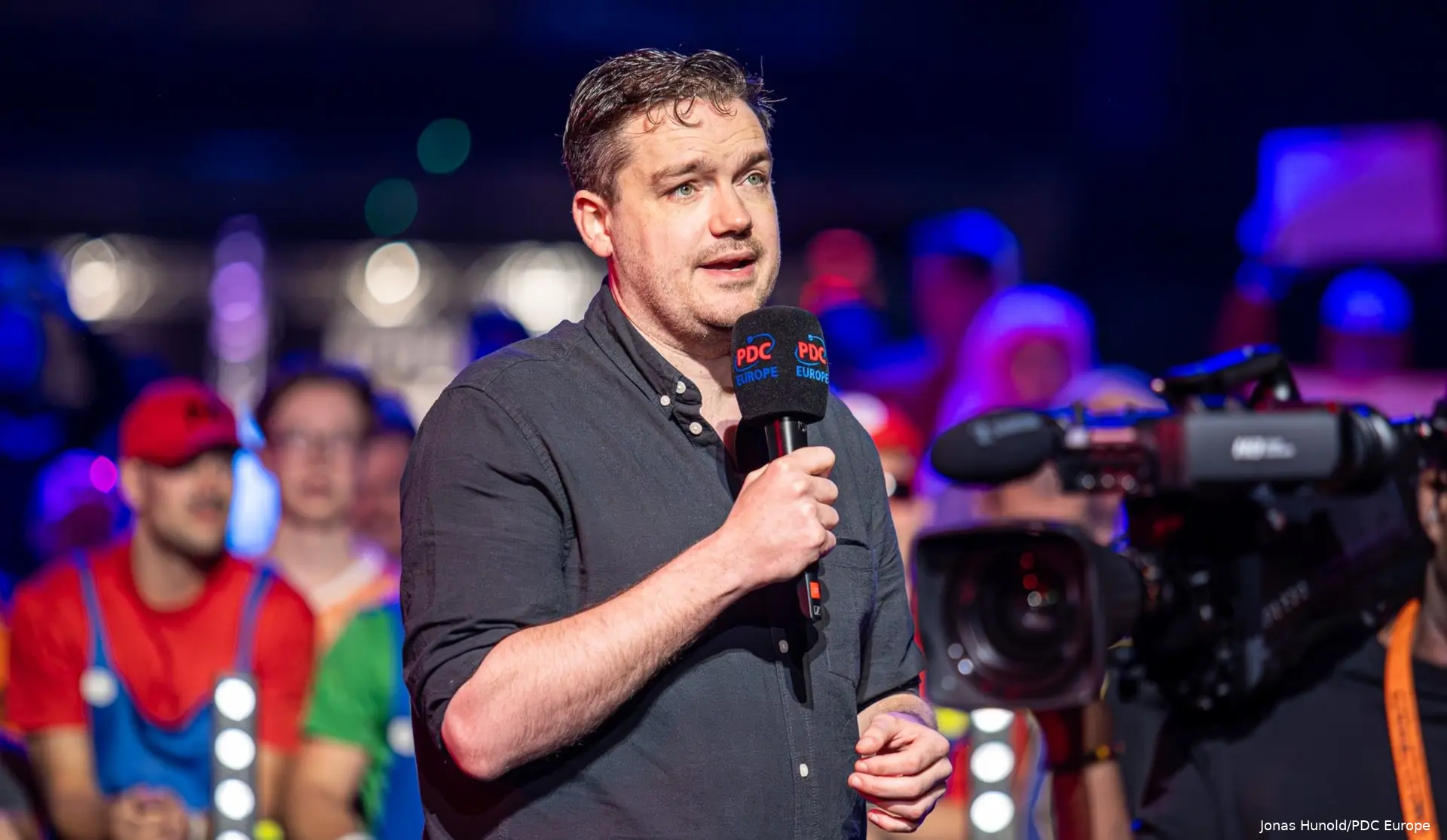
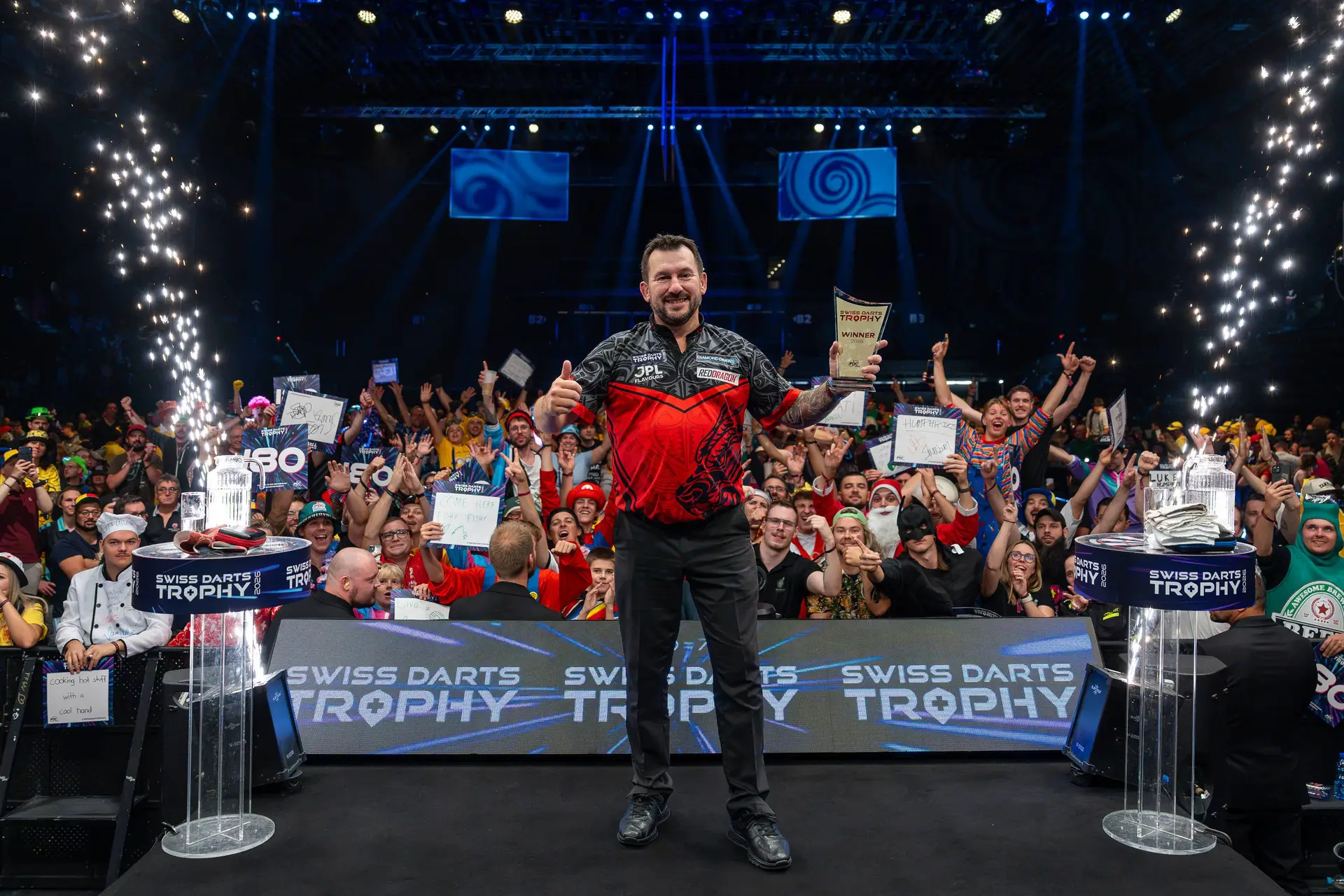
Anyone still dismissing darts as a pub game has completely missed the sport’s evolution in recent years. What began as a relatively small-scale pursuit has grown into a global entertainment phenomenon. Millions of TV viewers follow the biggest tournaments, while venues across Europe sell out within minutes. Fans arrive in fancy dress, sing non-stop, and create an atmosphere that is scarcely matched anywhere in sport.
ADVERTISEMENT
That success is no longer confined to Europe. With a new media deal between the PDC and ESPN, professional darts is taking a significant step toward the U.S. market. During the recent World Matchplay, the entire tournament was broadcast on ESPN+, while the final was even shown live on ESPN2. For the PDC, this marks another key milestone in the sport’s international growth.
One of the people who has witnessed this development up close is commentator Dan Dawson. For years, he has been one of the regular voices of major PDC tournaments for Sky Sports, ITV, and the European Tour. According to Dawson, darts’ success is not solely down to the standard on stage, but above all to the total experience that makes the sport unique.
A night out where sport and party go hand in hand
Dawson believes many new fans initially don’t even watch the players, but what’s happening in the stands. “The thing that grabs people’s attention, particularly I’ve found North American viewers, is what’s going on in the crowd because it is one big party.”
That is precisely where darts sets itself apart from almost every other sport, he says. Visitors often don’t buy a ticket to cheer on one specific player, but simply because they want a night out.

“They’re not necessarily going to support a particular player. They’re not necessarily going to be present at a particular tournament. They’re going for a night at the darts because the experience is what it’s all about. And the whole sporting aspect is going on parallel to it. So they want the big moments, they want the 9-darters, the massive checkouts, the 180s, so they can drink their drinks, sing their songs, and be part of the spectacle. I’m not sure there are many sports like that,” he says in conversation with Awful Announcing.
ADVERTISEMENT
Whereas supporters in football, tennis, or basketball usually have a clear preference for one team or player, it’s very different in darts. The atmosphere is central, and the crowd often gets swept along by the flow of the match. According to Dawson, that creates a unique dynamic in which sport and entertainment constantly coexist.
From rooms with two hundred people to sold-out arenas
Dawson has seen the growth up close. Since the inception of the European Tour, he has traveled virtually every weekend to the various venues. He calls the development he has witnessed enormous. “I do a lot of the European Tour and I’ve been doing that since its inception. And that has grown from playing in rooms of 200 people where they were having to give away tickets in the early days.”
That picture has completely changed. European Tour events now effortlessly attract several thousand spectators per session and rank among the most popular fixtures on the PDC calendar.
Dawson cites the tournament in Maastricht later this year as an example, for which 22,000 tickets were sold in just three days. “You can’t help but feel that energy in the room and all the crowds are slightly different in how they behave. We get enormous crowds in Hungary but they’re quite staid and placid as darts crowds go, whereas a room full of Dutchman can take the roof off the place even if there’s not so many of them.”
ADVERTISEMENT
He says that energy also rubs off on those covering the matches. “It’s quite a mix to be going on in the same room. And if you’re not carried along with that, you’re not in the right job.”
Although the partying stands often draw most of the attention, Dawson emphasises that the sporting side is at least as fascinating.
On paper, darts seems simple: two players throw at the same board over half an hour or longer. But Dawson believes there’s a complex mental battle behind every leg. “The beauty of the game is not just the maths and the skill, but it’s the psychology of it.”
He says the pressure players must handle is visible to the naked eye. While one player remains completely cool, another can crumble under the tension. “You can genuinely see the stress these guys are under and it does lead to mistakes. You have people have complete meltdowns, they can be fiery, it is a proper gladiatorial battle, and that is compelling in and of itself.”
ADVERTISEMENT
That contrast is precisely what makes darts so special, he argues. While thousands of supporters sing and drink beer, two players on stage wage an intense mental battle in which a single mistake can be the difference between victory and defeat.

Walk-ons have become a key part of the show
It’s not just the matches themselves that make darts a spectacle. The players’ walk-ons have also become a fixed part of the experience.
Every pro now has their own walk-on song, and almost all of them have a nickname that’s inseparable from their persona. Yet, according to Dawson, there isn’t always a carefully crafted marketing plan behind it. “I wish there was! Some of them are bloody awful.”
ADVERTISEMENT
According to him, many of those identities still arise in completely random ways. “We’ve got people who have reached the top of the game and won major titles and they’re still going with a nickname that some bloke gave them in a pub because they were wearing some fancy new trainers once.”
Even so, walk-ons and nicknames do play a significant role. They help players become recognisable and build their own brand. “It helps get the fans onside, which can be important in a game. Being popular, having the crowd with you, and they are fickle, darts crowds.”
Strikingly, the crowd doesn’t always stick with the same favourite for long. Darts fans are actually known for switching sides effortlessly during a match. “The bloke who everyone wants to win is winning comfortably, the other guy starts staging a comeback, they’ll switch allegiances, they want the party to continue.”

Nathan Aspinall is one of the players with the most beloved walk-on within the PDC.
Ordinary people who briefly turn into superstars
ADVERTISEMENT
Perhaps the greatest strength of darts, Dawson says, is that despite the light shows and packed arenas, the players have remained regular people. “The phrase I always use when talking about darts players is they’re ordinary people doing extraordinary things.”
Where top athletes in many other sports can seem out of reach, many darters spent years in regular jobs. Some even still combine that with their career on the PDC Tour. “We’ve got people on the tour who are firemen, delivery drivers, and they fit the darts in around it. But they are relatable in a way that a lot of elite sportspeople just aren’t."
A fitting example is Cameron Menzies. At the 2025 World Championship, the Scot stood on the Alexandra Palace stage, but earlier that same day he had been doing plumbing work. “He was underneath somebody’s sink fixing the plumbing on the day he was playing at Ally Pally. You don’t get this in normal sports.”
That contrast continues to fascinate Dawson. The same player gets a few hours later a spectacular walk-on, complete with pyrotechnics, lasers, pumping music, and thousands of fans chanting his name.
ADVERTISEMENT
“It’s hilarious and mad that they get the full WWE treatment and the walk-on song and the lights and the lasers and the announcers giving it the big-un when literally the boy was fixing a sink this morning or driving a delivery van tomorrow when he’s finished. But that’s one of the reasons I absolutely love it.”
Luke Littler opens the door to a completely new audience
That the sport has enjoyed enormous growth in recent years is beyond doubt, according to Dawson. He especially points to the impact of Luke Littler.
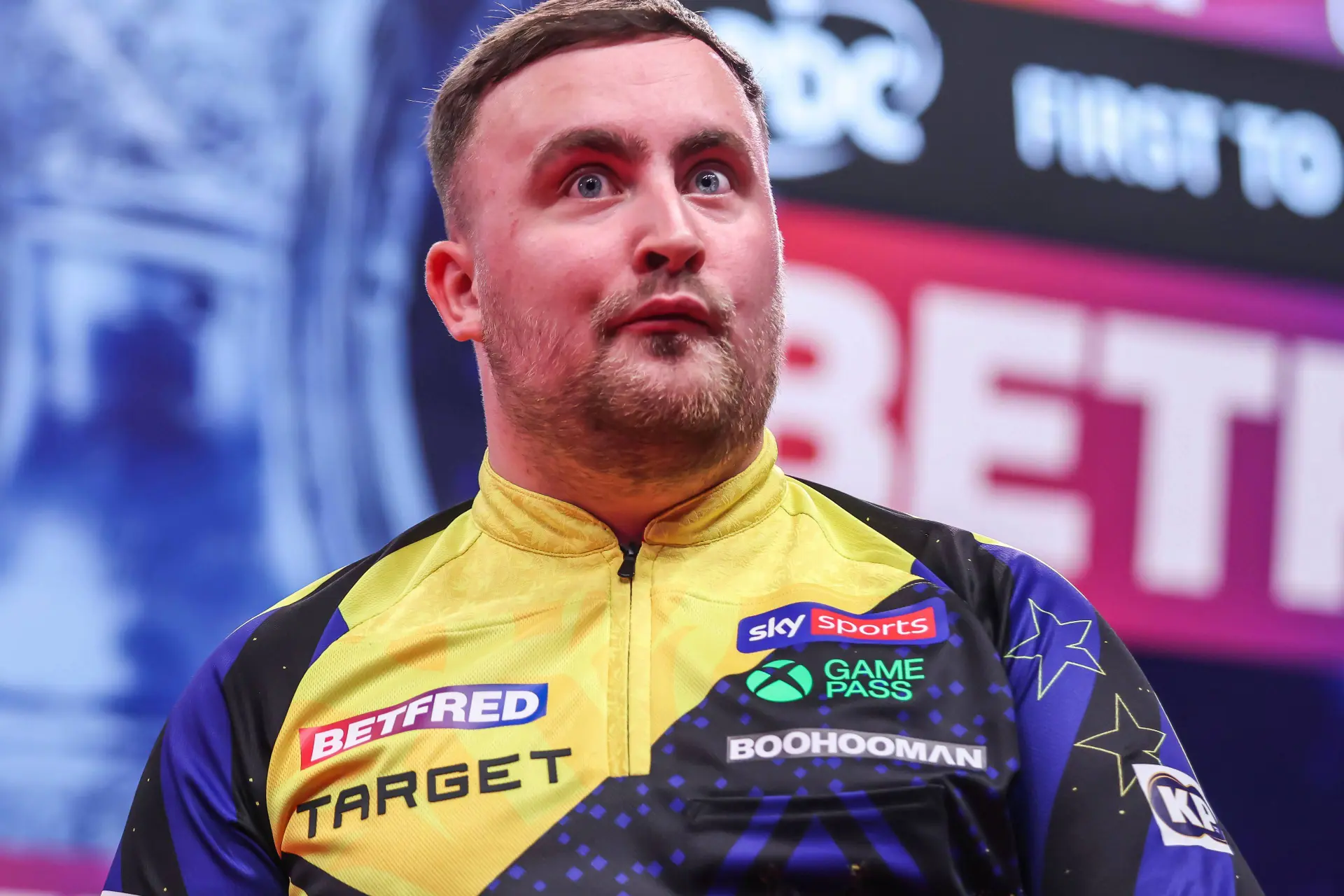
The now two-time world champion, the commentator says, managed to reach an audience that previously had little interest in darts. “His story has reached through to bits of the world darts doesn’t often reach.”
ADVERTISEMENT
Dawson believes that started with Littler’s sensational World Championship debut. “Child nearly wins world championship on debut is a heck of a story. Child then wins world championship and everything else is an unbelievable story. What he’s doing is pretty much unprecedented, to turn up as he has and kept on winning.”

Lucas MichaelDarts Journalist
Lucas Michael is a darts journalist and reporter based in Cambridge, UK, and has been part of the DartsNews team since 2025. He covers professional darts through reports, analysis, round-ups, and live coverage, with a focus on clear context and accurate reporting across the PDC calendar.
A key part of his work is liveblogging major tournaments throughout the year, providing real-time updates, match coverage, and contextual reporting across the professional circuit. He also reports regularly from events on site and has covered the PDC World Darts Championship from the venue, delivering first-hand insight throughout the tournament.
Within the newsroom, Lucas works closely with the editorial team and supports coverage alongside Chief Content Officer Samuel Gill and reporter Kieran Wood.
Lucas holds a BA (Hons) in Sports Journalism. In his work, he places strong emphasis on careful sourcing, editorial accuracy, and updating content promptly when new, verified information becomes available.
claps 0visitors 0
Just in

Popular news

Latest comments
- The players who deliberately slow the game down are usually boring and win very little in the way of silverware. Horrible to watch.MrYnyslas197112-10-2026
- [“The Gentle” then used a sweeping and questionable phrase...] You anglocucks are hilariously finished in every sense of the word.Critical99911-10-2026
- I love Jonny but I disagree. The Grand Slam was always supposed to be "champion of champions" type competition. If the top 16 are guaranteed participation in everything there will be so much less jeopardy involved in qualifying and each major tournament will lose its unique flavour which the PDC has worked hard trying to develop. I enjoy following the qualification races towards the end of the year, and while consistency should have its rewards, the truth is Jonny hasn't reached a major final all year or won a single event on the Pro Tour. Being consistent is one thing, but that alone should have consequences as the sport's elite should not be prepared to accept consistently strong performances, their foremost motivation should be to win and this should be what separates them from the rest, not the consistency of their performances. Jonny is expecting that losing should be enough; it shouldn't be, at least not as far as the Grand Slam is concerned.Deduce635811-10-2026
- Well being honest,it doesn't matter what level you play at, there's always someone who slows it down to suit themselves,and extra swig of water, replacing flights, asking the ref what the score is. It happens wherever. I'm not saying it's professional,but I'm sure we've all seen it beforerick6711-10-2026
- Agree completely. Not sure how a ranking event can have a criteria not based on rankings. And he right on popularity. In the UK second only to football.BandB11-10-2026
- Doesn't matter who's in it,it's boringrick6710-10-2026
- Assuming you qualify as one of the "muppets" in question. Classist too. And since you're so clearly interested in academia, look up "linguistic descriptivism" while you're at it. Oh, and better stay away from the working class sport of darts and maybe offer your insightful analysis to, let's say, croquet instead?Deduce635806-10-2026
- The consequences of being uneducated and grammatically challenged. "To all THOSE muppets not THEM " Everytime I see Arsepinall, I have an image of him wearing a cap, standing behind the counter of a fast food establishment.richieburnettrocks05-10-2026
- I don't understand Littler's reason for playing this tournament.rick6705-10-2026
- James Wade has become James Wide. He has piled on the tonnage considerably, he barely fits in his shirt.richieburnettrocks03-10-2026
Loading