"I have my period and my level drops... trans players don't experience that" - Aileen De Graaf welcomes WDF's ban on trans players in women's darts
WDF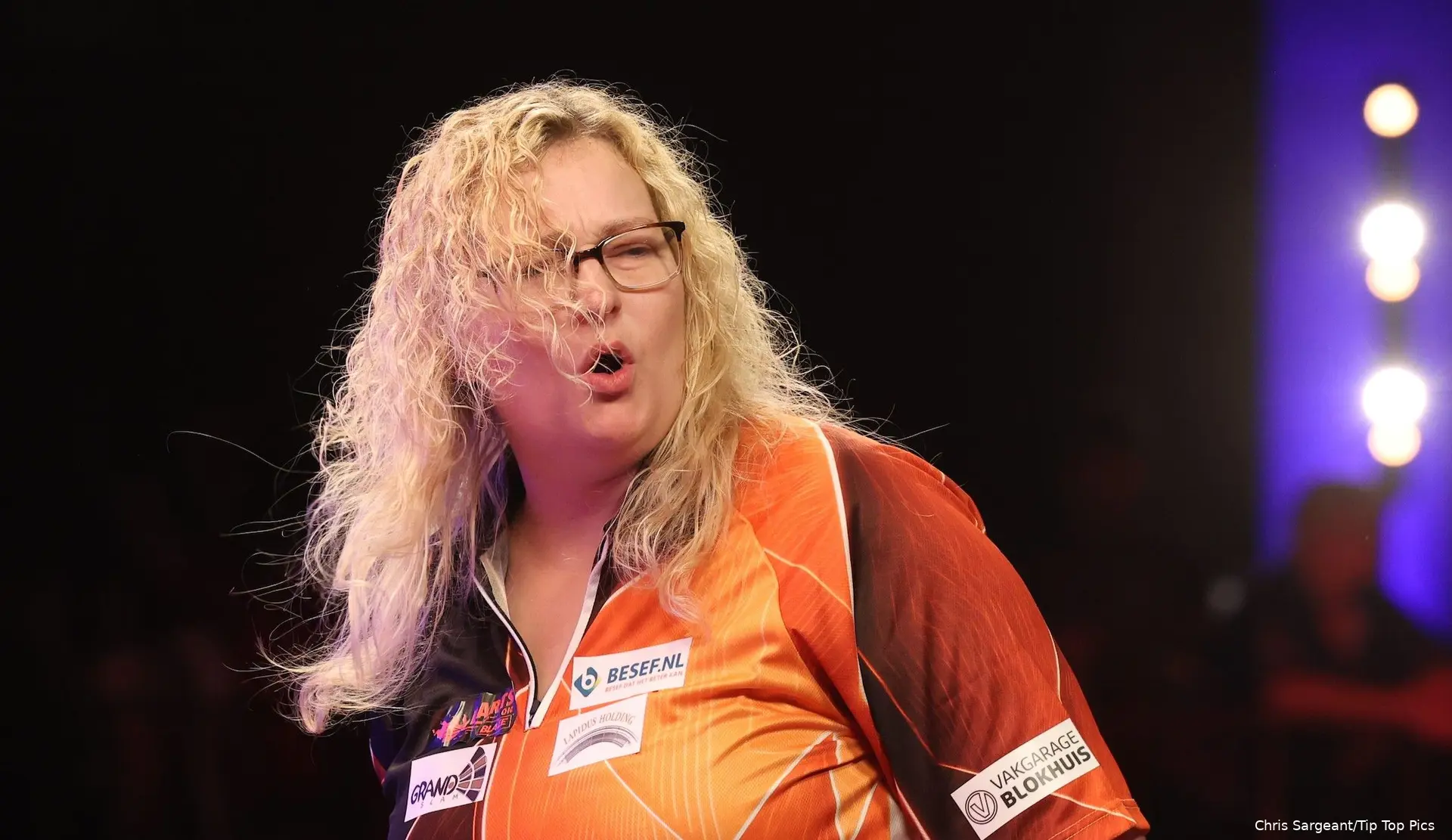
The World Darts Federation has drawn a line in the sand on one of the sport’s most contentious issues – and Aileen de Graaf is firmly in support.
ADVERTISEMENT
In a landmark move, the WDF has ruled that only players assigned female at birth will be eligible to compete in its women’s and girls’ tournaments. The change, ratified at September’s general meeting and formally written into the rulebook late last month, ends the organisation’s previous policy of allowing transgender women to compete if their passport listed their gender as female.
That previous rule enabled Dutch player Noa-Lynn van Leuven to appear in the women’s game – but also triggered a fierce debate within the sport. In March last year, De Graaf and fellow Netherlands international Anca Zijlstra resigned from the national team in protest, sparking headlines and heated discussion far beyond darts circles.
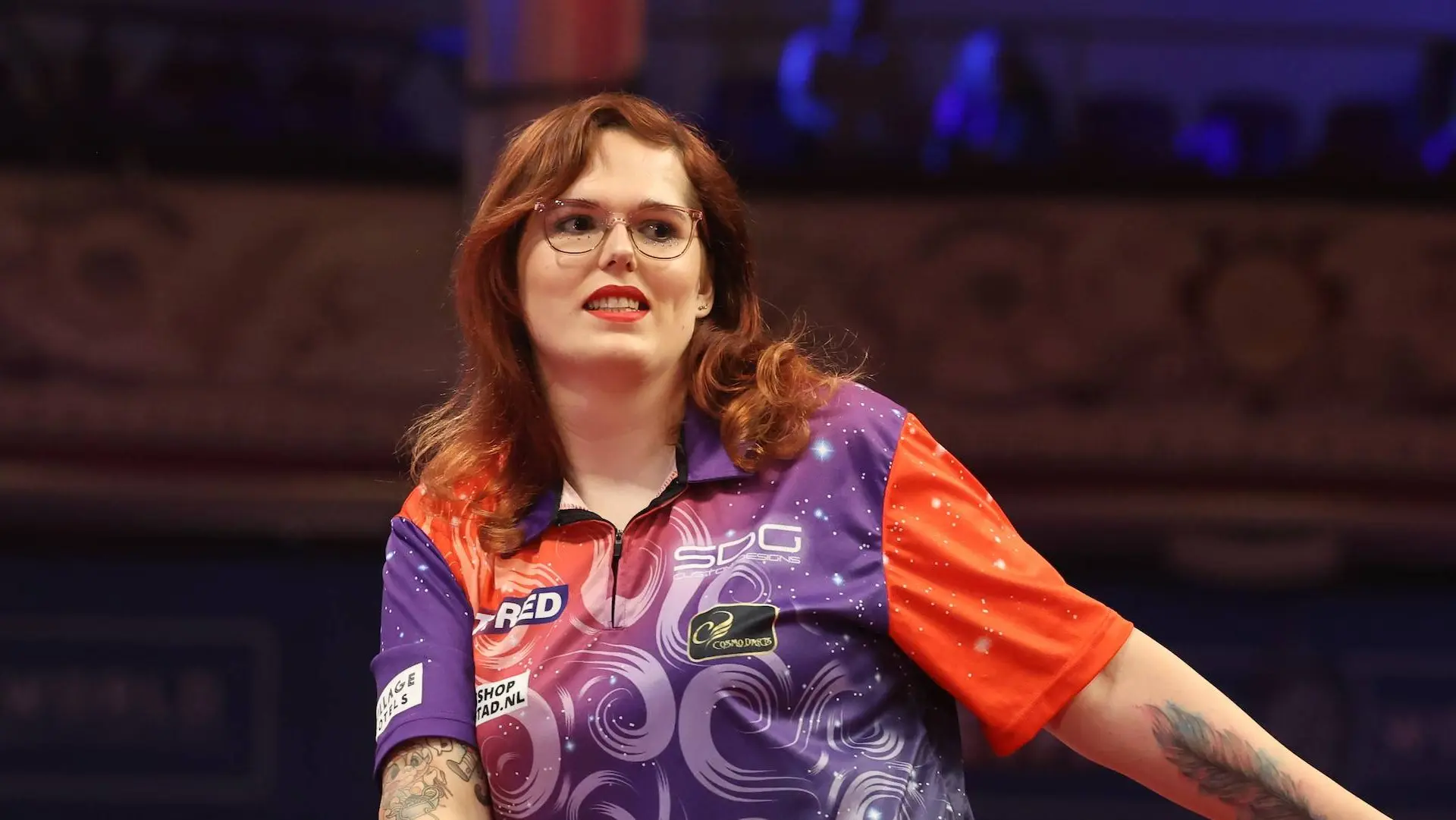
For De Graaf, who has been part of the world’s elite since 2008 and is a former Lakeside finalist, the decision brings closure to a long-running dispute. “I understand it’s not easy for the federation to put such a rule in writing,” she told AD.nl. “Not many sports have managed it yet. But it’s good that it’s happened, because if we all think logically, there is a difference between men’s and women’s sport.”
While darts is less physically demanding than other disciplines, De Graaf insists the differences are tangible. “The gap in averages is often at least 15 points. Hand–eye coordination, concentration and the natural physical build are in men’s favour,” she said.

Aileen de Graaf and Anca Zijlstra stepped down from the Dutch women's team last year due to the presence of Noa-Lynn van Leuven
She also highlighted factors rarely discussed in public debate. “I get my period once a month, and when I do, my level drops significantly. Trans women can’t experience that. There are clear differences. For me, it’s about fairness in girls’ darts. There’s a reason sport has a split between men and women.”
ADVERTISEMENT
Speaking out, however, comes at a cost. “If you stand up for women’s rights, you’re quickly labelled ‘transphobic’ and can lose sponsors. I’ve had threats, and that’s why I stayed quiet for a while. That’s also why many players don’t speak up now.”
De Graaf also credits England’s Deta Hedman as a key figure in pushing the issue forward. “This was about one trans woman, but in ten years there could be many more,” she warned.
Her stance on Van Leuven remains clear – the dispute was never personal. “When I used to play for the Dutch national team, Noa represented the Netherlands in the boys’ category. When she switched to the women’s, we felt it was unfair. Don’t get me wrong – everyone deserves to live freely and happily. Noa did nothing wrong and followed the rules. It’s just unfortunate it’s always about Noa, because she’s the only high-level example. We’re fighting for our rights just as much. Fairness always comes first.”
Whether this ruling will open the door to her returning to the Dutch side remains uncertain. “Normally the NDB adopts WDF rules, but they haven’t said anything yet. If they do, I’d be more open to playing for the national team again.”
With the WDF’s position now clear, attention will turn to how national federations respond – and whether other sports follow suit. For De Graaf, at least, the dartboard feels a little more level.
ADVERTISEMENT
Kieran WoodDarts Journalist
Kieran Wood is a sports journalist based in Wales and has been active in journalism since 2022. He contributes to DartsNews.com, where he covers professional darts through news, match reports, analysis, and live coverage across the PDC calendar and major tournaments.
A key part of his work is on-site reporting from leading events. Kieran has covered the PDC World Darts Championship in person, reporting daily from the venue and providing first-hand insight from the tournament. During his coverage, he has conducted interviews with leading players including Luke Littler, Luke Humphries, and Gerwyn Price.
He is also one of the leading voices of the English-language Dartsnews Podcast, contributing regular analysis and discussion on developments across the professional darts circuit.
In his reporting, Kieran places strong emphasis on careful sourcing, editorial accuracy, and updating articles when new, verified information becomes available.
claps 69visitors 8
Just in


Popular news

Latest comments
- I agree,I can't believe the lack of coverage of this sad loss. Always enjoyed watching him,but I guess now it's all about littler,well it seems that way. Darts has sadly lost a good manrick6717-10-2026
- In the absence of a report regarding the death of Stefan Lord, I'll assist. An excellent player in the late 70s and early 80s, he actually won the now defunct 3rd place match at two World Championships and a couple of the News of the World Championships. A fabulous player and easily the best Swedish player ever. Rest peacefully Stefan.richieburnettrocks16-10-2026
- Joking aside, it is the second most watched sport on sky (more than golf, F1 etc) behind football only, and in participation is second to only football and swimming. It doesn't get the attention or sponsorship of "bigger" sports because it's not as sexy, but it's right up there.BandB13-10-2026
- i love darts but you can't seriously believe it's the second most popular sport in the uk. even top five is pushing it. it may be the fastest growing, though.colt13-10-2026
- I'm a big Clayton fan, but he's got this completely wrong. Qualification criteria exists for a reason - so just as failing to make the top 32/64 for the Euro championships/PT Finals means you miss out, so does not lifting a title for this one.26sForFun12-10-2026
- The players who deliberately slow the game down are usually boring and win very little in the way of silverware. Horrible to watch.MrYnyslas197112-10-2026
- [“The Gentle” then used a sweeping and questionable phrase...] You anglocucks are hilariously finished in every sense of the word.Critical99911-10-2026
- I love Jonny but I disagree. The Grand Slam was always supposed to be "champion of champions" type competition. If the top 16 are guaranteed participation in everything there will be so much less jeopardy involved in qualifying and each major tournament will lose its unique flavour which the PDC has worked hard trying to develop. I enjoy following the qualification races towards the end of the year, and while consistency should have its rewards, the truth is Jonny hasn't reached a major final all year or won a single event on the Pro Tour. Being consistent is one thing, but that alone should have consequences as the sport's elite should not be prepared to accept consistently strong performances, their foremost motivation should be to win and this should be what separates them from the rest, not the consistency of their performances. Jonny is expecting that losing should be enough; it shouldn't be, at least not as far as the Grand Slam is concerned.Deduce635811-10-2026
- Well being honest,it doesn't matter what level you play at, there's always someone who slows it down to suit themselves,and extra swig of water, replacing flights, asking the ref what the score is. It happens wherever. I'm not saying it's professional,but I'm sure we've all seen it beforerick6711-10-2026
- Agree completely. Not sure how a ranking event can have a criteria not based on rankings. And he right on popularity. In the UK second only to football.BandB11-10-2026
Loading