How does the PDC Pro Tour work? Everything about the Players Championship events, European Tour and the PDC Pro Tour Order of Merit
FAQ
The PDC Pro Tour is the backbone of the professional darts circuit. It is the tour on which players earn their living week in, week out, and where qualification for the biggest tournaments of the year is decided. The Pro Tour consists of two components: the Players Championship events and the European Tour.
ADVERTISEMENT
The prize money players earn at these tournaments counts towards the Pro Tour Order of Merit. That ranking is a rolling year list and plays a crucial role in qualification for major events such as the World Darts Championship, the World Matchplay, and the World Grand Prix. Although the matches are not broadcast on television, they can be followed live via PDC TV.
All the information you need to know about the PDC Pro Tour
1. Why is it called the Pro Tour?
2. How did the PDC Pro Tour come about?
3. What is the impact of the Pro Tour on the PDC Order of Merit?
4. How do you gain access to the PDC Pro Tour?
5. What are the Players Championship events?
6. What is the European Tour?
7. Changes to European Tour rules for 2026
8. What is the format on the Pro Tour?
9. What is the prize money distribution on the Pro Tour?
10. Who has won the most Pro Tour tournaments?
11. What does the PDC Pro Tour season look like in 2026?
1 Why is it called the Pro Tour?
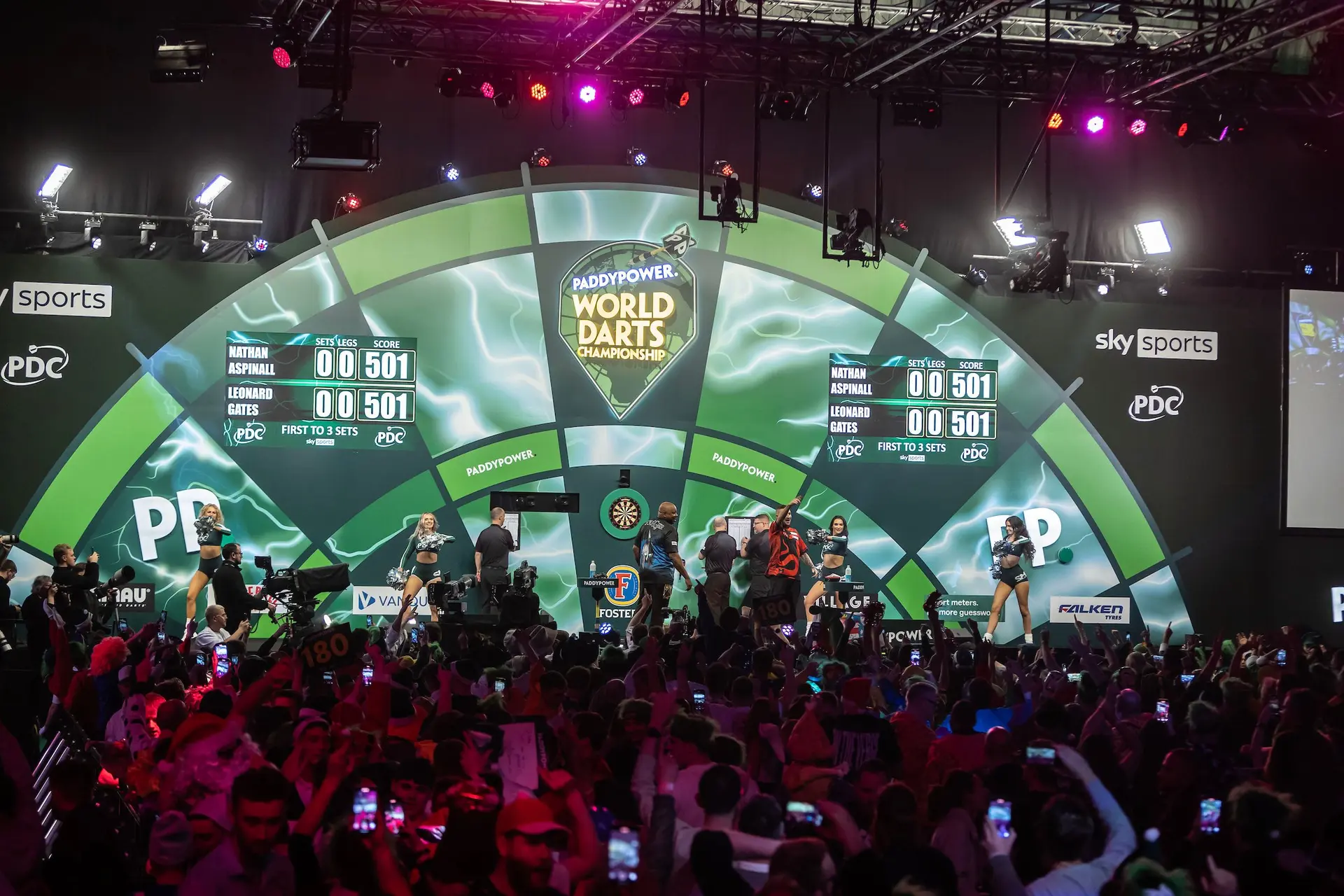
The name Pro Tour is short for Professional Tour and refers to the highest competitive circuit in professional darts. Only players with a PDC Tour Card can compete here on a regular basis. That makes the Pro Tour exclusive: there are only 128 active Tour Card holders worldwide.
This group forms the core of the field at virtually all Players Championship and European Tour events. Only a limited number of places are topped up via qualifying tournaments or players from the Challenge Tour.
ADVERTISEMENT
2 How did the Pro Tour come about?
The PDC Pro Tour was introduced in 2002 with regional qualifiers for the UK Open. A year later came the first official Players Championship, won by Phil Taylor. In 2011, the PDC introduced the Tour Card system, which formalized access to the Pro Tour.
The European Tour was added in 2012. This series of events gave players regular opportunities to perform on stage in front of packed arenas for the first time. The very first European Tour title went to Justin Pipe, who beat James Wade in Austria. Since then, the circuit has grown steadily. In 2026 there are no fewer than 49 ProTour events on the calendar.

Justin Pipe became the first-ever winner of a Euro Tour event in 2012
3 What is the impact of the Pro Tour on the PDC Order of Merit?
ADVERTISEMENT
The prize money players earn on the Pro Tour counts towards the PDC Order of Merit. In 2026, the total prize fund on the Pro Tour is £8.55 million, split between the Players Championships and the European Tour.
While the big majors have separate and larger prize funds, consistent results on the ProTour can be decisive for the world rankings. A good example is Martin Schindler, who now ranks inside the world’s top 16 and has earned the majority of his ranking points at Players Championship and European Tour events.
4 How do you gain access to the PDC Pro Tour?
The most common route to the ProTour is through Q-School, the annual qualifying event where Tour Cards are up for grabs with Tour Cards for both finalists this year. Players can also qualify via the Challenge Tour and the Development Tour. The best players from these circuits also receive a Tour Card at the end of the season.
Non–Tour Card holders can enter occasionally. At Players Championships, Challenge Tour players step in when Tour Card holders withdraw. On the European Tour, qualifying places are reserved for host nations and regional circuits, among others.
ADVERTISEMENT

5 What are the Players Championship events?
Players Championships are closed events, often referred to as “floor tournaments.” They are played without an audience, spread across sixteen boards in a large hall. The silence and absence of stage pressure make these events unique.
Each tournament features 128 participants. At the end of the season, the 64 players who have earned the most prize money on the Players Championship Order of Merit qualify for the Players Championship Finals, a televised event staged in Minehead at the end of November.
ADVERTISEMENT
6 What is the European Tour?
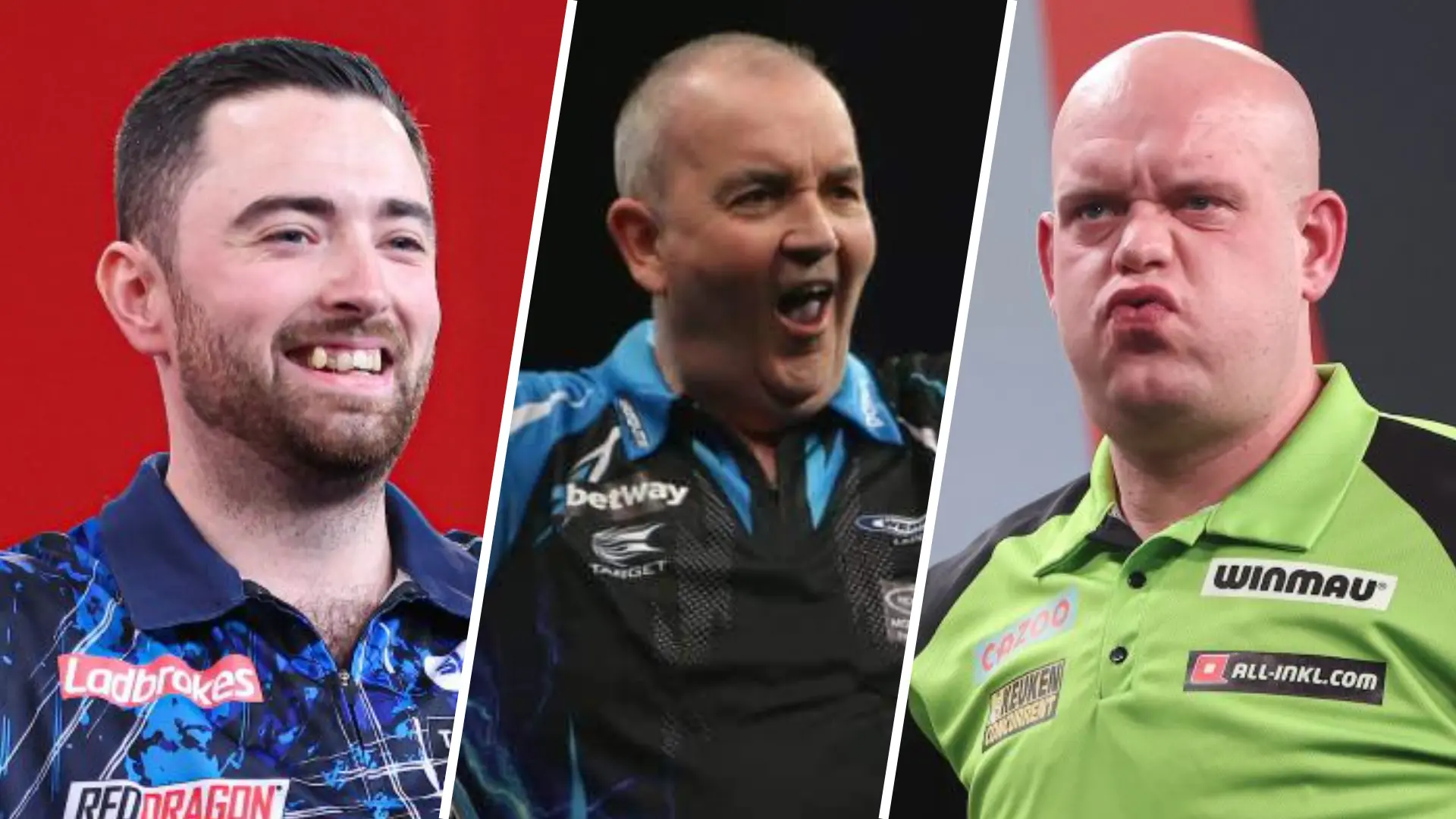
The European Tour consists of stage events held across Europe. These tournaments are played in front of thousands of fans and are known for their atmosphere. The field features 48 players, including the world’s top 16, Pro Tour qualifiers, and regional qualifiers.
In 2026, six of the fifteen tournaments will take place in Germany. In addition, there are stops in Poland, Belgium (2), Austria, Slovakia, Hungary, Czechia, Switzerland, and the Netherlands. The top 32 players on the European Tour ranking qualify for the European Championship, which is played at the end of October.
7. Changes to European Tour rules for 2026
ADVERTISEMENT
For a long time the top 16 did not receive any protection when it came to the European Tour but that changed in what was a controversial amendment of the rules with the top 16 now qualifying automatically.
This also meant that higher-ranked players, often the established names, were automatically protected from strong opponents in the opening round, even if they had qualified via the Pro Tour. For those high on said Order of Merit, this led to tough draws and early exits.
The top 16 players now in an amended rule who qualify via the Pro Tour will now receive seeded status in the first round. As a result, they will be paired with unseeded opponents, rather than potentially facing a top player straight away. The Main Order of Merit therefore no longer plays a role in this specific part of the draw. This then benefits ProTour players more than it did in 2025.
8. What does the format look like on the Pro Tour?
ADVERTISEMENT
Both Players Championships and European Tour events are played in legs, with the format increasing towards the final. Finals are best of 15 legs, semi-finals best of 13.
Players Championship format
| Round | Format |
| Last 128 | Best of 11 legs |
| Last 64 | Best of 11 legs |
| Last 32 | Best of 11 legs |
| Last 16 | Best of 11 legs |
| Quarter-finals | Best of 11 legs |
| Semi-finals | Best of 13 legs |
| Final | Best of 15 legs |
Euro Tour format
| Round | Format |
| First round | Best of 11 legs |
| Second round | Best of 11 legs |
| Last 16 | Best of 11 legs |
| Quarter-finals | Best of 11 legs |
| Semi-finals | Best of 13 legs |
| Final | Best of 15 legs |
ADVERTISEMENT
9. What is the prize money distribution on the Pro Tour?
Prize money on the ProTour has risen sharply in recent years. Whereas tournaments in 2002 had a prize fund of £12,000, that figure in 2026 stands at £150,000 per Players Championship and £230,000 per European Tour event.
A tournament win yields £15,000 (Players Championship) and £35,000 (European Tour) respectively.
Players Championship prize money
| Result | Prize money |
| Last 128 | £0 |
| Last 64 | £1250 |
| Last 32 | £2000 |
| Last 16 | £3000 |
| Quarter-finalists | £4000 |
| Semi-finalists | £6500 |
| Runner-up | £10,000 |
| Winner | £15,000 |
Euro Tour prize money
| Result | Prize money |
| First round | £2000 |
| Second round | £3500 |
| Last 16 | £5000 |
| Quarter-finalists | £8000 |
| Semi-finalists | £10,000 |
| Runner-up | £15,000 |
| Winner | £35,000 |
10. Who has won the most Pro Tour tournaments?
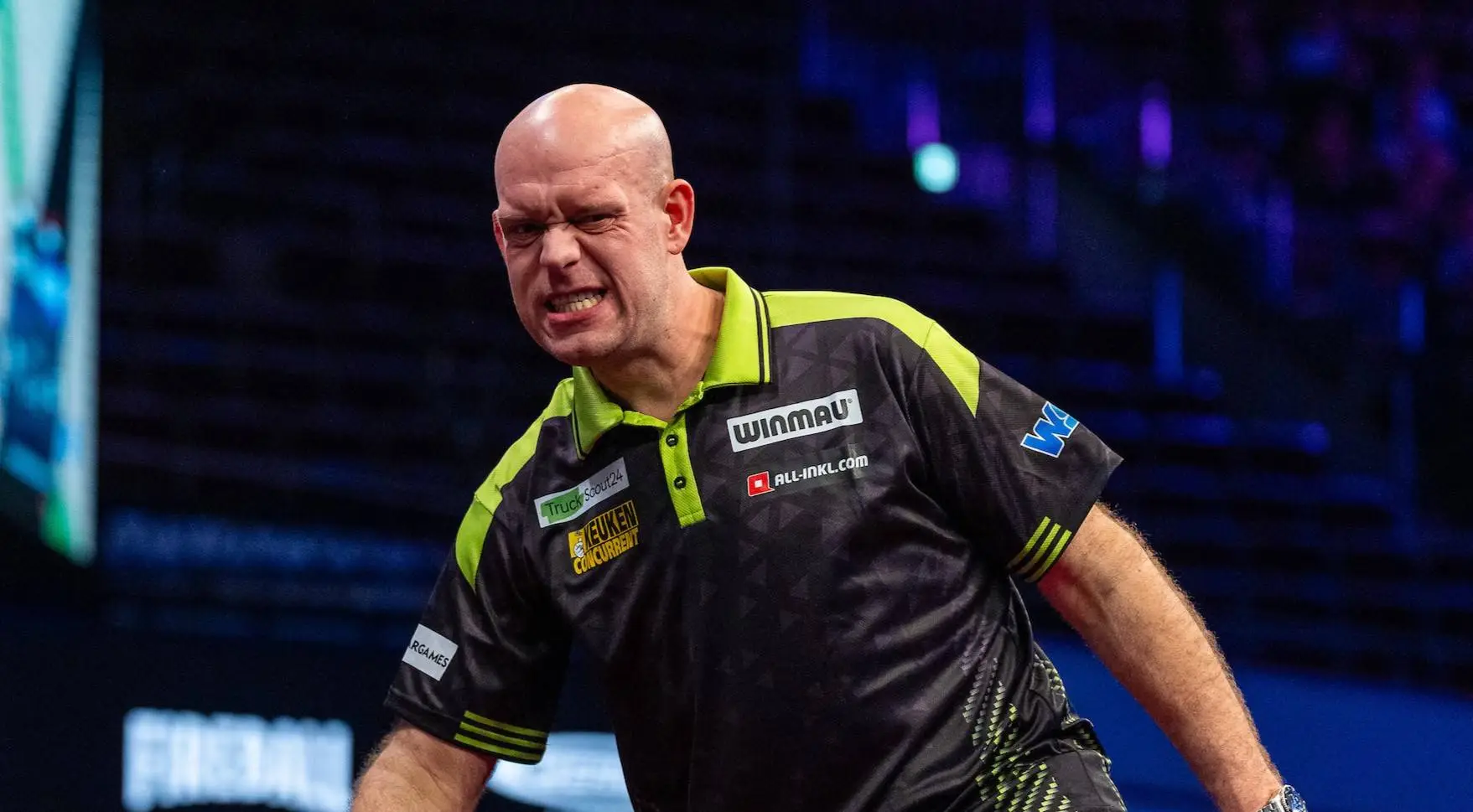
Michael van Gerwen is by far the most successful player in the history of the PDC Pro Tour. The Dutchman now stands on 90 tournament wins and passed Phil Taylor in 2019, who remained on 70 titles. Gary Anderson follows at a respectful distance with 38 victories.

Michael van Gerwen has for some years been regarded as the most successful player ever on the Euro Tour
11. What does the 2026 PDC Pro Tour season look like?
The PDC Pro Tour season is bigger than ever in 2026. A total of 34 Players Championship tournaments will be played. These floor events are staged during the week, usually on Mondays and Tuesdays, but sometimes switch to Wednesday and/or Thursday.
The first Pro Tour double-header will be held in Hildesheim on 02/09/2026 and 02/10/2026. Alongside Hildesheim, Den Bosch, Leicester, and Wigan also hosted these Players Championship events. The final two floor tournaments take place on 11/04/2026 and 11/05/2026.
The Euro Tour circuit consists of fifteen tournaments, which are normally played from Friday through Sunday. The only exception is the Euro Tour event in Munich, which, due to the Easter weekend, is staged from Saturday through Monday.
The Polish city of Krakow has the honor of opening the Euro Tour season from 02/20/2026 through 02/22/2026 with the Poland Darts Open, also the first ever PDC ranking tournament in Poland. After visits to Göttingen, Wieze, Munich, Sindelfingen, Graz, Riesa, Kiel, Bratislava, Leverkusen, Budapest, Prague, Antwerp, and Basel, the final Euro Tour weekend will be held in Maastricht from 10/16/2026 through 10/18/2026.


Samuel GillChief Content Officer
Samuel Gill is the Chief Content Officer (CCO) of DartsNews.com, a role he has held since 2020. He is responsible for editorial governance across the platform, including setting content standards, overseeing accuracy and consistency, and guiding long-term editorial strategy across professional darts coverage. Since joining, he has contributed more than 10,000 articles and editorial pieces, playing a central role in the development and daily operation of the site.
Based in Leicester, Samuel has extensive experience in darts media and has been closely involved in coverage of the professional darts circuit for several years. Within the UK darts community, he is a recognised figure known for his consistent editorial output and ongoing reporting on major tournaments and developments across the PDC calendar.
In his current role, Samuel works closely with editors and writers to ensure content meets clear journalistic standards, with a focus on source verification, editorial consistency, and timely updates when new, confirmed information becomes available.
claps 2visitors 1
Just in


Popular news

Latest comments
- She is a professional. If darts is her income, she is a professional. Same as Adrian Lewis, Martin Adams. A tour card just means someone can play on the PDC tour. You could even make a case that Clayton wasn't a professional (until recently I believe) because he had employment elsewhere.BandB04-11-2026
- She's technically not a professional though as she doesn't hold a pro tour card.mr-pablo04-11-2026
- Such a shame that lakeside has been reduced to this. Fantastic venue,and previously a great tournament. Not any morerick6703-11-2026
- Seems to me that the top 16 players pick and choose whatever they want to play. Good,all the money will get spread out more. They get more money from exhibitions than tournaments so let them all withdrawrick6703-11-2026
- Play all legs and the winners split the pot. Luke gets the lot of he wins them all. If your occupation is darts player you can't enter, regardless of ability.BandB01-11-2026
- I'm quite a jaded person all things considered, but to be honest I found Beat Luke Littler to be pretty entertaining. It certainly wasn't seamless, which is to be expected given the lack of precedence, but I actually think the pacing was pretty good, the production was impressive, and there was a good sense of humour and levity to it. I think it was a very ambitious undertaking but one that, for the most part, paid off. I liked the system with the four pots and I think it added to the drama and intrigue. I enjoyed seeing the diverse range of entrants and learning about their backstories. I think the interactivity was pretty clever and well-integrated. The panel was a little incoherent at times; Lee Mack shone however, and his improvisational skills were appreciated during some more awkward interstitial moments. As far as the darts is concerned, it was a shame that the format didn't allow Littler to get into full flow. You obviously don't want him to steamroll everyone but you want to feel like you're getting the full Littler package rather than seeing him struggling to get out of first gear. I will say that his leg against Jayden Walker was very impressive, but it was mostly downhill from there. The attraction revolves around Littler being this untouchable, indomitable force, yet the format doesn't really allow him to fulfil that characterisation. As for Fallon Sherrock, she was mightily impressive and deserved the victory. It is a testament to her unshakeable character that she was able to bang in a 14-darter under such mind-bending pressure. Everything that has been said about the misleading marketing is valid, though they were clear about their eligibility criteria and were able to offload the responsibility somewhat by bringing the viewers into the decision-making process in real time. What is clear though, is that Fallon played the game according to the rules, and she should not be criticised for that, much less abused. I will admit though that it is a kick in the teeth for those true amateurs who committed time and money to the course, and I would also question those who think pub players would have no chance, given that some of Littler's winning legs were dispatched in 7 visits to the board! The great thing about darts is that it isn't so much that amateurs cannot replicate the feats of brilliance pulled off by professionals of the sport, than it is that they simply cannot replicate the consistency of their output, something that this format almost entirely removes from the equation. It should also be noted that, financially, Fallon certainly stands to benefit much less in relative terms from the paycheque than would your average pub thrower, as I'm sure she nets a fair income from the lucrative exhibition circuit alone. What I do hope is that she might use this as an opportunity to really build up a head of steam heading into the new season, as it seems long overdue that she come through Q-School and really take it to the pros on a week-in week-out basis, but whatever she chooses to do, she has certainly achieved enough already for one if not several lifetimes, so who am I to dictate terms? To conclude though, I will state once again that I found Beat Luke Littler to be a pretty enjoyable evening of entertainment. I do feel for the contestants who never actually had the chance to try their luck against the world #1, although I suppose it comes with the format, but all which inevitably raises the question: will Netflix be tempted to do it all again next year? It's hard to say. Whether it would be financially viable, I can't weigh in there. One point I have been making though, and which I touched on earlier, is that the entire concept relies on a public perception that Littler is more or less unbeatable, and that certainly hasn't been the case of late. If the execs had been trying to pitch the show in recent months while Littler has seemed vulnerable, rather than when he was mopping up almost every major title on the calendar, it would certainly be a tougher sell. We will have to see in about 6 months' time whether Littler can still reliably command perception as a near-unstoppable force in darts, and then we'll have a clearer idea about whether we should expect a second helping. Even as a one-off experiment though, and with all the controversy taken into account, I still don't think they disgraced themselves by any means, and that will probably be my lingering assessment of the event when all is said and done.Deduce635801-11-2026
- Fair play to Fallon. But...shows the mockery when a professional players wins what was meant to be an amateur v Pro event, Littlers performance was poor, and what about the players who didn't get a game? Would have been better if the pot was split amoungst all the winners and they all got a leg.BandB31-10-2026
- Not even slightly interestedrick6730-10-2026
- And yet the PDC has decided to aggravate this problem by doubling the Players Championship Finals field from 2027. I can't imagine there will be fewer withdrawals next year with even less reason to turn up. I can only hope that a whole slew of Challenge Tour top-up players receive enough prize money in the absence of much of the elite, that some of the more complacent among them struggle to scrape into even a heavily diluted field! More semi-pro players will get to test their mettle, but the standard of competition will be much inferior. It could hardly be said that the Players Championship series will provide an opportunity for darts' second string to test their Tour Card credentials anymore, but at least it will underscore the achievements of those Challenge Tour players of current and previous years, who were able to prove themselves as more than capable of competing with, and beating, the elite of the sport on a consistent basis, and reaping the due rewards.Deduce635828-10-2026
- No point in being there? Champions want to win.Deduce635828-10-2026