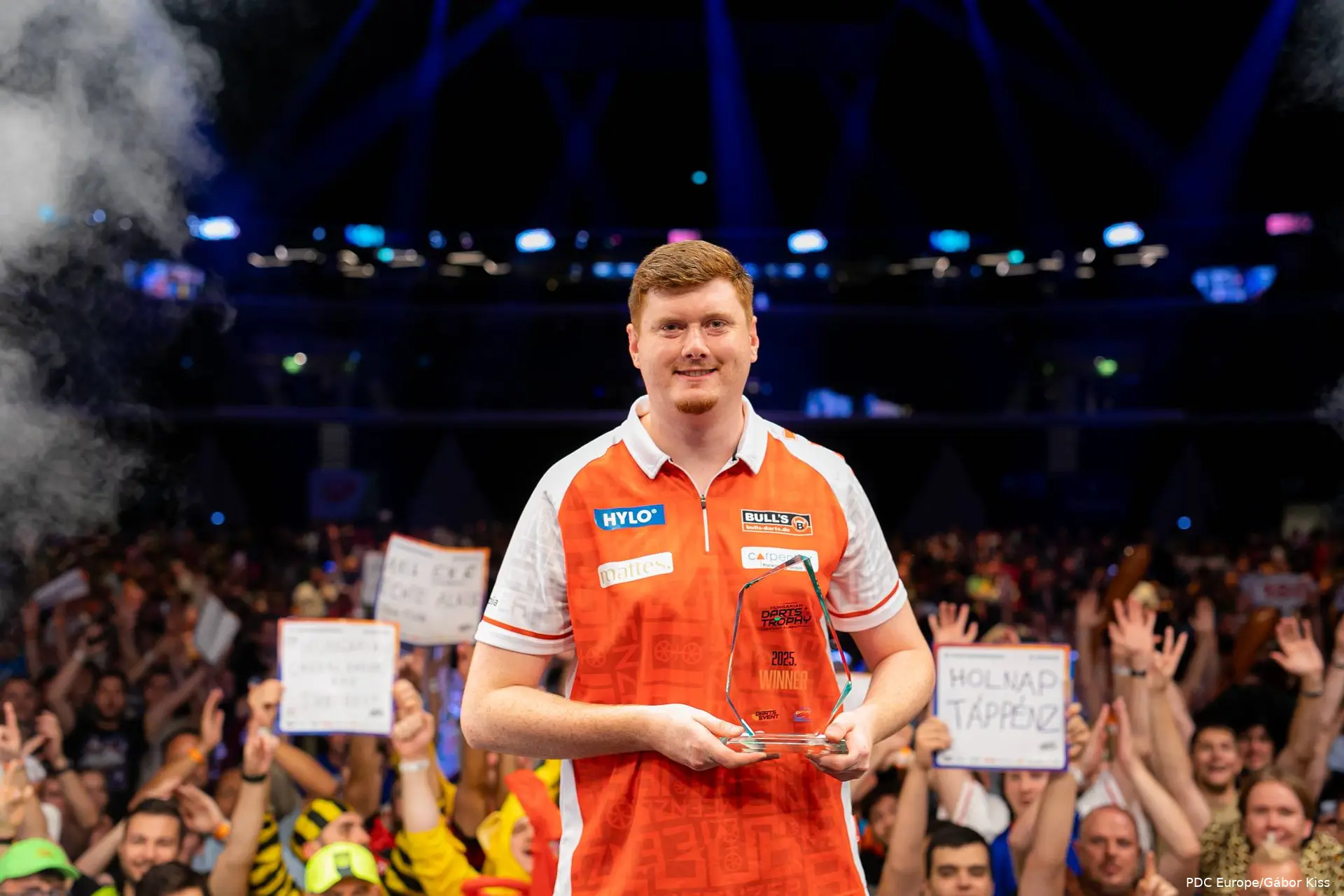
Niko Springer has etched his name into the history books. The 25-year-old from Mainz claimed his first European Tour title in stunning fashion, lifting the Hungarian Darts Trophy after overcoming one of the toughest routes imaginable.
ADVERTISEMENT
Across a high-class week in Budapest, Springer defeated a host of world-class names to capture the biggest success of his career so far. His path to glory ran through Gian van Veen, Damon Heta, Rob Cross, Luke Humphries, Josh Rock, and finally Danny Noppert – all players ranked inside the world’s top 18.
Here, we look at the key factors that powered Springer to his maiden PDC title.
1. Timing – delivering at the decisive moment
In darts, everything can hinge on timing. Springer, who had previously struggled to seize key chances, showed a new-found maturity in Budapest.
His response under pressure was most striking in the quarter-final against Luke Humphries. After the world number one levelled at 2–2, Springer reeled off an 11-darter. At 4–4, he produced back-to-back 11-darters to reassert control, sending out a clear message: he can now go toe-to-toe with the very best at the critical moments.
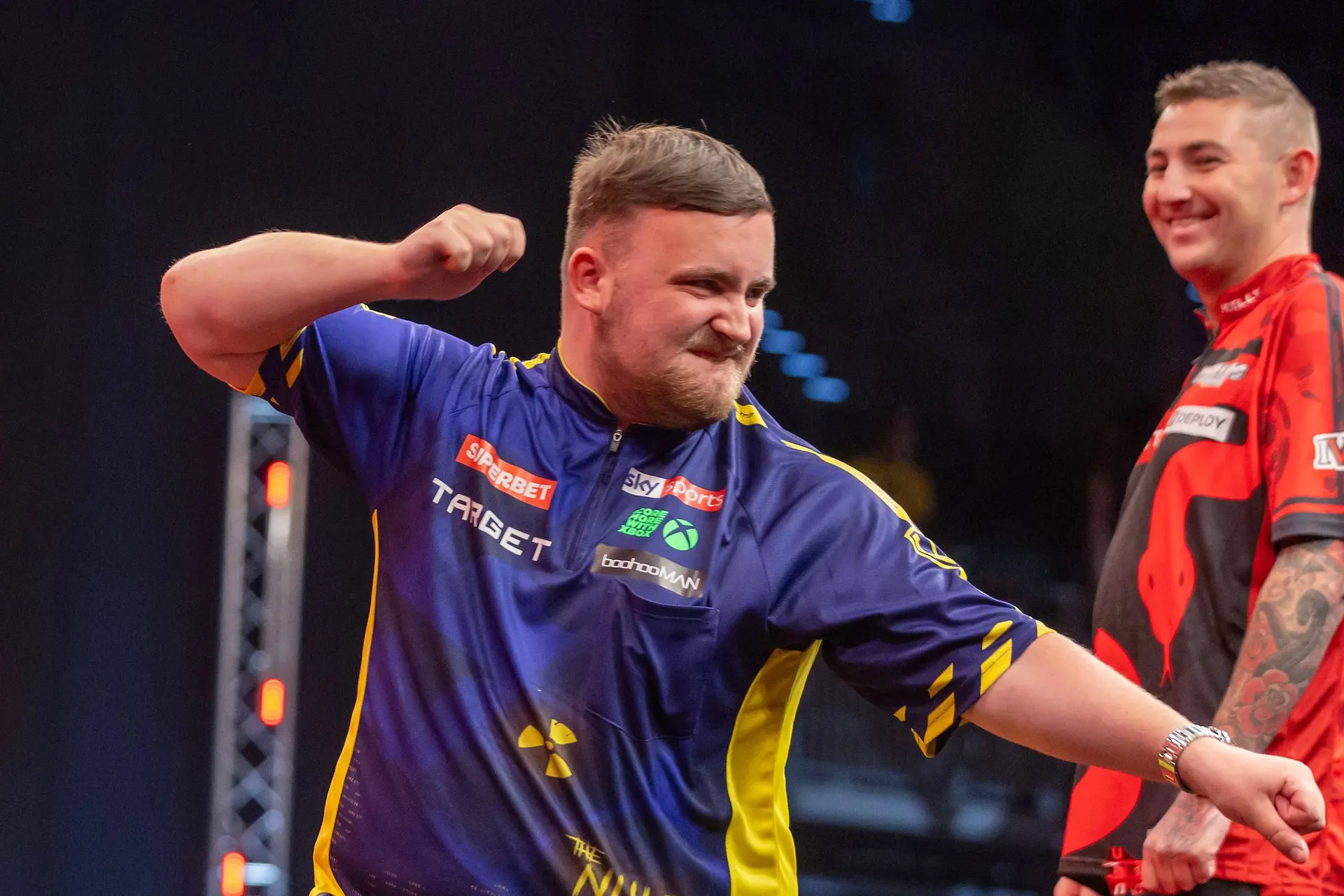
The semi-final against Josh Rock offered more of the same. Rock’s spectacular 88 bull finish was met with a magnificent 170 checkout from Springer. Even when he missed out on a chance to move ahead in the seventh leg, he responded with eight perfect darts in the next. In the decider, he held his nerve, taking out 31 with his final dart in hand.
ADVERTISEMENT
In the final, timing once again proved decisive. Trailing 4–5, Springer pinned a 120 checkout on tops, then found double 20 to make it 6–6. When Noppert faltered in the last leg, Springer pounced with a 180 followed by an 82 finish, setting up the title-winning dart. His sense of timing was nothing short of world-class.
2. Consistency – turning talent into titles
For much of his young career, Springer’s main weakness had been inconsistency – flashes of brilliance followed by dips below 90 averages. In Budapest, however, he produced his most stable run of form yet.
His first three matches all saw averages in the mid-90s. Against Humphries, he went over the 100 mark when it mattered most, a level he nearly matched again versus Rock. Only in the final did his scoring dip below 90, but crucially, his timing and resilience carried him through.
This week, Springer delivered solid, reliable performances from first dart to last – the kind of stability that transforms promise into silverware.
ADVERTISEMENT
3. Double success – from weakness to weapon
Earlier this year, missed doubles were costing Springer matches. In Budapest, that weakness became a strength.
He started as he meant to go on, hitting 75% of his doubles against van Veen. He followed up with 50% against Heta and kept up strong figures against Cross and Humphries. In both the semi-final and final, his finishing hovered over 40%.
Across the tournament, Springer landed over 50% of his doubles – an elite standard that proved the difference in tight contests.
4. Mental strength – calm under fire
ADVERTISEMENT
Beating Humphries, Rock, and Noppert in succession requires more than scoring power – it demands ice-cool mentality. Springer showed that in abundance.
From the opening rounds, he looked composed and assured. Against Humphries, his response to pressure was emphatic: two 11-darters immediately after being broken at 4–4. When Humphries attempted to disrupt his rhythm late on, Springer calmly checked out 58 on tops in one dart.
In the semi-final, Rock missed match dart before Springer clinically took out 31 with his final dart. In the final, despite falling behind early, Springer refused to panic, fighting his way back and showing the stronger nerve when it mattered most.
5. Comeback ability – refusing to fold
Springer’s resilience was another defining factor. Time and again, he refused to let setbacks derail him.
ADVERTISEMENT
From 0–2 down against van Veen, he won five of the next six legs to seal a comfortable 6–3 victory. Against Humphries, he twice surrendered leads but responded with even stronger play.
In the semi-final, he fought back from 1–3 behind against Rock, and in the final he trailed for long periods before striking decisively in the decider. His ability to turn matches around made him nearly unstoppable.
Conclusion – Mainz’s man steps into the spotlight
With this triumph, Niko Springer has sent a clear message: he is no longer just Germany’s brightest prospect, but a proven title-winner on the big stage. His scoring was steady, his finishing clinical, his timing impeccable, and his composure outstanding.
The Hungarian Darts Trophy is more than just his first PDC title – it is a statement that Springer belongs among the game’s elite. Alongside Martin Schindler and Ricardo Pietreczko, he is spearheading a golden era for German darts.
ADVERTISEMENT
Expectations were already high, but Springer has surpassed them. The way he fought through a world-class field has whetted appetites for what comes next. This could well be the dawn of a new chapter – the rise of Niko Springer as a genuine force at the very top of world darts.

Samuel GillChief Content Officer
Samuel Gill is the Chief Content Officer (CCO) of DartsNews.com, a role he has held since 2020. He is responsible for editorial governance across the platform, including setting content standards, overseeing accuracy and consistency, and guiding long-term editorial strategy across professional darts coverage. Since joining, he has contributed more than 10,000 articles and editorial pieces, playing a central role in the development and daily operation of the site.
Based in Leicester, Samuel has extensive experience in darts media and has been closely involved in coverage of the professional darts circuit for several years. Within the UK darts community, he is a recognised figure known for his consistent editorial output and ongoing reporting on major tournaments and developments across the PDC calendar.
In his current role, Samuel works closely with editors and writers to ensure content meets clear journalistic standards, with a focus on source verification, editorial consistency, and timely updates when new, confirmed information becomes available.
claps 0visitors 0
Just in

Popular news
Latest comments
- I agree,I can't believe the lack of coverage of this sad loss. Always enjoyed watching him,but I guess now it's all about littler,well it seems that way. Darts has sadly lost a good manrick6717-10-2026
- In the absence of a report regarding the death of Stefan Lord, I'll assist. An excellent player in the late 70s and early 80s, he actually won the now defunct 3rd place match at two World Championships and a couple of the News of the World Championships. A fabulous player and easily the best Swedish player ever. Rest peacefully Stefan.richieburnettrocks16-10-2026
- Joking aside, it is the second most watched sport on sky (more than golf, F1 etc) behind football only, and in participation is second to only football and swimming. It doesn't get the attention or sponsorship of "bigger" sports because it's not as sexy, but it's right up there.BandB13-10-2026
- i love darts but you can't seriously believe it's the second most popular sport in the uk. even top five is pushing it. it may be the fastest growing, though.colt13-10-2026
- I'm a big Clayton fan, but he's got this completely wrong. Qualification criteria exists for a reason - so just as failing to make the top 32/64 for the Euro championships/PT Finals means you miss out, so does not lifting a title for this one.26sForFun12-10-2026
- The players who deliberately slow the game down are usually boring and win very little in the way of silverware. Horrible to watch.MrYnyslas197112-10-2026
- [“The Gentle” then used a sweeping and questionable phrase...] You anglocucks are hilariously finished in every sense of the word.Critical99911-10-2026
- I love Jonny but I disagree. The Grand Slam was always supposed to be "champion of champions" type competition. If the top 16 are guaranteed participation in everything there will be so much less jeopardy involved in qualifying and each major tournament will lose its unique flavour which the PDC has worked hard trying to develop. I enjoy following the qualification races towards the end of the year, and while consistency should have its rewards, the truth is Jonny hasn't reached a major final all year or won a single event on the Pro Tour. Being consistent is one thing, but that alone should have consequences as the sport's elite should not be prepared to accept consistently strong performances, their foremost motivation should be to win and this should be what separates them from the rest, not the consistency of their performances. Jonny is expecting that losing should be enough; it shouldn't be, at least not as far as the Grand Slam is concerned.Deduce635811-10-2026
- Well being honest,it doesn't matter what level you play at, there's always someone who slows it down to suit themselves,and extra swig of water, replacing flights, asking the ref what the score is. It happens wherever. I'm not saying it's professional,but I'm sure we've all seen it beforerick6711-10-2026
- Agree completely. Not sure how a ranking event can have a criteria not based on rankings. And he right on popularity. In the UK second only to football.BandB11-10-2026
Loading