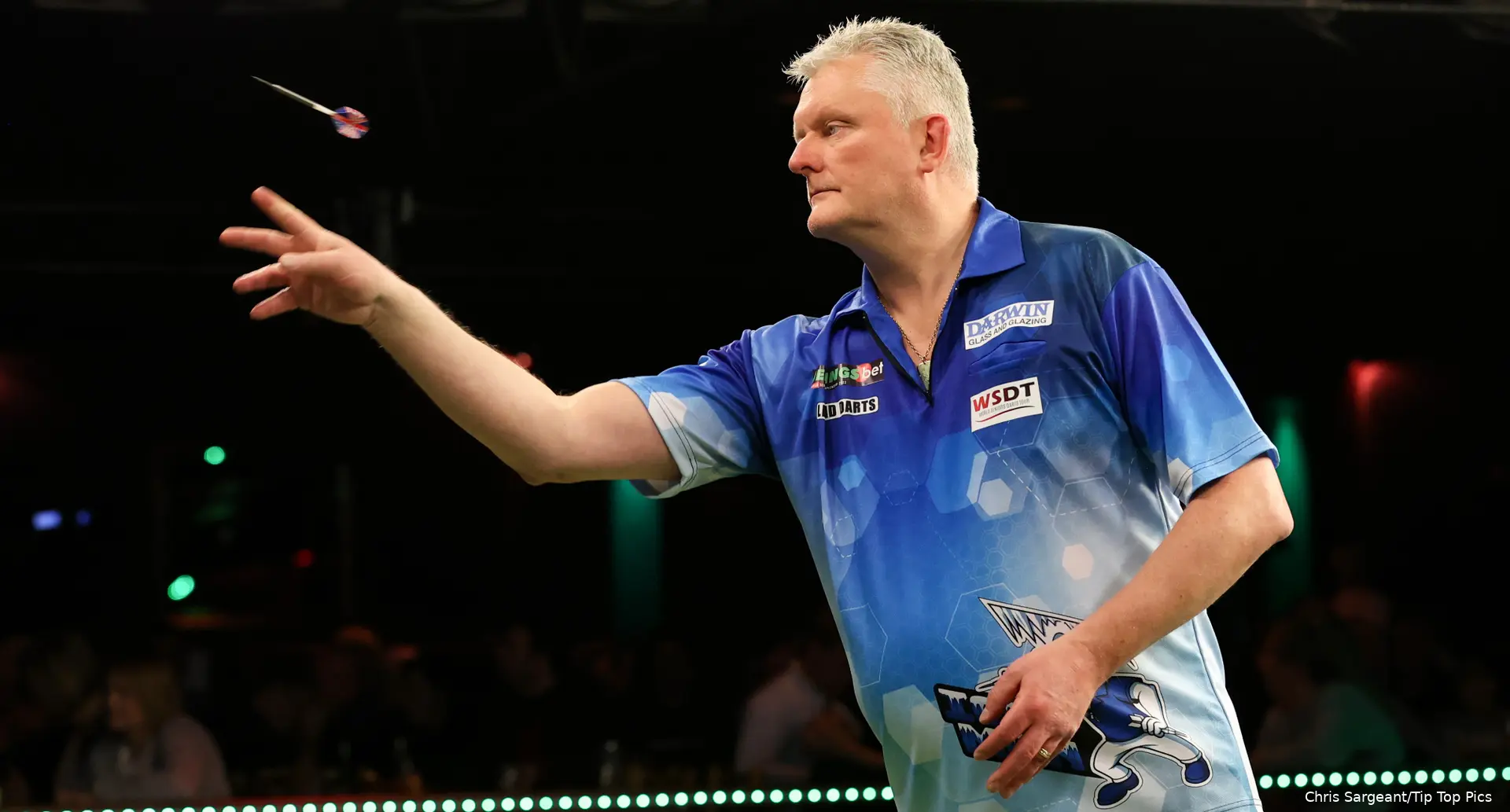
In this recurring feature, we regularly travel back in the day to revisit a darts player from the past. Today, it's the turn of the original iceman, Alan Warriner-Little.
ADVERTISEMENT
Alan Warriner-Little was born on March 24, 1962, in Lancaster, England. For many darts players, a professional career begins with years of practice as a youngster, local tournaments, and dreams of one day reaching the big stage. Warriner-Little's journey was different. Before becoming one of the most recognizable names from the early years of professional darts, he worked as a psychiatric nurse and even appeared as a contestant on a popular British television show.
In 1987, Warriner-Little appeared on Bullseye, the famous ITV game show where contestants combined general knowledge with throwing darts. A year later, he was invited back to showcase his darts skills for charity, recording a score of 257.
Looking back, those television appearances proved to be a sign of much bigger things to come. Not long afterwards, Warriner-Little established himself among the very best players of his generation.
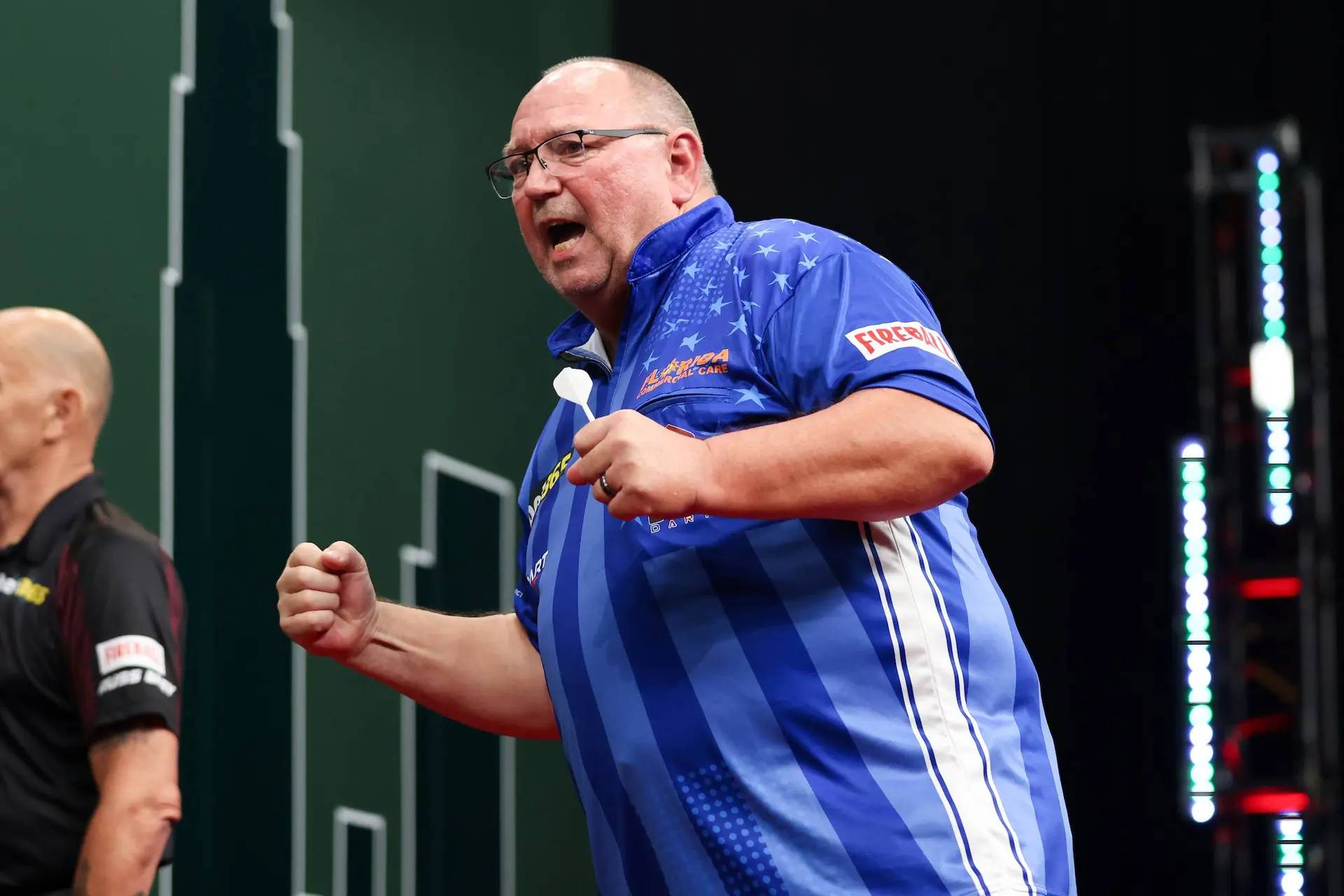
Eight missed match darts against Jocky Wilson
His first appearance at the BDO World Championship came in 1989. Warriner-Little made an immediate impression by defeating fellow Englishman Arnie Bunn 3-0 in the opening round. However, his debut ultimately ended in one of the most painful defeats of his career. In the second round, he faced Jocky Wilson, who was among the world's elite at the time.
The match went all the way to a sudden-death leg. Warriner-Little was handed no fewer than eight match darts to seal victory but failed to convert any of them. Wilson took full advantage and completed the comeback. The Scot would go on to win the entire tournament, becoming world champion for the second time in his career.
ADVERTISEMENT
Although the defeat was a bitter blow, the 1989 World Championship proved to be only the beginning of Warriner-Little's rise. He reached the quarter-finals in both 1991 and 1992, increasingly establishing himself as a player to be reckoned with.
His major breakthrough came in 1993. Warriner-Little reached his first World Championship final, where he faced one of the sport's greatest names, John Lowe. Lowe ultimately proved too strong, winning the final 6-3.
Despite the defeat, the tournament confirmed Warriner-Little's status as one of the game's leading players. His performances even propelled him to the top of the world rankings.

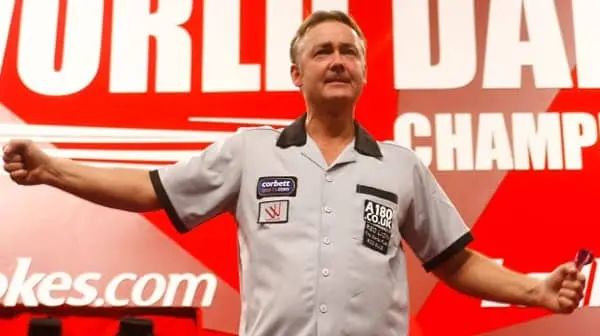
Alan Warriner-Little during his prime.
Part of the revolution
ADVERTISEMENT
Shortly after the 1993 World Championship final, the professional darts landscape changed dramatically. A group of leading players decided to break away from the British Darts Organisation (BDO). Warriner-Little joined the group and became part of the movement that ultimately led to the creation and growth of the Professional Darts Corporation (PDC).
In the years that followed, Warriner-Little remained a regular fixture at the sport's biggest tournaments. His World Championship record was remarkably consistent. He reached the quarter-finals on seven occasions: 1994, 1996, 1997, 2000, 2001, 2004 and 2006.
He also reached the semi-finals twice, in 1999 and again in 2003. Another World Championship final would elude him, but his consistent performances made him one of the most respected players of that era.
Away from the World Championship, Warriner-Little also enjoyed significant success. He reached the World Matchplay final twice, in 1997 and 2000, but lost both title matches. In 1998, he also finished runner-up at the World Masters.
ADVERTISEMENT
Greatest success in 2001
The absolute highlight of his career came in October 2001. Warriner-Little captured the World Grand Prix title, securing one of the biggest trophies of his career.
During the same tournament, he also demonstrated not only his experience but his exceptional scoring ability. In his opening-round match against Andy Jenkins, he won 2-0 in sets while averaging 106.45. At the time, it was the highest winning three-dart average ever recorded in a match played under the World Grand Prix's double-start format.
Three years later, Warriner-Little had another opportunity to win the World Grand Prix. He returned to the final in 2004 but had to settle for runner-up.
His career was ultimately defined by a remarkable blend of success and near misses. He won one of darts' biggest titles, reached multiple major finals, and spent years among the world's very best players, yet also saw several golden opportunities for even greater success slip away.
ADVERTISEMENT
From player to influential voice
Although Warriner-Little is no longer competing as a top professional on the biggest stages, his role within the darts world is far from over. He remains active on the exhibition circuit and spent many years working as a commentator for ITV, sharing his knowledge and experience with fans. However, at the end of last year, ITV decided not to renew its partnership with Warriner-Little. Albeit he said that he found out through social media which provided much discussion and debate.
He also served for a period as chairman of the Professional Darts Players Association (PDPA), the players' union that represents the interests of professional darts players.

Alan Warriner-Little during his time with ITV.
Warriner-Little has therefore completed a remarkable full circle. From a psychiatric nurse who first appeared on television throwing darts during the 1980s, he became a World Championship finalist, world number one and World Grand Prix champion. Later, he became an important voice for players and a familiar face behind the microphone.
ADVERTISEMENT
His career tells not only the story of a successful darts player but also of a man who witnessed several defining moments in the modern history of the sport. From the BDO era and the players' breakaway to the development of the PDC, Warriner-Little was right at the heart of it.
World Championship results of Alan Warriner-Little
| Year | Organisation | Round | Opponent | Result |
| 1989 | BDO | Second Round | Jocky Wilson | Lost 2–3 |
| 1990 | BDO | First Round | Mike Gregory | Lost 0–3 |
| 1991 | BDO | Quarter-finals | Bob Anderson | Lost 3–4 |
| 1992 | BDO | Quarter-finals | Kevin Kenny | Lost 0–4 |
| 1993 | BDO | Final | John Lowe | Lost 3–6 |
| 1994 | PDC | Quarter-finals | Steve Brown | Lost 3–4 |
| 1995 | PDC | Group Stage | Dennis Smith | Second in Group 4 |
| 1996 | PDC | Quarter-finals | Dennis Priestley | Lost 1–4 |
| 1997 | PDC | Quarter-finals | Eric Bristow | Lost 3–5 |
| 1998 | PDC | Group Stage | — | Bottom of Group 8 |
| 1999 | PDC | Semi-finals | Phil Taylor | Lost 3–5 |
| 2000 | PDC | Quarter-finals | Phil Taylor | Lost 0–5 |
| 2001 | PDC | Quarter-finals | John Part | Lost 1–4 |
| 2002 | PDC | Second Round | Colin Lloyd | Lost 4–6 |
| 2003 | PDC | Semi-finals | Phil Taylor | Lost 1–6 |
| 2004 | PDC | Quarter-finals | Phil Taylor | Lost 1–5 |
| 2005 | PDC | Third Round | Paul Williams | Lost 1–4 |
| 2006 | PDC | Quarter-finals | Wayne Mardle | Lost 0–5 |
| 2007 | PDC | First Round | Alan Tabern | Lost 0–3 |
| 2008 | PDC | Second Round | Peter Manley | Lost 1–4 |
Brief comeback
In 2022, Warriner-Little made a brief return to competitive darts. At the World Seniors Championship, he was eliminated in the first round after a 3-0 defeat to American Larry Butler. Warriner-Little averaged below 60 and did not compete again on the World Seniors Darts Tour.
ADVERTISEMENT

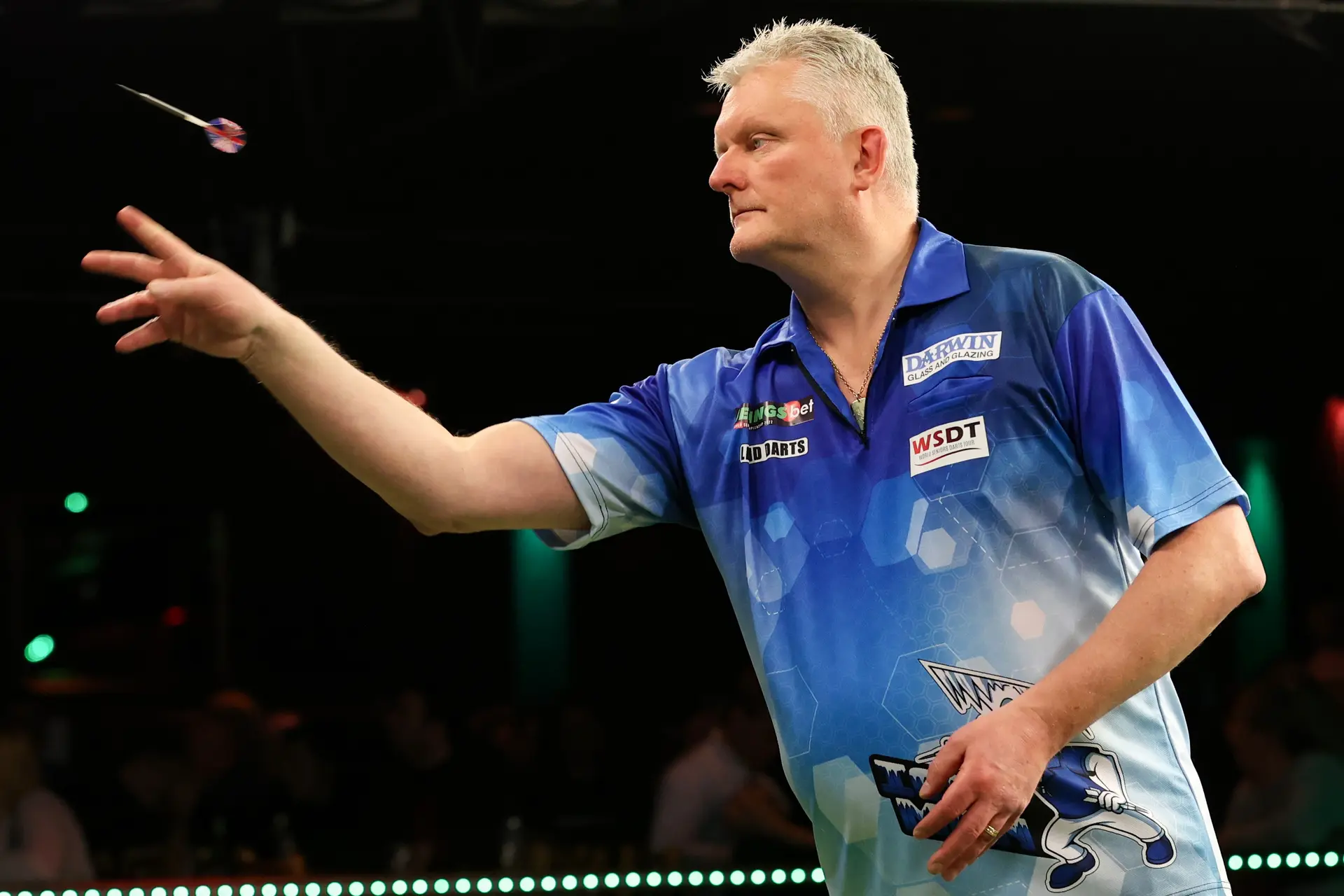
Alan Warriner-Little during his brief comeback.
Warriner-Little's place in darts history
Warriner-Little was never a prolific title winner, finishing his career with "just" one major title. Nevertheless, he should be regarded as one of the finest players of his generation. He spent time as world number one and was a regular fixture in the latter stages of virtually every major tournament.
As mentioned earlier, he also played a significant role in the formation of the PDC, a revolutionary moment in darts history whose benefits players continue to enjoy today. Even after his playing career, Warriner-Little continued to make valuable contributions to the sport as both a commentator and chairman of the players' association, and he remains a highly respected voice within darts.
ADVERTISEMENT
The 'original' Iceman
Finally, there's Warriner-Little's nickname. Although he was often called "Wozza" early in his career, he soon became known as "The Iceman." Today's generation naturally associates that nickname with Gerwyn Price, but Warriner-Little was in fact the first player to wear "The Iceman" on his shirt.
You may also be wondering where his double-barrelled surname came from. Warriner married Brenda Little in 2005 and subsequently added her surname to his own, becoming Alan Warriner-Little.
Kieran WoodDarts Journalist
Kieran Wood is a sports journalist based in Wales and has been active in journalism since 2022. He contributes to DartsNews.com, where he covers professional darts through news, match reports, analysis, and live coverage across the PDC calendar and major tournaments.
A key part of his work is on-site reporting from leading events. Kieran has covered the PDC World Darts Championship in person, reporting daily from the venue and providing first-hand insight from the tournament. During his coverage, he has conducted interviews with leading players including Luke Littler, Luke Humphries, and Gerwyn Price.
He is also one of the leading voices of the English-language Dartsnews Podcast, contributing regular analysis and discussion on developments across the professional darts circuit.
In his reporting, Kieran places strong emphasis on careful sourcing, editorial accuracy, and updating articles when new, verified information becomes available.
claps 14visitors 5
Just in

Popular news

Latest comments
- The players who deliberately slow the game down are usually boring and win very little in the way of silverware. Horrible to watch.MrYnyslas197112-10-2026
- [“The Gentle” then used a sweeping and questionable phrase...] You anglocucks are hilariously finished in every sense of the word.Critical99911-10-2026
- I love Jonny but I disagree. The Grand Slam was always supposed to be "champion of champions" type competition. If the top 16 are guaranteed participation in everything there will be so much less jeopardy involved in qualifying and each major tournament will lose its unique flavour which the PDC has worked hard trying to develop. I enjoy following the qualification races towards the end of the year, and while consistency should have its rewards, the truth is Jonny hasn't reached a major final all year or won a single event on the Pro Tour. Being consistent is one thing, but that alone should have consequences as the sport's elite should not be prepared to accept consistently strong performances, their foremost motivation should be to win and this should be what separates them from the rest, not the consistency of their performances. Jonny is expecting that losing should be enough; it shouldn't be, at least not as far as the Grand Slam is concerned.Deduce635811-10-2026
- Well being honest,it doesn't matter what level you play at, there's always someone who slows it down to suit themselves,and extra swig of water, replacing flights, asking the ref what the score is. It happens wherever. I'm not saying it's professional,but I'm sure we've all seen it beforerick6711-10-2026
- Agree completely. Not sure how a ranking event can have a criteria not based on rankings. And he right on popularity. In the UK second only to football.BandB11-10-2026
- Doesn't matter who's in it,it's boringrick6710-10-2026
- Assuming you qualify as one of the "muppets" in question. Classist too. And since you're so clearly interested in academia, look up "linguistic descriptivism" while you're at it. Oh, and better stay away from the working class sport of darts and maybe offer your insightful analysis to, let's say, croquet instead?Deduce635806-10-2026
- The consequences of being uneducated and grammatically challenged. "To all THOSE muppets not THEM " Everytime I see Arsepinall, I have an image of him wearing a cap, standing behind the counter of a fast food establishment.richieburnettrocks05-10-2026
- I don't understand Littler's reason for playing this tournament.rick6705-10-2026
- James Wade has become James Wide. He has piled on the tonnage considerably, he barely fits in his shirt.richieburnettrocks03-10-2026
Loading