BACK IN THE DAY WITH: Wayne Mardle - the colourful rebel known as 'Hawaii 501' who became the voice of darts
PDC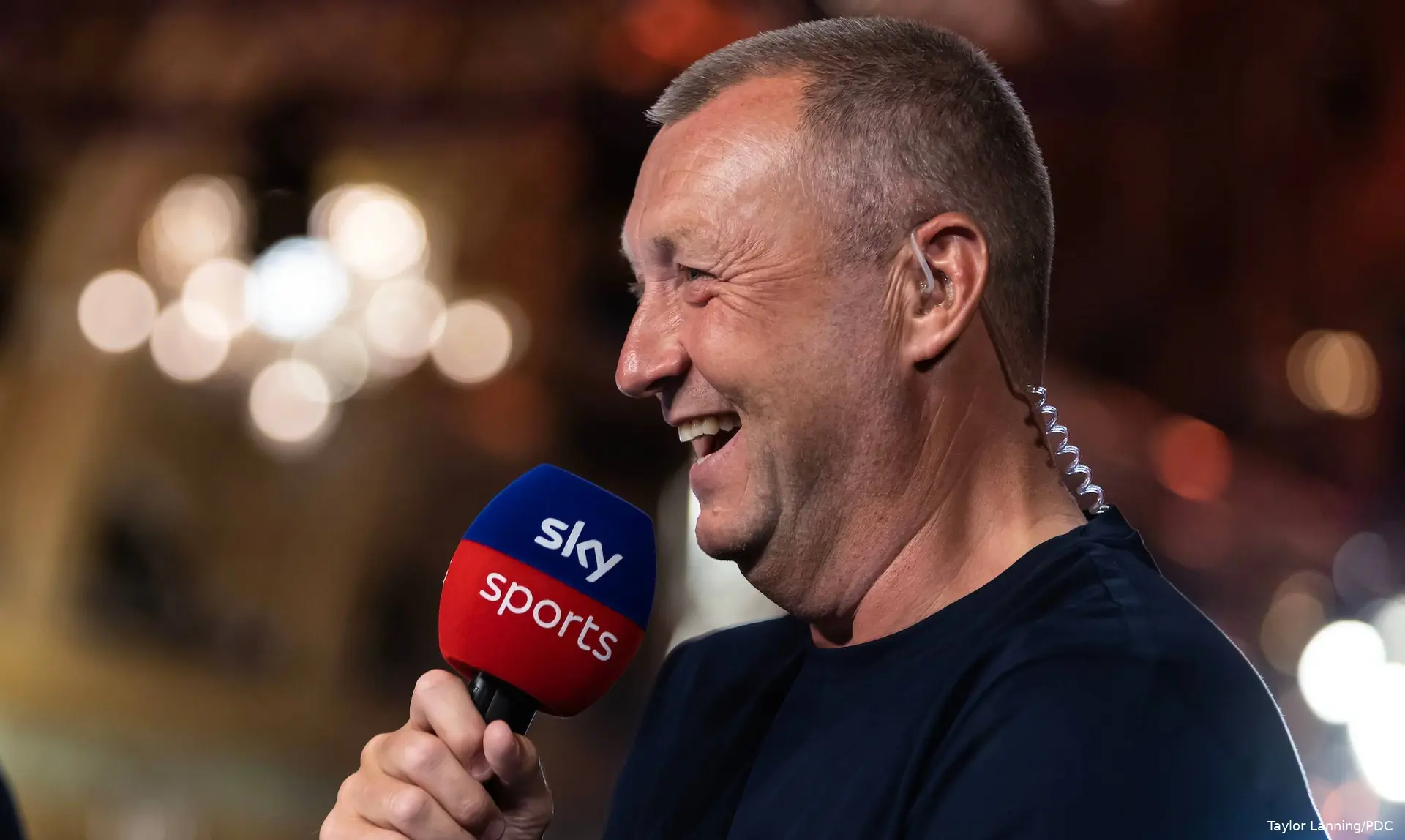
In this series, we regularly look back in the day at the career of a particular darts player. Today, we turn our attention to Englishman Wayne Mardle. ‘Hawaii 501’, as he is nicknamed, is one of the most colourful figures the darts world has ever produced.
ADVERTISEMENT
As a player, the Englishman became an absolute fan favourite, with spectacular matches, painful defeats and some of the biggest moments in PDC history. Although he never became world champion, Mardle left a lasting impression. First through his performances on stage, and later through his outspoken analysis and distinctive commentary style.
Wayne Mardle was born on 10 May 1973 in Dagenham. His story began in Tottenham, in north London. Mardle was just eleven years old when he started playing darts. His father was his first opponent and practice partner. Young Wayne quickly showed that he had talent. Just two weeks after he had seriously started playing darts, he threw his first 180. Not long afterwards, he had already surpassed his father.
His first tournament victory came on his thirteenth birthday in 1986. At the Double Top pub, the young Mardle claimed his first prize. It proved to be the beginning of a long journey that would eventually take him to the biggest darting stages in the world.
Early success with the BDO
Before Mardle definitively chose the PDC, he made a name for himself in the British Darts Organisation (BDO) circuit. His first appearance at the Lakeside World Championship came in 2000. He was eliminated in the first round by Matt Clark.
A year later, however, Mardle showed that he was capable of much more. At Lakeside, he defeated the likes of Co Stompé and Ronnie Baxter before reaching the semi-finals. There, eventual champion John Walton proved too strong. In 2002, Mardle reached the quarter-finals again, but Colin Monk brought his run to an end.
ADVERTISEMENT
The next step in his career came in 2003. Mardle switched to the PDC and made his World Championship debut. His first appearance at the Circus Tavern ended in the third round, where he lost to Phil Taylor. It proved to be the beginning of a special rivalry with the greatest player in the history of the sport.
World Matchplay final
Mardle did not need much time to adapt to the level of the PDC. During his first World Matchplay in Blackpool, he immediately made a major impression. At the Winter Gardens, he defeated reigning world champion John Part, Alan Warriner-Little and Colin Lloyd in succession.
That put him into the final of one of the most important tournaments on the PDC calendar. His opponent? Phil Taylor. Mardle could not prevent Taylor from claiming the title, but his name had been firmly established.
ADVERTISEMENT
The Englishman subsequently became a regular at the top of the PDC. Between 2004 and 2006, he reached the World Championship semi-finals three years in a row. Taylor stopped him in 2004 and 2006, while Mark Dudbridge prevented him from reaching the final in 2005.
Mardle eventually climbed to fifth in the world rankings, the highest position of his career. Yet there was one curious weakness in his game. Darts legend and commentator Sid Waddell once referred to the so-called ‘Mardle Drift’: darts intended for the 20 would regularly end up in the 5 or treble 5.
The Premier League Darts and the ‘Mardle Cup’
Mardle was also one of the players who became a regular presence during the early years of the Premier League Darts. He competed in the first editions in 2005 and 2006 before returning in 2008 and 2009.
ADVERTISEMENT
His first two appearances were particularly difficult, however. In both 2005 and 2006, Mardle finished at the bottom of the table. That unintentionally gave him a unique legacy: last place in the Premier League became popularly known as the ‘Mardle Cup’.
His poor form subsequently cost him his place in the 2007 edition. That year was disastrous for Mardle anyway. At the World Championship, he surprisingly lost in the first round to unseeded Alan Caves. He was then unable to make his mark on a major tournament for the remainder of 2007.
But immediately afterwards came one of the most memorable chapters of his career.
The sensational victory over Phil Taylor
At the 2008 World Championship, Mardle appeared to be back at his best. In the quarter-finals, he faced Phil Taylor, who already had 13 world titles to his name at the time. Taylor appeared to be heading towards another victory and took a 3-0 lead.
ADVERTISEMENT
Mardle refused to give up. He fought his way back into the match and ultimately produced one of the biggest shocks in World Championship history. He defeated Taylor 5-4.
For the first time in the history of the PDC World Championship, Taylor had been eliminated before the final. Following that victory, Mardle was immediately regarded as one of the major favourites for the world title. His semi-final opponent was 21-year-old Kirk Shepherd, a qualifier who was ranked just 142nd in the world at the time.
On paper, the path to the final appeared to be open. But that was exactly where things went wrong. Mardle lost 6-4 to Shepherd. He later admitted honestly that he had not given his opponent the respect he deserved. He described his attitude before the match as too casual. It was one of the biggest missed opportunities of his career. Mardle would never again come closer to a possible world title.
One last Premier League Darts flourish
ADVERTISEMENT
Following his sensational victory over Taylor, Mardle received a wildcard for the 2008 Premier League Darts. Although some followers questioned the decision, Mardle proved on stage that he belonged there.
He enjoyed a solid campaign and eventually finished fifth. He was just two legs behind Adrian Lewis, who finished fourth and qualified for the play-offs. Mardle also showed his class once again at the 2008 World Matchplay. He reached the semi-finals, but James Wade proved far too strong. Wade won 17-5.
Yet Mardle remained a player who knew how to entertain the crowd. His flamboyant appearance, enthusiasm and emotion made him different from many of his fellow professionals.

Wayne Mardle in his usual garb.
An illness brings an end to his top level
ADVERTISEMENT
The downward spiral began in 2009. In the Premier League, Mardle collected just four points from his first nine matches. He was then struck by a virus, forcing him to miss one night of action.
A week later, he appeared ready to return, but he was admitted to hospital the day before the matches. The diagnosis was mumps. Mardle subsequently attempted to return, but had to go back to hospital. Under Premier League rules, he was eventually removed from the tournament and his previous results were deleted.
The physical problems had major consequences. Mardle would later say that his form never fully returned after the period in which he was sidelined by mumps for around six months. His final appearance at the World Championship came in 2010. Against Jyhan Artut, he lost 3-0 in the first round. His average of just 72 was indicative of the problems he was experiencing at the time.
Mardle gradually slipped down the world rankings. Eventually, he even found himself around 85th in the PDC Order of Merit.
Wayne Mardle World Championship results
ADVERTISEMENT
| Year | Tournament | Round | Opponent | Result |
| 2000 | BDO World Championship | First round | Matt Clark | 1–3 |
| 2001 | BDO World Championship | Semi-final | John Walton | 3–5 |
| 2002 | BDO World Championship | Quarter-final | Colin Monk | 4–5 |
| 2003 | PDC World Championship | Third round | Phil Taylor | 3–5 |
| 2004 | PDC World Championship | Semi-final | Phil Taylor | 2–6 |
| 2005 | PDC World Championship | Semi-final | Mark Dudbridge | 4–6 |
| 2006 | PDC World Championship | Semi-final | Phil Taylor | 5–6 |
| 2007 | PDC World Championship | First round | Alan Caves | 2–3 |
| 2008 | PDC World Championship | Semi-final | Kirk Shepherd | 4–6 |
| 2009 | PDC World Championship | Third round | Co Stompé | 0–4 |
| 2010 | PDC World Championship | First round | Jyhan Artut | 0–3 |
From player to commentator – and the remarkable incident with Wilfred Genee
Mardle attempted to qualify for the World Championship again in 2012 through the PDPA Qualifier, but lost 5-0 to Ken Dobson in the preliminary round. Shortly afterwards, he faced an important decision. Because his ranking no longer gave him an automatic Tour Card, he would have had to earn a place on the Pro Tour again through Q School. Mardle decided not to participate. Instead, he chose a new career as a commentator and analyst.
When he made his debut in television, a video from 2005 was also brought back into the spotlight. Mardle had been competing in the Netherlands at the Masters of Darts when, after losing a match, he was interviewed by Dutch presenter Wilfred Genee. A clearly drunk Mardle did not realise that he was live on television, resulting in a hilarious interview. Years later, Mardle was able to laugh about it himself.
His first official commentary work for the PDC came during the 2011 World Championship. He worked alongside, among others, legendary commentator Sid Waddell. He also worked with well-known figures such as Rod Harrington and Eric Bristow.
From 2012 onwards, Mardle became a regular presence at Sky Sports' televised tournaments. His style was completely different from that of many other analysts. While some commentators primarily emphasise statistics and tactics, Mardle brings enormous amounts of emotion and energy.
He is outspoken, enthusiastic and regularly critical. Moreover, he knows the sport from virtually every possible perspective. He knows what it feels like to stand on a stage in front of thousands of people, to surrender a big lead and to play a crucial match under pressure. That experience is precisely what makes his analysis so valuable.
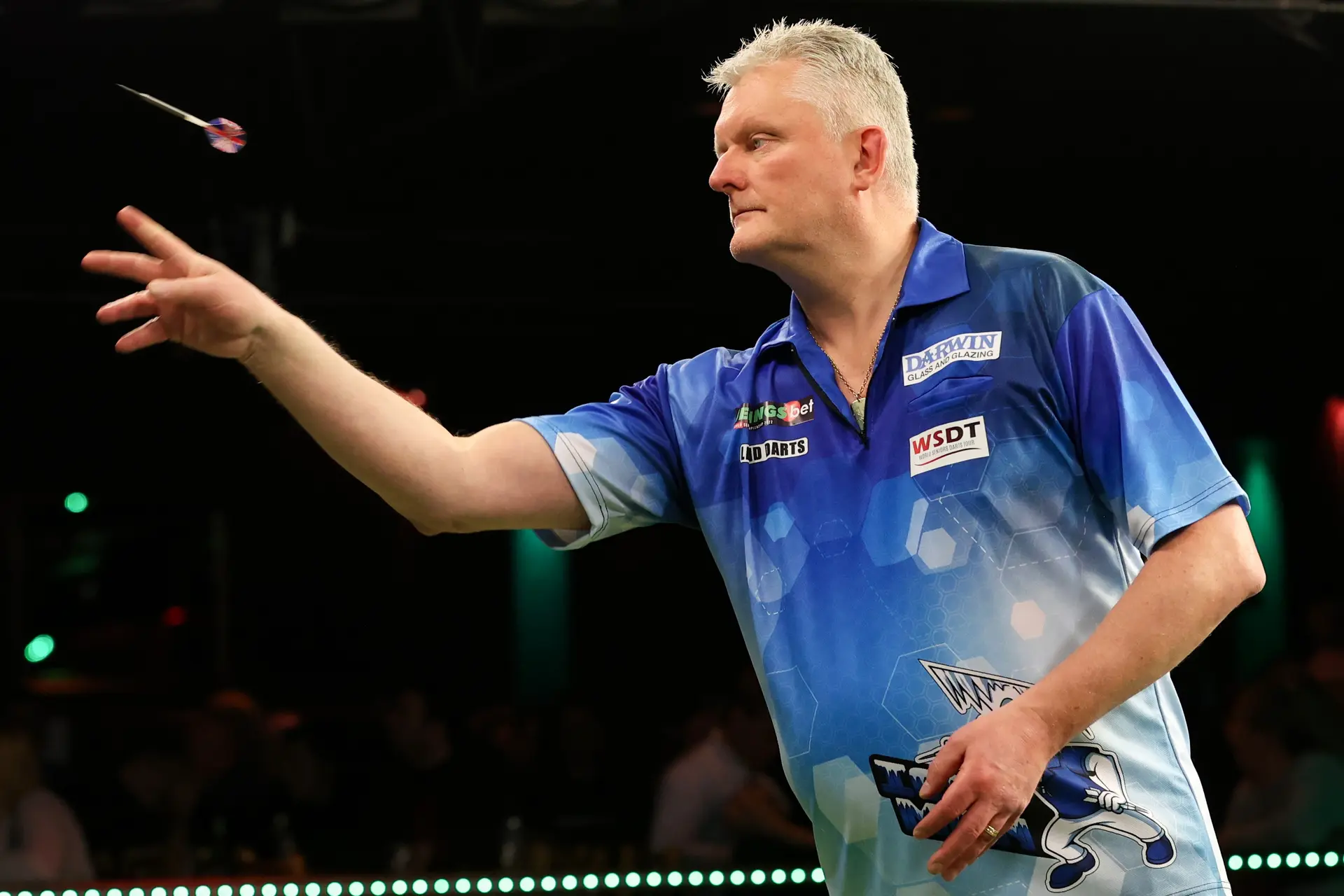
During the World Championship, Mardle has also become known for his own segments in which he rewards the crowd for spectacular outfits, dances, banners or other eye-catching antics. The winners receive a ‘Wayne's World’ shirt.
A life full of highs and lows
In 2006, Mardle co-wrote the book Hawaii 501 – Life as a Darts Pro with Ian Spragg, looking back on his life as a professional darts player. The nickname ‘Hawaii 501’ became an important part of his identity.
His private life has also seen profound moments. In December 2024, it was announced that his wife Donna had passed at the age of 52. The news came shortly before the start of the 2025 World Championship and marked another extremely difficult period for Mardle. Nevertheless, he continued to dedicate himself to the sport he has been involved in since the age of eleven.
His place in darts history
Wayne Mardle ultimately never won the world title. He did, however, reach the World Matchplay final twice, reached the World Championship semi-finals multiple times and defeated Phil Taylor on one of the biggest stages the sport has to offer. His career perfectly demonstrates why darts is about so much more than simply winning trophies.
Mardle was the player who could sometimes shine and sometimes collapse. The man who could defeat Taylor, only to then lose a semi-final against a qualifier. The fan favourite who ultimately transformed himself from professional player into one of the most recognisable voices in the modern darts world.
And perhaps that is his greatest victory. Although Wayne Mardle never became world champion, his name has become inextricably linked with PDC darts. First as a colourful player on the stage, and now as a colourful voice alongside it.
Kieran WoodDarts Journalist
Kieran Wood is a sports journalist based in Wales and has been active in journalism since 2022. He contributes to DartsNews.com, where he covers professional darts through news, match reports, analysis, and live coverage across the PDC calendar and major tournaments.
A key part of his work is on-site reporting from leading events. Kieran has covered the PDC World Darts Championship in person, reporting daily from the venue and providing first-hand insight from the tournament. During his coverage, he has conducted interviews with leading players including Luke Littler, Luke Humphries, and Gerwyn Price.
He is also one of the leading voices of the English-language Dartsnews Podcast, contributing regular analysis and discussion on developments across the professional darts circuit.
In his reporting, Kieran places strong emphasis on careful sourcing, editorial accuracy, and updating articles when new, verified information becomes available.
claps 0visitors 0
Just in
Popular news
Latest comments
- I agree,I can't believe the lack of coverage of this sad loss. Always enjoyed watching him,but I guess now it's all about littler,well it seems that way. Darts has sadly lost a good manrick6717-10-2026
- In the absence of a report regarding the death of Stefan Lord, I'll assist. An excellent player in the late 70s and early 80s, he actually won the now defunct 3rd place match at two World Championships and a couple of the News of the World Championships. A fabulous player and easily the best Swedish player ever. Rest peacefully Stefan.richieburnettrocks16-10-2026
- Joking aside, it is the second most watched sport on sky (more than golf, F1 etc) behind football only, and in participation is second to only football and swimming. It doesn't get the attention or sponsorship of "bigger" sports because it's not as sexy, but it's right up there.BandB13-10-2026
- i love darts but you can't seriously believe it's the second most popular sport in the uk. even top five is pushing it. it may be the fastest growing, though.colt13-10-2026
- I'm a big Clayton fan, but he's got this completely wrong. Qualification criteria exists for a reason - so just as failing to make the top 32/64 for the Euro championships/PT Finals means you miss out, so does not lifting a title for this one.26sForFun12-10-2026
- The players who deliberately slow the game down are usually boring and win very little in the way of silverware. Horrible to watch.MrYnyslas197112-10-2026
- [“The Gentle” then used a sweeping and questionable phrase...] You anglocucks are hilariously finished in every sense of the word.Critical99911-10-2026
- I love Jonny but I disagree. The Grand Slam was always supposed to be "champion of champions" type competition. If the top 16 are guaranteed participation in everything there will be so much less jeopardy involved in qualifying and each major tournament will lose its unique flavour which the PDC has worked hard trying to develop. I enjoy following the qualification races towards the end of the year, and while consistency should have its rewards, the truth is Jonny hasn't reached a major final all year or won a single event on the Pro Tour. Being consistent is one thing, but that alone should have consequences as the sport's elite should not be prepared to accept consistently strong performances, their foremost motivation should be to win and this should be what separates them from the rest, not the consistency of their performances. Jonny is expecting that losing should be enough; it shouldn't be, at least not as far as the Grand Slam is concerned.Deduce635811-10-2026
- Well being honest,it doesn't matter what level you play at, there's always someone who slows it down to suit themselves,and extra swig of water, replacing flights, asking the ref what the score is. It happens wherever. I'm not saying it's professional,but I'm sure we've all seen it beforerick6711-10-2026
- Agree completely. Not sure how a ranking event can have a criteria not based on rankings. And he right on popularity. In the UK second only to football.BandB11-10-2026
Loading