"Don’t pick a fight with the crowd" – Paulke and Hempel criticise Luke Littler’s treatment of the fans
PDC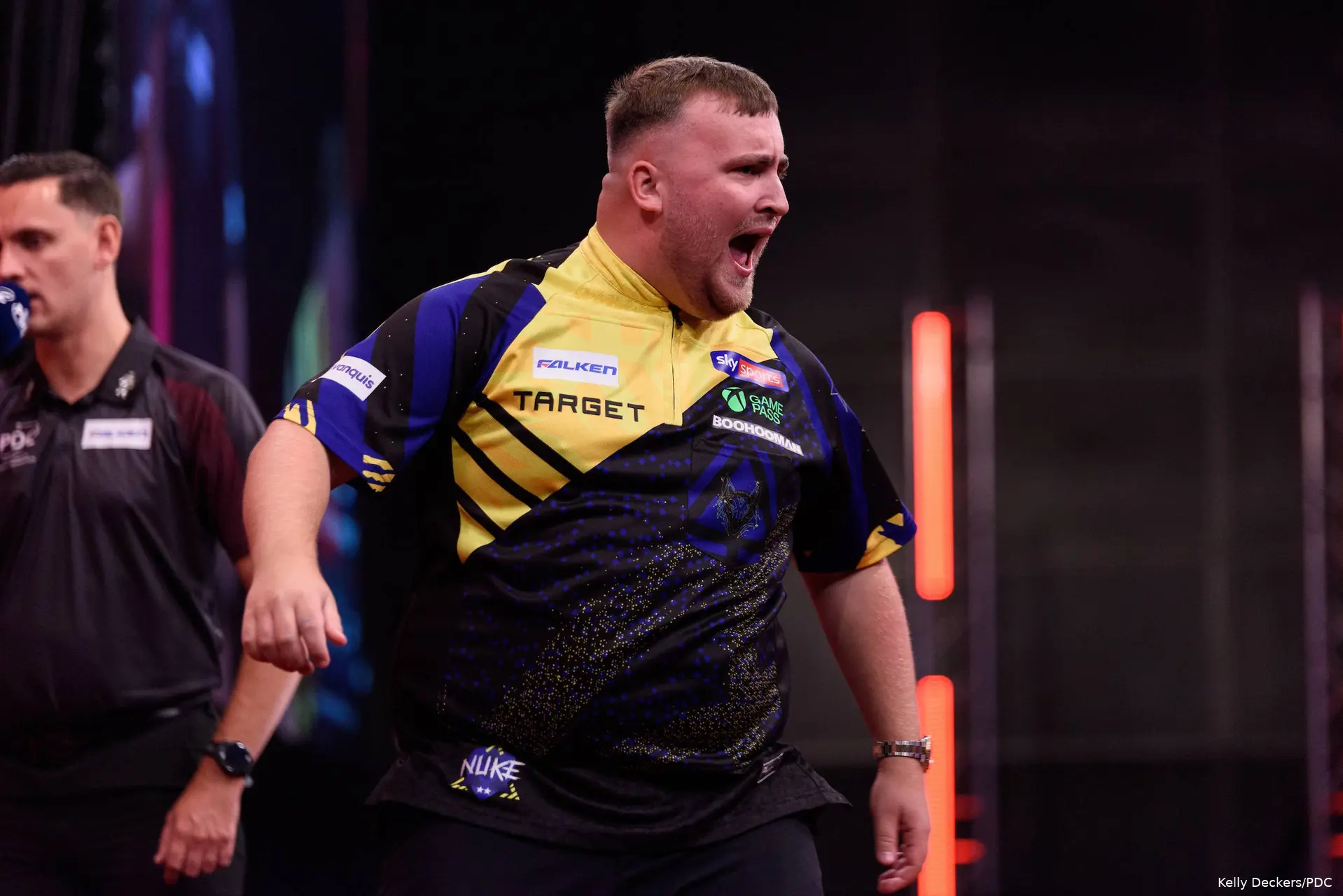
Luke Littler’s clash with the crowd at the World Series of Darts Finals continues to stir debate across the darts world. On the “Game On” podcast, Elmar Paulke and Florian Hempel discussed in depth the Englishman’s responses to the fans in Amsterdam. Both felt his handling of the spectators was wrong. They stressed, however, that Littler’s sporting class and his importance to darts are beyond dispute.
ADVERTISEMENT
Hempel began by asking whether Littler should pick a fight with the crowd early at a Major. Paulke’s answer was unequivocal: “That was a cardinal error.” Littler could be annoyed by the atmosphere and address it afterwards. But repeatedly dragging the conflict onto the stage during the event, Paulke argued, was a mistake.
Paulke did not perceive the mood at the World Series of Darts Finals in Amsterdam as unusually unfair either. “I didn’t find the crowd unfair in Amsterdam; they were just normally loud,” he said.
There were also boos for Littler. “That’s how it is as the world number one: as the best, you polarise.” For Paulke, those reactions did not justify Littler’s repeated run-ins with the fans.
Paulke recalls the Noppert incident
Paulke particularly remembered Littler’s opener against Danny Noppert. The Dutchman at one stage led 3–1, even though, in Paulke’s view, he hadn’t settled well. Littler, by contrast, struggled on the doubles from the start.
Then came a moment Paulke found notable: Noppert celebrated a visit and clenched his fist close to Littler. He then appeared to want to apologise for the gesture. But, according to Paulke’s observation, Littler wouldn’t let him approach. “That’s when I thought: Hey, what a character,” Paulke said of Littler’s reaction. He felt the incident lingered with Noppert, while Littler fought his way back and won.

Luke Littler did beat Danny Noppert at the World Series of Darts Finals but later fell to Jonny Clayton
ADVERTISEMENT
Afterwards, however, Paulke missed Littler’s usual energy. In the following matches, Littler seemed unusually calm and low on emotion. “That wasn’t Luke Littler at his best,” he said. The row with the crowd was therefore also a factor for Paulke regarding Littler’s focus.
Hempel, in this context, recalled Littler’s later match against Jonny Clayton. When the Englishman missed doubles several times late on, he turned to the spectators again. Hempel found it difficult to blame them across the board. The arena might have been louder than it sounded at the commentary position. But, in his view, the reactions were not unusually intense.
“The crowd is still the crowd”
Hempel pushed back especially against the idea that spectators must behave identically on every visit. “The crowd is still the crowd and wants to party, wants to enjoy the evening,” he said on the podcast. From his perspective, it is only natural that Dutch fans back their own players.
Hempel distinguished between a lively atmosphere and targeted disruption. Isolated whistles, boos, or audible reactions on darts at double can happen. “Isolated whistles that do interfere, the really unfair stuff we’ve already seen – I exclude that. That’s not on,” he made clear. What he perceived in Amsterdam mostly did not fall into that category.
ADVERTISEMENT
He therefore felt it was wrong for Littler to keep confronting the fans. “The best thing is to silence the crowd, definitely. But don’t pick a fight with the crowd,” he said. Spectators had paid for their tickets and wanted a night out. As long as their reactions stayed within bounds, a player had to handle it.
Paulke also did not see Littler as the only target. Ross Smith was booed in his match against Gian van Veen. Gerwyn Price and James Wade know hostile reactions as well. Precisely for that reason, Paulke was irritated that Littler made his Amsterdam experience such a big talking point.
Hempel on his own experience in Salzburg
Hempel spoke about a match against Mensur Suljović in Salzburg. He was booed heavily from the walk-on. “It was incredibly uncomfortable when 1,500 behind you are whistling,” he said. He still didn’t complain because he knew many Austrians wanted to support Suljović.
For Hempel, it is part of a darts pro’s job to play under such conditions. “Face your challenge,” he urged. Littler is also good enough to flip the mood with heavy scoring. With his 180s and big moments, he can often win the crowd over anyway.
ADVERTISEMENT
Paulke also criticised Littler’s suggestion that he might skip European Tour events in the Netherlands and Germany. The Englishman still travels to these countries for awards ceremonies, Paulke noted on “Game On.” He found it contradictory to accept the honours yet question tournaments because of fan reactions: “I can’t just keep cherry-picking.”
Read also
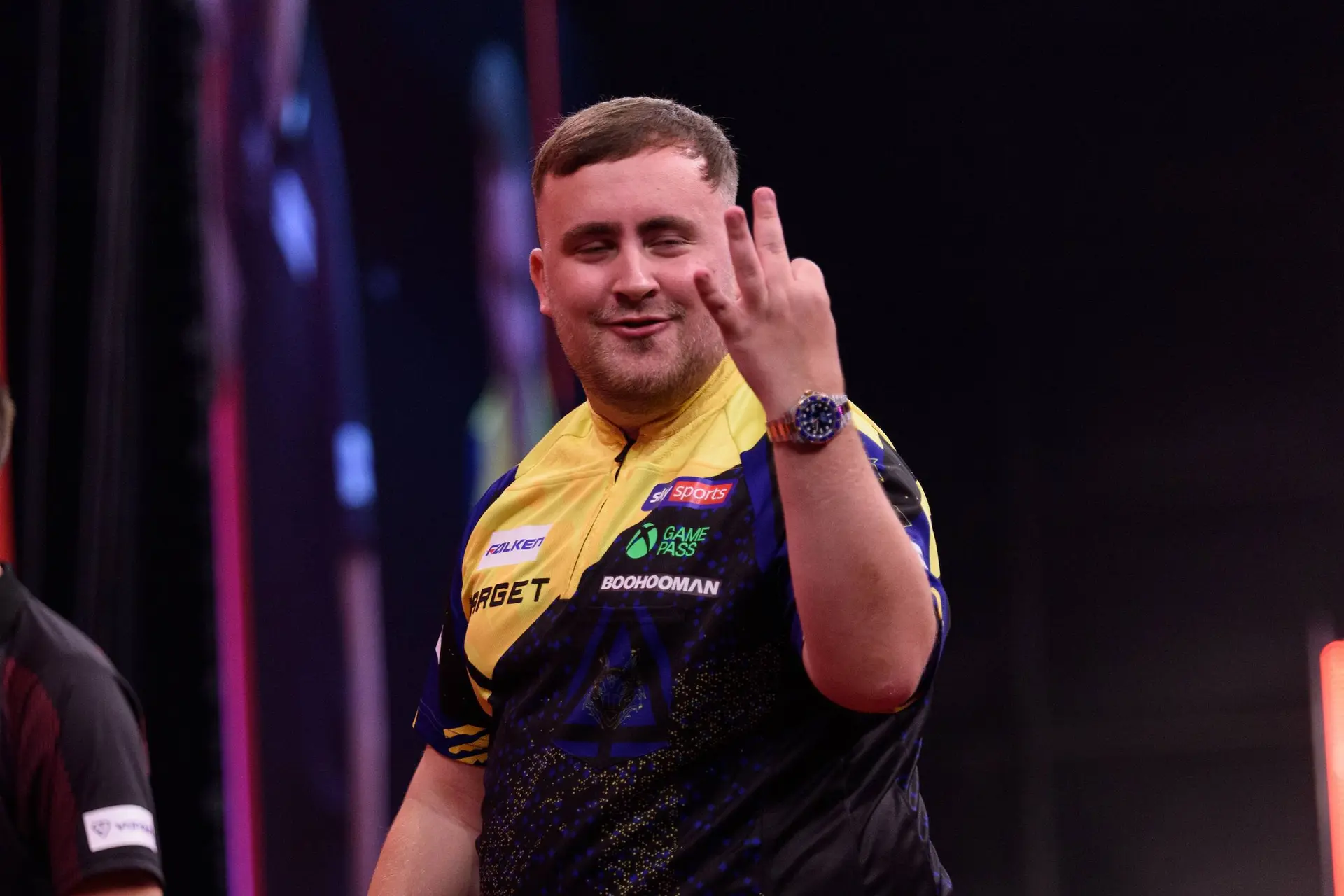
For all the criticism, Paulke did not want to reduce Littler to the dispute. “He is so good for the sport,” he said. The Englishman is shaping darts and producing superb performances. That is exactly why the conflicts annoy Paulke: “He doesn’t need this at all.” Public spats do him no favours.
Behind the debate lies an exceptional record. Before his exit in Amsterdam, Littler had won 38 consecutive matches at Majors. Paulke and Hempel do not doubt his class. Their criticism is aimed at how he reacted to the fans – and at the fact he kept the row going during the tournament.

Samuel GillChief Content Officer
Samuel Gill is the Chief Content Officer (CCO) of DartsNews.com, a role he has held since 2020. He is responsible for editorial governance across the platform, including setting content standards, overseeing accuracy and consistency, and guiding long-term editorial strategy across professional darts coverage. Since joining, he has contributed more than 10,000 articles and editorial pieces, playing a central role in the development and daily operation of the site.
Based in Leicester, Samuel has extensive experience in darts media and has been closely involved in coverage of the professional darts circuit for several years. Within the UK darts community, he is a recognised figure known for his consistent editorial output and ongoing reporting on major tournaments and developments across the PDC calendar.
In his current role, Samuel works closely with editors and writers to ensure content meets clear journalistic standards, with a focus on source verification, editorial consistency, and timely updates when new, confirmed information becomes available.
claps 0visitors 0
Just in


Popular news
Latest comments
- I agree,I can't believe the lack of coverage of this sad loss. Always enjoyed watching him,but I guess now it's all about littler,well it seems that way. Darts has sadly lost a good manrick6717-10-2026
- In the absence of a report regarding the death of Stefan Lord, I'll assist. An excellent player in the late 70s and early 80s, he actually won the now defunct 3rd place match at two World Championships and a couple of the News of the World Championships. A fabulous player and easily the best Swedish player ever. Rest peacefully Stefan.richieburnettrocks16-10-2026
- Joking aside, it is the second most watched sport on sky (more than golf, F1 etc) behind football only, and in participation is second to only football and swimming. It doesn't get the attention or sponsorship of "bigger" sports because it's not as sexy, but it's right up there.BandB13-10-2026
- i love darts but you can't seriously believe it's the second most popular sport in the uk. even top five is pushing it. it may be the fastest growing, though.colt13-10-2026
- I'm a big Clayton fan, but he's got this completely wrong. Qualification criteria exists for a reason - so just as failing to make the top 32/64 for the Euro championships/PT Finals means you miss out, so does not lifting a title for this one.26sForFun12-10-2026
- The players who deliberately slow the game down are usually boring and win very little in the way of silverware. Horrible to watch.MrYnyslas197112-10-2026
- [“The Gentle” then used a sweeping and questionable phrase...] You anglocucks are hilariously finished in every sense of the word.Critical99911-10-2026
- I love Jonny but I disagree. The Grand Slam was always supposed to be "champion of champions" type competition. If the top 16 are guaranteed participation in everything there will be so much less jeopardy involved in qualifying and each major tournament will lose its unique flavour which the PDC has worked hard trying to develop. I enjoy following the qualification races towards the end of the year, and while consistency should have its rewards, the truth is Jonny hasn't reached a major final all year or won a single event on the Pro Tour. Being consistent is one thing, but that alone should have consequences as the sport's elite should not be prepared to accept consistently strong performances, their foremost motivation should be to win and this should be what separates them from the rest, not the consistency of their performances. Jonny is expecting that losing should be enough; it shouldn't be, at least not as far as the Grand Slam is concerned.Deduce635811-10-2026
- Well being honest,it doesn't matter what level you play at, there's always someone who slows it down to suit themselves,and extra swig of water, replacing flights, asking the ref what the score is. It happens wherever. I'm not saying it's professional,but I'm sure we've all seen it beforerick6711-10-2026
- Agree completely. Not sure how a ranking event can have a criteria not based on rankings. And he right on popularity. In the UK second only to football.BandB11-10-2026
Loading