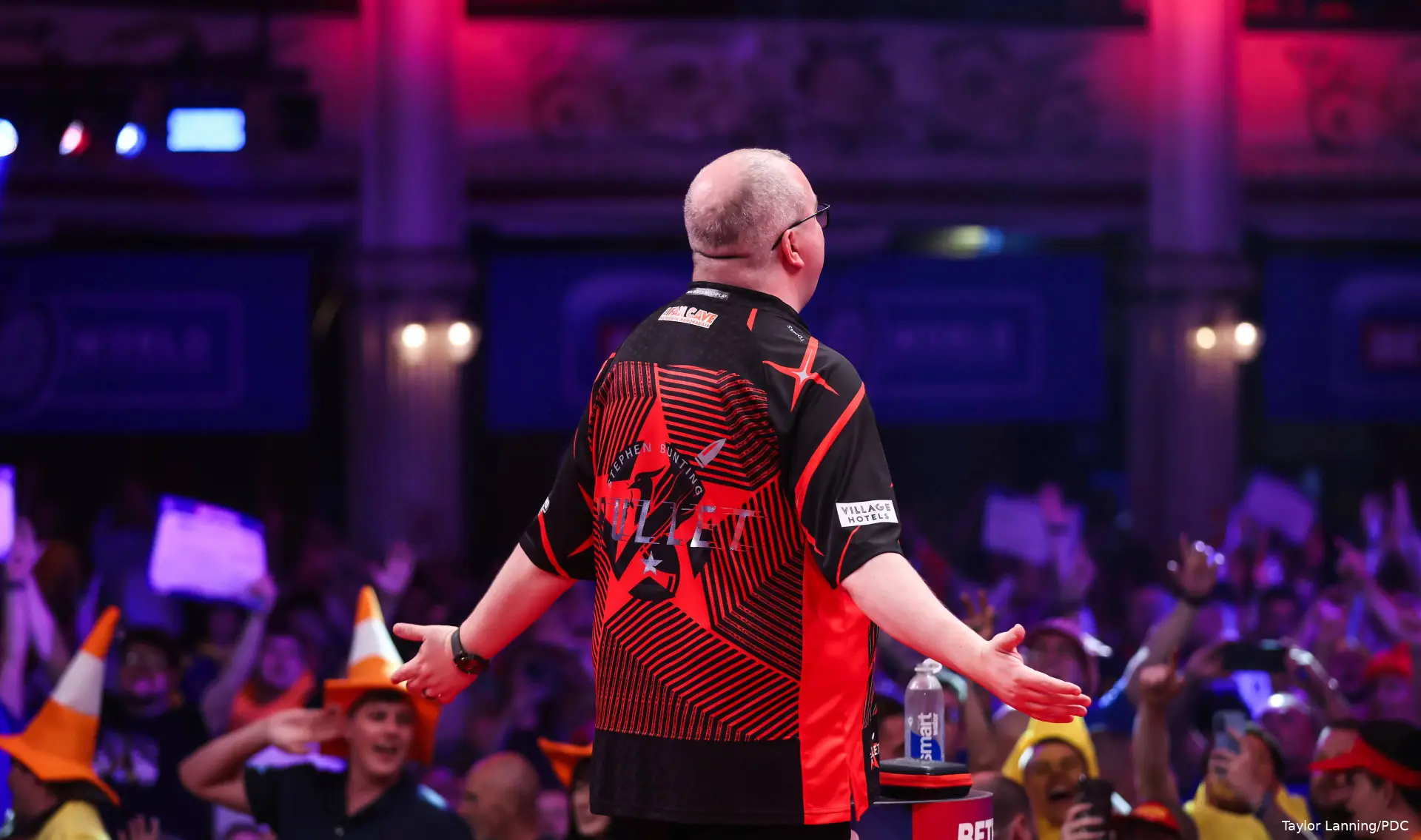
Over the years, Stephen Bunting has carved out a distinct place in the darts world. The Englishman is not only a former world number four and a genuine top-tier player, but thanks to his outspoken personality, signature walk-on, and huge social media presence, he has grown into a true cult hero. In his new autobiography, Bulletproof, the 41-year-old also shows the other side of his life.
ADVERTISEMENT
The book, which took around eighteen months to complete, arrives at a time when Bunting seems more popular than ever. The nickname 'Bunting Mental' is now firmly embedded in darts, and his walk-on to Titanium by David Guetta and Sia has become one of the most recognisable on the PDC circuit. “Well obviously I’ve got a lot of stories to tell,” Bunting told The Standard. “I’m quite an interesting person, I believe.”
According to the Englishman, it was important that the book wouldn’t be a polished tale. Bunting wanted to be honest about both his successes and the toughest periods of his life. He writes candidly about his gambling problems, which ultimately left him with £90,000 of debt from online slots.
“I always try to be as honest as I can. That might get me into trouble with certain people, but it’s important people know who I really am. It’s not manufactured. I’ve not left any stone unturned, including the bad moments, the gambling problems.”
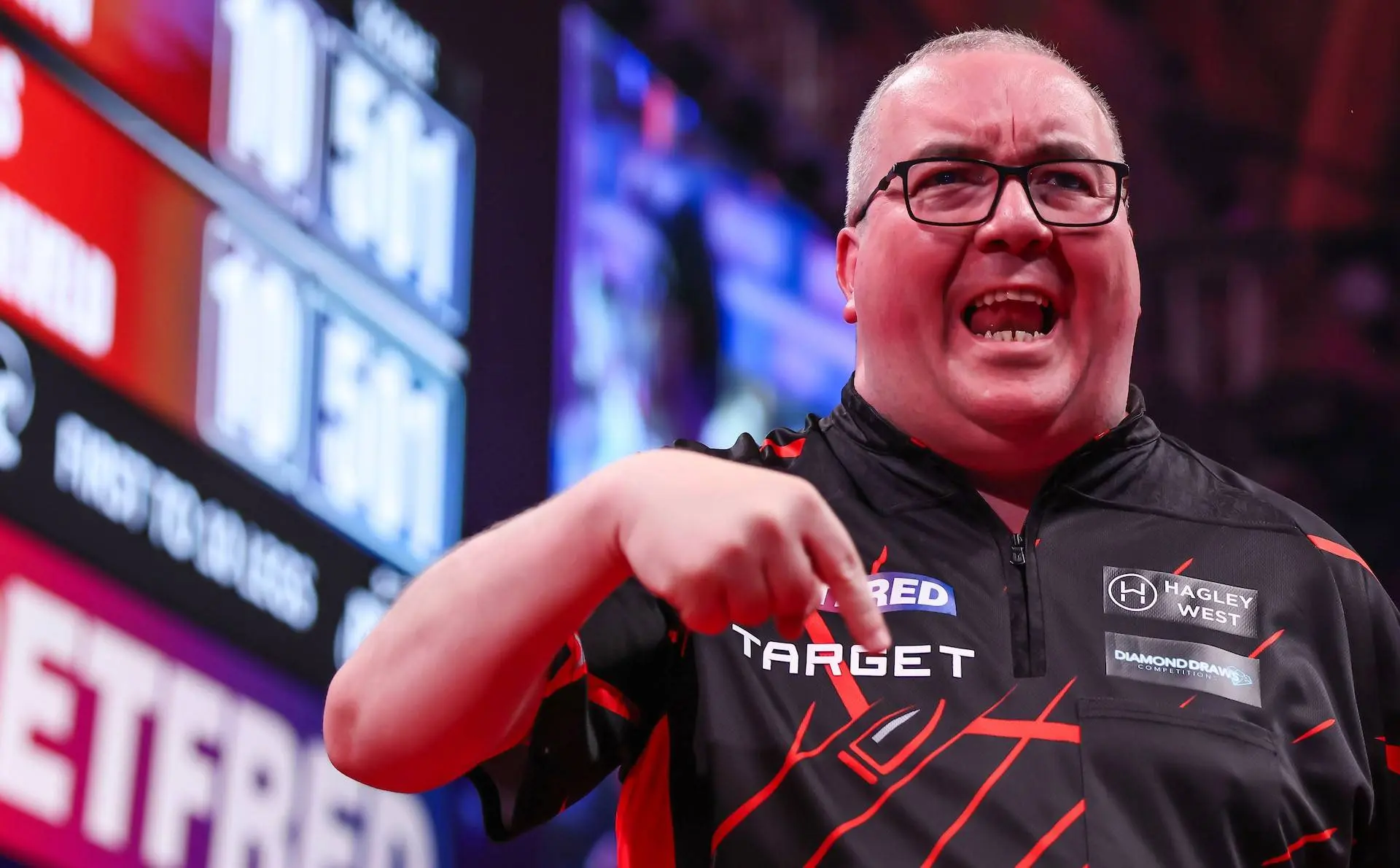
From darter to cult hero
Although Bunting remains first and foremost a professional darter, he has built a second career in recent years. Through YouTube and social media, he shows far more of himself than just the player on stage. “Definitely a darts player,” Bunting laughs when asked if he’d rather be a darter or a YouTuber. “But if you’re just a darts player, people only see the back of your head.”
His approach has clearly worked. A video of his famous walk-on recently racked up twenty million views. Commercially, too, the Englishman has capitalised on his personality. His website crashed when his personalised teddy bears went on sale. Even so, Bunting calls his commercial success “a bit of a fluke.”
ADVERTISEMENT
He believes the sport’s surge in popularity is partly down to the rise of Luke Littler. Bunting, who co-owns a horse with Littler aptly named ‘Bunting Mental’, has great respect for the young world champion.
“We should all be grateful because of the amount of money he’s brought into our sport. He has got that certain aura about him. Long may it continue, but hopefully I can win my fair share of tournaments as well.”

Stephen Bunting is known as 'The People's Champion'
“I’m absolutely Bunting Mental”
Fans play a major role in Bunting’s story. During matches, the now-famous chant “Let’s go Bunting Mental” regularly rings out. The Englishman clearly relishes it. “I’m definitely Bunting mental. I think it’s absolutely fantastic that fans chant that. It gives me that extra energy in a match. They say about the crowd being the 12th man for Liverpool at Anfield. The crowd really is the 12th man for me.”
ADVERTISEMENT
Yet the popular Bunting is anything but untouchable. The title of his book comes from the lyrics of his walk-on track Titanium, but he answers the question of whether he’s truly “bulletproof” without hesitation. “No, definitely not. Certain things have been thrown my way that you could call potential bullets, and they really do leave a scar.”
He is referring, among other things, to the heavy criticism he received on social media late last year. After an interview in which he jokingly called himself ‘The People’s Champion’, Bunting faced a torrent of online abuse. The effects were even felt at home. His fourteen-year-old son Toby was moved to a private school due to bullying. “For them [fans] to think of me like that was totally against everything I’ve worked hard to build up,” Bunting says.
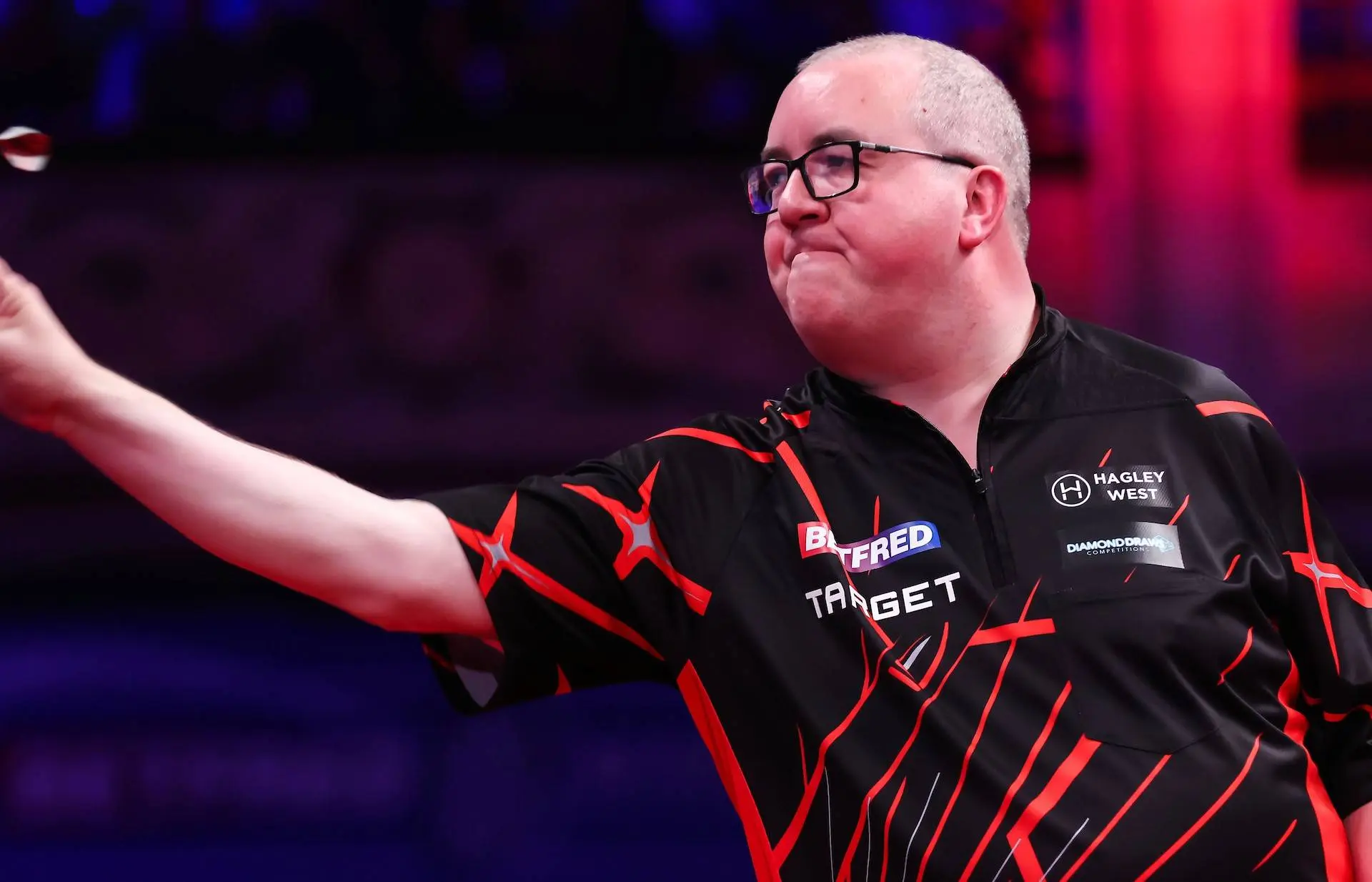
Never give up
Despite the tough moments, Bunting refuses to take a negative view of his career. He admits he has considered quitting darts several times. The individual nature of the sport can make it tough. “Darts can be a lonely sport, not like football where you can pass to your mate and not get it back for 20 minutes. You can’t hide.”
ADVERTISEMENT
Even so, Bunting says he has learned to control his thoughts better. With the help of hypnotherapy, he tries to think more positively. “Even if I were 9-0 down, I’d always believe I can win a game,” he insists. “I’ve trained my brain with the hypnotherapy to think more positively and stop my brain attacking itself. If I lose 6-1, I think of the leg I won, not about getting absolutely whacked.”
His greatest motivation remains his family. His son Toby, who looks up to him, plays a key role. Bunting sees a lot of himself in his son and ultimately wants above all to keep providing for his family.
And even after his playing days, Bunting wants to stay involved in the sport. Whether as a commentator or by coaching young players, the Englishman doesn’t see himself disappearing from darts. “Even when I’m done in darts, I still want to be involved around darts, whether that be commentary or teaching kids with lessons. To keep providing for my family, that’s the most important thing for me.”

Kieran WoodDarts Journalist
Kieran Wood is a sports journalist based in Wales and has been active in journalism since 2022. He contributes to DartsNews.com, where he covers professional darts through news, match reports, analysis, and live coverage across the PDC calendar and major tournaments.
A key part of his work is on-site reporting from leading events. Kieran has covered the PDC World Darts Championship in person, reporting daily from the venue and providing first-hand insight from the tournament. During his coverage, he has conducted interviews with leading players including Luke Littler, Luke Humphries, and Gerwyn Price.
He is also one of the leading voices of the English-language Dartsnews Podcast, contributing regular analysis and discussion on developments across the professional darts circuit.
In his reporting, Kieran places strong emphasis on careful sourcing, editorial accuracy, and updating articles when new, verified information becomes available.
claps 0visitors 0
Just in


Popular news


Latest comments
- I agree,I can't believe the lack of coverage of this sad loss. Always enjoyed watching him,but I guess now it's all about littler,well it seems that way. Darts has sadly lost a good manrick6717-10-2026
- In the absence of a report regarding the death of Stefan Lord, I'll assist. An excellent player in the late 70s and early 80s, he actually won the now defunct 3rd place match at two World Championships and a couple of the News of the World Championships. A fabulous player and easily the best Swedish player ever. Rest peacefully Stefan.richieburnettrocks16-10-2026
- Joking aside, it is the second most watched sport on sky (more than golf, F1 etc) behind football only, and in participation is second to only football and swimming. It doesn't get the attention or sponsorship of "bigger" sports because it's not as sexy, but it's right up there.BandB13-10-2026
- i love darts but you can't seriously believe it's the second most popular sport in the uk. even top five is pushing it. it may be the fastest growing, though.colt13-10-2026
- I'm a big Clayton fan, but he's got this completely wrong. Qualification criteria exists for a reason - so just as failing to make the top 32/64 for the Euro championships/PT Finals means you miss out, so does not lifting a title for this one.26sForFun12-10-2026
- The players who deliberately slow the game down are usually boring and win very little in the way of silverware. Horrible to watch.MrYnyslas197112-10-2026
- [“The Gentle” then used a sweeping and questionable phrase...] You anglocucks are hilariously finished in every sense of the word.Critical99911-10-2026
- I love Jonny but I disagree. The Grand Slam was always supposed to be "champion of champions" type competition. If the top 16 are guaranteed participation in everything there will be so much less jeopardy involved in qualifying and each major tournament will lose its unique flavour which the PDC has worked hard trying to develop. I enjoy following the qualification races towards the end of the year, and while consistency should have its rewards, the truth is Jonny hasn't reached a major final all year or won a single event on the Pro Tour. Being consistent is one thing, but that alone should have consequences as the sport's elite should not be prepared to accept consistently strong performances, their foremost motivation should be to win and this should be what separates them from the rest, not the consistency of their performances. Jonny is expecting that losing should be enough; it shouldn't be, at least not as far as the Grand Slam is concerned.Deduce635811-10-2026
- Well being honest,it doesn't matter what level you play at, there's always someone who slows it down to suit themselves,and extra swig of water, replacing flights, asking the ref what the score is. It happens wherever. I'm not saying it's professional,but I'm sure we've all seen it beforerick6711-10-2026
- Agree completely. Not sure how a ranking event can have a criteria not based on rankings. And he right on popularity. In the UK second only to football.BandB11-10-2026
Loading