“I don’t have the talent to go all the way” – France’s lone World Championship hope embraces reality at Ally Pally
PDC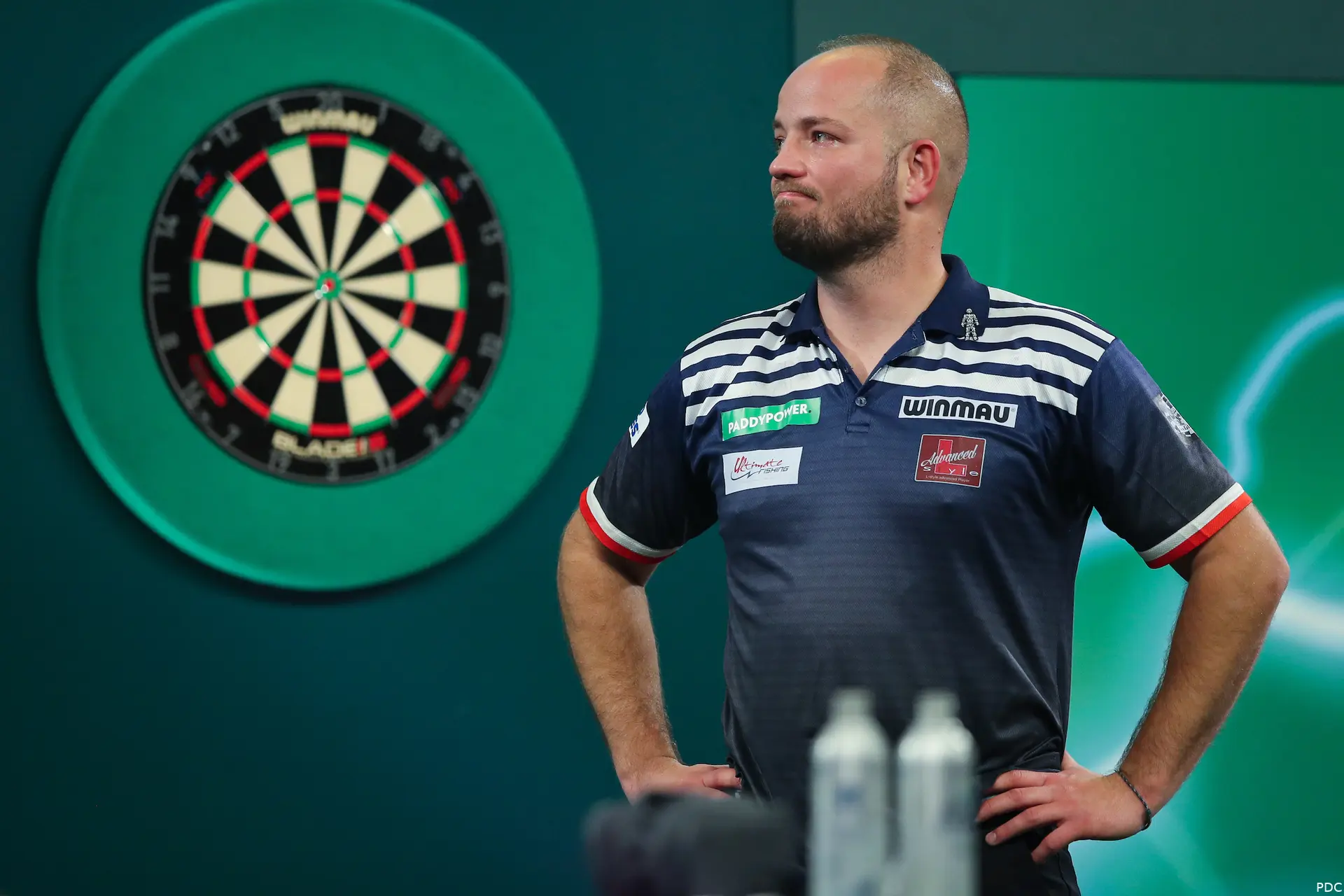
As Thibault Tricole prepares to step onto the Alexandra Palace stage on Thursday 18 December, the stakes extend far beyond his opening match at the 2026 PDC World Darts Championship. At 36, the Frenchman is once again carrying not only his own ambitions, but also the growing hopes of a country beginning to engage seriously with the sport.
ADVERTISEMENT
Speaking earlier this week from Brittany, where he had deliberately remained until the final days before his match, Tricole sounded relaxed and confident.
“I feel very good,” he said in an interview with Flashscore. “The event kicked off on December 11th, and I play on the 18th, so I’m still in Brittany, tucked away in the countryside. But I’m heading off to London tomorrow afternoon.”
That late departure was a conscious choice rather than a risk. “Getting to London is really straightforward. I leave from Nantes, and I’m there in an hour, so leaving two days before is enough. Not the day before, as that’s a bit tight. You never know what might happen with travel. And I’m used to going to England, I probably go 15 times a year, so it’s a journey I know well.”
From opening night to the edge of round one
Twelve months ago, Tricole opened the World Championship on the very first night. This time, his name appears almost at the end of the first round schedule.
“Yes, it’s a bit different,” he says with a laugh. “This year, it’s almost the opposite – I play my first match right at the end of the first round, which lasts a week. So, is it better? I don’t really know, to be honest, but I have already seen a few upsets. It’s a reminder that I need to be careful, that this first round could be a bit of a banana skin for me.”
ADVERTISEMENT
Watching from the sidelines has had its benefits. “Watching the others battle it out also helps me mentally prepare for what’s coming. The World Championship is special. It’s the one that puts the most pressure on every player.”
That pressure was something he felt acutely last year, when victory over Joe Comito was followed just hours later by a meeting with Luke Humphries.
“Last year, I played an Australian in the first round, whom I beat, and then I had to face the world number one and reigning World Champion just a few hours later, knowing that the World Championship is the biggest event of the year,” Tricole recalls. “I really struggled to play two matches back to back. It was too much for me, right from the first night.”
This time, the circumstances are different. “I’ve got another year’s experience on the pro circuit now, so I’m going in with a bit more calm. And it’s true, the draw is more favourable, but you never really know in advance. It would be too easy if the favourite always won.”

Thibault Tricole once again carries French hopes at Ally Pally
ADVERTISEMENT
Favourites, pressure and reality
The early elimination of Ross Smith, a possible second round opponent, has opened the draw further, but Tricole is quick to temper expectations.
“If he’s out, it means the player who beat him was good too. I don’t want to get ahead of myself,” he says. “I’m not saying it’s my year because I don’t have the talent to go all the way, but the draw is definitely more open than what I had last year, or even the year before.”
He is acutely aware of how status can alter mindset. “I often have this issue where I tend to play better against higher ranked players than against outsiders. I put too much pressure on myself when I’m the favourite, so that’s something I need to work on. I have to accept my role, my status.”
That mental battle is central to surviving at Alexandra Palace. “It’s the classic footballer’s line – take it one match at a time – but it’s true. Because it’s so mental that if you start thinking you’ve won before you’ve even played, you’re setting yourself up for a fall.”
ADVERTISEMENT
Beyond progress in the tournament itself, the first round carries practical consequences. “It would be really good for me to win this first match, because it would guarantee my place on the circuit next year,” Tricole explains. “I’m currently ranked 61st, so I should be safe, but I still need to win this first match to be sure. You never know, it could all come down to circumstances.”
Added to that is the weight of expectation back home. “I’m still the only French participant. There’s real excitement, there’s genuine interest in France now. It was already a huge hit in terms of viewing figures last year, so yes, there’s pressure, but it’s a good kind of pressure.”

An unknown opponent and an unforgiving stage
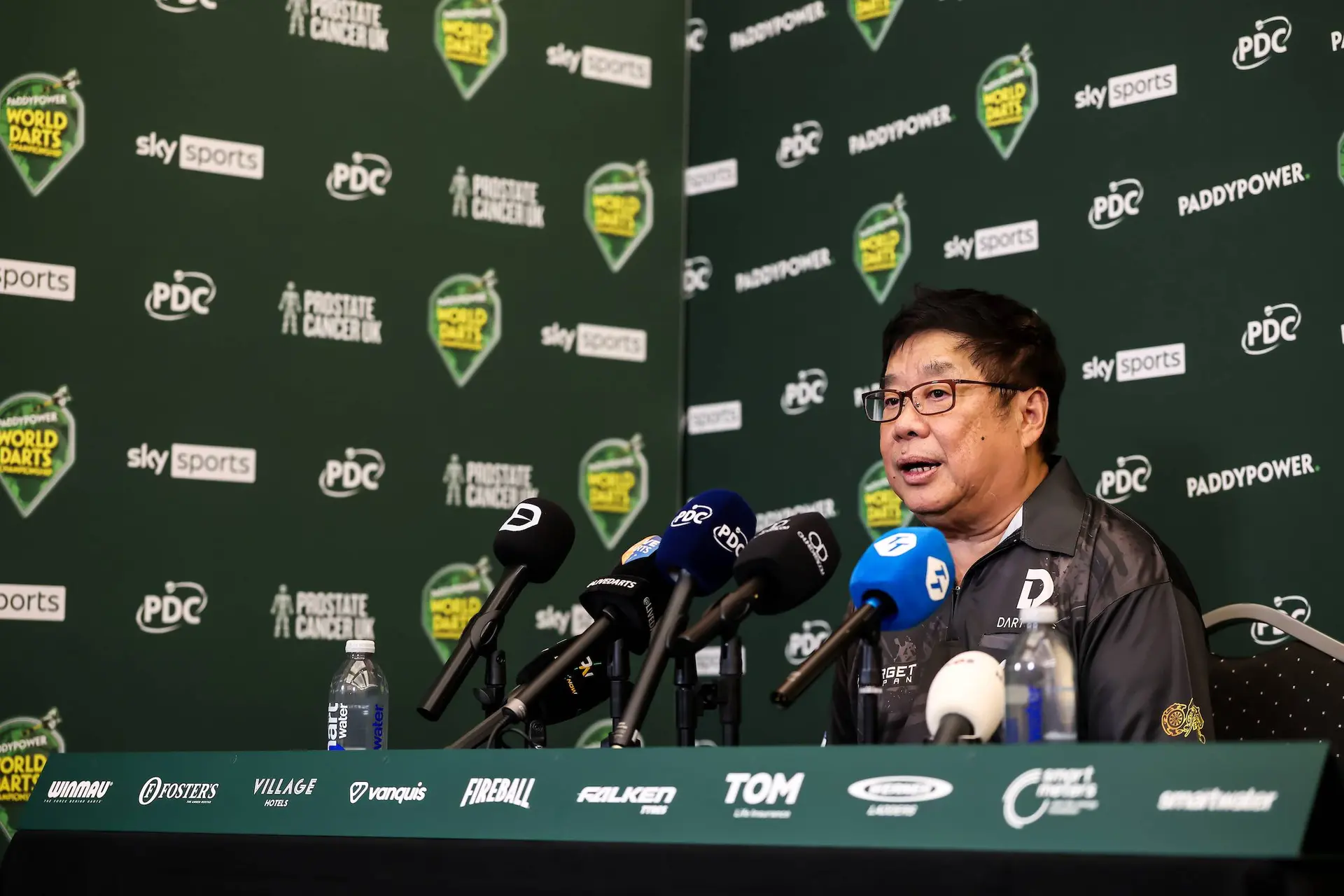
Standing between Tricole and that crucial first win is Motomu Sakai, a Japanese qualifier with little European exposure.
ADVERTISEMENT
“He’s a Japanese player who only competes in Asia,” Tricole says. “I struggled to find much information about him, especially about his playing rhythm. It’s important to know how fast he plays, whether I’ll need to adapt.”
That lack of information makes preparation difficult. “I did find a few YouTube videos, but there’s very little info, which is why it could be a tricky match. He’s unranked, so he’s not playing for ranking points or his pro survival, he’s got nothing to lose.”
The stage itself can be decisive. “It’s his first time, so he’ll be discovering it all, but that could work in my favour. When you first walk into that arena, the atmosphere is electric. It’s always a bit tricky.”
Confidence built over a breakthrough season
Despite the unknowns, Tricole arrives in London after the strongest season of his career.
ADVERTISEMENT
“That’s the difference between this year and last,” he says. “For the first time, I managed to put in solid performances against some really top players, even iconic ones like Michael Smith or Stephen Bunting.”
One moment stands out. “In Budapest, not long ago, I played in front of 6,000 or 7,000 spectators, even more than at the Worlds. I proved to myself that I could be comfortable on stage, something I hadn’t managed in previous years.”
That experience matters now. “This will be my third time. I know the venue, I know how the pre and post match routines work, and there are no more surprises. But I’ll still need to be focused on the day and at the moment of the match.”
Carrying French darts forward
ADVERTISEMENT
Away from the oche, Tricole increasingly recognises his role within French darts.
“There are two or three players like Nicolas Thuillier or Lylian Le Calvez who want to follow in my footsteps,” he says. “They’re on the right track, but I don’t see them making it straight away. Everyone develops at their own pace. I know it took me a while to break through.”
He accepts the label of ambassador. “People say I’m a bit of a flag bearer. I waited so long for darts to get some recognition in France, so I’m really pleased. But we’re still at the very beginning. Compared to Germany or Belgium, we’re at least 10 or 15 years behind.”
Visibility remains key. “Only the real enthusiasts subscribe to PDC TV, but we do have La Chaîne L’Équipe broadcasting some major tournaments. That would have been unthinkable two or three years ago. It’s a really positive step.”
And with visibility comes responsibility. “Yes, but it’s a good kind of pressure,” Tricole says. “For more than 15 years, I’ve heard, ‘France needs a player who can perform internationally.’ Look at what Raymond van Barneveld and Michael van Gerwen did in the Netherlands. Without them, nothing would have happened.”
ADVERTISEMENT
He remains grounded. “I don’t have their talent, but I do have resilience. At 36, I still believe I can achieve things. If I can perform regularly and pull off some big results, people will talk more about darts in France, and that’s already a win.”
A deep run at the World Championship would accelerate that momentum. “That would be the ultimate dream,” he says. “On paper, there’s definitely a chance. I won’t think about it too much when I’m playing, but it’s on my mind. Of course, a good run would be fantastic.”
On Thursday night, Tricole steps back onto the sport’s most famous stage, aware that every dart carries weight far beyond the scoreboard.
Kieran WoodDarts Journalist
Kieran Wood is a sports journalist based in Wales and has been active in journalism since 2022. He contributes to DartsNews.com, where he covers professional darts through news, match reports, analysis, and live coverage across the PDC calendar and major tournaments.
A key part of his work is on-site reporting from leading events. Kieran has covered the PDC World Darts Championship in person, reporting daily from the venue and providing first-hand insight from the tournament. During his coverage, he has conducted interviews with leading players including Luke Littler, Luke Humphries, and Gerwyn Price.
He is also one of the leading voices of the English-language Dartsnews Podcast, contributing regular analysis and discussion on developments across the professional darts circuit.
In his reporting, Kieran places strong emphasis on careful sourcing, editorial accuracy, and updating articles when new, verified information becomes available.
claps 0visitors 0
Just in


Popular news
Latest comments
- Assuming you qualify as one of the "muppets" in question. Classist too. And since you're so clearly interested in academia, look up "linguistic descriptivism" while you're at it. Oh, and better stay away from the working class sport of darts and maybe offer your insightful analysis to, let's say, croquet instead?Deduce635806-10-2026
- The consequences of being uneducated and grammatically challenged. "To all THOSE muppets not THEM " Everytime I see Arsepinall, I have an image of him wearing a cap, standing behind the counter of a fast food establishment.richieburnettrocks05-10-2026
- I don't understand Littler's reason for playing this tournament.rick6705-10-2026
- James Wade has become James Wide. He has piled on the tonnage considerably, he barely fits in his shirt.richieburnettrocks03-10-2026
- Littler will play whatever tournaments he decides. But does every headline have to start with him? Bristow bought Taylor through,and he followed that with Lewis. I can't see littler doing the same. Let him choose,and lose,he's getting good at that lately!rick6702-10-2026
- I believe he has it in him to qualify for the Worlds as he consistently wins matches, even if it is only one or two at a time, although his recent PC quarter-final run was somewhat encouraging in that regard. I think there is a lot of pressure for him to retire, people in the media accusing him of tarnishing his legacy. I think that is a ridiculous line of thinking. How ungrateful it is to attach terms and conditions to the amazing moments he has provided us over the course of his career. What position are we in to dictate to him how he should manage his career when it is he who achieved those successes in the first place? What's more, this is his life and the passion that sustains it, it is not for us to decide when his career is over when it is he who must bear the genuine ramifications of that decision. Since I'm sure money is not a concern, the only question on which the decision should rest is whether he truly continues to enjoy competing. He has retired once before, but the desire to compete is what brought him back. We see a lot of negative body language and he does genuinely look miserable when he is not playing well, but only he will know when he wakes up the next day whether he wants to go and do it all over again. If he wants to compete, he should, it's as simple as that, this is a decision that should not involve anyone else but him and his family. He should not retire to indulge the whims of the media or the public. What satisfaction would he receive by being forced into retirement? What closure would it bring to such a brilliant career? When Phil Taylor decided to retire, his decision was final and resolute. I believe RvB needs to get to this point himself, no matter how many 70 averages it might take. We see the likes of John Part continue to compete on a regular basis well past his prime, I say more power to him, and who knows, further glory could be around the corner, it's darts after all, you just never know. Sometimes I worry that RvB is acutely aware of the clamour for him to retire and that this pressure may even have an impact on his performances as he begins to question whether there is even a place for him in darts anymore, further compounding his poor form and creating a vicious loop. Perhaps to take his future into his own hands would provide him with a levity and freedom that would lend itself to better performances, not to mention an improved wellbeing. In any case, it is under these conditions that one can clear-headedly and definitively settle an issue so profound as retirement, not when you feel you're being rushed out the door. If his performances can no longer sustain his presence on the tour, so be it; as it stands his card seems safe for this year but is in serious jeopardy next year. He could always allow himself to drop off the tour naturally rather than forfeiting his place in the top 64, this could provide a sense of finality while offering a route back through Q-School if he so desired; after all, he's done it before. In conclusion, I just hope that RvB can play - or not play - for his own sake, rather than anyone else's, so that when the time comes he can be in no doubt as to his decision, leaving no lingering questions, so that he can reflect with no regret or uncertainty on the marvelous career he has had.Deduce635826-09-2026
- Luke Littler has been good for the sport of darts, no question. But he is not above it. For his sake and ours, he needs to be put in his place sometimes, rather than having his every whim catered to. That is not how you build a good person nor a good sporting organisation, and it's beginning to have consequences.Deduce635826-09-2026
- Extremely disappointing decision. It used to be that, along with major events and Euro Tours, the Players Championship series constituted one of three standards against which successful darts players could be measured, one of three challenges every successful darts player should be expected to master to consider themself among the elite. Now they are dead weight in the darting calendar, and player turnout and the standard of competitiveness will reflect that. The truth is that Luke Littler and other big names would rather play lucrative exhibitions than put in the hard graft that being a successful dart player requires. It undermines the authority of the PDC and the game in general. So what do they do about it? Give them exactly what they want. Of course, why wouldn't they? They are their star attractions. It is ironic that an organisation formed in protest by the sport's elite should be undermined and disrespected by their contemporary equivalents, but the PDC had a chance to stand up to them with a firm message: play 2 events all year and expect the final to be played without you. Instead, they caved in. These events will be hardly worth playing anymore and this decision may have grave consequences for the future of floor events at the elite level. Some may say the calendar is overstuffed, yet these elite players have more than enough time to play plenty of exhibitions. The Premier League in particular is gruelling, but busy players are not expected to play every event, they are expected to manage their playing schedule carefully in order to apportion their time and energy appropriately. Clayton and Humphries, for instance, both sit in the top 20 of the Players Championship and European orders of merit, in addition to competing in the Premier League; they have proven it is absolutely possible and this change is an insult to their efforts in effectively managing their calendars. I think we are seeing players who simply think they are too good for Pro Tour events, arrogance which should be punished rather than rewarded as we are seeing here. Furthermore, why should success in Euro Tours qualify you for the Players Championship Final? The PDC are blurring the lines between those three disciplines of darting excellence, and in so doing destabilising the very foundations upon which the organisation and its success is built. Some may say I'm overreacting, but this, in addition to the PDC's subservience and snivelling obsequiousness toward their biggest assets, makes me fear for the future of professional darts.Deduce635826-09-2026
- I guess this will mean the top players will turn up even less? Taken all the excitement of qualifying away I think. Wish they made it top 32 to qualify and the finals to last all week.Baphomet26-09-2026
- Great article - but not written by this site. It's taken wholesale from last Sunday's Observer with this interview published online on Saturday.Scoobedybop22-09-2026
Loading