From social media sparring to working on ITV as Chris Mason finally works with Wayne Mardle: "Was I surprised it worked? No, Was I surprised by the amount of love it got? Yes"
PDC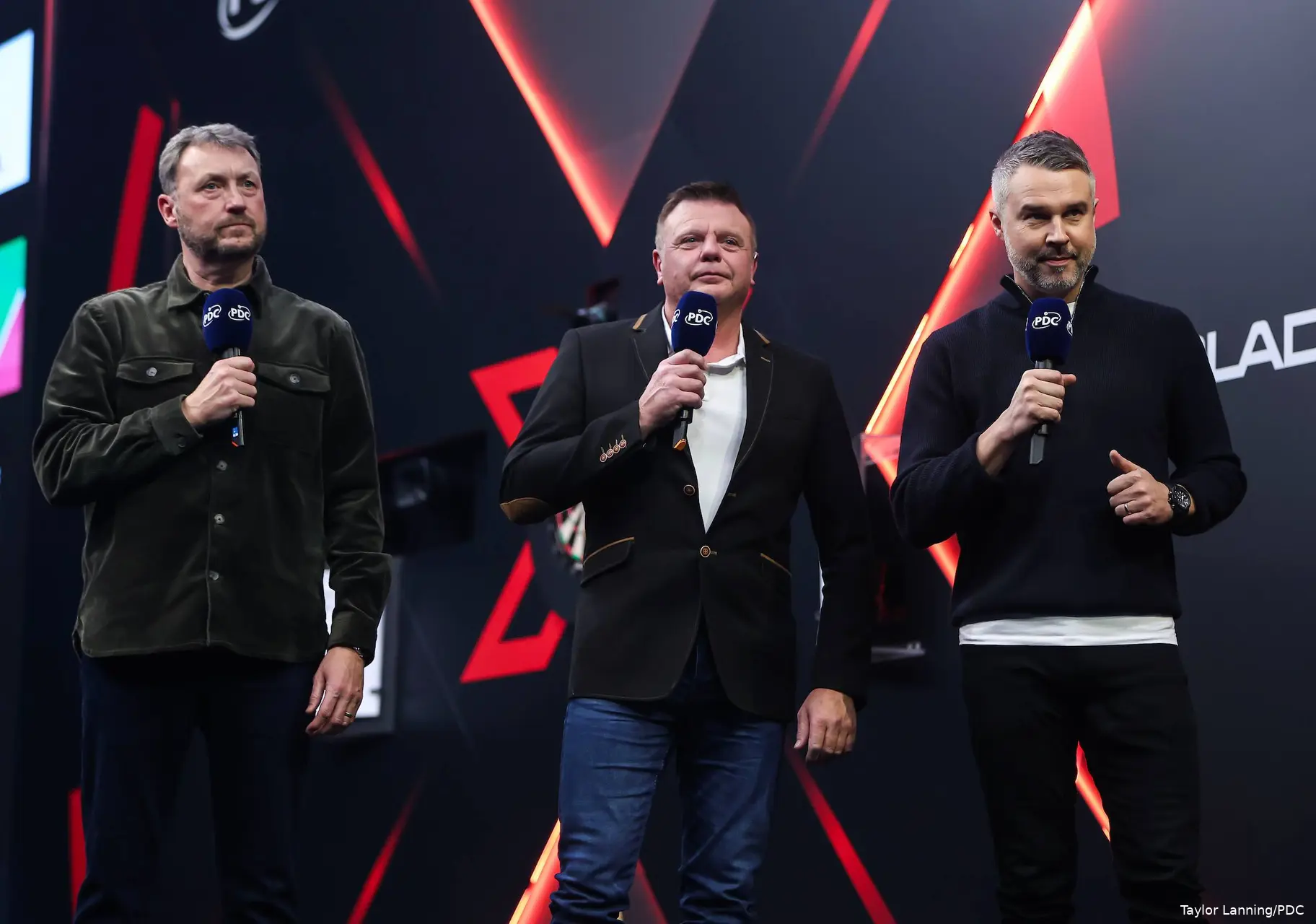
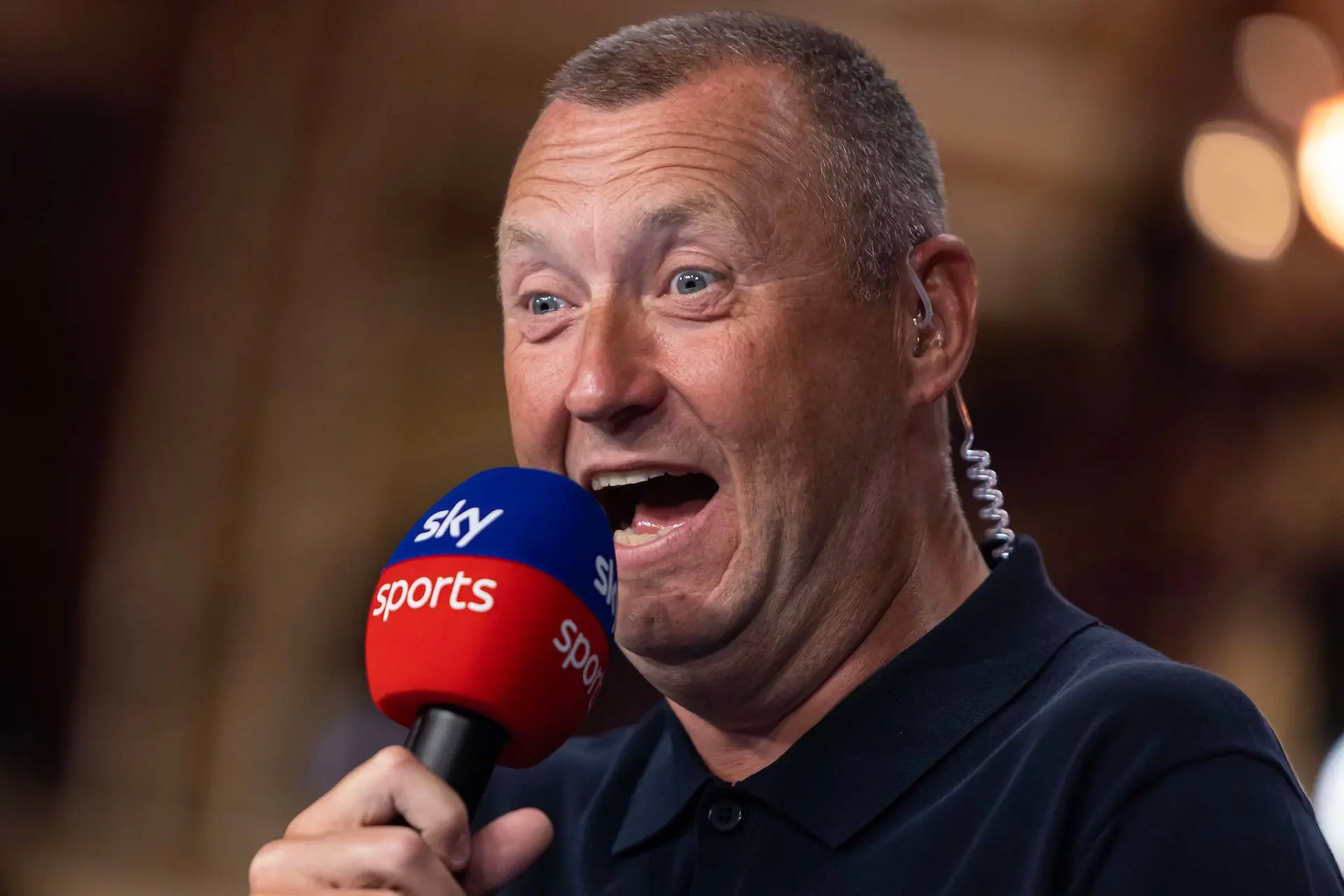
For all the noise that has surrounded ITV’s darts coverage over the winter, few voices carry the weight of Chris Mason’s. Not because he is new to the sport’s evolving broadcast landscape, but precisely because he is not.
ADVERTISEMENT
Mason is one of the rare figures to have lived both versions of ITV darts. He was a familiar presence during the previous era fronted by Jacqui Oatley and long-standing pundit Alan Warriner-Little, and he is now one of the constants to carry through into a refreshed on-screen team alongside Wayne Mardle, Mark Webster and presenter Pete Graves.
That vantage point makes his assessment of ITV’s new look especially revealing. Speaking in conversation with Online Darts, Mason did not hedge his words. “For me, it was some of the best darts TV I’ve ever seen.”
It is a striking endorsement not just of a single tournament, but of a broader production shift that has coincided with increased Matchroom influence behind the scenes and a more modernised broadcast approach.
A visible shift in production culture
Mason’s praise is rooted in process as much as presentation. He described a level of preparation he had not previously experienced on ITV coverage, underlining how the tone was set long before the first dart was thrown. “I’ve never done as much rehearsal for an event as I did for this one.”
That attention to detail, he explained, extended across the entire production team. “Every cameraman, every sound engineer, every bit of talent, even the markers – no stone was left unturned.”
ADVERTISEMENT
Mason recalled a production environment where assumptions were deliberately stripped away. “The production executive basically said, ‘I don’t care if you think you know what you’re doing. We’re not getting this wrong.’”
For a broadcaster undergoing transition, those words speak to a cultural reset as much as a technical one. Rather than simply refreshing faces on screen, the coverage was rebuilt around structure, rehearsal and clarity.

The former ITV Darts team where Mason was joined by Jacqui Oatley and Alan Warriner-Little
The Matchroom influence
While Mason was careful not to draw explicit comparisons with previous ITV setups, he did acknowledge where some of that shift appeared to originate. In particular, he pointed to Matchroom’s wider experience in televised sport.
ADVERTISEMENT
“When you look at what Matchroom have been doing in Saudi Arabia with boxing production, you can see how that experience filtered into darts.”
That crossover, he suggested, helped unlock new possibilities for a sport that has often wrestled with how best to balance accessibility and spectacle. “Someone clearly looked at that and thought, ‘We can do something with darts here,’ and they absolutely nailed it.”
The result, in Mason’s view, was coverage that felt more inclusive to viewers dropping in mid-session, without alienating those steeped in the sport. “Not everyone knows everything about darts. Some people are coming home from work and suddenly they’re dropped into a match halfway through. We explained what had happened and why it mattered.”
A new blend of voices
ADVERTISEMENT
One of the most obvious flashpoints in the wider reaction to ITV’s overhaul has been the changing composition of its broadcast team. Mason acknowledged that uncertainty himself, admitting he was not convinced from the outset that the different styles would seamlessly combine.
“I wasn’t sure how all the styles would blend. Wayne has his style, I have mine. Webby has his. Mark Wilson is a proper broadcaster, very structured. And then there’s Dan, who is just a genius.”
The balance, he felt, ultimately came from clearly defined roles rather than forced uniformity. “Mark brought calm and structure. He wouldn’t let things drift too far.”
Working alongside Mardle in particular felt natural, built on decades of shared experience rather than rehearsed chemistry. “Wayne and I have known each other for over 30 years. The way we talk on comms is exactly how we talk in the press room watching darts.”
What did surprise him was the scale of the response. “Was I surprised it worked? No. Was I surprised by the amount of love it got? Yes.”
ADVERTISEMENT
Mason said feedback from within the television industry itself had been especially striking. “I’ve never had so much positive feedback from people inside the TV industry saying how involved they felt in the broadcast.”

Mardle (L) and Webster (R) join Mason on the new ITV coverage
Fallout, backlash and restraint
That enthusiasm has not existed in a vacuum. The reshaped ITV line-up prompted visible frustration from figures who did not carry over into the new era, with Warriner-Little among those to publicly express disappointment at how changes were handled. Some viewers, too, questioned whether ITV’s coverage was losing its established identity in favour of something closer to a Matchroom house style.
Mason did not address individual grievances, but he did acknowledge the intensity of reaction around elements of the presentation itself, particularly graphics and on-screen design. “The score graphic became divisive, which amazed me.”
ADVERTISEMENT
He was clear that criticism should not lose sight of broader considerations. “People forget there are visually impaired fans. Darts is one of the few sports they can follow easily. The outrage over the graphics, over the MC – it was just unnecessary. Be kind.”
The measured tone reflects Mason’s unusual position in this debate. Having worked closely with the previous ITV team, and now embraced the new structure, his comments validate the direction of travel without dismissing the past.
The Winmau World Masters as a statement event
If there was a single moment that crystallised the shift for viewers, it was the Winmau World Masters, which doubled as both a high-profile tournament and a showcase for the revamped broadcast.
ADVERTISEMENT
Mason highlighted not only the production values, but the equipment itself, pointing to the introduction of the new Winmau board. “That board isn’t designed for aggressive points. It’s had thousands of hours of research and development.”
The impact, he argued, was visible in the numbers. “Look at the averages produced since it’s been used.”
For Mason, the conclusion was simple. “The proof is in the pudding. The tournament was incredible.”
A verdict shaped by perspective
In a period of transition, ITV darts has inevitably prompted debate about what has been gained and what has been lost. Mason’s perspective does not erase that tension, but it does offer context.
ADVERTISEMENT
He has experienced the rhythms of the old setup, built relationships within it, and now finds himself endorsing a new approach that places rehearsal, clarity and modern production at its core. That combination of continuity and change is precisely why his verdict resonates.
When Mason says it was some of the best darts television he has ever seen, it is not the enthusiasm of a newcomer speaking. It is the considered judgement of someone who has seen both sides of ITV darts, and who believes the sport has taken a significant step forward on screen.
Kieran WoodDarts Journalist
Kieran Wood is a sports journalist based in Wales and has been active in journalism since 2022. He contributes to DartsNews.com, where he covers professional darts through news, match reports, analysis, and live coverage across the PDC calendar and major tournaments.
A key part of his work is on-site reporting from leading events. Kieran has covered the PDC World Darts Championship in person, reporting daily from the venue and providing first-hand insight from the tournament. During his coverage, he has conducted interviews with leading players including Luke Littler, Luke Humphries, and Gerwyn Price.
He is also one of the leading voices of the English-language Dartsnews Podcast, contributing regular analysis and discussion on developments across the professional darts circuit.
In his reporting, Kieran places strong emphasis on careful sourcing, editorial accuracy, and updating articles when new, verified information becomes available.
claps 102visitors 3
Just in
Popular news
Latest comments
- I agree,I can't believe the lack of coverage of this sad loss. Always enjoyed watching him,but I guess now it's all about littler,well it seems that way. Darts has sadly lost a good manrick6717-10-2026
- In the absence of a report regarding the death of Stefan Lord, I'll assist. An excellent player in the late 70s and early 80s, he actually won the now defunct 3rd place match at two World Championships and a couple of the News of the World Championships. A fabulous player and easily the best Swedish player ever. Rest peacefully Stefan.richieburnettrocks16-10-2026
- Joking aside, it is the second most watched sport on sky (more than golf, F1 etc) behind football only, and in participation is second to only football and swimming. It doesn't get the attention or sponsorship of "bigger" sports because it's not as sexy, but it's right up there.BandB13-10-2026
- i love darts but you can't seriously believe it's the second most popular sport in the uk. even top five is pushing it. it may be the fastest growing, though.colt13-10-2026
- I'm a big Clayton fan, but he's got this completely wrong. Qualification criteria exists for a reason - so just as failing to make the top 32/64 for the Euro championships/PT Finals means you miss out, so does not lifting a title for this one.26sForFun12-10-2026
- The players who deliberately slow the game down are usually boring and win very little in the way of silverware. Horrible to watch.MrYnyslas197112-10-2026
- [“The Gentle” then used a sweeping and questionable phrase...] You anglocucks are hilariously finished in every sense of the word.Critical99911-10-2026
- I love Jonny but I disagree. The Grand Slam was always supposed to be "champion of champions" type competition. If the top 16 are guaranteed participation in everything there will be so much less jeopardy involved in qualifying and each major tournament will lose its unique flavour which the PDC has worked hard trying to develop. I enjoy following the qualification races towards the end of the year, and while consistency should have its rewards, the truth is Jonny hasn't reached a major final all year or won a single event on the Pro Tour. Being consistent is one thing, but that alone should have consequences as the sport's elite should not be prepared to accept consistently strong performances, their foremost motivation should be to win and this should be what separates them from the rest, not the consistency of their performances. Jonny is expecting that losing should be enough; it shouldn't be, at least not as far as the Grand Slam is concerned.Deduce635811-10-2026
- Well being honest,it doesn't matter what level you play at, there's always someone who slows it down to suit themselves,and extra swig of water, replacing flights, asking the ref what the score is. It happens wherever. I'm not saying it's professional,but I'm sure we've all seen it beforerick6711-10-2026
- Agree completely. Not sure how a ranking event can have a criteria not based on rankings. And he right on popularity. In the UK second only to football.BandB11-10-2026
Loading