"It’s a shark tank, Lennart is too nice at times" — Kim Huybrechts takes young Belgian talent under his wing
PDC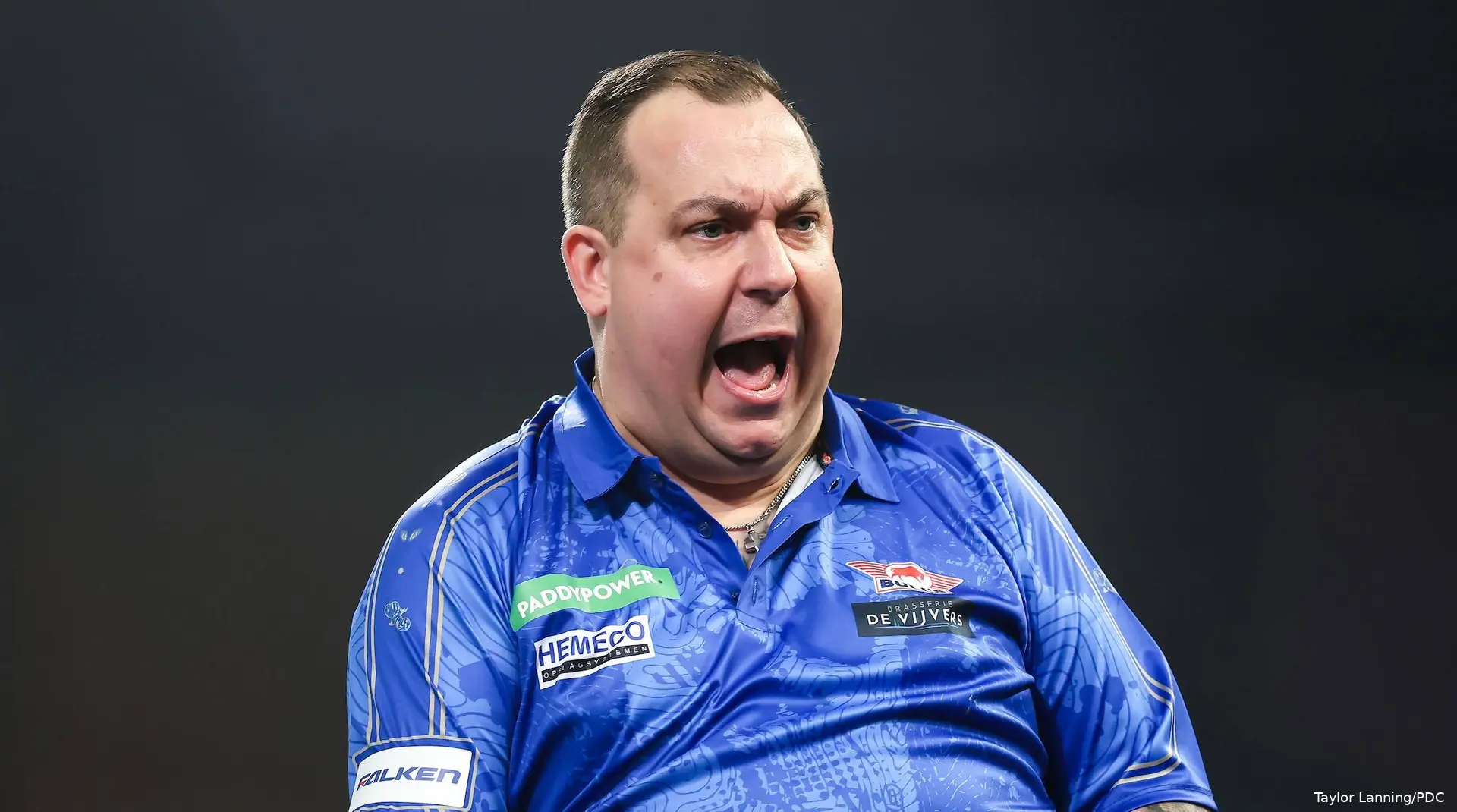
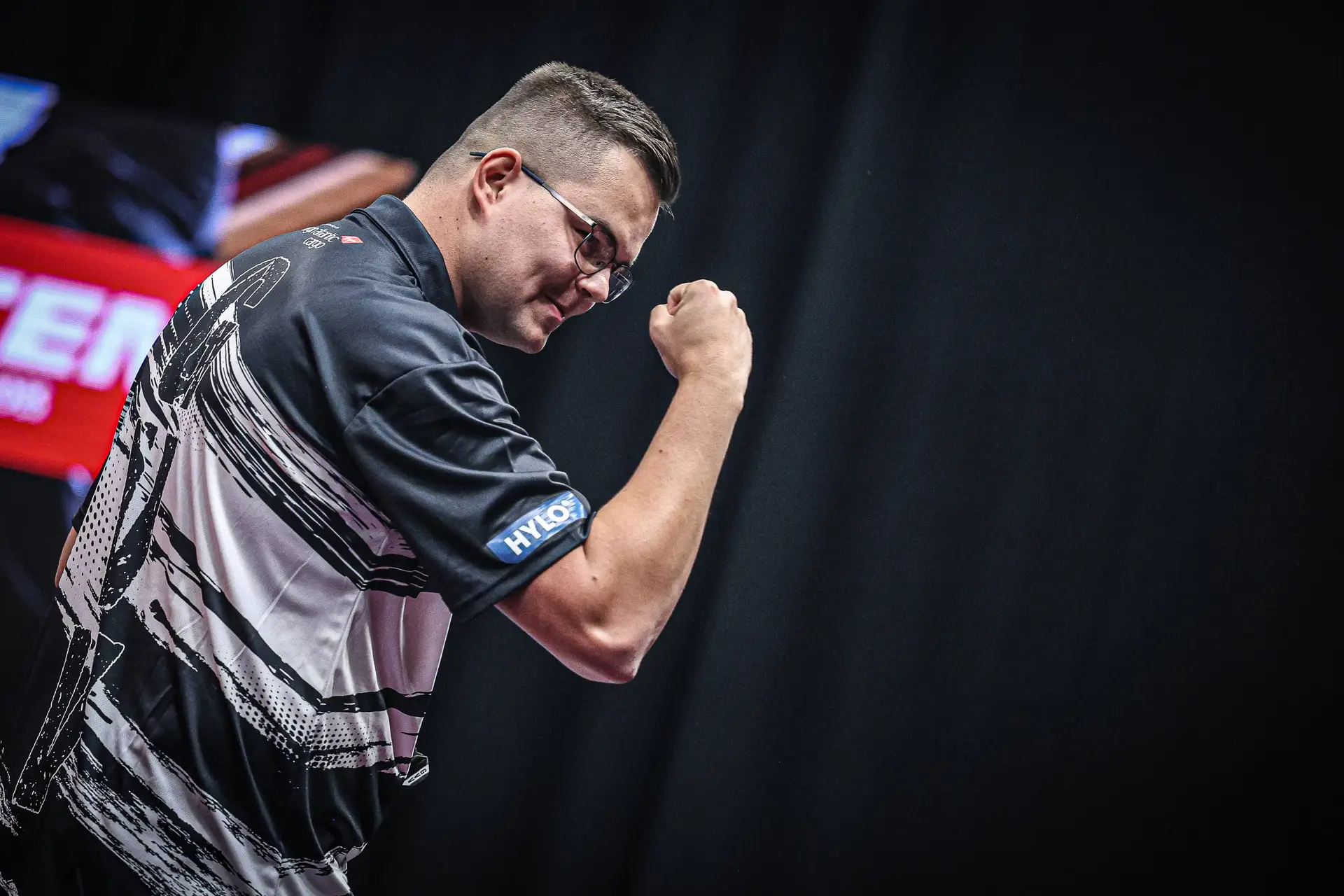
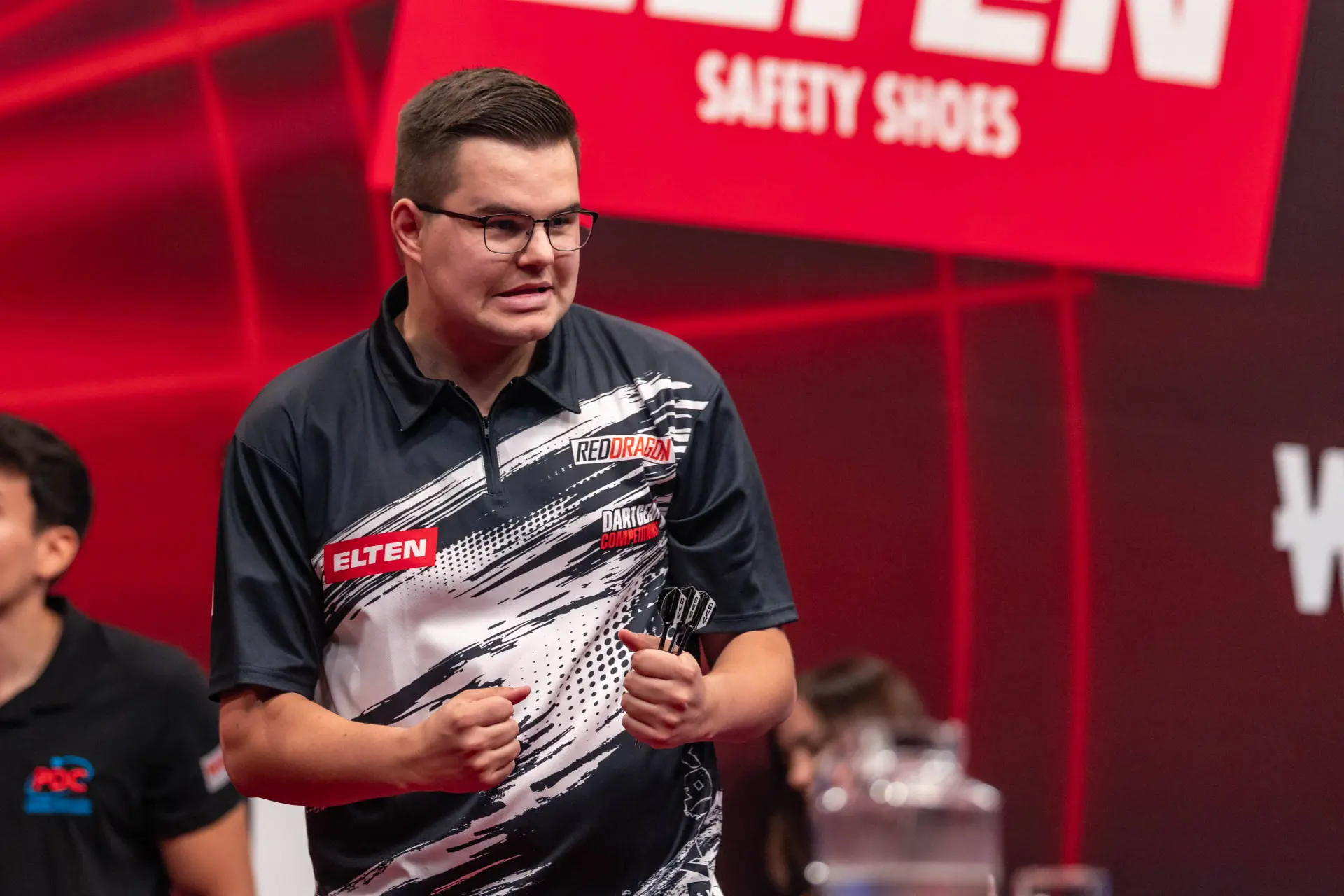
The European Q-School is, year after year, a brutal reality check for darts players with professional ambitions. Dreams are fulfilled, but just as often ruthlessly shattered. For 24-year-old Lennart Faes from Belgium, Q-School 2026 was an emotional rollercoaster: he stood one point away from a PDC Tour Card, but ultimately missed out by the slimmest margin. Yet there was no bitterness, only pride, realism, and confidence in what lies ahead. Together with mentor and figurehead Kim Huybrechts, Faes looked back in depth on the ‘Double Top’ podcast at a week that will help shape his career.
ADVERTISEMENT
From local player to Q-School revelation
Lennart Faes isn’t a darts player who was hailed from a young age as “the next big thing.” On the contrary: he only started taking darts seriously four to five years ago, around and just after the pandemic period. His rise, however, was swift. Through the Development Tour, the Challenge Tour, and strong performances at various tournaments, he worked his way to Q-School, where he immediately impressed and nearly secured a PDC Tour Card.
Faes originally began his darts journey at another darts shop, together with two good friends. When that shop went bankrupt, a new opportunity arose. Kim Huybrechts and his wife Dana offered him a contract to play under their shop. The bond between Huybrechts and Faes had already existed, mainly through encounters at tournaments and in league play. But a legendary quarterfinal in Berlaar—in which both players averaged around 140 per three darts and finished legs in 12 to 15 darts—proved the true starting point.
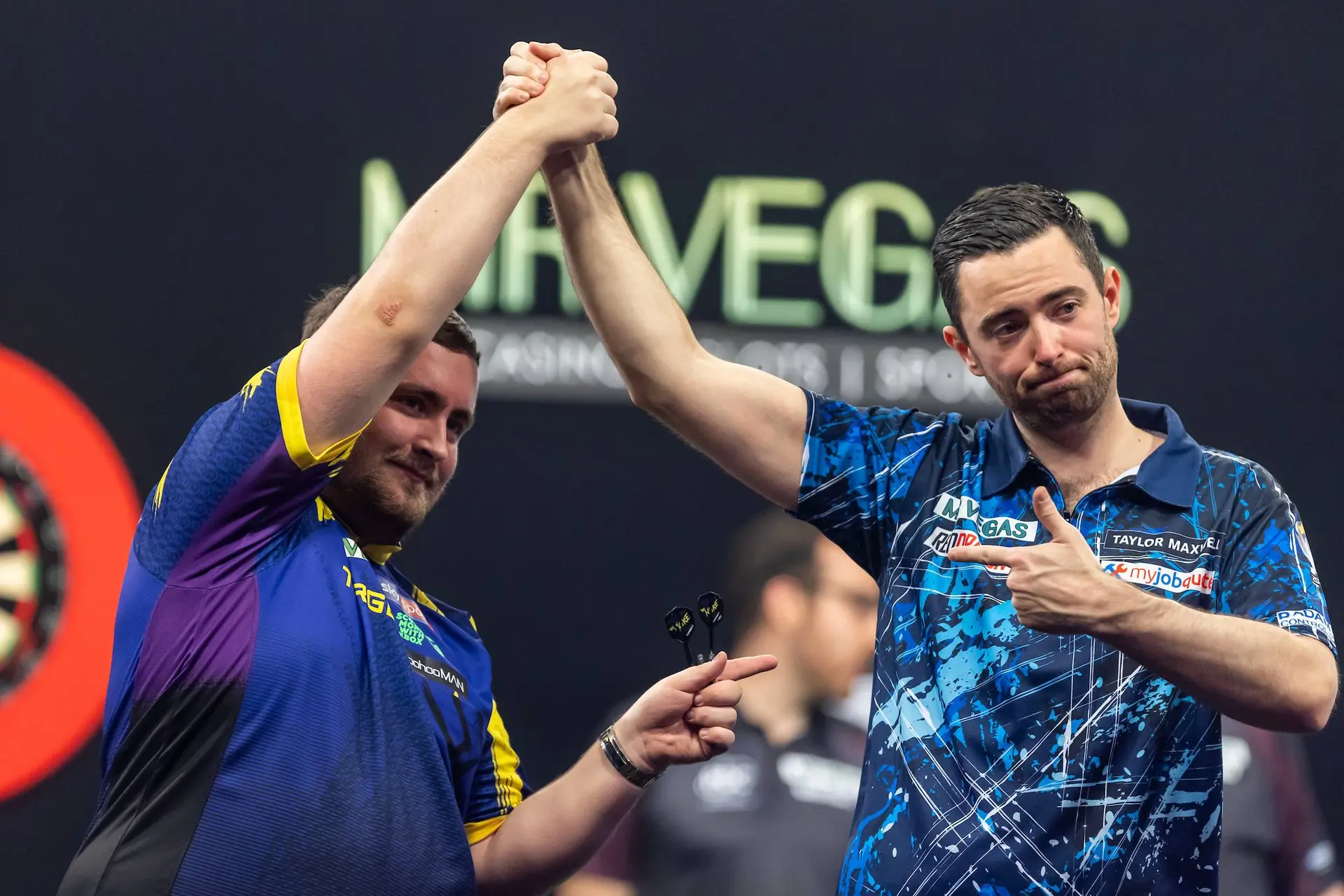
“That was a fantastic match,” Huybrechts recalls. “It ended 4-3 to me, but I immediately thought: this lad can really play. And he was still so young.”
From that moment, the collaboration intensified. Faes joined Huybrechts’ team, they trained together, and gradually a friendship and a coach–pupil relationship developed. “I truly believe in Lennart,” says Huybrechts. “Maybe even more than he believes in himself.”
A gentle soul in a hard world
ADVERTISEMENT
That last point goes straight to the heart of the story. According to Huybrechts, Faes is hugely talented but also a player with a self-doubting nature. “It’s a shark tank,” he states. “Full of machos, strutting, mind games. Lennart is the opposite of that. Too nice at times.”
Faes acknowledges that himself. He describes himself as someone who doesn’t make much noise, prefers to stay in the background, and avoids conflict. And that, according to Huybrechts, is dangerous at the highest level. “I’ve known too many lads who let people walk all over them. That’s not good. So I try to support him in that.”
That happens not only with tactical training, but mentally as well. During practice sessions, Huybrechts deliberately tries to trigger Faes, makes comments at crucial moments, and teaches him to handle pressure. “Chin up, shoulders back. Don’t show you’re a victim.”
Q-School: in the flow, until the bitter end
At Q-School itself, Faes felt strikingly good. He had to play three days in the first stage and stayed in his rhythm throughout. Rest days were no advantage for him—quite the opposite. “I often have trouble with my shoulder. By keeping on throwing it stayed loose. I was really in my element.”
ADVERTISEMENT
He carried that mental momentum into the final stage, where he ultimately finished tenth on the Q-School Order of Merit. He had the same number of points as the player in eighth, but an inferior leg difference. A margin of one point, one leg, one moment. “At that moment I didn’t fully realize how painful that was,” says Faes. “But afterwards you realize: every leg counts. Even when you already think a match is lost.”
A painful example was his 6-1 defeat to Toretta, in which Faes himself averaged around 90, but his opponent posted 104. “Those are matches where you have chances, but those legs make the difference.”
Final standings European Q-School Order of Merit
| Rk | Name | Points | Leg diff | Legs won |
|---|---|---|---|---|
| 1 | Jimmy van Schie | 12 | +32 | 89 |
| 2 | Chris Landman | 10 | +20 | 70 |
| 3 | Marvin Kraft | 10 | +11 | 71 |
| 4 | Benjamin Pratnemer | 9 | +25 | 67 |
| 5 | Adam Gawlas | 9 | +18 | 70 |
| 6 | Jurjen van der Velde | 9 | +14 | 69 |
| 7 | Alexander Merkx | 9 | +10 | 64 |
| 8 | Pascal Rupprecht | 8 | +22 | 63 |
| 9 | Andreas Harrysson | 8 | +16 | 58 |
| 10 | Lennert Faes | 8 | +13 | 64 |
Stress, mind games, and skewed dynamics
In the final stage, Faes also encountered the darker side of Q-School for the first time. Rumors circulated about players ‘helping’ each other, especially compatriots. Faes literally heard conversations where people said: “What do you need?” or “Let my mate win.”
ADVERTISEMENT
“At that moment I was mainly angry,” he admits. “Not even so much disappointed. I just knew: this isn’t going to happen anymore.”
Huybrechts is clear about it: “It shouldn’t happen. Period. But it is human. If you’ve been traveling together for years, sharing costs, that plays a role. The ranking system also encourages these situations.”
According to Huybrechts, this is a structural issue that is hard to solve. “Maybe something can be devised, but it’s incredibly complex.”
Why not getting a PDC Tour Card might be better
Strikingly, Huybrechts argues that, painful as it is, it might be better that Faes hasn’t taken a PDC Tour Card for now. “If I’m completely honest: for his development this might be the right moment.”
ADVERTISEMENT
He explains that Faes is currently averaging around 89 to 90. “To really compete on the Pro Tour, you need a consistent 95 to 97. He can already produce that one peak match, but not often enough yet.”
According to Huybrechts, getting a PDC Tour Card too early can even be harmful. “Taking a beating from the top 128 every week for two years… That does something to your confidence. Especially for someone who’s still mentally vulnerable.”
Faes shares that view. “I also felt, in a way, that I wasn’t quite ready yet. The goal wasn’t to get my PDC Tour Card right now. If it had happened, I’d obviously have taken it. But now it’s just about building further.”
Belgian versus Dutch: a mentality gap?
ADVERTISEMENT
The conversation also delves into the differences between Belgian and Dutch darters. According to Huybrechts, the Belgian mindset is often too modest. “We say: we’ll do our best, we’ll see. The Dutch are quicker to say: I’m going to win.”
He believes you see that difference not only in darts, but in almost every sport. “It’s not arrogance, it’s belief in yourself. And you project that to an opponent.”
On top of that, Belgian players are often judged more harshly by their own supporters. Negative reactions on social media are commonplace. “We constantly shoot down our own people,” says Huybrechts. “That causes damage, especially to young players.”
After Q-School, Faes fortunately received only positive messages, but he realizes that will change someday. “Negativity will always be there. We grew up with it.”
Rituals, calm, and looking ahead
ADVERTISEMENT
A striking detail: during Q-School, Faes developed a small superstition. Every day he drove past a church and made the sign of the cross. “Maybe superstitious, but it gave me calm.”
He also found that calm by choosing not to stay at the Q-School hotel, but in a secluded cottage. “That way I wasn’t constantly in the Q-School bubble. It helped enormously.”
For 2026, the focus is now fully on the Challenge Tour, supplemented with ADC and WDF tournaments. No specific ranking targets, just development. “When I play, I just want to go as far as possible.”
Proud, despite everything
At the end of the conversation, Faes perhaps sums it up best: “Above all, I’m very proud of what I’ve achieved.”
ADVERTISEMENT
Huybrechts fully agrees. “You’re going to hear a lot more from him. The talent is there. Now he just needs to grow some ‘cojones’.”
Or as they put it among themselves: “You’re too nice, Lennie. But that’ll change.”

Samuel GillChief Content Officer
Samuel Gill is the Chief Content Officer (CCO) of DartsNews.com, a role he has held since 2020. He is responsible for editorial governance across the platform, including setting content standards, overseeing accuracy and consistency, and guiding long-term editorial strategy across professional darts coverage. Since joining, he has contributed more than 10,000 articles and editorial pieces, playing a central role in the development and daily operation of the site.
Based in Leicester, Samuel has extensive experience in darts media and has been closely involved in coverage of the professional darts circuit for several years. Within the UK darts community, he is a recognised figure known for his consistent editorial output and ongoing reporting on major tournaments and developments across the PDC calendar.
In his current role, Samuel works closely with editors and writers to ensure content meets clear journalistic standards, with a focus on source verification, editorial consistency, and timely updates when new, confirmed information becomes available.
claps 0visitors 0
Just in
Popular news
Latest comments
- I agree,I can't believe the lack of coverage of this sad loss. Always enjoyed watching him,but I guess now it's all about littler,well it seems that way. Darts has sadly lost a good manrick6717-10-2026
- In the absence of a report regarding the death of Stefan Lord, I'll assist. An excellent player in the late 70s and early 80s, he actually won the now defunct 3rd place match at two World Championships and a couple of the News of the World Championships. A fabulous player and easily the best Swedish player ever. Rest peacefully Stefan.richieburnettrocks16-10-2026
- Joking aside, it is the second most watched sport on sky (more than golf, F1 etc) behind football only, and in participation is second to only football and swimming. It doesn't get the attention or sponsorship of "bigger" sports because it's not as sexy, but it's right up there.BandB13-10-2026
- i love darts but you can't seriously believe it's the second most popular sport in the uk. even top five is pushing it. it may be the fastest growing, though.colt13-10-2026
- I'm a big Clayton fan, but he's got this completely wrong. Qualification criteria exists for a reason - so just as failing to make the top 32/64 for the Euro championships/PT Finals means you miss out, so does not lifting a title for this one.26sForFun12-10-2026
- The players who deliberately slow the game down are usually boring and win very little in the way of silverware. Horrible to watch.MrYnyslas197112-10-2026
- [“The Gentle” then used a sweeping and questionable phrase...] You anglocucks are hilariously finished in every sense of the word.Critical99911-10-2026
- I love Jonny but I disagree. The Grand Slam was always supposed to be "champion of champions" type competition. If the top 16 are guaranteed participation in everything there will be so much less jeopardy involved in qualifying and each major tournament will lose its unique flavour which the PDC has worked hard trying to develop. I enjoy following the qualification races towards the end of the year, and while consistency should have its rewards, the truth is Jonny hasn't reached a major final all year or won a single event on the Pro Tour. Being consistent is one thing, but that alone should have consequences as the sport's elite should not be prepared to accept consistently strong performances, their foremost motivation should be to win and this should be what separates them from the rest, not the consistency of their performances. Jonny is expecting that losing should be enough; it shouldn't be, at least not as far as the Grand Slam is concerned.Deduce635811-10-2026
- Well being honest,it doesn't matter what level you play at, there's always someone who slows it down to suit themselves,and extra swig of water, replacing flights, asking the ref what the score is. It happens wherever. I'm not saying it's professional,but I'm sure we've all seen it beforerick6711-10-2026
- Agree completely. Not sure how a ranking event can have a criteria not based on rankings. And he right on popularity. In the UK second only to football.BandB11-10-2026
Loading