"It’s the same as what us old lads are still hitting": Luke Littler hasn't raised the bar says Gary Anderson as perceived false narrative highlighted
PDC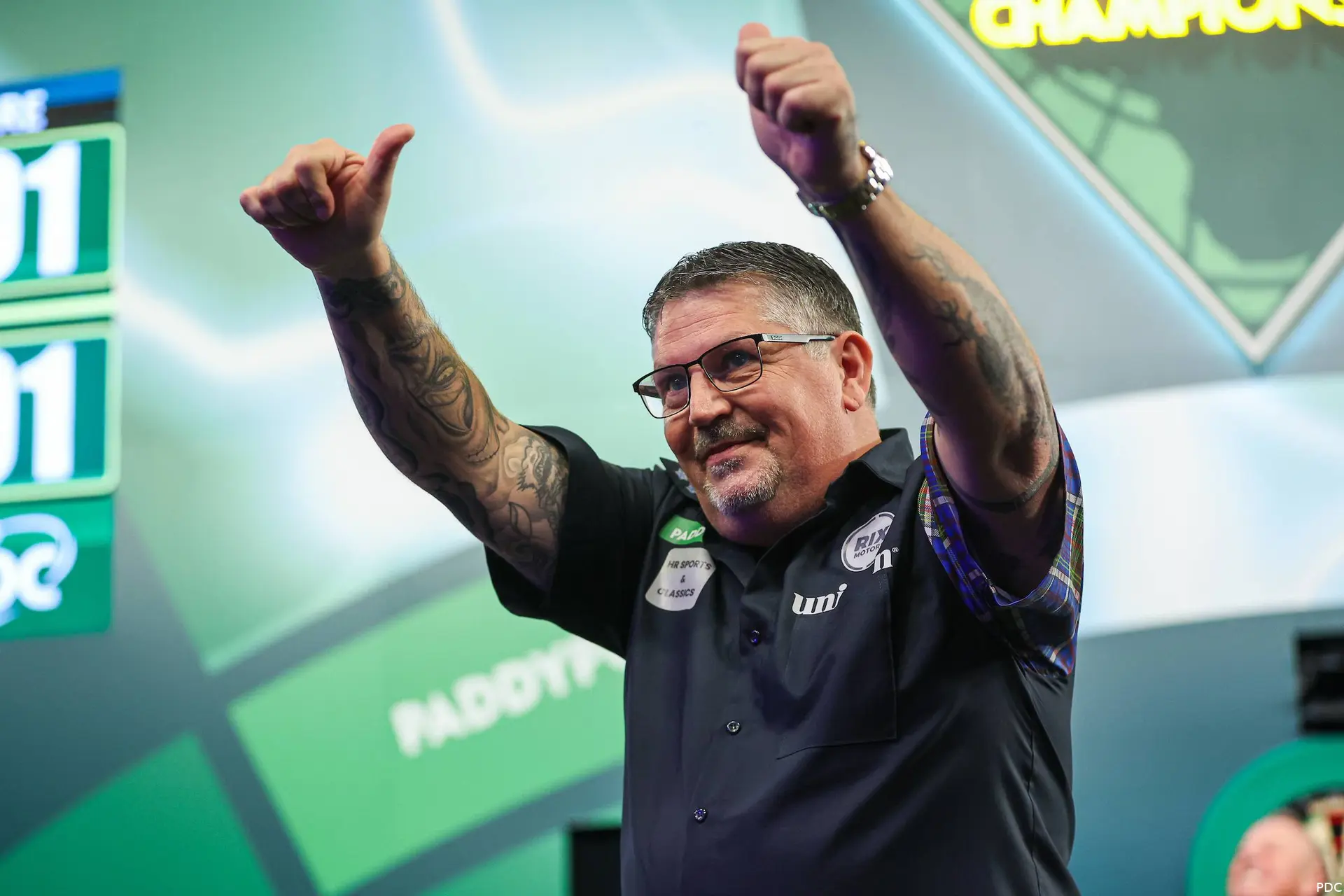
Gary Anderson has once again spoken out about the current level in professional darts. The two-time world champion is convinced that the standard on the big stage has not risen in recent years, despite the emergence of young sensations like Luke Littler and Luke Humphries. According to the Scot, the difference from the past is not quality, but quantity.
ADVERTISEMENT
The now 55-year-old Anderson, currently the world number six, recently reached the semi-finals of the World Darts Championship for the eighth time in his impressive career. There he ultimately had to acknowledge the superiority of Gian van Veen, one of the talented players of the new generation. Yet “The Flying Scotsman” sees no fundamental difference between today’s elite and the players from his own era.
Same level as before
Speaking to talkSPORT, Anderson made his view on the current development of darts clear. According to Anderson, people often assume the sport has had a huge boost in quality, but that conclusion is too simple in his view. "The level has not gone up. It’s the same as what us old lads are still hitting."
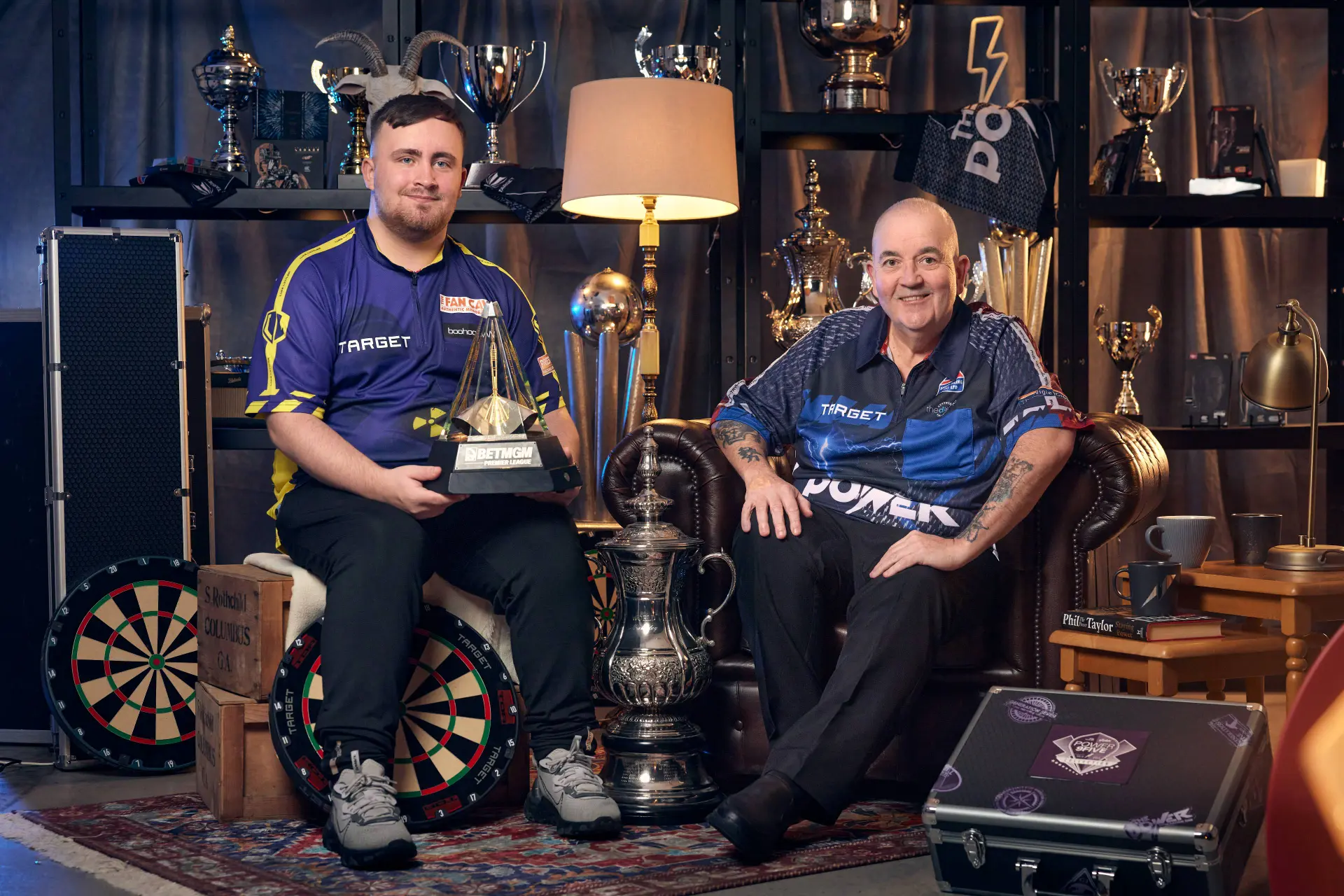
The Scot explains that high averages were being thrown back then as well. “It’s just that there are more of them. Before, you maybe had 20 players who could hit a 100 or 105 average." By that he means the broader field that is now capable of playing top-level darts on a consistent basis.
According to Anderson, this does not mean that players like Littler or Humphries are better than the greats of the past. “Now you have 128. So, I would not say they are getting any better than us, or better in terms of averages. There are just more players who can hit them.” He believes the professionalization of the sport, better training options, and more tournaments have mainly produced a larger group of high-level players, not necessarily a higher peak level.
Alongside his view on the game itself, Anderson also spoke candidly about his current career planning. While younger players enter virtually every tournament, he now chooses more carefully which events he plays. The reason is simple: the intensive travel schedule on the PDC Tour.
ADVERTISEMENT

Gary Anderson is the current world number six
Picking tournaments
“I do. I mean it’s the travelling. It’s great to be these youngsters who go all over the world." He has largely closed that chapter himself. “I have been all over the world and I have loved it. I have seen countries that I have dreamt about going to."
Still, Anderson acknowledges that life on tour can be tough, especially for players who also compete in the Premier League Darts. “But I have done it playing darts. It’s a hectic schedule. It’s really bad especially for the Premier League players," said the Scot. The combination of long trips, high expectations, and constant pressure makes it increasingly difficult, in his view, to keep delivering at the top level.
Despite his age and selective playing schedule, Anderson remains a force to be reckoned with in global darts. His recent World Championship run proves that experience and class still count at the highest level. Moreover, his forthright opinion shows that he is not swayed by hype, but looks at hard numbers and performances.
ADVERTISEMENT

Samuel GillChief Content Officer
Samuel Gill is the Chief Content Officer (CCO) of DartsNews.com, a role he has held since 2020. He is responsible for editorial governance across the platform, including setting content standards, overseeing accuracy and consistency, and guiding long-term editorial strategy across professional darts coverage. Since joining, he has contributed more than 10,000 articles and editorial pieces, playing a central role in the development and daily operation of the site.
Based in Leicester, Samuel has extensive experience in darts media and has been closely involved in coverage of the professional darts circuit for several years. Within the UK darts community, he is a recognised figure known for his consistent editorial output and ongoing reporting on major tournaments and developments across the PDC calendar.
In his current role, Samuel works closely with editors and writers to ensure content meets clear journalistic standards, with a focus on source verification, editorial consistency, and timely updates when new, confirmed information becomes available.
claps 14visitors 13
Just in


Popular news

Latest comments
- I love Jonny but I disagree. The Grand Slam was always supposed to be "champion of champions" type competition. If the top 16 are guaranteed participation in everything there will be so much less jeopardy involved in qualifying and each major tournament will lose its unique flavour which the PDC has worked hard trying to develop. I enjoy following the qualification races towards the end of the year, and while consistency should have its rewards, the truth is Jonny hasn't reached a major final all year or won a single event on the Pro Tour. Being consistent is one thing, but that alone should have consequences as the sport's elite should not be prepared to accept consistently strong performances, their foremost motivation should be to win and this should be what separates them from the rest, not the consistency of their performances. Jonny is expecting that losing should be enough; it shouldn't be, at least not as far as the Grand Slam is concerned.Deduce635811-10-2026
- Well being honest,it doesn't matter what level you play at, there's always someone who slows it down to suit themselves,and extra swig of water, replacing flights, asking the ref what the score is. It happens wherever. I'm not saying it's professional,but I'm sure we've all seen it beforerick6711-10-2026
- Agree completely. Not sure how a ranking event can have a criteria not based on rankings. And he right on popularity. In the UK second only to football.BandB11-10-2026
- Doesn't matter who's in it,it's boringrick6710-10-2026
- Assuming you qualify as one of the "muppets" in question. Classist too. And since you're so clearly interested in academia, look up "linguistic descriptivism" while you're at it. Oh, and better stay away from the working class sport of darts and maybe offer your insightful analysis to, let's say, croquet instead?Deduce635806-10-2026
- The consequences of being uneducated and grammatically challenged. "To all THOSE muppets not THEM " Everytime I see Arsepinall, I have an image of him wearing a cap, standing behind the counter of a fast food establishment.richieburnettrocks05-10-2026
- I don't understand Littler's reason for playing this tournament.rick6705-10-2026
- James Wade has become James Wide. He has piled on the tonnage considerably, he barely fits in his shirt.richieburnettrocks03-10-2026
- Littler will play whatever tournaments he decides. But does every headline have to start with him? Bristow bought Taylor through,and he followed that with Lewis. I can't see littler doing the same. Let him choose,and lose,he's getting good at that lately!rick6702-10-2026
- I believe he has it in him to qualify for the Worlds as he consistently wins matches, even if it is only one or two at a time, although his recent PC quarter-final run was somewhat encouraging in that regard. I think there is a lot of pressure for him to retire, people in the media accusing him of tarnishing his legacy. I think that is a ridiculous line of thinking. How ungrateful it is to attach terms and conditions to the amazing moments he has provided us over the course of his career. What position are we in to dictate to him how he should manage his career when it is he who achieved those successes in the first place? What's more, this is his life and the passion that sustains it, it is not for us to decide when his career is over when it is he who must bear the genuine ramifications of that decision. Since I'm sure money is not a concern, the only question on which the decision should rest is whether he truly continues to enjoy competing. He has retired once before, but the desire to compete is what brought him back. We see a lot of negative body language and he does genuinely look miserable when he is not playing well, but only he will know when he wakes up the next day whether he wants to go and do it all over again. If he wants to compete, he should, it's as simple as that, this is a decision that should not involve anyone else but him and his family. He should not retire to indulge the whims of the media or the public. What satisfaction would he receive by being forced into retirement? What closure would it bring to such a brilliant career? When Phil Taylor decided to retire, his decision was final and resolute. I believe RvB needs to get to this point himself, no matter how many 70 averages it might take. We see the likes of John Part continue to compete on a regular basis well past his prime, I say more power to him, and who knows, further glory could be around the corner, it's darts after all, you just never know. Sometimes I worry that RvB is acutely aware of the clamour for him to retire and that this pressure may even have an impact on his performances as he begins to question whether there is even a place for him in darts anymore, further compounding his poor form and creating a vicious loop. Perhaps to take his future into his own hands would provide him with a levity and freedom that would lend itself to better performances, not to mention an improved wellbeing. In any case, it is under these conditions that one can clear-headedly and definitively settle an issue so profound as retirement, not when you feel you're being rushed out the door. If his performances can no longer sustain his presence on the tour, so be it; as it stands his card seems safe for this year but is in serious jeopardy next year. He could always allow himself to drop off the tour naturally rather than forfeiting his place in the top 64, this could provide a sense of finality while offering a route back through Q-School if he so desired; after all, he's done it before. In conclusion, I just hope that RvB can play - or not play - for his own sake, rather than anyone else's, so that when the time comes he can be in no doubt as to his decision, leaving no lingering questions, so that he can reflect with no regret or uncertainty on the marvelous career he has had.Deduce635826-09-2026
Loading
