“Mental health? My mother would have said, are you a man or a mouse? Get on with it” – Phil Taylor on tough upbringing that forged darts’ most ruthless mindset
PDCWednesday, 29 April 2026 at 14:00
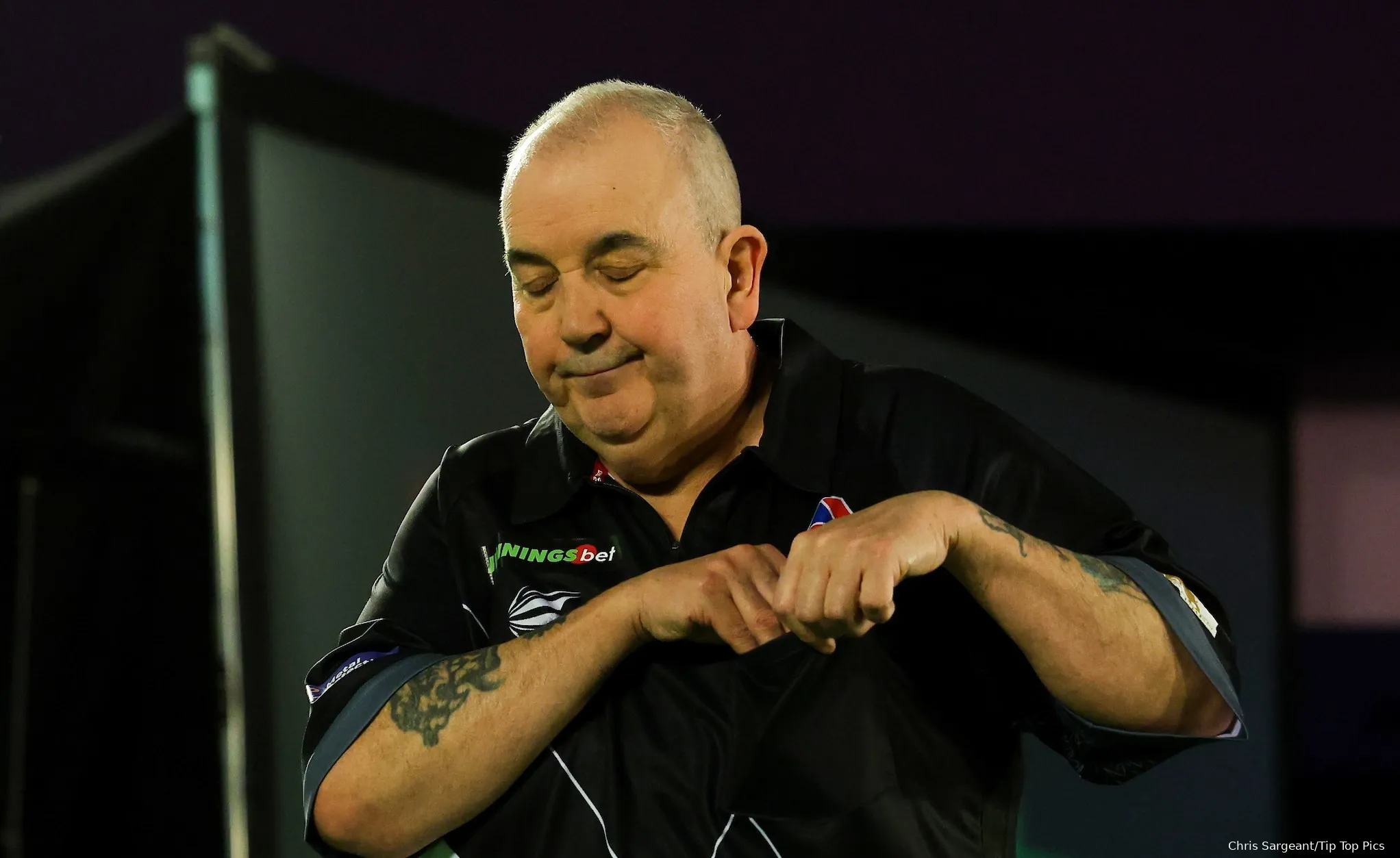
Phil Taylor has opened up on the tough upbringing that shaped his ruthless mentality, while also revealing how a changing darts landscape later left him questioning whether the sport was still for him.
ADVERTISEMENT
The sixteen-time world champion, who rose from humble beginnings with money as his early motivation, recalled how that same relentless mindset carried him to the top before a shift in crowd culture made him realise his career was coming to an end, speaking in conversation with the Double Tops podcast.
“I ain’t got no money” – the hunger behind the rise
Taylor’s journey began with a simple motivation. “Money was my motivation in the beginning, because obviously I ain’t got no money,” he said.
That first breakthrough win quickly showed how different the sport was at the time. “Then the first time I won, I think it was £500, I bought a shower from British Gas. Nobody had a shower. So, I had this power shower, which you press the button, it’s enormous,” he recalled. “The whole street were knocking. ‘Phil, can I have a look at your shower?’”
The scale of that early prize money remained a source of amusement as his career progressed. “I did! It’s great. £500, that was a lot of money then. And then when I won the worlds, the first one, it was £24,000,” he said. “And my neighbours again were knocking on, ‘Phil, can we have a look at that money? I’ve never seen £24,000.’ I said, ‘I haven’t got it, it’s in the bank, it’s a cheque.’ He thought they’d give me a suitcase full of money, like I was a bank robber or something, it was brilliant. I said, ‘I haven’t got it.’”
From those beginnings, Taylor would go on to dominate the sport for more than two decades, winning 16 world titles and setting a standard that still defines the professional game.
ADVERTISEMENT
“Are you a man or a mouse?” – the mentality that defined an era
That success was rooted in a mindset shaped long before the titles arrived. “Well, my dad with my mother, I mean, if I’d have said I got mental health, she’d have said, are you a man or a mouse? Get on with it,” he said. “Yeah, suck it up and get on with it. You’ve got a family to look after.”
That same approach carried through into his everyday life. “You couldn’t lie in bed either. When I was working, I was working seven days a week,” Taylor said. “If I said to my mother, she did it once, it only happens once. Get up. I’m up and I’m banging my foot on the ceiling. You’re banging your foot again, you little swine. Get up. The next thing you know, bucket of water.”
Even at the height of his dominance, that mentality never changed. “My dad’s forte was, right, you’ve won that, put the trophy over there, get ready for your next one. Because you’re only as good as your next tournament,” he said. “If you win the World Championship and then you’re playing a Players and get beat, you’re going to be plastered.”
It was that relentless outlook that underpinned a career in which Taylor reached 21 world finals and dominated the sport across multiple generations.
ADVERTISEMENT

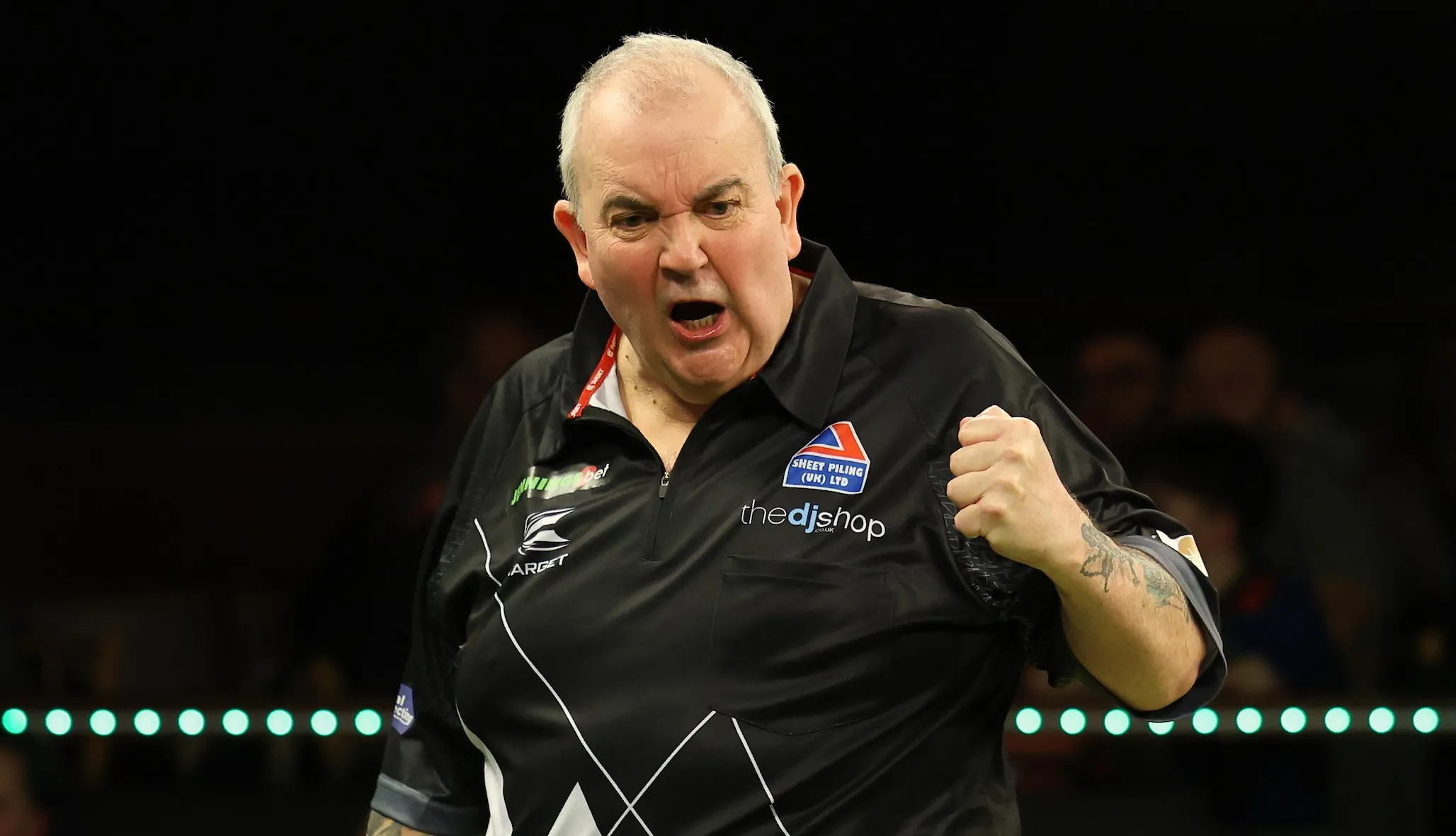
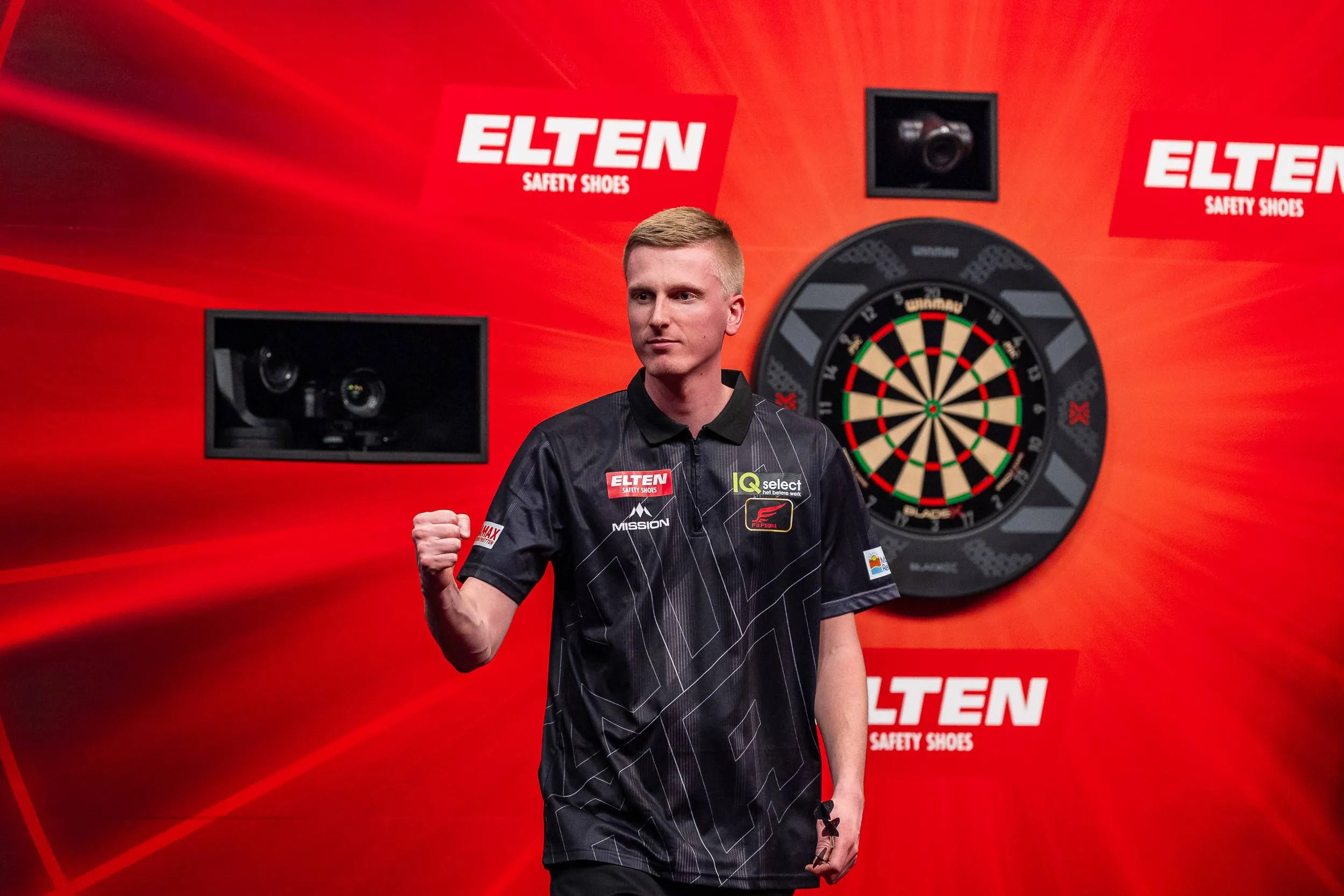
Phil Taylor in action
“This isn’t right” – the moment everything changed
Despite that success, Taylor has revealed there was a clear moment when things began to feel different. “I was never really sure when, or if, I would want to retire but I was told that I would wake up one morning and just know that I’d had enough,” he said.
That moment came during one of his most successful events. “I was playing Terry Jenkins at the World Matchplay – I always thought the crowd at that tournament were the best around,” he recalled. “They were real darts fans and I looked around during my match with Terry and the atmosphere wasn’t what it used to be. That was the first time I was thinking, ‘this isn’t right and my career is coming to an end.’”
He suggested that shift was tied to a broader change in the sport’s audience. “I wasn’t used to the sort of new-age crowd of everyone at the bar in fancy dress, and I think that’s the same with the worlds now,” he said.
ADVERTISEMENT
It was a contrast to the environment in which he had built his career. “I’d struggle being a commentator or that type of role because I’ve always been used to being able to say whatever I want – but you can’t do that these days,” he admitted.
Even with that growing sense that the end was approaching, the process itself was not immediate. “I knew roughly when I was going to retire but that year really dragged out – a bit like when you’re waiting to go on holiday,” he said.
That combination of early hunger, relentless mentality and eventual disconnect with a changing sport ultimately brought an end to a career that not only dominated darts, but helped shape it into the global spectacle it is today.
claps 0visitors 0
Just in
Popular news
Latest comments
- I'm going to the one in Bremen after the Euro Champs Finals. Flying over from Australia going to be mad one.medinabello29-04-2026
- Too much to do for the matchplay?BandB28-04-2026
- First up: total respect to Alan Soutar for showing up and winning matches the day after running the London Marathon. Proper boss behaviour. Now some Beau stats: She has now beaten five axtive PDC world champions competitively, just needing Humphries and MVG for the full set. Ranked above 50 Tour Card Holders, 18 of whom had a year's head start. Her 2026 ProTour record is 24-10, beating Lisa Ashton's 23 wins. On last year's tables she is two match wins away from qualifying for both the PC Finals and the Worlds. Top of the ProTour qualifying list for the Worlds and the Grand Prix is in reach. All in all, pretty incredible!Scoobedybop28-04-2026
- Absolutely brilliant. Made up for her! Such a talent and likable young lady. Go Beau!!!BandB27-04-2026
- The PDC has just made it very clear that it believes that men have inherent advantages that make it unfair for anyone born as a man to compete with females. Doesn't that mean that Wayne's good intentions give false hope to all those poor weak inadequate girls, and who's going to tell Beau that she is biologically incapable of competing as an equal?Scoobedybop26-04-2026
- Always like Peter,always had a cheeky grin, unfortunately TV wasn't kind to his heyday at the time,so he's not as well known as a lot of players won nothing. Good lad thoughrick6725-04-2026
- He has a point! Fewer events in Germany would teach them a lesson. They are far too rowdy.MrYnyslas197124-04-2026
- Who gives a toss about what deller thinks.medinabello22-04-2026
- Move three to Britain and Ireland, give chances for our new Tour Card Holders and amateurs to qualify. The likes of Scott Waites and Jack Drayton would be far stronger than the locals we're normally lumbered with.Scoobedybop20-04-2026
- He didn't say anything when de Graff of ziljstra wouldn't partner her for the Dutch team,did he? No.rick6719-04-2026
Loading