“I’d get through and say, 'I got beat in the semis.' And he’d go, 'Ring me when you effing win something'” – Phil Taylor shares how his mentor, Eric Bristow, made him angry
PDC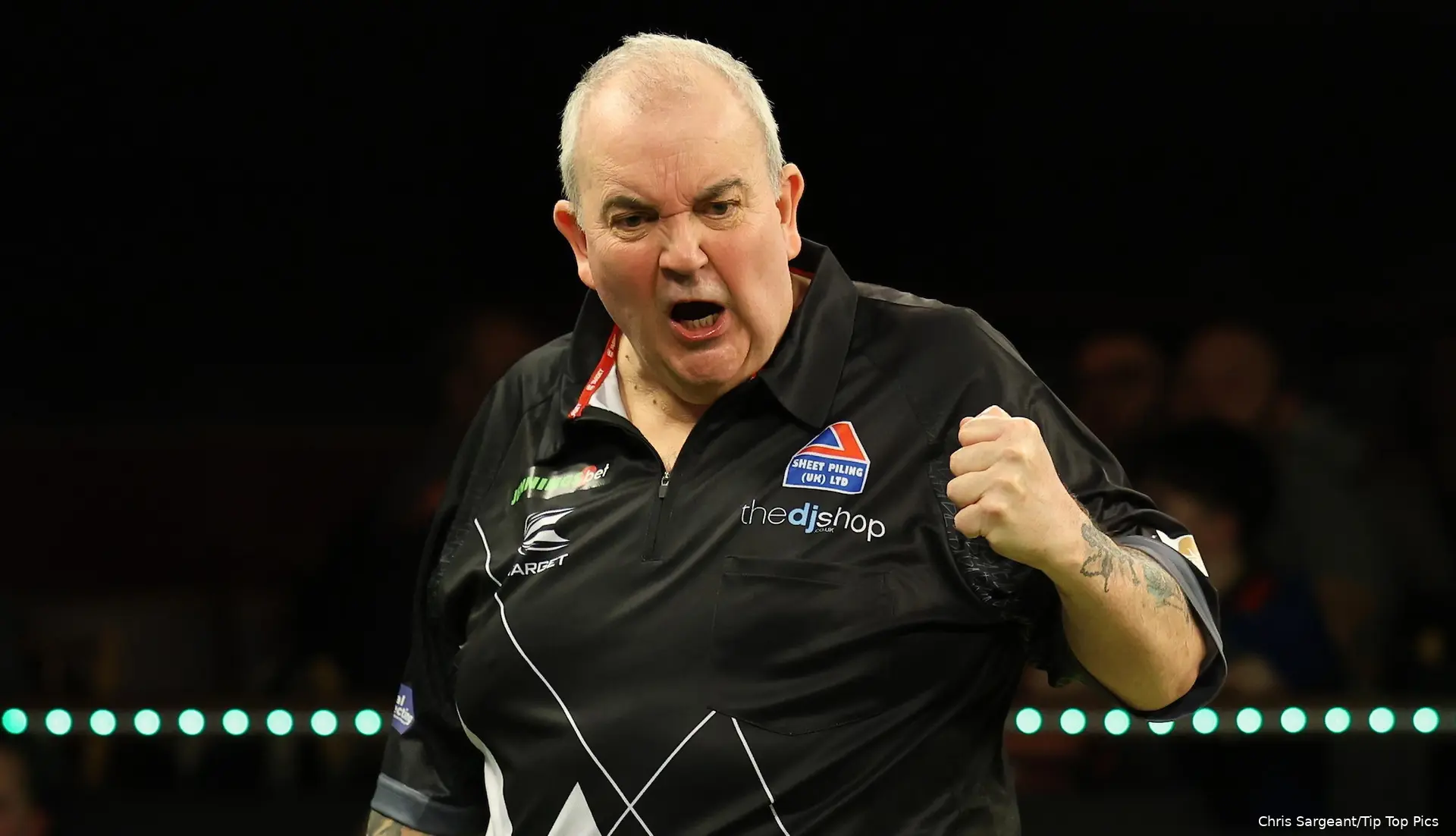
In the world of darts, Phil Taylor is a name synonymous with dominance. But behind those 16 world titles lies no straightforward tale of success. In the Double Tops podcast, “The Power” reflects on his early years, his drive, and the mental reality of winning — and above all, keeping on winning.
ADVERTISEMENT
The influence of Eric Bristow
Taylor points without hesitation to his mentor Eric Bristow as the defining factor in his development. Not through gentle guidance, but through hard-edged prods. “Eric Bristow was a big influence on me. He’d say, 'Where are you going this weekend?' I’d say, 'I’m playing in the Derbyshire Open.' He’d tell me, “Ring me when you’re on your way back and let me know how you got on.” There were no mobiles in those days, so I had to find a working phone box—half of them were wrecked."
What follows is a story that perfectly sums up Bristow’s mentality. Taylor had to find a working phone box, never a given at the time, to call his mentor. But a decent result wasn’t met with praise.
“I’d get through and say, 'I got beat in the semis.' And he’d go, 'Ring me when you effing win something.' I’d just passed 20 phone boxes trying to call him, and he’d tell me to ring back when I’d won.” That approach paid off. “But it made me angry—and it worked.”
Even at major tournaments Bristow kept pushing Taylor. When Taylor travelled to the Winter Gardens in Blackpool with several shirts, he was told he’d only need two. “I’d look at him and think, 'Yeah, I do.' Then I’d go and win each round. Afterward, he’d say, 'I knew that would wind you up.'”
Winning a world title is often seen as the ultimate moment of euphoria. But Taylor paints a different picture. “It’s a bit of an anticlimax, really. It’s been your dream—like winning the lottery. For about five days, it’s great.” After that comes the void. “You do all your press, radio, TV interviews. But after that, you come down from it and feel quite emotional—very weepy.”
ADVERTISEMENT
The phenomenon is known as the “arrival fallacy”: the idea that achieving a goal delivers lasting happiness. Taylor admits he experienced it too, but it didn’t stop him from pushing on.
Where many players stumble over expectations and looking ahead, Taylor kept it simple. “But I only ever played the player in front of me.Sometimes I didn’t even know who I’d face next.”
According to Taylor, that’s a major difference from other players. “Some players think, 'I’ve got him—I beat him every time. Then I’ve got him next.' That’s when complacency creeps in. They’re already thinking about the semi-finals, and then they lose in the first round because they’re not focused on the job.” His philosophy was clear: every opponent deserves maximum respect. Only once they’re beaten can you look ahead.

Taylor won no fewer than 101 official TV tournaments during his PDC career, including 83 majors.
ADVERTISEMENT
Upbringing and mindset: “Are you a man or a mouse?”
Taylor’s mental resilience was shaped early. His parents played a crucial role. “if I’d said I had mental health issues, my mother would have said, 'Are you a man or a mouse? Get on with it.'”
It sounds harsh, but Taylor says it typifies the era he grew up in. “Different times, weren’t they? It was, 'Suck it up and get on with it. You’ve got a family to look after.' You couldn’t lie in bed either.” He laughs as he recalls how his mother literally got him out of bed—if necessary, with a bucket of water. “Next time I even thought about it, she’d be coming upstairs, and I was already up, out the door."
His father had a different, but equally important lesson. “My dad’s way was: 'Right, you’ve won that—put the trophy over there. Get ready for the next one. You’re only as good as your next tournament.'”
While honour and legacy took centre stage later, money was Taylor’s biggest motivation at the start. “That was my motivation at the beginning because I didn’t have any.” He spent his first prize money, £500, on a luxury item: a shower. "Nobody had a shower back then. People were knocking on the door: "Phil, can I have a look at your shower?'”
ADVERTISEMENT
When he won his first world title and earned £24,000, it again sparked amazement in the neighbourhood. "My neighbours were knocking again: 'Phil, can we have a look at that money? I’ve never seen £24,000.' I said, 'I haven’t got it—it’s in the bank. It’s a cheque,'" he concludes with a smile.
Lucas MichaelDarts Journalist
Lucas Michael is a darts journalist and reporter based in Cambridge, UK, and has been part of the DartsNews team since 2025. He covers professional darts through reports, analysis, round-ups, and live coverage, with a focus on clear context and accurate reporting across the PDC calendar.
A key part of his work is liveblogging major tournaments throughout the year, providing real-time updates, match coverage, and contextual reporting across the professional circuit. He also reports regularly from events on site and has covered the PDC World Darts Championship from the venue, delivering first-hand insight throughout the tournament.
Within the newsroom, Lucas works closely with the editorial team and supports coverage alongside Chief Content Officer Samuel Gill and reporter Kieran Wood.
Lucas holds a BA (Hons) in Sports Journalism. In his work, he places strong emphasis on careful sourcing, editorial accuracy, and updating content promptly when new, verified information becomes available.
claps 0visitors 0
Just in

Popular news

Latest comments
- [“The Gentle” then used a sweeping and questionable phrase...] You anglocucks are hilariously finished in every sense of the word.Critical99911-10-2026
- I love Jonny but I disagree. The Grand Slam was always supposed to be "champion of champions" type competition. If the top 16 are guaranteed participation in everything there will be so much less jeopardy involved in qualifying and each major tournament will lose its unique flavour which the PDC has worked hard trying to develop. I enjoy following the qualification races towards the end of the year, and while consistency should have its rewards, the truth is Jonny hasn't reached a major final all year or won a single event on the Pro Tour. Being consistent is one thing, but that alone should have consequences as the sport's elite should not be prepared to accept consistently strong performances, their foremost motivation should be to win and this should be what separates them from the rest, not the consistency of their performances. Jonny is expecting that losing should be enough; it shouldn't be, at least not as far as the Grand Slam is concerned.Deduce635811-10-2026
- Well being honest,it doesn't matter what level you play at, there's always someone who slows it down to suit themselves,and extra swig of water, replacing flights, asking the ref what the score is. It happens wherever. I'm not saying it's professional,but I'm sure we've all seen it beforerick6711-10-2026
- Agree completely. Not sure how a ranking event can have a criteria not based on rankings. And he right on popularity. In the UK second only to football.BandB11-10-2026
- Doesn't matter who's in it,it's boringrick6710-10-2026
- Assuming you qualify as one of the "muppets" in question. Classist too. And since you're so clearly interested in academia, look up "linguistic descriptivism" while you're at it. Oh, and better stay away from the working class sport of darts and maybe offer your insightful analysis to, let's say, croquet instead?Deduce635806-10-2026
- The consequences of being uneducated and grammatically challenged. "To all THOSE muppets not THEM " Everytime I see Arsepinall, I have an image of him wearing a cap, standing behind the counter of a fast food establishment.richieburnettrocks05-10-2026
- I don't understand Littler's reason for playing this tournament.rick6705-10-2026
- James Wade has become James Wide. He has piled on the tonnage considerably, he barely fits in his shirt.richieburnettrocks03-10-2026
- Littler will play whatever tournaments he decides. But does every headline have to start with him? Bristow bought Taylor through,and he followed that with Lewis. I can't see littler doing the same. Let him choose,and lose,he's getting good at that lately!rick6702-10-2026
Loading