“It felt quite surreal” – Women’s world champion Deta Hedman receives OBE after four decades at the heart of darts
Other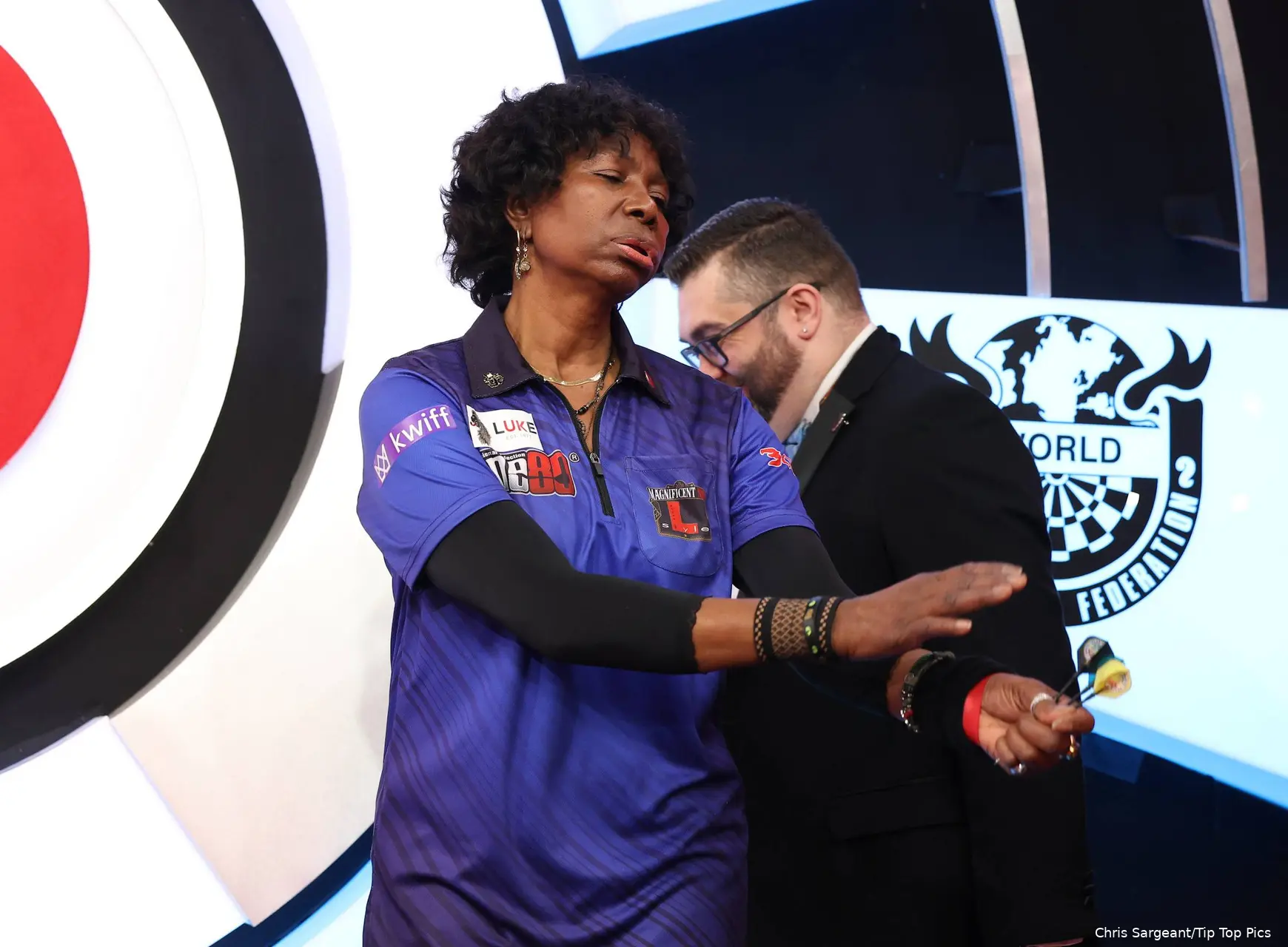
When Deta Hedman walked into St James's Palace this week to receive her OBE from Princess Anne, it marked a moment few figures in women’s darts could claim.
ADVERTISEMENT
“It felt quite surreal,” Hedman said afterwards. “She’s so lovely. We were having a right proper laugh. She’s a sportswoman herself. So, we were having a little chat. It just felt quite surreal, to be honest. It was a little bit mind-blowing.”
Only weeks earlier, the 66-year-old had completed the final chapter of her career by winning the WDF Women's World Championship title. The honour may have been for services to darts and charity, but inside the sport, it represents recognition that has been building for decades.
More than longevity
Hedman has been competing at the elite level since the 1980s. She won her first WDF ranking title in 1989 and lifted the World Masters crown in both 1994 and 2013, a gap that alone tells the story of her longevity.
She competed through the height of the BDO era, through its decline, into the WDF structure and across into the modern PDC women’s landscape. Very few names in darts are recognised across all of those generations. Hers is one of them.
This is why the OBE lands with such weight for darts followers. It is not tied to a single recent result. It is an acknowledgement of a lifetime spent at the centre of the women’s game.

ADVERTISEMENT
A voice as well as a player
Hedman’s legacy in darts is not built only on titles and finals. She has also been one of the most open voices about the racism she experienced within the sport and the effect it had on her career. She has spoken publicly about the abuse she received and about periods where it contributed to her stepping away from the game.
That honesty is a significant part of why she is held in such regard. She did not simply compete for forty years. She helped change how women’s darts talks about inclusion, respect and opportunity.
Alongside that, she has long been associated with charity work supporting children with disabilities, earning her the nickname “The Heart of Darts” in WDF circles.
And throughout all of this, she worked full-time. “Most people don’t believe that I do have a full-time job and play darts,” she said in an interview with BBC Essex. “It’s just a hobby that I happen to be fairly good at, and I enjoy very much. And if you enjoy something, you will excel at it.”
ADVERTISEMENT
A world champion who still worked for Royal Mail is not a contradiction. It is a reflection of the reality she has lived for decades in women’s darts.

Deta Hedman celebrates her Lakeside win
Standing up for the women’s game
Hedman has also remained a prominent and outspoken voice when it comes to protecting opportunities within the women’s category. In recent years, she has spoken firmly about fairness and the importance of ensuring that women’s darts remains a space where female players can compete on equal terms and build meaningful careers.
Those views have placed her at the centre of difficult and sometimes uncomfortable conversations within the sport. But they have also underlined why she is still such a relevant figure in 2026, not simply a respected name from the past.
ADVERTISEMENT
Her comments this week reflect that continued focus on the future of the women’s game. “At the moment, darts is just having such a great revival and long may that continue, and more girls get into it,” she said. “But it will catch up to a much better level where girls can say, ‘right, this is my caree,r and I can make a good living’. But everything takes time.”
Those words come from someone who has lived the gap between passion and financial reality for forty years.
Born in Jamaica and arriving in the UK in 1973, Hedman built her life in Essex and built her reputation on darts stages across Europe. She stepped away from the sport at times when work and life demanded it. She returned again and again to compete at the highest level. And in December, she finally lifted the world title that had eluded her.
A few weeks later, she stood in St James’s Palace receiving an OBE. The ceremony itself may have felt light, friendly and “mind-blowing” in her own words. For darts, it felt like long overdue recognition of a pioneer whose impact on the women’s game extends far beyond trophies and into the very conversations that continue to shape it today.
ADVERTISEMENT
Kieran WoodDarts Journalist
Kieran Wood is a sports journalist based in Wales and has been active in journalism since 2022. He contributes to DartsNews.com, where he covers professional darts through news, match reports, analysis, and live coverage across the PDC calendar and major tournaments.
A key part of his work is on-site reporting from leading events. Kieran has covered the PDC World Darts Championship in person, reporting daily from the venue and providing first-hand insight from the tournament. During his coverage, he has conducted interviews with leading players including Luke Littler, Luke Humphries, and Gerwyn Price.
He is also one of the leading voices of the English-language Dartsnews Podcast, contributing regular analysis and discussion on developments across the professional darts circuit.
In his reporting, Kieran places strong emphasis on careful sourcing, editorial accuracy, and updating articles when new, verified information becomes available.
claps 0visitors 0
Just in


Popular news

Latest comments
- In the absence of a report regarding the death of Stefan Lord, I'll assist. An excellent player in the late 70s and early 80s, he actually won the now defunct 3rd place match at two World Championships and a couple of the News of the World Championships. A fabulous player and easily the best Swedish player ever. Rest peacefully Stefan.richieburnettrocks16-10-2026
- Joking aside, it is the second most watched sport on sky (more than golf, F1 etc) behind football only, and in participation is second to only football and swimming. It doesn't get the attention or sponsorship of "bigger" sports because it's not as sexy, but it's right up there.BandB13-10-2026
- i love darts but you can't seriously believe it's the second most popular sport in the uk. even top five is pushing it. it may be the fastest growing, though.colt13-10-2026
- I'm a big Clayton fan, but he's got this completely wrong. Qualification criteria exists for a reason - so just as failing to make the top 32/64 for the Euro championships/PT Finals means you miss out, so does not lifting a title for this one.26sForFun12-10-2026
- The players who deliberately slow the game down are usually boring and win very little in the way of silverware. Horrible to watch.MrYnyslas197112-10-2026
- [“The Gentle” then used a sweeping and questionable phrase...] You anglocucks are hilariously finished in every sense of the word.Critical99911-10-2026
- I love Jonny but I disagree. The Grand Slam was always supposed to be "champion of champions" type competition. If the top 16 are guaranteed participation in everything there will be so much less jeopardy involved in qualifying and each major tournament will lose its unique flavour which the PDC has worked hard trying to develop. I enjoy following the qualification races towards the end of the year, and while consistency should have its rewards, the truth is Jonny hasn't reached a major final all year or won a single event on the Pro Tour. Being consistent is one thing, but that alone should have consequences as the sport's elite should not be prepared to accept consistently strong performances, their foremost motivation should be to win and this should be what separates them from the rest, not the consistency of their performances. Jonny is expecting that losing should be enough; it shouldn't be, at least not as far as the Grand Slam is concerned.Deduce635811-10-2026
- Well being honest,it doesn't matter what level you play at, there's always someone who slows it down to suit themselves,and extra swig of water, replacing flights, asking the ref what the score is. It happens wherever. I'm not saying it's professional,but I'm sure we've all seen it beforerick6711-10-2026
- Agree completely. Not sure how a ranking event can have a criteria not based on rankings. And he right on popularity. In the UK second only to football.BandB11-10-2026
- Doesn't matter who's in it,it's boringrick6710-10-2026
Loading