European Tour MC Philip Brzezinski was never asked to be John McDonald's successor despite fan backing: "Every time the PDC has asked me for something, I’ve said yes"
PDC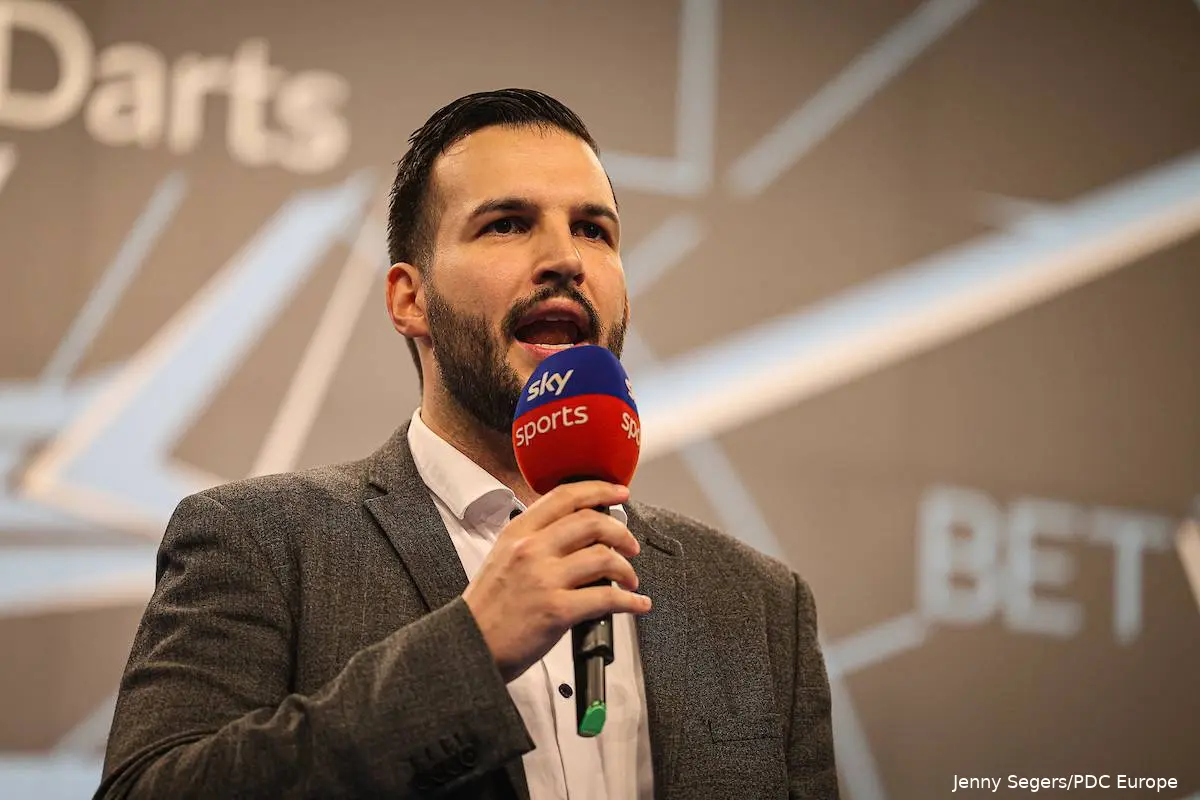
In February, the PDC returns to Poland. This time not with a World Series event, but with a full European Tour tournament: the Poland Darts Open in Krakow. For many darts fans, it feels like a key step in the continued international expansion of the sport. Behind the scenes, Philip Brzezinski, Head of Sport at PDC Europe and best known to the wider public as the regular master of ceremonies on the European Tour, is one of the pivotal figures.
ADVERTISEMENT
For the Polish darts website Łączy Nas Dart, he gave an extensive interview about his background, the choice for Krakow, the future of the European Tour, and the importance of innovation. It offers an intriguing look at how PDC Europe thinks and plans ahead.
“There must be a Pole somewhere in my family tree”
The name Brzezinski immediately raises questions for many fans. Does Philip Brzezinski have Polish roots? He can laugh about it. “I think there must have been Polish roots somewhere in my family history, otherwise I wouldn’t have this surname,” he says. “But honestly: I don’t know anyone in my family who actually comes from Poland. I’m simply German. I was born in Germany, and so were my parents.”
Still, in the darts world he’s often referred to by the nickname “Swiss Phil.” That also needs explaining. “You should really ask Dan Dawson,” Brzezinski laughs. “My parents live in Switzerland, but at some point Dan just decided I was Swiss and not German. He started calling me ‘Swiss Phil,’ and it stuck. I was fine with that.”
More than just the man with the microphone
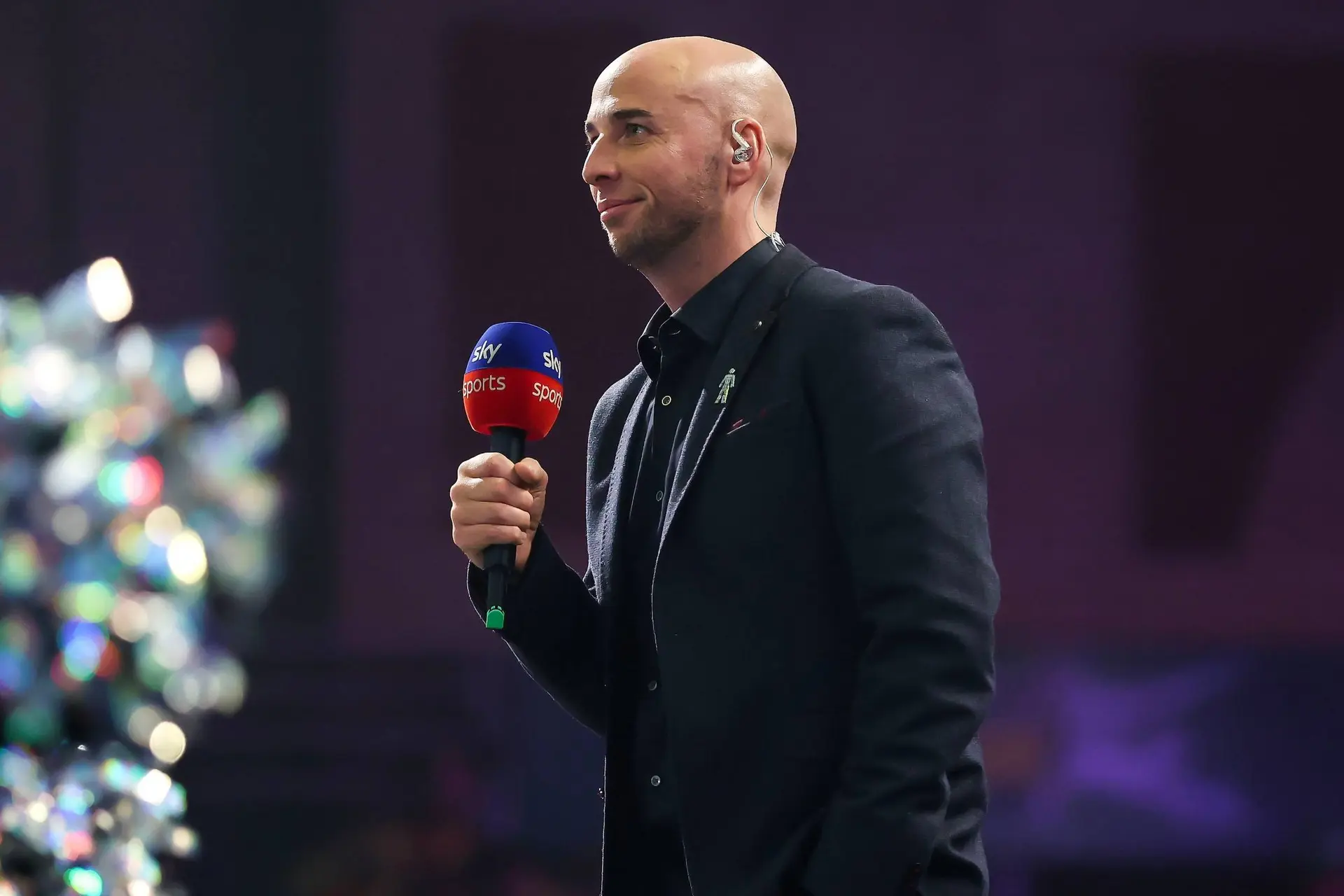
For many fans, Brzezinski is the face and voice of the European Tour. But his role goes far beyond the stage. “My work as a presenter is the most visible,” he explains. “I present the European Tour and major exhibition tournaments. But I’m also responsible for all events in continental Europe that aren’t televised.”
ADVERTISEMENT
These include qualifiers, Pro Tour events, the Challenge Tour, and the Development Tour. “Those tournaments also need to be organized and delivered,” says Brzezinski. “It all happens behind the scenes, but it’s just as important.”
Social media regularly features fans who would like to see him present televised tournaments in the United Kingdom. Is his busy PDC Europe schedule the reason that never happened? “I’m honored by those comments,” he says candidly. “It’s great to see people would like me there. But I can say with a clear conscience: every time the PDC has asked me for something, I’ve said yes. I’ve never turned down an offer. They’ve simply never asked me to take on that role in the United Kingdom. It’s as simple as that.”
European Tour grows, on and off the oche
The European Tour is the backbone of PDC Europe. Looking back on last season, Brzezinski is very satisfied. “Absolutely,” he says. “We always have to consider the economic side, and in terms of ticket sales last year was really very good. We’re growing steadily, year on year. That’s fantastic to see.”
He also sees sporting progress. “We had multiple winners, top-quality finals, and incredibly exciting matches,” he emphasizes. “Looking at darts in general, the talent level is higher than ever. You see that reflected on the European Tour, and that makes me proud.”
ADVERTISEMENT

Philip Brzezinski is the regular master of ceremonies on the European Tour
Fifteen tournaments: is that the limit?
In 2026, the European Tour features fifteen events — a record. Is that the maximum? “We only have 365 days in a year,” Brzezinski says matter-of-factly. “At some point you hit a ceiling. But I don’t know if fifteen is the absolute maximum. Maybe there’s room for one or two more in the future.”
He points out that players are more strategic with their schedules nowadays. “They don’t have to play everything. They’re increasingly choosing where to enter and where not. And that will only increase as the calendar fills up.”
Brzezinski calls Poland’s European Tour stop a logical step. “If you look at the World Series events in Poland, you see the interest is enormous,” he says. “Poland lives and breathes darts. Fans love to watch it live. From that perspective, a European Tour event here is a relatively low-risk decision.”
ADVERTISEMENT
According to Brzezinski, the European Tour is an even better fit for Poland than the World Series of Darts. “For Polish events, the European Tour is probably the most natural platform,” he states. “I’m really looking forward to starting the season in Poland.”
Why Krakow?
Why was Krakow chosen and not, for example, Warsaw? “The requirements for a European Tour venue are sometimes different from those for British PDC events,” Brzezinski explains. “Catering facilities in the arena, for instance, are very important for us.”
PDC Europe also often looks deliberately at cities just outside the biggest metros. “In Germany, we stage tournaments in Sindelfingen or Riesa, close to Stuttgart and Leipzig,” he says. “Financially, that’s often a very sensible choice.”
Ticket sales for Krakow confirm to him that the right decision has been made. “I’ve heard Krakow is a beautiful city,” he adds. “Hopefully I’ll have time to see some of it as well.”
ADVERTISEMENT
Besides Poland, Slovakia is also a notable newcomer on the calendar. “The PDC has never staged a tournament there,” says Brzezinski. “But we see, and hear from our local promoter, that there’s a lot of interest.”
Bratislava is also strategically located. “Austria is close by, and there are an enormous number of darts fans there,” he explains. “I expect many Austrians will travel to Slovakia.”
He draws a parallel with Switzerland, which was once seen as an ‘illogical’ choice too. “That ultimately proved a great success,” says Brzezinski. “It’s about finding local partners with a passion for darts. People who want to build something.”
Less Germany, but Germany remains crucial
ADVERTISEMENT
Of the fifteen European Tour events, six are played in Germany. Some still think that’s too many. “Romantically, fifteen countries would be nice,” Brzezinski acknowledges. “But realistically, German events are enormously important economically. Germany is, after the United Kingdom, the biggest darts market in the world.”
He does not rule out further internationalization. “We have moved tournaments in the past,” he says. “That could happen again in the future.”
He calls dropping Hildesheim painful but logical. “It has a great history, but with Göttingen nearby and a larger arena, we had to make a choice.”
Next Gen: daring to experiment
Finally, Brzezinski addressed the Next Gen cycle, which is drawing huge interest. “I don’t call it crazy, I call it avant-garde,” he laughs. “You have to dare to experiment. Sometimes something doesn’t work, and then you stop. That’s fine.”
ADVERTISEMENT
According to him, Next Gen is about development. “We want to challenge young players with new formats. That helps them grow.”
Does he see such formats returning in bigger tournaments? “Why not?” he says. “If it isn’t broken, you don’t need to fix it – 501 works perfectly. But trying something new from time to time? That seems only healthy to me.”
And yes, the Polish translation of Are you ready for darts? is already in the bag. “I got help from a Polish friend of a colleague,” Brzezinski smiles. “I still need to practice it, but it’ll be fine.”

Samuel GillChief Content Officer
Samuel Gill is the Chief Content Officer (CCO) of DartsNews.com, a role he has held since 2020. He is responsible for editorial governance across the platform, including setting content standards, overseeing accuracy and consistency, and guiding long-term editorial strategy across professional darts coverage. Since joining, he has contributed more than 10,000 articles and editorial pieces, playing a central role in the development and daily operation of the site.
Based in Leicester, Samuel has extensive experience in darts media and has been closely involved in coverage of the professional darts circuit for several years. Within the UK darts community, he is a recognised figure known for his consistent editorial output and ongoing reporting on major tournaments and developments across the PDC calendar.
In his current role, Samuel works closely with editors and writers to ensure content meets clear journalistic standards, with a focus on source verification, editorial consistency, and timely updates when new, confirmed information becomes available.
claps 1visitors 1
Just in

Popular news
Latest comments
- I agree,I can't believe the lack of coverage of this sad loss. Always enjoyed watching him,but I guess now it's all about littler,well it seems that way. Darts has sadly lost a good manrick6717-10-2026
- In the absence of a report regarding the death of Stefan Lord, I'll assist. An excellent player in the late 70s and early 80s, he actually won the now defunct 3rd place match at two World Championships and a couple of the News of the World Championships. A fabulous player and easily the best Swedish player ever. Rest peacefully Stefan.richieburnettrocks16-10-2026
- Joking aside, it is the second most watched sport on sky (more than golf, F1 etc) behind football only, and in participation is second to only football and swimming. It doesn't get the attention or sponsorship of "bigger" sports because it's not as sexy, but it's right up there.BandB13-10-2026
- i love darts but you can't seriously believe it's the second most popular sport in the uk. even top five is pushing it. it may be the fastest growing, though.colt13-10-2026
- I'm a big Clayton fan, but he's got this completely wrong. Qualification criteria exists for a reason - so just as failing to make the top 32/64 for the Euro championships/PT Finals means you miss out, so does not lifting a title for this one.26sForFun12-10-2026
- The players who deliberately slow the game down are usually boring and win very little in the way of silverware. Horrible to watch.MrYnyslas197112-10-2026
- [“The Gentle” then used a sweeping and questionable phrase...] You anglocucks are hilariously finished in every sense of the word.Critical99911-10-2026
- I love Jonny but I disagree. The Grand Slam was always supposed to be "champion of champions" type competition. If the top 16 are guaranteed participation in everything there will be so much less jeopardy involved in qualifying and each major tournament will lose its unique flavour which the PDC has worked hard trying to develop. I enjoy following the qualification races towards the end of the year, and while consistency should have its rewards, the truth is Jonny hasn't reached a major final all year or won a single event on the Pro Tour. Being consistent is one thing, but that alone should have consequences as the sport's elite should not be prepared to accept consistently strong performances, their foremost motivation should be to win and this should be what separates them from the rest, not the consistency of their performances. Jonny is expecting that losing should be enough; it shouldn't be, at least not as far as the Grand Slam is concerned.Deduce635811-10-2026
- Well being honest,it doesn't matter what level you play at, there's always someone who slows it down to suit themselves,and extra swig of water, replacing flights, asking the ref what the score is. It happens wherever. I'm not saying it's professional,but I'm sure we've all seen it beforerick6711-10-2026
- Agree completely. Not sure how a ranking event can have a criteria not based on rankings. And he right on popularity. In the UK second only to football.BandB11-10-2026
Loading

