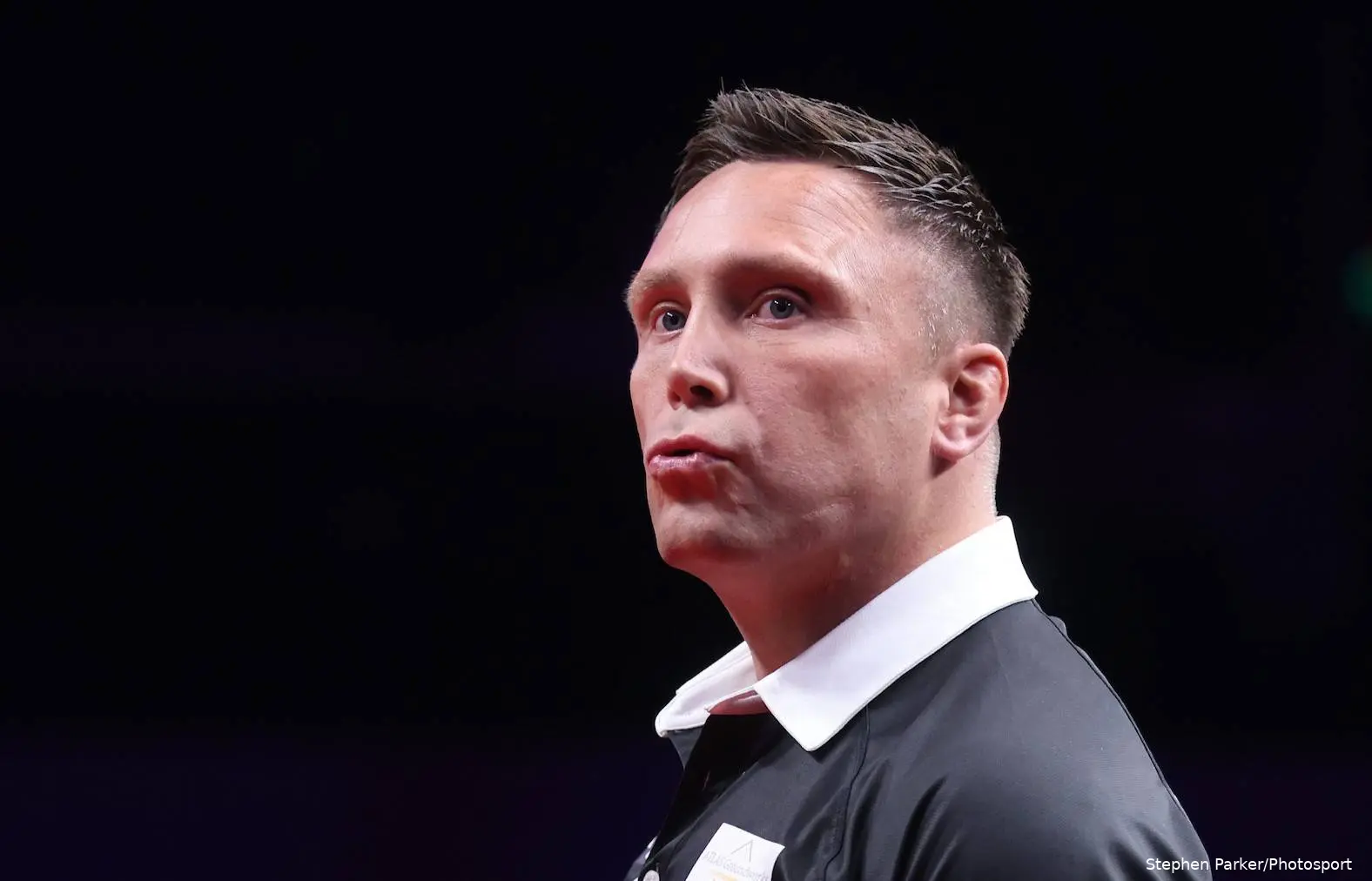
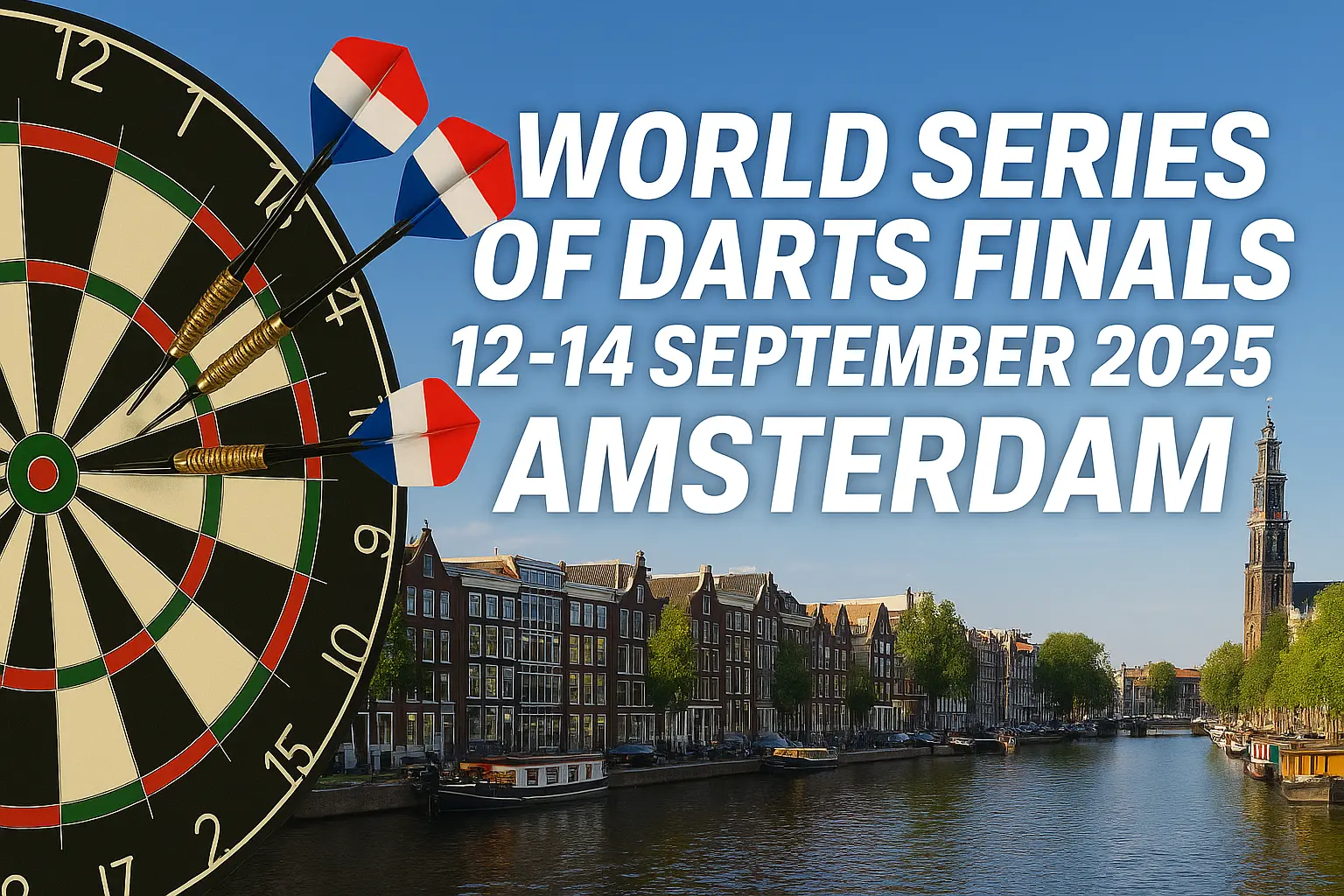
The World Series of Darts Finals, the PDC's next major tournament, is scheduled for September 12 to 14. It should actually be a highlight in the calendar, but the anticipation is limited. Many players and fans are now openly questioning the purpose of the tournament. Top stars are canceling their participation, others are forgoing the qualifier. Even seasoned professionals now only see the event as a by-product. For most of them, the most important thing is that the finalists can secure a ticket for the Grand Slam of Darts. As the prize money is not included in the Order of Merit, the tournament has little sporting value for many professionals.
ADVERTISEMENT
The World Series of Darts has long been criticized. Many fans complain about the lack of excitement and variety. The same stars compete against each other again and again, and the big names usually come out on top in the end anyway. This has been particularly evident in recent years at the series' stops. In the Netherlands, all Premier League players took to the oche, while the professional field at the other tournaments consisted mainly of Premier League players. Surprises were therefore few and far between. The qualification rules were also tweaked. In previous years, eight starting places went to players from the Tourcard Qualifier. This year there are only six. The result: fewer opportunities for the wider playing public and more scope for invitations from the PDC.
The first eight players in the World Series Order of Merit are automatically seeded. Unsurprisingly, these are all big names. The PDC invites these stars to all seven events anyway, so they are well ahead in the rankings. There are also other players who just didn't make it into the top eight via the ranking list. Michael van Gerwen, Josh Rock and Jonny Clayton, for example, were awarded a place. Van Gerwen climbed to tenth place in the rankings with just three wins against Dirk van Duijvenbode, Pero Ljubic and Leonard Gates.

They are joined by local qualifiers such as Raymond van Barneveld, Kevin Doets, Jermaine Wattimena, Danny Lauby Jr, Jason Brandon and Krzysztof Ratajski. A single win over a top star is often enough to punch your ticket. Jason Brandon, for example, benefited from a weak performance by Stephen Bunting in Madison Square Garden. With an average of just 86 points, one win was enough for him to enter the Major. For no other major PDC tournament is a single success enough - at the World Series, that is exactly what is possible.
The participation of Jonny Tata, Simon Whitlock and Haupai Puha is particularly controversial. None of them won a match at the World Series, yet they are still in the final tournament. The reason: all three took part in the events in Australia and New Zealand. As a result, they collected two points each and secured qualification. Even more questionable: Whitlock and Puha didn't even have to prove themselves athletically. Whitlock received a wildcard due to his legendary status, while Puha was automatically seeded thanks to his tour card. Whitlock qualified with a leg ratio of 5:12, while Puha at least managed to force Luke Littler into the decider once. So it was already clear before the tournaments that both would play in the final event, regardless of their performance. A situation that massively diminishes the sporting value.
As if that wasn't enough, the PDC awards additional starting places to players who have not even played a World Series event. The rule here is that the top four players in the world rankings who have not yet qualified can also take part. James Wade, Dave Chisnall, Ross Smith and Danny Noppert are therefore taking part. Wade was supposed to take part in the events Down Under, but opted out in favor of a family vacation at Disneyland. Noppert was active in the Netherlands, but was defeated early on by Gerwyn Price. Nevertheless, both are represented at the final tournament - solely because of their world ranking. For many fans, this seems arbitrary and further undermines the credibility of the series.
Lost its soul?
ADVERTISEMENT
The next problem is the numerous withdrawals. Even before the tournament in Amsterdam, Gary Anderson canceled his participation, although he would have qualified via the world rankings. Paolo Nebrida, who had played his way into the rankings with his surprising victory over Rob Cross at the Bahrain Darts Masters, also withdrew. His average was only 82 points, but his success was still enough. But the journey from the Philippines to Amsterdam is obviously too expensive for the player, even if at least 5000 pounds prize money is guaranteed.
The situation is even more drastic for the qualifier. Numerous professionals passed up the opportunity to qualify via this route. These include Tim Wolters, Maximilian Czerwinski, Nathan Rafferty and Jules van Dongen. They are also skipping the Players Championships anyway and are therefore consistently staying away. However, the withdrawal of ten seasoned pros who are very active on the Pro Tour is particularly striking: Ryan Searle, Ryan Joyce, Benjamin Reus, Pero Ljubic, Stefaan Hendryck, George Killington, Keane Barry, Alan Soutar, Scott Williams and Martin Schindler. Schindler's decision in particular has raised eyebrows. After Danny Noppert, he would have been the next player to qualify for the tournament via the world rankings, but now he is not even trying to qualify for the tournament.
These cancellations shed a significant light on the standing of the World Series Finals. When even experienced professionals forgo guaranteed prize money, it clearly shows that the tournament does not have the sporting appeal of a real major. Many players simply see no added value. The chances of winning are slim, as the top stars are seeded anyway. At the same time, the event has no influence on the rankings. In the end, the only sporting incentive is the possible place in the Grand Slam of Darts.
The criticism is not new. Fans and players have been calling for a fundamental reform of the series for some time. The PDC is now under pressure to rethink the concept. One possible approach would be to offer more open qualifying places again so that not only invited stars compete. Clear sporting criteria instead of wildcards would increase credibility. The tournament should have a clear sporting qualification, not just through pure attendance or a game in which the opponent did not have a good day. At the same time, many spectators would like to see more rotation among the invited players to bring variety to the field. Without such changes, the series threatens to lose further significance.
The World Series of Darts Finals currently seem like a tournament without a soul. Players like Simon Whitlock and Haupai Puha qualify simply by being there. Others, such as Paolo Nebrida or Gary Anderson, voluntarily choose not to take part. The PDC must see these developments as a warning signal. If a major tournament electrifies neither the pros nor the fans, a reorientation is urgently needed.
ADVERTISEMENT
Because one thing is clear: the World Series fulfills its purpose of taking the sport to new countries. However, the current format is no longer suitable as a serious sporting highlight in the calendar. It remains to be seen whether the finals in Amsterdam will be a turning point or another low point. The PDC has shown in the past that it is perfectly capable of reorganizing a major tournament. The Masters, previously considered boring, was replaced by the innovative Winmau World Masters at the beginning of the year - with great success. One thing is certain: it can hardly go on as before.

Samuel GillChief Content Officer
Samuel Gill is the Chief Content Officer (CCO) of DartsNews.com, a role he has held since 2020. He is responsible for editorial governance across the platform, including setting content standards, overseeing accuracy and consistency, and guiding long-term editorial strategy across professional darts coverage. Since joining, he has contributed more than 10,000 articles and editorial pieces, playing a central role in the development and daily operation of the site.
Based in Leicester, Samuel has extensive experience in darts media and has been closely involved in coverage of the professional darts circuit for several years. Within the UK darts community, he is a recognised figure known for his consistent editorial output and ongoing reporting on major tournaments and developments across the PDC calendar.
In his current role, Samuel works closely with editors and writers to ensure content meets clear journalistic standards, with a focus on source verification, editorial consistency, and timely updates when new, confirmed information becomes available.
claps 8visitors 6
Just in

Popular news
Latest comments
- I agree,I can't believe the lack of coverage of this sad loss. Always enjoyed watching him,but I guess now it's all about littler,well it seems that way. Darts has sadly lost a good manrick6717-10-2026
- In the absence of a report regarding the death of Stefan Lord, I'll assist. An excellent player in the late 70s and early 80s, he actually won the now defunct 3rd place match at two World Championships and a couple of the News of the World Championships. A fabulous player and easily the best Swedish player ever. Rest peacefully Stefan.richieburnettrocks16-10-2026
- Joking aside, it is the second most watched sport on sky (more than golf, F1 etc) behind football only, and in participation is second to only football and swimming. It doesn't get the attention or sponsorship of "bigger" sports because it's not as sexy, but it's right up there.BandB13-10-2026
- i love darts but you can't seriously believe it's the second most popular sport in the uk. even top five is pushing it. it may be the fastest growing, though.colt13-10-2026
- I'm a big Clayton fan, but he's got this completely wrong. Qualification criteria exists for a reason - so just as failing to make the top 32/64 for the Euro championships/PT Finals means you miss out, so does not lifting a title for this one.26sForFun12-10-2026
- The players who deliberately slow the game down are usually boring and win very little in the way of silverware. Horrible to watch.MrYnyslas197112-10-2026
- [“The Gentle” then used a sweeping and questionable phrase...] You anglocucks are hilariously finished in every sense of the word.Critical99911-10-2026
- I love Jonny but I disagree. The Grand Slam was always supposed to be "champion of champions" type competition. If the top 16 are guaranteed participation in everything there will be so much less jeopardy involved in qualifying and each major tournament will lose its unique flavour which the PDC has worked hard trying to develop. I enjoy following the qualification races towards the end of the year, and while consistency should have its rewards, the truth is Jonny hasn't reached a major final all year or won a single event on the Pro Tour. Being consistent is one thing, but that alone should have consequences as the sport's elite should not be prepared to accept consistently strong performances, their foremost motivation should be to win and this should be what separates them from the rest, not the consistency of their performances. Jonny is expecting that losing should be enough; it shouldn't be, at least not as far as the Grand Slam is concerned.Deduce635811-10-2026
- Well being honest,it doesn't matter what level you play at, there's always someone who slows it down to suit themselves,and extra swig of water, replacing flights, asking the ref what the score is. It happens wherever. I'm not saying it's professional,but I'm sure we've all seen it beforerick6711-10-2026
- Agree completely. Not sure how a ranking event can have a criteria not based on rankings. And he right on popularity. In the UK second only to football.BandB11-10-2026
Loading