“Gone will be the days of overweight middle-aged men, We won't exist”: Generational shift underway in darts as Mardle sees Greaves and Littler heralding younger, faster sport
PDC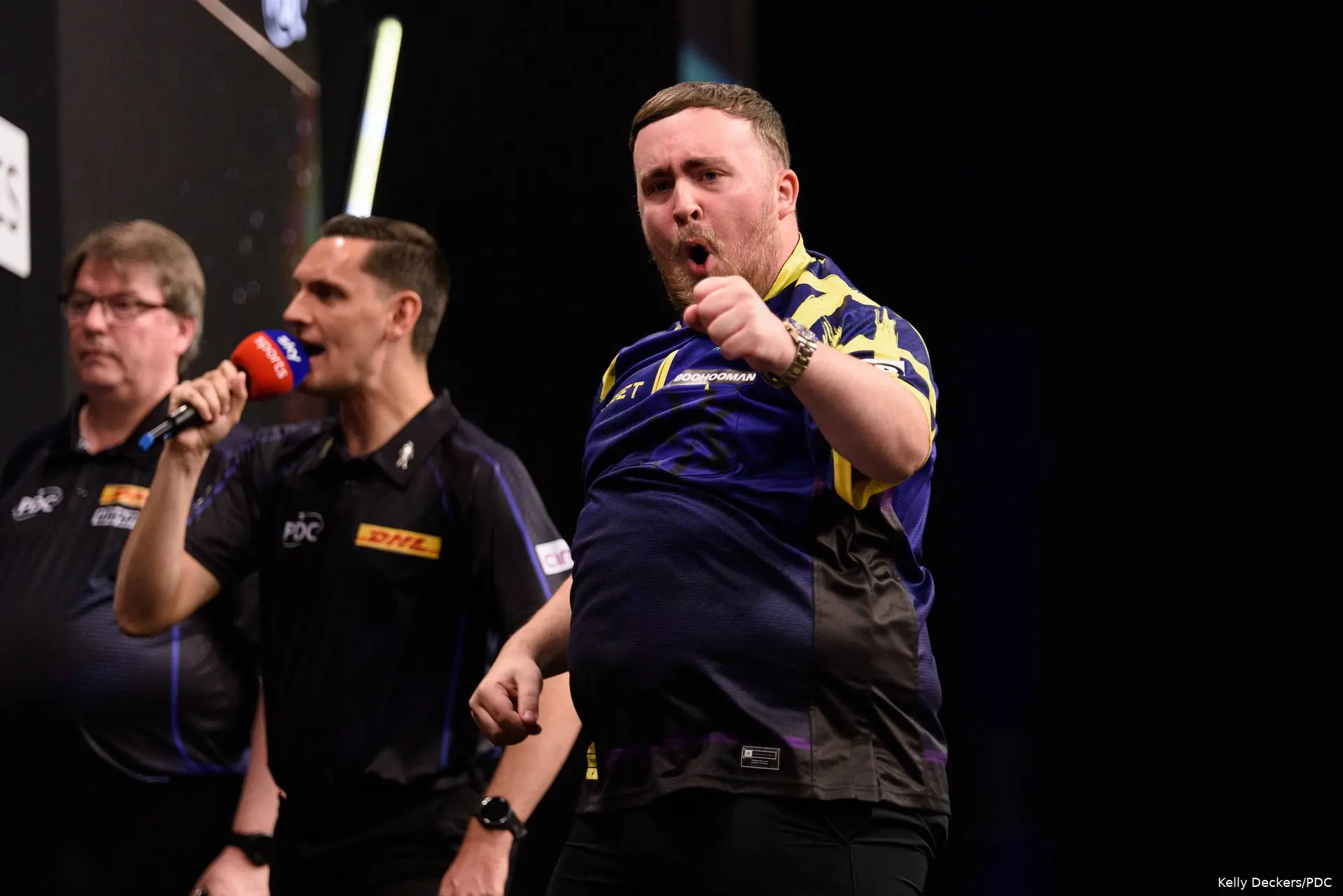
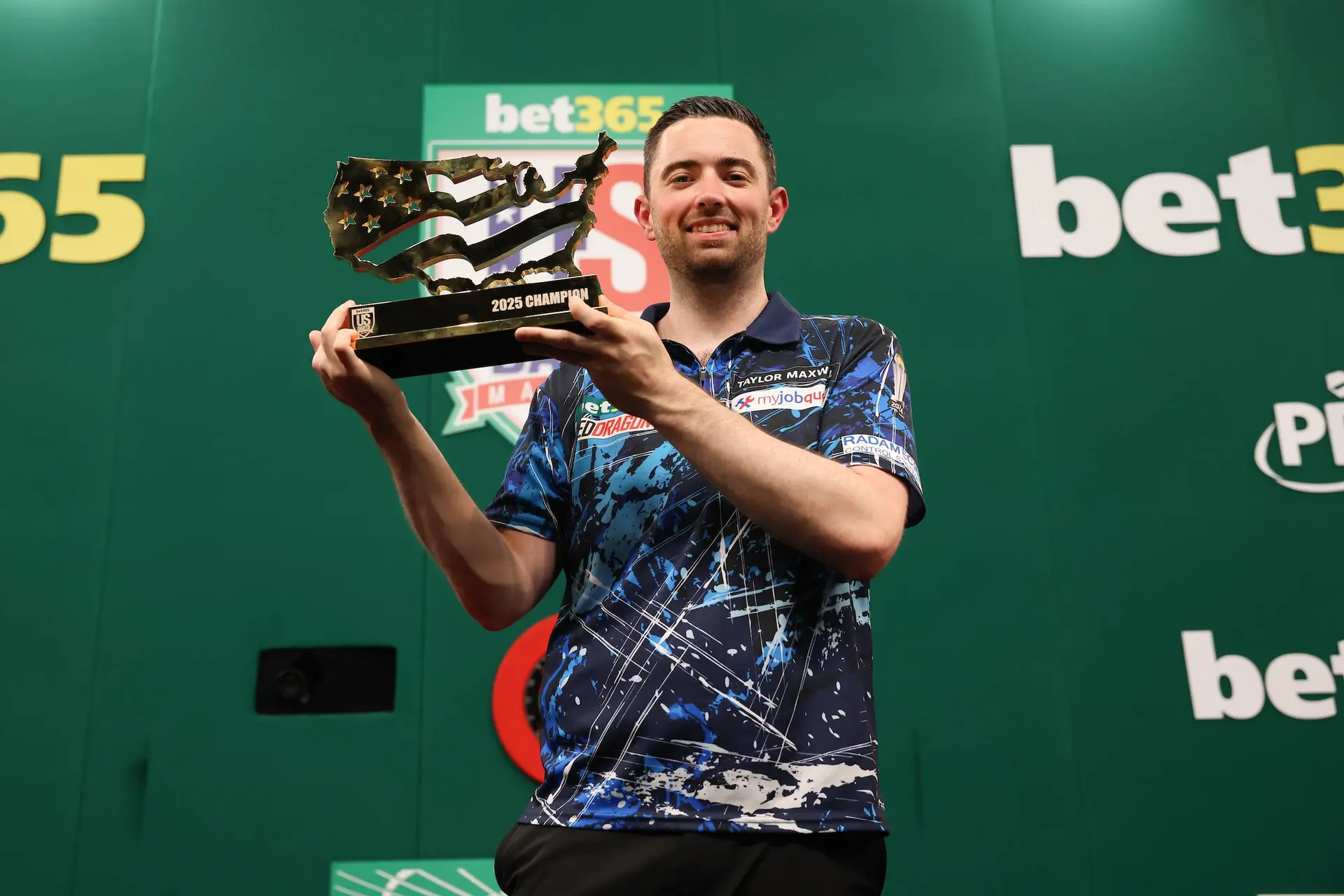
Wayne Mardle believes darts is already in the middle of a generational shift, and that change is only going to accelerate. From the emergence of teenage stars like Luke Littler to the barrier-breaking rise of Beau Greaves within the PDC system, the sport is moving rapidly towards a younger, more professional future.
ADVERTISEMENT
But while that evolution is redefining what a top-level darts player looks like, Mardle also sees a growing weight of expectation on those leading it, particularly Greaves as she continues to push into new territory.
“Beau Greaves has a massive responsibility”
Mardle did not shy away from the scale of what Greaves represents in the current landscape, especially as her 2026 season continues to gather momentum. “Beau has a massive responsibility,” he said during his interview with Darts Planet. “Because she's a young female that is plying her trade in the male-dominated professional darting environment.”
That context has only intensified in recent months. Greaves has already delivered one of the standout moments of the year with a nine-darter on the PDC ProTour, while continuing to establish herself as a genuine presence within the wider professional structure rather than a crossover name.
Mardle pointed to the broader impact of her performances, particularly for the next generation watching closely. “If she buckles and folds at any point, the girls may be thinking that we can't compete. Because Beau's way better than me and she can't compete, how can I?”
That is where the responsibility lies. Not in proving her own level, but in what that level represents.
Mardle was clear that, from a purely technical perspective, Greaves already belongs. “Her throw is one of the best on tour. The action, the smoothness, the rhythm, everything about the routine is just world-class. She can throw world-class darts alongside any man.”
ADVERTISEMENT
The next step, in his view, is equally clear. “I want her to win sooner rather than later because it will show every single girl that wants to pick up a dart that we can do this.”
Read also
A sport getting younger, faster
Greaves’ rise sits within a wider shift that Mardle believes is already reshaping the sport at every level. “Gone will be the days of overweight middle-aged men,” he said. “We won't exist.”
It is a blunt assessment, but one he expanded on further when discussing the direction darts is heading. “There's going to be teenager versus teenager in the World Championship,” he continued. “I thought it would have happened before now.”
ADVERTISEMENT
That expectation reflects what is already unfolding across the 2026 season. The emergence of teenage stars like Luke Littler, alongside the continued rise of players such as Gian van Veen, has accelerated a trend towards younger contenders competing deep into major tournaments.
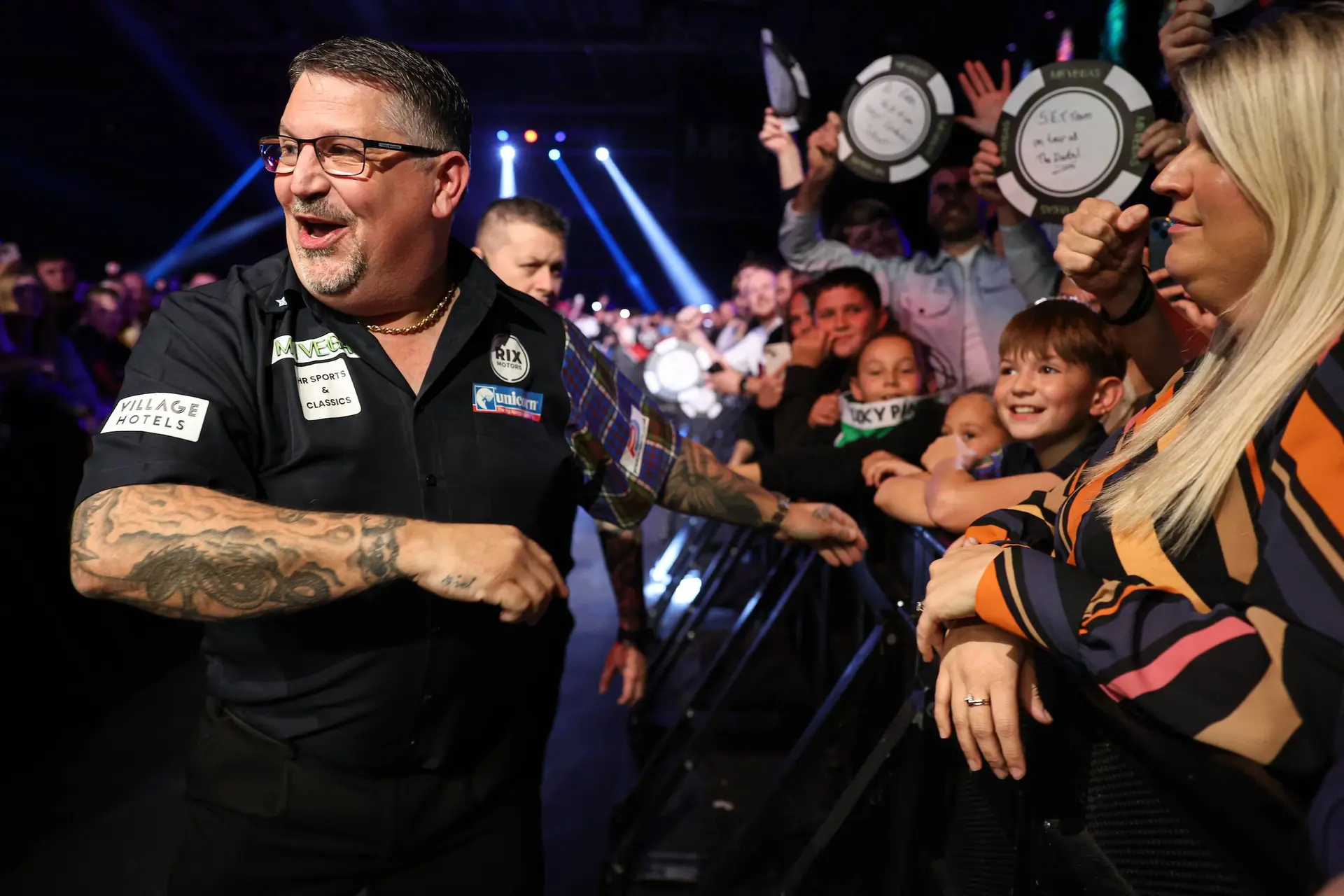
Mardle also pointed to how different the sport looked in previous eras. “There were times when the average age would be like 50 when Phil Taylor was taking on like Dennis Priestley or Raymond van Barneveld or Simon Whitlock or Gary Anderson in a final.”
That contrast underlines the scale of the shift now taking place, with earlier development pathways and increased professionalism helping to lower the age profile at the very top of the game. “Just expect more teenagers,” Mardle added. “I think the world of darts will relish that because they will become leaner, meaner darting machines.”

Wayne Mardle is one of the leading darts pundits in the UK
“There’s going to be world champions come out of this room”
ADVERTISEMENT
That evolution is not happening by chance. Speaking from inside of a newly opened darts venue, Mardle pointed directly to the environments now being created for young players as a defining factor. “No way did anyone envisage this kind of growth in darts, but here we are,” he said. “I'm hoping this is going to be the blueprint.”
Reflecting on his own early experiences in far less developed settings, Mardle contrasted them with the facilities now available to emerging players. “I played in a tenants association social club… there'd be a bucket catching rainwater and we weren't playing outside.”
By comparison, the modern set-up offers something entirely different. “They can come in here, it's their safe space. They can practise for as long as they like on world-class facilities… How often does a young kid get a chance to play on the main stage?”
For Mardle, that exposure is crucial. “If you get used to it early, you've got such an advantage.”
The long-term impact, in his view, is inevitable. “There's going to be world champions come out of this room. There's no doubt about it.”
ADVERTISEMENT

Managing the next generation
With that rise comes a different kind of challenge, particularly for younger players navigating attention, opportunity and expectation at the same time.
Mardle admitted his thinking on that has shifted. “They're going to need to be led or even managed to the nth degree… I actually believe that they need to be micromanaged.”
The reasoning is simple. The scale of opportunity in modern darts has changed. “The amount of money being thrown at a lot of these players now is head turning. That can get you doing things that maybe you don't want to do.”
ADVERTISEMENT
As a result, he sees family and close support networks as more important than ever. “I like anyone managed by their family because you can guarantee that they've got your best interests at heart.”

World number one Luke Littler celebrates winning the Grand Slam with his mum and dad
Crowd behaviour “becoming part of the game”
Away from the oche, Mardle also addressed an issue that has become increasingly visible throughout 2026. “What you allow will continue,” he said.
Incidents involving whistling and crowd disruption have become a recurring talking point across both the Premier League and Euro Tour events, and Mardle believes the sport risks normalising it if action is not taken. “Once it becomes part of the game, then you're in trouble, and it is becoming part of the game.”
ADVERTISEMENT
While he acknowledged that players often try to ignore it, he was clear that responsibility cannot sit with them alone. “I tried to ignore it… I didn't always win that battle.”
Instead, he called for a more direct approach. “I would like there to be wandering security… that have the right to throw out anyone that they think is disrupting the game.”
For Mardle, the principle is straightforward. “It's not fair on anyone… but most of all, it's not fair on those competing.”
From rising teenage stars to the growing influence of Beau Greaves and the challenges that come with a rapidly expanding sport, Mardle’s assessment is clear. Darts is changing quickly, and both the opportunities and the pressures are increasing just as fast.
ADVERTISEMENT
Kieran WoodDarts Journalist
Kieran Wood is a sports journalist based in Wales and has been active in journalism since 2022. He contributes to DartsNews.com, where he covers professional darts through news, match reports, analysis, and live coverage across the PDC calendar and major tournaments.
A key part of his work is on-site reporting from leading events. Kieran has covered the PDC World Darts Championship in person, reporting daily from the venue and providing first-hand insight from the tournament. During his coverage, he has conducted interviews with leading players including Luke Littler, Luke Humphries, and Gerwyn Price.
He is also one of the leading voices of the English-language Dartsnews Podcast, contributing regular analysis and discussion on developments across the professional darts circuit.
In his reporting, Kieran places strong emphasis on careful sourcing, editorial accuracy, and updating articles when new, verified information becomes available.
claps 0visitors 0
Just in


Popular news


Latest comments
- [“The Gentle” then used a sweeping and questionable phrase...] You anglocucks are hilariously finished in every sense of the word.Critical99911-10-2026
- I love Jonny but I disagree. The Grand Slam was always supposed to be "champion of champions" type competition. If the top 16 are guaranteed participation in everything there will be so much less jeopardy involved in qualifying and each major tournament will lose its unique flavour which the PDC has worked hard trying to develop. I enjoy following the qualification races towards the end of the year, and while consistency should have its rewards, the truth is Jonny hasn't reached a major final all year or won a single event on the Pro Tour. Being consistent is one thing, but that alone should have consequences as the sport's elite should not be prepared to accept consistently strong performances, their foremost motivation should be to win and this should be what separates them from the rest, not the consistency of their performances. Jonny is expecting that losing should be enough; it shouldn't be, at least not as far as the Grand Slam is concerned.Deduce635811-10-2026
- Well being honest,it doesn't matter what level you play at, there's always someone who slows it down to suit themselves,and extra swig of water, replacing flights, asking the ref what the score is. It happens wherever. I'm not saying it's professional,but I'm sure we've all seen it beforerick6711-10-2026
- Agree completely. Not sure how a ranking event can have a criteria not based on rankings. And he right on popularity. In the UK second only to football.BandB11-10-2026
- Doesn't matter who's in it,it's boringrick6710-10-2026
- Assuming you qualify as one of the "muppets" in question. Classist too. And since you're so clearly interested in academia, look up "linguistic descriptivism" while you're at it. Oh, and better stay away from the working class sport of darts and maybe offer your insightful analysis to, let's say, croquet instead?Deduce635806-10-2026
- The consequences of being uneducated and grammatically challenged. "To all THOSE muppets not THEM " Everytime I see Arsepinall, I have an image of him wearing a cap, standing behind the counter of a fast food establishment.richieburnettrocks05-10-2026
- I don't understand Littler's reason for playing this tournament.rick6705-10-2026
- James Wade has become James Wide. He has piled on the tonnage considerably, he barely fits in his shirt.richieburnettrocks03-10-2026
- Littler will play whatever tournaments he decides. But does every headline have to start with him? Bristow bought Taylor through,and he followed that with Lewis. I can't see littler doing the same. Let him choose,and lose,he's getting good at that lately!rick6702-10-2026
Loading