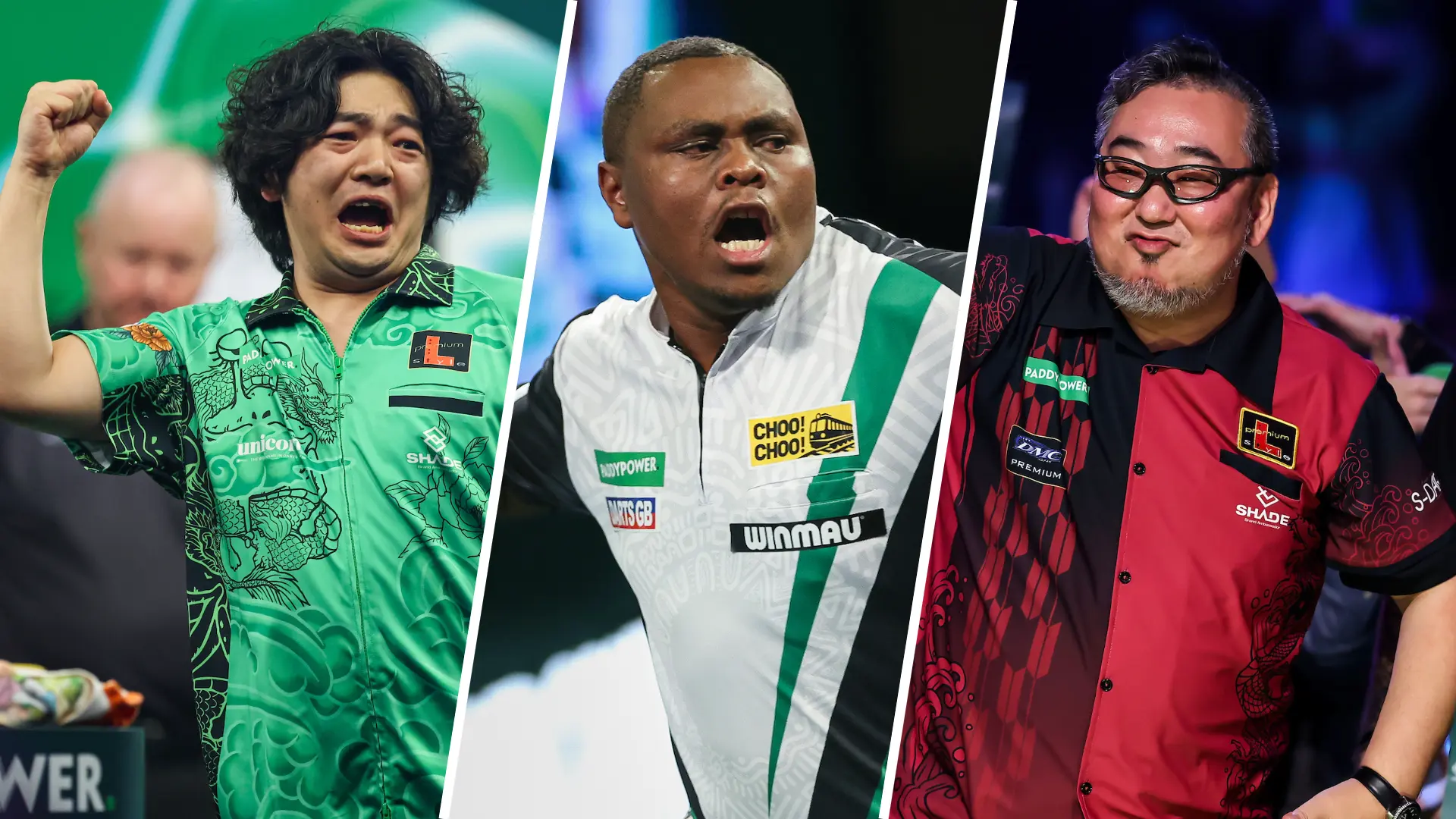
By mid-afternoon inside Alexandra Palace, it was already clear this was not unfolding like a normal PDC World Darts Championship day. The noise was different. The crowd were quicker to latch on, quicker to react, and increasingly willing to carry players along with them rather than simply respond to results. There was a sense, hard to quantify but unmistakable if you were in the room, that Ally Pally was in the mood to create something.
ADVERTISEMENT
What followed across a remarkable Thursday was not one moment, or even one upset, but a sequence. As the day progressed, the atmosphere escalated rather than peaked, each match seemingly feeding the next. The crowd did not need prompting. They were ready to invest, ready to believe, and ready to turn fleeting moments into something more permanent.
Across the course of the day, three debutants from outside the sport’s traditional centres each forged an instant connection with the Ally Pally faithful, all in very different ways. By the time the final of those performances played out under the lights, the feeling inside the arena had shifted from surprise to disbelief.
Motomu Sakai, David Munyua and Mitsuhiko Tatsunami did not arrive in north London as headline acts. Yet across three matches, against three established opponents, they became the clearest illustration yet of what the expanded World Darts Championship is capable of producing. Not through sentiment, novelty or indulgence, but through quality, courage and moments that could only exist when player and crowd found each other in real time.

Motomu Sakai set the tone
If the day needed a spark to get it moving, Motomu Sakai provided it almost immediately. From the moment he danced onto the Ally Pally stage for his debut, there was a sense that the crowd had found someone they wanted to invest in. The walk-on was joyful, slightly unhinged and completely unapologetic, the first hint that this was not going to be a standard World Championship introduction.
What followed only deepened that connection. Sakai was in constant motion on the oche, animated between visits and visibly feeding off the atmosphere, yet crucially his darts never reflected the chaos around him. Against Thibault Tricole, he remained in control of the contest throughout, producing his best moments at exactly the right times to close out a straight-sets victory.
ADVERTISEMENT
The most telling aspect of the reaction inside the arena was its consistency. Even when chances were missed, the support never wavered. Sakai’s infectious energy, beaming smile and willingness to embrace the moment made him an instant favourite, and Ally Pally responded by lifting him rather than waiting to be impressed.
In hindsight, Sakai’s performance was more than just an entertaining opener. It set the emotional tone for everything that followed. The crowd had been reminded, early in the day, that individuality and personality still have a place on the sport’s biggest stage, and they were ready to reward it again.
David Munyua changed the scale of the day
If Sakai’s performance invited the crowd in, David Munyua’s asked them to believe. On paper, this was meant to be a mismatch. Munyua arrived at the World Darts Championship with expectations firmly set at the lowest end of the field, facing a player with recent major pedigree and far deeper experience on stages like this.
ADVERTISEMENT
Munyua's participation at Ally Pally even looked in doubt forna while, before sponsorship came in the form of Andy Robson from andysbetclub.co.uk, with part of that sponsorship even benefiting the wider Kenyan community, as £100 for every leg won donated to the Kenya Children Centres charity.
Early on, the expected script appeared to be holding. From inside the arena, however, there was a moment when that sense began to shift. As Mike De Decker’s grip loosened, Munyua’s confidence visibly grew, and with it the noise. The Kenyan started to play with freedom rather than caution, and the crowd sensed it immediately. What began as encouragement quickly turned into anticipation, then into something louder and more insistent.
The comeback unfolded in waves. Big checkouts were met with roars that seemed to roll around the venue rather than dissipate, and every missed opportunity by De Decker was greeted with the kind of intake of breath usually reserved for deciding legs. By the time Munyua forced a fifth set, the feeling inside Alexandra Palace had moved beyond surprise. There was a genuine belief that something unprecedented was about to happen.
When the winning dart finally landed, the reaction was overwhelming. It was not simply the volume that stood out, but the release. Munyua’s 3-2 victory, completed from two sets down, felt like a collective moment rather than an individual one. For the first Kenyan ever to win on the Ally Pally stage, the achievement was enormous. For those in the room, it was the point at which the day stopped being remarkable and started to feel unforgettable.
ADVERTISEMENT
Mitsuhiko Tatsunami completed the picture
By the time Mitsuhiko Tatsunami took to the stage in the evening session, Ally Pally was already primed. Two cult heroes had emerged earlier in the day, and the crowd now seemed almost curious to see how far the atmosphere could stretch. Tatsunami’s walk on provided an immediate answer. More dancing, more theatre, more unfiltered joy, and an arena that needed no invitation to join in.
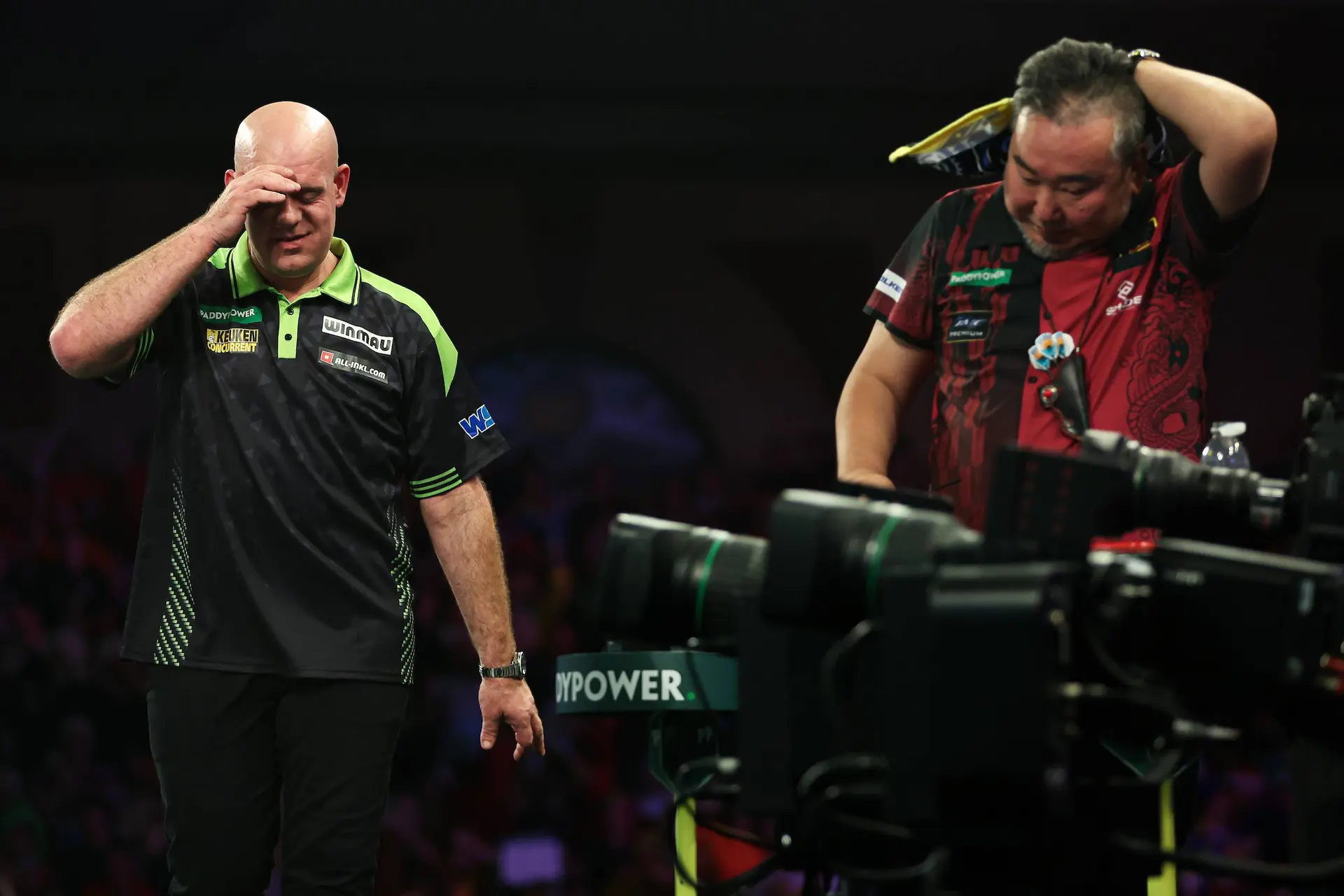
What made Tatsunami’s performance resonate so deeply was that it refused to remain novelty. Against Michael van Gerwen, one of the greatest players the sport has ever produced, the Japanese debutant played with fearless intent. He scored heavily, finished cleanly, and most importantly, never shrank from the moment. When Tatsunami claimed the opening set, the reaction was thunderous, the crowd chanting his name with the same conviction they might reserve for a long-established favourite.
Unlike Sakai and Munyua, Tatsunami would not leave the stage as a winner. Van Gerwen’s quality eventually told, as it so often does, and missed chances at crucial moments prevented the upset from being completed. Yet the result barely dulled the impression left behind. Tatsunami had done what cult heroes do best at Alexandra Palace: he had made the crowd care, deeply and immediately.
In many ways, his performance was the most telling of all. It confirmed that what had unfolded earlier was not coincidence or indulgence, but something more fundamental. Three debutants, three very different stories, and three unmistakable connections forged between player and audience. Even in defeat, Tatsunami’s impact reinforced the same message that had been building throughout the day. This was not dilution. It was expansion, realised in real time, inside the most demanding arena in the sport.
ADVERTISEMENT
A narrative rewritten inside the room
When the PDC World Darts Championship expanded to 128 players, concerns about dilution felt inevitable. More qualifiers, more debutants, more unfamiliar names, and an opening round that some feared would sacrifice quality for quantity. What unfolded inside Alexandra Palace on this unforgettable Thursday offered a compelling counter-argument.
Motomu Sakai, David Munyua and Mitsuhiko Tatsunami did not arrive with reputations to protect or expectations to fulfil. Yet between them, they produced a day of darts that was richer, louder and more absorbing than many featuring far bigger names. Against established opponents, they played with freedom, courage and personality, and in doing so transformed scepticism into belief in real time.
This was not nostalgia or novelty. It was competition, connection and atmosphere aligning in the sport’s most iconic arena. Three debutants, three cult heroes, and a single day that shifted the conversation around what an expanded World Darts Championship can be. For those inside Ally Pally, it was one of the most entertaining days the venue has ever staged, and that is a statement grounded in experience, not exaggeration.
ADVERTISEMENT

Kieran WoodDarts Journalist
Kieran Wood is a sports journalist based in Wales and has been active in journalism since 2022. He contributes to DartsNews.com, where he covers professional darts through news, match reports, analysis, and live coverage across the PDC calendar and major tournaments.
A key part of his work is on-site reporting from leading events. Kieran has covered the PDC World Darts Championship in person, reporting daily from the venue and providing first-hand insight from the tournament. During his coverage, he has conducted interviews with leading players including Luke Littler, Luke Humphries, and Gerwyn Price.
He is also one of the leading voices of the English-language Dartsnews Podcast, contributing regular analysis and discussion on developments across the professional darts circuit.
In his reporting, Kieran places strong emphasis on careful sourcing, editorial accuracy, and updating articles when new, verified information becomes available.
claps 0visitors 0
Just in


Popular news

Latest comments
- [“The Gentle” then used a sweeping and questionable phrase...] You anglocucks are hilariously finished in every sense of the word.Critical99911-10-2026
- I love Jonny but I disagree. The Grand Slam was always supposed to be "champion of champions" type competition. If the top 16 are guaranteed participation in everything there will be so much less jeopardy involved in qualifying and each major tournament will lose its unique flavour which the PDC has worked hard trying to develop. I enjoy following the qualification races towards the end of the year, and while consistency should have its rewards, the truth is Jonny hasn't reached a major final all year or won a single event on the Pro Tour. Being consistent is one thing, but that alone should have consequences as the sport's elite should not be prepared to accept consistently strong performances, their foremost motivation should be to win and this should be what separates them from the rest, not the consistency of their performances. Jonny is expecting that losing should be enough; it shouldn't be, at least not as far as the Grand Slam is concerned.Deduce635811-10-2026
- Well being honest,it doesn't matter what level you play at, there's always someone who slows it down to suit themselves,and extra swig of water, replacing flights, asking the ref what the score is. It happens wherever. I'm not saying it's professional,but I'm sure we've all seen it beforerick6711-10-2026
- Agree completely. Not sure how a ranking event can have a criteria not based on rankings. And he right on popularity. In the UK second only to football.BandB11-10-2026
- Doesn't matter who's in it,it's boringrick6710-10-2026
- Assuming you qualify as one of the "muppets" in question. Classist too. And since you're so clearly interested in academia, look up "linguistic descriptivism" while you're at it. Oh, and better stay away from the working class sport of darts and maybe offer your insightful analysis to, let's say, croquet instead?Deduce635806-10-2026
- The consequences of being uneducated and grammatically challenged. "To all THOSE muppets not THEM " Everytime I see Arsepinall, I have an image of him wearing a cap, standing behind the counter of a fast food establishment.richieburnettrocks05-10-2026
- I don't understand Littler's reason for playing this tournament.rick6705-10-2026
- James Wade has become James Wide. He has piled on the tonnage considerably, he barely fits in his shirt.richieburnettrocks03-10-2026
- Littler will play whatever tournaments he decides. But does every headline have to start with him? Bristow bought Taylor through,and he followed that with Lewis. I can't see littler doing the same. Let him choose,and lose,he's getting good at that lately!rick6702-10-2026
Loading