"He’s closer to Littler than Van Gerwen was last year" - Van der Voort believes in world title prospects of Gian van Veen
PDC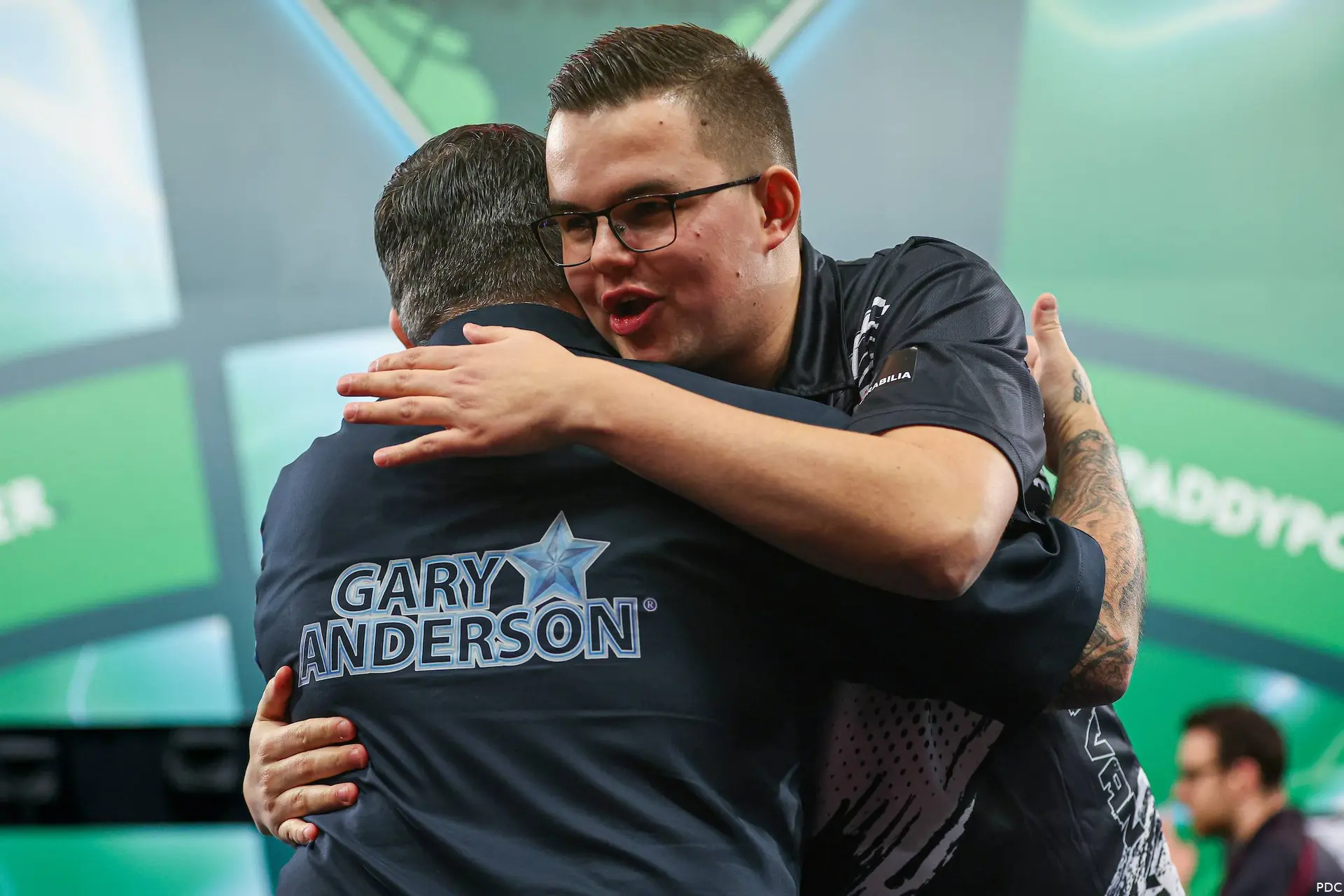
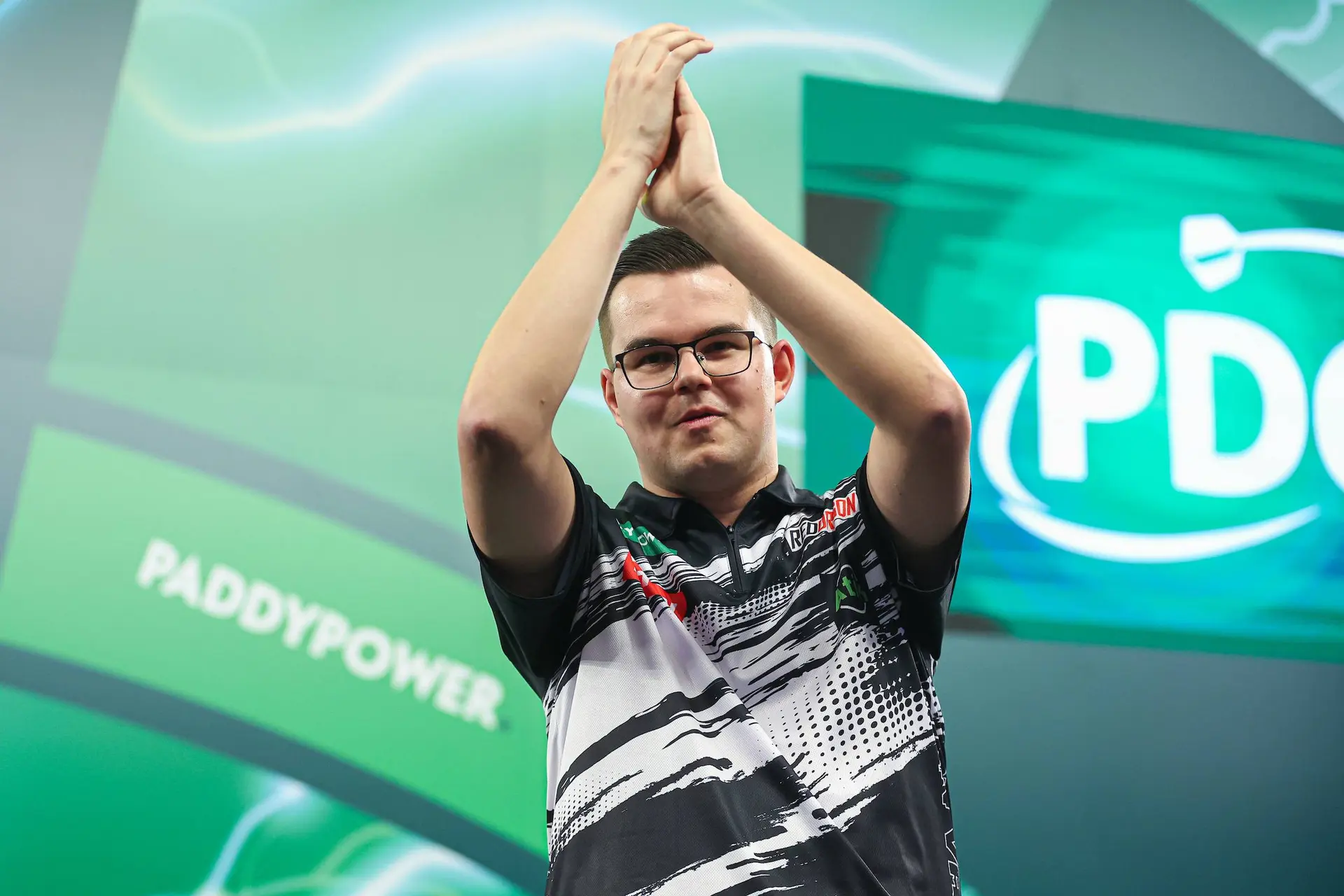
In the latest episode of the WK Darts Draait Door podcast, Vincent van der Voort and Damien Vlottes looked back on a historic night at Alexandra Palace. Gian van Veen wrote a new chapter in Dutch darts history by reaching the final of the PDC World Darts Championship for the first time in his career.
ADVERTISEMENT
Van der Voort visibly enjoyed his semi-final against Gary Anderson. Not just the standard, but especially the way Van Veen did it. “I thought it was a truly fantastic match,” he said. “How Gian played that match, from start to finish: really superb. And he fully deserved to win.” Anderson did everything to turn the match around. “There were spells where he was brilliant on scoring and still Gian had the answer. Just great to watch.”
Mentioned in the same breath as Van Gerwen and Van Barneveld
Vlottes immediately put the achievement into historical context: Van Veen is only the third Dutchman to reach the PDC World Championship final. That puts him in a list that until now was exclusive to Michael van Gerwen and Raymond van Barneveld. “He simply joins the list with Van Gerwen and Van Barneveld,” Vlottes stated.
Van der Voort agreed. “Yes, absolutely. That’s such a major achievement. And he’s still so young, there’s so much more to come. Words fail with this performance.”

Neither Van der Voort nor Vlottes expected it to happen this quickly. “If I’m very honest, I didn’t think this would come so soon,” said Vlottes. Van der Voort responded immediately: “No, no, no. But no one really saw this coming.”
Van der Voort recalled that Van Veen has also been through a difficult time, including dartitis. That’s exactly why he finds it so striking how mature and controlled Van Veen now looks. He also outlined a key difference from some other stars who broke through: Van Veen did not arrive as a mega-talent who had been tipped for years as a future world champion.
ADVERTISEMENT
“It’s not like he’s this mega-talent breaking through or something, he never was,” said Van der Voort. “But he has developed so much.” That development, he believes, is not only in his throwing but also in how Van Veen approaches his profession. “He’s also very professional. And the way he deals with the media and the things he says, he comes across as very mature.”
Vlottes pressed on, because Van Veen also impressed in a media moment with his comments about Michael van Gerwen. Van der Voort felt Van Veen struck exactly the right tone. “He basically said all the right things. That’s how we know him: whether he’s speaking to the English press, the Dutch press, wherever he is.”
What stood out most was that it didn’t sound rehearsed. “He comes across very naturally. I also don’t get the sense he’s acting. He’s actually very relaxed about everything. Even though so much is coming his way. And that’s admirable.”
Van Veen held firm despite a hostile crowd
Against Gary Anderson, Van Veen not only faced a top darter, but also a crowd that increasingly turned against him as the match went on. When Van Veen pulled too far ahead, the crowd started to get involved. “As the match went on, when he got too far in front, the crowd started to get involved,” said Van der Voort. The dangerous moment came when Anderson clawed his way back into the match. “Then he got close at 4-3.”
ADVERTISEMENT
Afterward, Van Veen admitted he briefly thought it might slip through his fingers because of that. “He also said in the interview: I was a little afraid I might lose the match because of it,” said Van der Voort. “Fortunately that didn’t happen and he beat Anderson on merit.”
That ‘beating him on merit’ was not only down to scoring power, but especially mental strength. Vlottes pointed to moments when Van Veen took hits—also through missed set darts—and still didn’t break. Van der Voort: “He was there again in the next leg. As if it didn’t affect him.”
Of course form plays a role, he admitted. “I know all that. But it’s also class. If you can do that, then you’re the real deal. We’ve had a lot of players in history who had a very good tournament. And when they faced something like this, it collapsed… Or they had an error. And he simply didn’t suffer from that.”
In Van der Voort’s eyes, Van Veen behaved like a seasoned pro. “He handled it like someone who’s been doing this for years. That he knows exactly what to do to turn it around again.”
What’s remarkable is that you could barely see the tension on his face. “He just stays so relaxed. That’s special too. You only really saw after the match how much pressure there was. During the match you hardly saw it at all.”
ADVERTISEMENT
Where does that calm come from? Van der Voort believes Van Veen has played the entire tournament with a conviction he didn’t previously have at this level. “I think that European Championship gave him so much confidence. That he knows he can beat anyone.”
And then there’s that one match that can act as a mental turbo: the win over Luke Humphries. “If you just beat the world number two 5-1… and you’re mentally better in every aspect too: that obviously gives you a good feeling.”
Details that decided the semi-final
In the match against Anderson, the standard was often insanely high, with legs flying by at blistering speed. Van der Voort referred to a set in which both men played at the peak of their powers. “There were just four legs finished within twelve darts.” And yet, even when Anderson played fantastically for three or four sets in a row, he only won two. “So that shows how good Gian was. In the key moments.”
ADVERTISEMENT
According to Van der Voort, the difference also lay in something you often see with great champions: deciding legs. “Every time a fifth leg is played, he throws a strong leg. He also just starts with 180 very often. Yes, that’s bizarre too. It means you’re in a good place mentally.”
Anderson’s sportsmanship also stood out to him. He didn’t get grumpy or snappy. “You could see Anderson too: he didn’t get irritated or anything like that. He simply did everything he could to win. And he just ran into someone who was that bit better.”
What does this say about the final?
If Van Veen hits this level again, he can really turn the final into a battle. Van der Voort offered a percentage estimate beforehand: “I think beforehand it’s 60-40 in Littler’s favor.”
ADVERTISEMENT
But Van Veen is certainly not without a chance. “I also don’t think he’s very far off,” said Van der Voort. The key question: can he produce it again? “Can he reproduce what he did today? Yes, then it becomes very difficult for Littler as well.”
Vlottes also asked whether Van Veen is closer to Littler than Michael van Gerwen was last year in their final. Van der Voort answered without hesitation: “Yes, definitely.” He explained why: Van Veen, in his view, plays much freer and, above all, more consistently at a high level. “All his averages are over a hundred and scoring. He’s simply closer than Van Gerwen was last year.”

Kieran WoodDarts Journalist
Kieran Wood is a sports journalist based in Wales and has been active in journalism since 2022. He contributes to DartsNews.com, where he covers professional darts through news, match reports, analysis, and live coverage across the PDC calendar and major tournaments.
A key part of his work is on-site reporting from leading events. Kieran has covered the PDC World Darts Championship in person, reporting daily from the venue and providing first-hand insight from the tournament. During his coverage, he has conducted interviews with leading players including Luke Littler, Luke Humphries, and Gerwyn Price.
He is also one of the leading voices of the English-language Dartsnews Podcast, contributing regular analysis and discussion on developments across the professional darts circuit.
In his reporting, Kieran places strong emphasis on careful sourcing, editorial accuracy, and updating articles when new, verified information becomes available.
claps 0visitors 0
Just in


Popular news
Latest comments
- I agree,I can't believe the lack of coverage of this sad loss. Always enjoyed watching him,but I guess now it's all about littler,well it seems that way. Darts has sadly lost a good manrick6717-10-2026
- In the absence of a report regarding the death of Stefan Lord, I'll assist. An excellent player in the late 70s and early 80s, he actually won the now defunct 3rd place match at two World Championships and a couple of the News of the World Championships. A fabulous player and easily the best Swedish player ever. Rest peacefully Stefan.richieburnettrocks16-10-2026
- Joking aside, it is the second most watched sport on sky (more than golf, F1 etc) behind football only, and in participation is second to only football and swimming. It doesn't get the attention or sponsorship of "bigger" sports because it's not as sexy, but it's right up there.BandB13-10-2026
- i love darts but you can't seriously believe it's the second most popular sport in the uk. even top five is pushing it. it may be the fastest growing, though.colt13-10-2026
- I'm a big Clayton fan, but he's got this completely wrong. Qualification criteria exists for a reason - so just as failing to make the top 32/64 for the Euro championships/PT Finals means you miss out, so does not lifting a title for this one.26sForFun12-10-2026
- The players who deliberately slow the game down are usually boring and win very little in the way of silverware. Horrible to watch.MrYnyslas197112-10-2026
- [“The Gentle” then used a sweeping and questionable phrase...] You anglocucks are hilariously finished in every sense of the word.Critical99911-10-2026
- I love Jonny but I disagree. The Grand Slam was always supposed to be "champion of champions" type competition. If the top 16 are guaranteed participation in everything there will be so much less jeopardy involved in qualifying and each major tournament will lose its unique flavour which the PDC has worked hard trying to develop. I enjoy following the qualification races towards the end of the year, and while consistency should have its rewards, the truth is Jonny hasn't reached a major final all year or won a single event on the Pro Tour. Being consistent is one thing, but that alone should have consequences as the sport's elite should not be prepared to accept consistently strong performances, their foremost motivation should be to win and this should be what separates them from the rest, not the consistency of their performances. Jonny is expecting that losing should be enough; it shouldn't be, at least not as far as the Grand Slam is concerned.Deduce635811-10-2026
- Well being honest,it doesn't matter what level you play at, there's always someone who slows it down to suit themselves,and extra swig of water, replacing flights, asking the ref what the score is. It happens wherever. I'm not saying it's professional,but I'm sure we've all seen it beforerick6711-10-2026
- Agree completely. Not sure how a ranking event can have a criteria not based on rankings. And he right on popularity. In the UK second only to football.BandB11-10-2026
Loading