“I just hope they appreciate the sacrifices we made” – Dennis Priestley reflects on remarkable darts career
PDC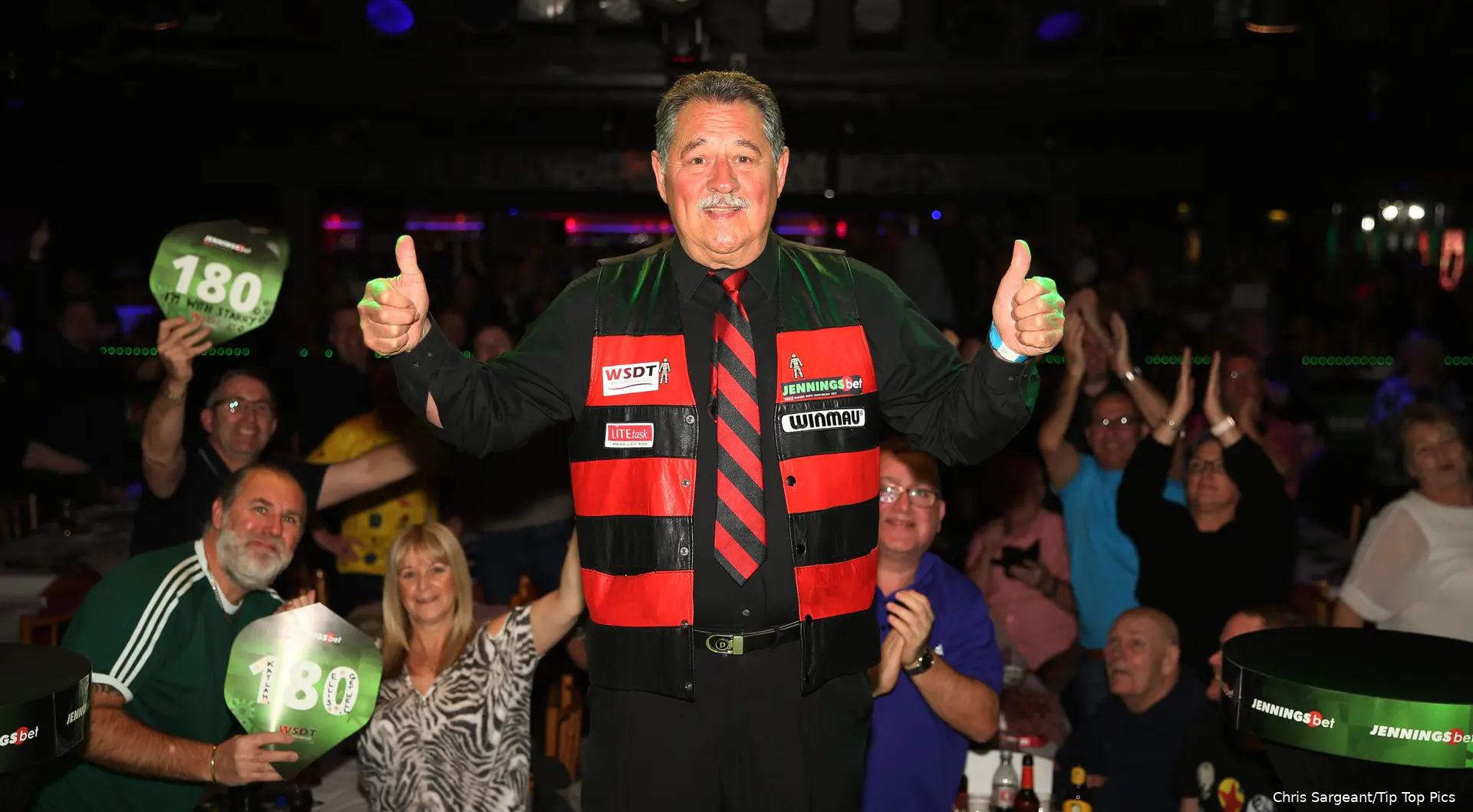
Dennis Priestley spent years among the world’s elite and played an instrumental role in establishing the professional darts circuit that exists today. Now, the two-time world champion can look back with considerable satisfaction on a career which spanned several transformative decades for the sport.
ADVERTISEMENT
Speaking on referee Huw Ware’s Tops & Tales podcast, Priestley discussed earning his place in the Premier League, the fighting spirit which defined his career, his prostate cancer diagnosis and the extraordinary growth darts has experienced since he helped form the breakaway organisation that eventually became the PDC.
Priestley endured a more difficult spell at the beginning of the century but managed to force his way back among the world’s leading players. When the Premier League was launched in 2005, however, ‘The Menace’ was not included in the inaugural line-up.
“During the period you’ve just mentioned, I was still in the top four or five in the rankings,” Priestley explained. “When the first Premier League was announced, I didn’t get picked and thought, ‘This can’t be right.’ I think I was fifth in the rankings. I told my friends, ‘I’m going to put that right. I’ll make sure I’m in the top four and then they can’t leave me out.’”
Priestley remained true to his word. He committed himself to the circuit, collected the necessary ranking points and climbed as high as third in the world by his own recollection. “That’s what I did,” he said. “I persevered throughout that year, went to most of the tournaments, picked up the ranking points and got to number three, I think. They couldn’t leave me out then.”
Goosebumps in Sheffield
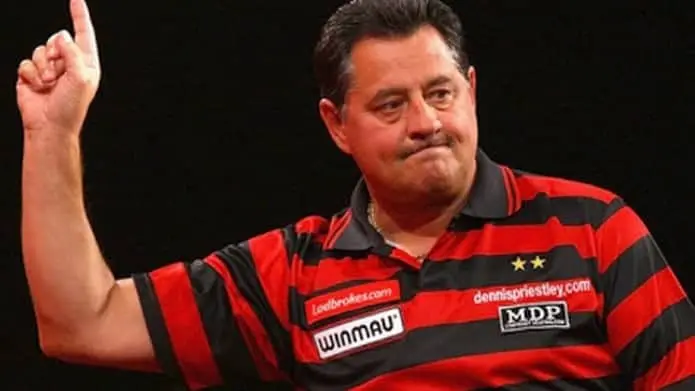
Priestley’s eventual Premier League appearance provided one of the most memorable experiences of his career. Playing in Sheffield in front of approximately 5,000 spectators carried particular significance for the proud Yorkshireman.
ADVERTISEMENT
“The hairs on the back of my neck stood up when the crowd started chanting, ‘Yorkshire, Yorkshire,’” he recalled. “I was playing Colin Lloyd. The support really got to the player I was playing against.”
For Priestley, the reception also provided confirmation that the risks he and the other breakaway players had taken more than a decade earlier had not been in vain. Asked whether that night made everything they had endured worthwhile, he answered without hesitation: “It made it all worthwhile, yes.”
His connection to Yorkshire has remained a central part of Priestley’s identity. He grew up in a household where hard work was expected, with his father setting an example that stayed with him throughout his life.
“I don’t think I ever met anybody who worked harder than my father,” Priestley said. “He had two or three jobs. He worked nights at Manvers Main Colliery, which left him more time during the day to pursue other business ventures.”
His father would buy second-hand timber from buildings that were being demolished and cut it down into different sizes. He also ran a stall at Doncaster’s outdoor market, selling bicycle equipment, spanners and other hardware. “The man was a real grafter,” Priestley added.
ADVERTISEMENT

Dennis Priestley became the first ever PDC world champion
“You’re 5-0 down, but you shouldn’t be”
That work ethic was reflected in one of the defining characteristics of Priestley’s darts career. He rarely accepted defeat, even when a match appeared to have slipped beyond his reach.
One of the finest examples came against three-time world champion John Part at the Circus Tavern in 2009. Priestley found himself 5-0 behind but refused to believe the score accurately reflected the way the match had unfolded.
“I was 5-0 down at the break and saying to myself, ‘Dennis, you’re 5-0 down, but you shouldn’t be. You could easily have been 5-0 up, or it could have been 3-2,’” he recalled.
ADVERTISEMENT
That belief enabled him to produce a remarkable turnaround. “I was 5-0 down, but after the break I came back and won 6-5.”
Priestley acknowledged that some players begin performing better once a match appears lost because the pressure disappears. That was not how he approached those situations, however. Rather than accepting the likely defeat and relaxing, he remained fully engaged in the contest. “As I was telling myself, I shouldn’t have been 5-0 down, so there was no reason to give up,” he explained.
Nevertheless, Priestley can now place his reputation as one of darts’ great comeback specialists into a humorous perspective. “I would rather have been in a position where I was winning than have to fight my way back,” he admitted. “I would have preferred to do it the easy way, as Phil eventually did.”
Prostate cancer diagnosis
ADVERTISEMENT
In 2007, Priestley was confronted with a far more serious battle. While competing in the Premier League during the opening months of the year, he began noticing symptoms that persuaded him to seek medical advice.
“The warning sign was that I was getting up four or five times during the night to go to the toilet, so I thought I had better get it checked,” he said.
Priestley was diagnosed with prostate cancer in October 2007. Although he attempted to accept the situation pragmatically, hearing the diagnosis inevitably came as a profound shock. “It is a shock when somebody tells you that you’ve got the big C,” he said. “You start wondering how long you might have left. All cancers are now beatable if they can be detected and treated early enough. The success rate for beating cancer has never been higher, but it was definitely a trying time.”
Priestley was determined not to allow fear and uncertainty to dominate his life. “I just thought, ‘What will be, will be,’” he explained. “If I was meant to pass away from prostate cancer, that was it. There was no use worrying about it.”
He still competed at the 2008 World Championship, losing to Steve Maish in the opening round, before turning his attention towards undergoing surgery. Priestley was willing to pay privately because he wanted the procedure to take place at a time of his choosing.
ADVERTISEMENT
After being referred to specialist Damian Green at Sunderland Royal Hospital, Priestley travelled north early on January 2 for the operation. The procedure was successful and he was allowed to return home after spending only one night in hospital.
“He said everything had gone well and that, if I felt fit enough, the sooner I went home and recuperated there, the better,” Priestley recalled. “I spent one night in Sunderland Royal Hospital and then we drove home.”
Emotional reception on his return
Playing darts was temporarily out of the question while Priestley recovered. “I didn’t throw a dart for three or four weeks because everything still had to heal and settle down,” he explained.
His return eventually came at a Players Championship in Wigan several months later. The welcome he received from his fellow professionals and others inside the venue became another cherished memory. “Somebody must have announced that I had arrived because, when I walked into the hall, everybody started applauding me,” Priestley said. “That was a really nice moment.”
ADVERTISEMENT
Priestley subsequently underwent regular PSA blood tests. The desired result continued to come back at zero, and after five years the frequency of his check-ups was reduced. “Instead of having perhaps four blood tests a year, I only needed one each year,” he said. “Everything has been fine ever since, touch wood.”
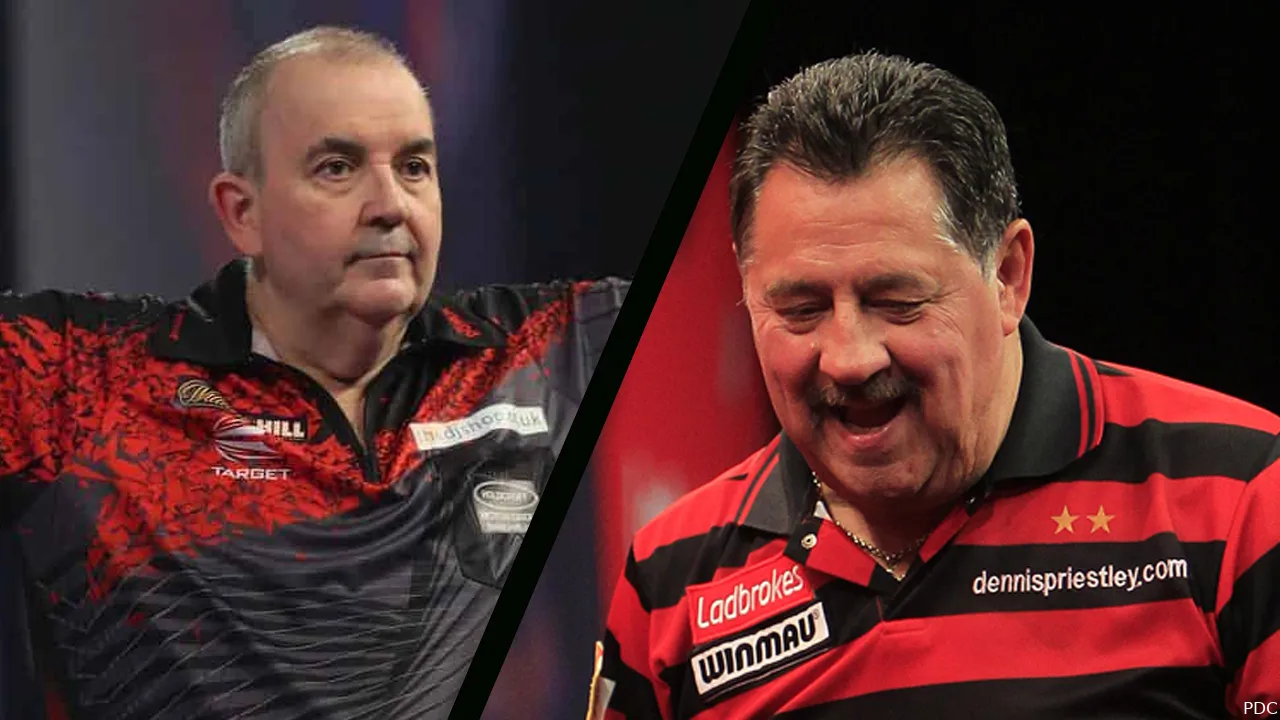
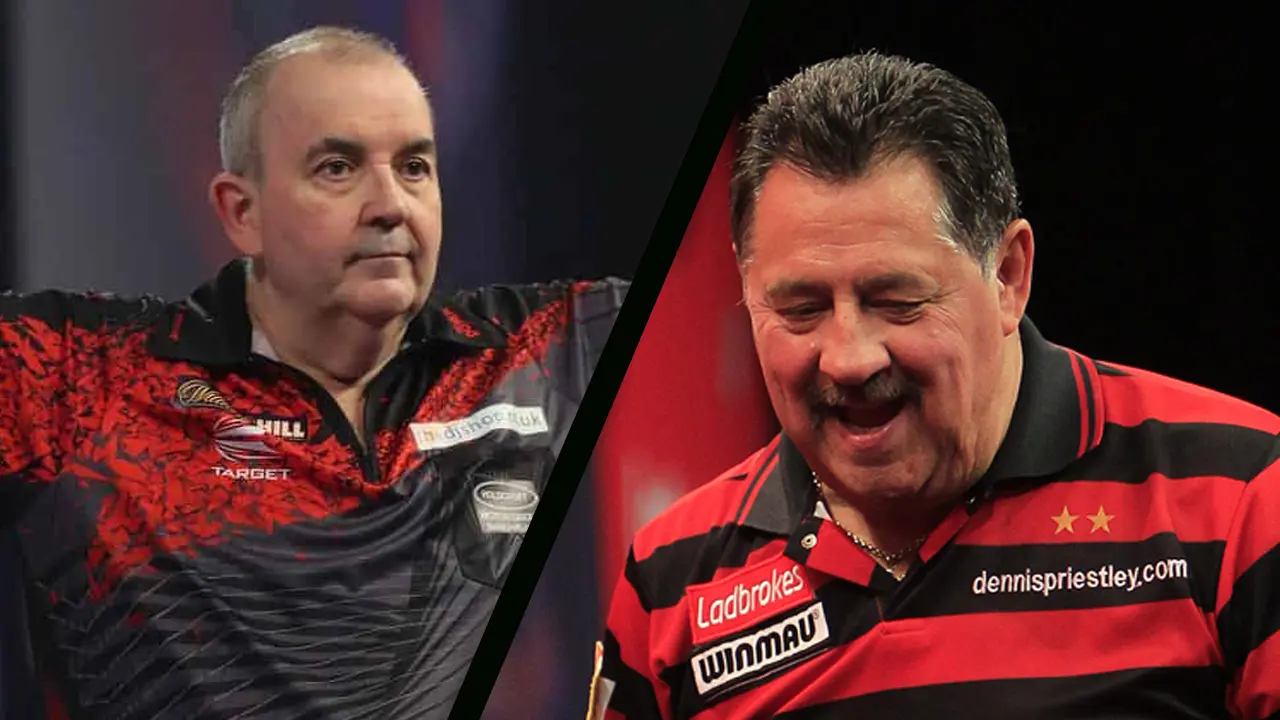
In the 1990s Phil Taylor and Dennis Priestley were major rivals
“I knew it was my time”
Priestley remained active on the professional circuit for several more years. Although he was no longer as consistent as he had been at his peak, he continued to collect victories and challenge the emerging generation.
Among the successes he recalled were a Players Championship triumph at Ashton Gate, the home of Bristol City, and another tournament victory in Gibraltar. At Ashton Gate, he almost failed to register after becoming stuck inside the car park beneath his hotel.
ADVERTISEMENT
“We were running around trying to find a way out of the car park,” he recalled. “I just made it in time. My youngest son was with me and he said, ‘We were the last to arrive and the last to leave.’”
Eventually, however, Priestley reached the point where the motivation was no longer there. The decisive moment arrived during another tournament weekend in Wigan. “I played there on the Saturday and was thrashed by somebody, only a young lad,” he said. “I wasn’t enjoying it.”
Priestley was scheduled to return for another event the following morning but instead told his wife Jenny that he would not be going back. “That’s not like a Yorkshireman because I had paid £110 to enter,” he joked. “That was £110 wasted, but I knew it was my time. I just couldn’t summon the enthusiasm to keep playing.”
Questions over the modern world rankings
As one of the players who helped build modern professional darts, Priestley continues to follow the sport and has watched the opportunities available to today’s players grow dramatically. “It is obviously very, very busy,” he said. “The top players, if they have done well enough, can now pick and choose which events they play.”
Priestley does, however, have reservations about the PDC Order of Merit being determined entirely by prize money. In particular, he questioned the enormous effect winning the World Championship can have on a player’s ranking.
“I’m not sure whether the person who wins the World Championship automatically becoming world number one because of the prize money is the best way to operate a ranking system,” he said.
Despite that concern, Priestley believes the organisation of the professional circuit has improved enormously. Players now have opportunities that would have been unimaginable when he and the other founding members were travelling around the world in an attempt to keep the fledgling organisation alive. “The players have so much to look forward to, though, and everything seems to be organised better now,” he acknowledged.
“I just hope they appreciate the sacrifices we made”
The scale of the modern game makes Priestley especially determined that today’s generation should understand what their predecessors risked during the bitter split in the early 1990s. “Good luck to the players now,” Priestley said. “We set the organisation up so that darts players could become multimillionaires. I just hope they appreciate the sacrifices we made and everything we went through.”
Several members of the original breakaway group, including Jocky Wilson, Eric Bristow and Jamie Harvey, have since died. Priestley believes the surviving pioneers and those who are no longer here deserve greater acknowledgement for the turmoil they endured.
“It would be nice if the PDC recognised the amount of turmoil and upheaval we went through and what we sacrificed,” he said. “I wouldn’t necessarily call it respect, but perhaps a little more thanks to us.”
Priestley also stressed that the breakaway could not have succeeded without the continued support of Sky Sports. “If Sky Sports hadn’t taken us on when we broke away, there wouldn’t be a PDC,” he said. “They stuck with us loyally.”
Barry Hearn’s arrival later provided another decisive moment. The organisation was experiencing serious financial problems and, according to Priestley, did not have enough money to pay some of the prize money it owed.
“Barry came in when there was no money,” Priestley recalled. “He said, ‘I’ll settle all the debts,’ because the PDC owed me and Phil quite a lot of money. There wasn’t enough money available to pay the winners and runners-up.”
Hearn subsequently made a clear commitment during a meeting in Blackpool. “To give him his due, Barry said at a meeting in Blackpool, ‘If I don’t turn this around within two or three years, I’ll walk away,’” Priestley said.
He did turn it around. The organisation which once struggled to pay its leading players has developed into a global professional circuit offering millions in prize money, fulfilling the ambitions Priestley and his fellow pioneers had when they risked their livelihoods to secure a different future for darts.
Kieran WoodDarts Journalist
Kieran Wood is a sports journalist based in Wales and has been active in journalism since 2022. He contributes to DartsNews.com, where he covers professional darts through news, match reports, analysis, and live coverage across the PDC calendar and major tournaments.
A key part of his work is on-site reporting from leading events. Kieran has covered the PDC World Darts Championship in person, reporting daily from the venue and providing first-hand insight from the tournament. During his coverage, he has conducted interviews with leading players including Luke Littler, Luke Humphries, and Gerwyn Price.
He is also one of the leading voices of the English-language Dartsnews Podcast, contributing regular analysis and discussion on developments across the professional darts circuit.
In his reporting, Kieran places strong emphasis on careful sourcing, editorial accuracy, and updating articles when new, verified information becomes available.
claps 0visitors 0
Just in


Popular news

Latest comments
- I agree,I can't believe the lack of coverage of this sad loss. Always enjoyed watching him,but I guess now it's all about littler,well it seems that way. Darts has sadly lost a good manrick6717-10-2026
- In the absence of a report regarding the death of Stefan Lord, I'll assist. An excellent player in the late 70s and early 80s, he actually won the now defunct 3rd place match at two World Championships and a couple of the News of the World Championships. A fabulous player and easily the best Swedish player ever. Rest peacefully Stefan.richieburnettrocks16-10-2026
- Joking aside, it is the second most watched sport on sky (more than golf, F1 etc) behind football only, and in participation is second to only football and swimming. It doesn't get the attention or sponsorship of "bigger" sports because it's not as sexy, but it's right up there.BandB13-10-2026
- i love darts but you can't seriously believe it's the second most popular sport in the uk. even top five is pushing it. it may be the fastest growing, though.colt13-10-2026
- I'm a big Clayton fan, but he's got this completely wrong. Qualification criteria exists for a reason - so just as failing to make the top 32/64 for the Euro championships/PT Finals means you miss out, so does not lifting a title for this one.26sForFun12-10-2026
- The players who deliberately slow the game down are usually boring and win very little in the way of silverware. Horrible to watch.MrYnyslas197112-10-2026
- [“The Gentle” then used a sweeping and questionable phrase...] You anglocucks are hilariously finished in every sense of the word.Critical99911-10-2026
- I love Jonny but I disagree. The Grand Slam was always supposed to be "champion of champions" type competition. If the top 16 are guaranteed participation in everything there will be so much less jeopardy involved in qualifying and each major tournament will lose its unique flavour which the PDC has worked hard trying to develop. I enjoy following the qualification races towards the end of the year, and while consistency should have its rewards, the truth is Jonny hasn't reached a major final all year or won a single event on the Pro Tour. Being consistent is one thing, but that alone should have consequences as the sport's elite should not be prepared to accept consistently strong performances, their foremost motivation should be to win and this should be what separates them from the rest, not the consistency of their performances. Jonny is expecting that losing should be enough; it shouldn't be, at least not as far as the Grand Slam is concerned.Deduce635811-10-2026
- Well being honest,it doesn't matter what level you play at, there's always someone who slows it down to suit themselves,and extra swig of water, replacing flights, asking the ref what the score is. It happens wherever. I'm not saying it's professional,but I'm sure we've all seen it beforerick6711-10-2026
- Agree completely. Not sure how a ranking event can have a criteria not based on rankings. And he right on popularity. In the UK second only to football.BandB11-10-2026
Loading